Benefits of Solving 19 Years of GATE Electrical PYQs
Preparing for the Graduate Aptitude Test in Engineering requires a strategic approach rather than just routine studying. Electrical engineering candidates often feel overwhelmed by the vast syllabus, intricate circuit theories, and challenging mathematical problems.
Solving GATE Electrical Engineering PYQ papers solves this issue directly by exposing learners to authentic question standards. Practicing past papers helps candidates bridge the gap between theoretical knowledge and practical execution, turning effort into measurable exam performance.
Importance of GATE Electrical Engineering PYQ
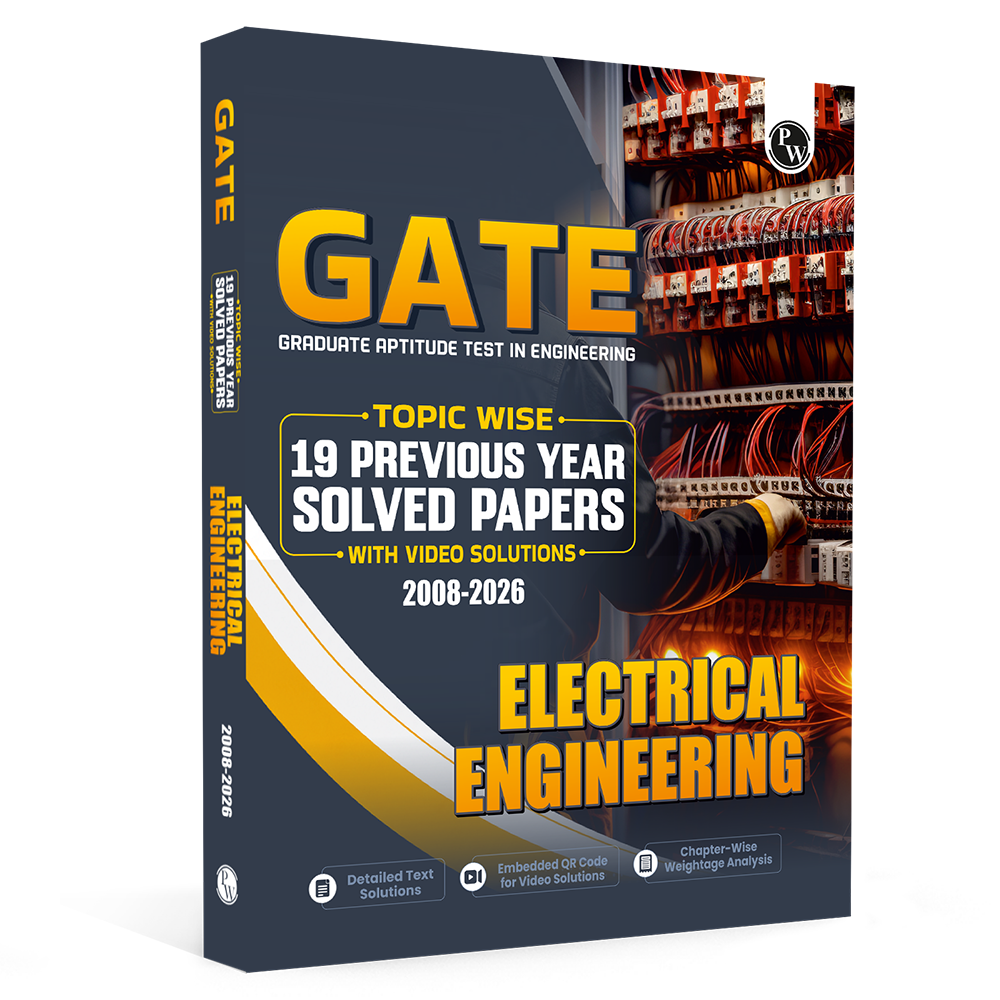
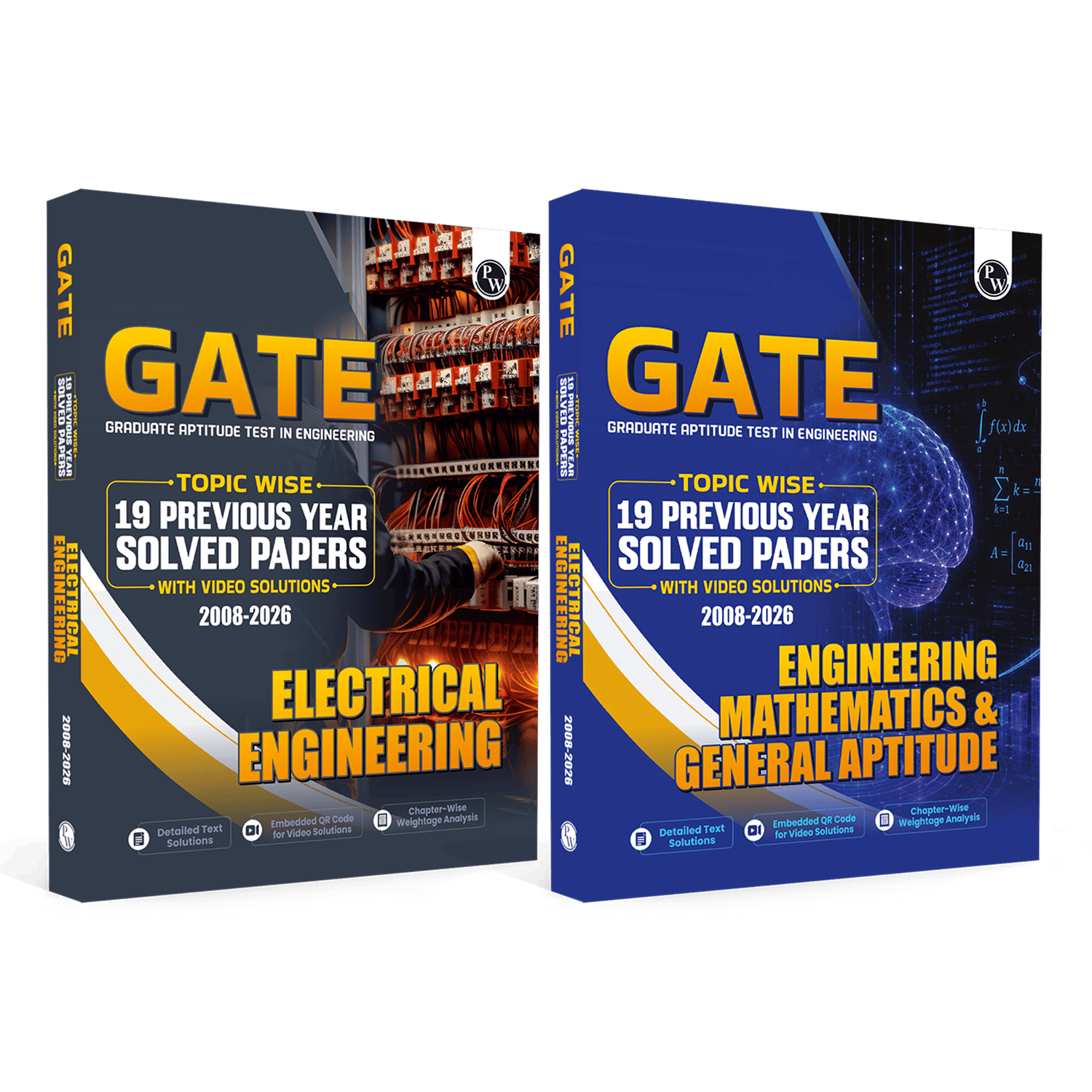
The GATE Electrical Engineering PYQ is a useful resource for candidates preparing for the GATE Electrical Engineering exam. It provides previous year questions from 2008 to 2026 in a chapter-wise and topic-wise format. Practising these questions helps students understand exam patterns, identify important topics, improve speed and accuracy, and find weak areas.
Detailed step-by-step solutions, video explanations, and year-wise weightage analysis make revision easier. Regular practice with GATE Electrical PYQs also helps candidates become familiar with different question types and improve their problem-solving skills before the actual exam.
Preparing for a competitive technical examination demands a clear understanding of what examiners test most frequently. Candidates who spend time analyzing past papers gain valuable insights into how theoretical concepts translate into numerical problems.
The primary advantage of working through GATE Electrical Engineering PYQ collections is gaining an accurate understanding of paper structure. The exam tests a combination of conceptual clarity, mathematical calculation, and logical reasoning.
-
Multiple Choice Questions (MCQs): These test standard conceptual understanding with options designed to catch common calculation errors.
-
Multiple Select Questions (MSQs): These require deep conceptual clarity across entire topics since more than one choice can be correct.
-
Numerical Answer Type (NAT) Questions: These test precision and speed because there are no options provided, leaving zero room for guessing.
By practicing past papers regularly, candidates adapt to these distinct question formats. This reduces exam anxiety and helps students handle tricky numerical questions with greater composure.
Solving paper after paper helps candidates build the required numerical speed. Electrical engineering problems often involve long matrix computations, differential equations, and multi-step circuit analysis.
-
Formula recall: Regular practice makes standard formulas second nature, saving valuable minutes during the exam.
-
Reduction of silly mistakes: Repeated exposure to complex numerical calculations highlights common units conversion errors and sign mistakes.
-
Effective time allocation: Students learn how much time to dedicate to 1-mark questions versus complex 2-mark problems.
Candidates who use a reliable PW GATE electrical PYQ book source can evaluate their performance systematically. Developing speed alongside accuracy ensures that students finish the paper well within the stipulated three hours.
|
Parameter |
Unplanned Study Approach |
Practice-Led PYQ Approach |
|
Exam Familiarity |
Low exposure to NAT and MSQ formats |
High exposure and comfort with all formats |
|
Speed & Accuracy |
Frequent calculation errors under time pressure |
High numerical precision and quick formula recall |
|
Topic Prioritisation |
Equal time spent on all topics regardless of importance |
Targeted focus on high-weightage topics |
|
Confidence Level |
Uncertain about real paper difficulty |
Prepared for real exam level difficulty |
Features of GATE Electrical Engineering PYQ Book
Prepare for the GATE exam with a well-organized collection of previous year questions. This GATE books provides chapter-wise practice, detailed solutions, video explanations, and exam analysis to help you understand important topics and improve your preparation.
Topic-wise & Chapter-wise Previous Years’ Questions: Practice previous year questions in a topic-wise and chapter-wise format. This organized approach makes it easier to study each topic, find weak areas, and revise effectively.
Detailed Solutions with Step-by-Step Explanations: Get clear and detailed solutions for the questions. Step-by-step explanations help you understand the correct approach, strengthen concepts, and improve problem-solving skills.
PYQ Coverage from 2008–2026: Practice 19 years of GATE Previous Year Questions from 2008 to 2026. This wide coverage helps you understand exam patterns, repeated concepts, important topics, and different types of questions.
QR Codes for Video Solutions: Scan the QR codes to access video solutions from expert educators. These explanations provide additional support and make difficult concepts easier to understand.
Year-wise Weightage Analysis: Understand the importance of different topics through year-wise weightage analysis. Use these insights to identify important areas and focus on topics that can help improve your score.
Prepared by Expert Faculties & Academic Team: The content is carefully prepared and reviewed by experienced faculties and an academic team to ensure accurate solutions, clear explanations, and exam-focused preparation.
Topic-wise Weightage in GATE Electrical Engineering PYQ
The GATE syllabus is vast, covering power systems, electrical machines, control systems, signal processing, and electromagnetic fields. Attempting to master every single topic with equal intensity is often inefficient.
Topic-wise distribution and trend analysis
Analysing past papers over a 19-year period reveals clear patterns in how marks are distributed across subjects. Some subjects consistently carry higher weightage, while specific sub-topics yield predictable numerical questions year after year.
-
Power Systems: Frequently features complex questions on fault analysis, load flow studies, power system stability, and protection schemes.
-
Electrical Machines: Focuses heavily on transformers, induction motors, and synchronous machines, testing equivalent circuits and torque-speed characteristics.
-
Control Systems: Routinely tests Routh-Hurwitz criteria, Bode plots, Nyquist plots, and state-space analysis.
-
Circuit Theory & Networks: Forms the foundational backbone, with continuous testing of Transient analysis, AC circuits, and network theorems.
A candidate practicing GATE electrical previous year questions quickly notices which topics appear consistently. This insight allows students to allocate study hours effectively, prioritizing areas that yield the highest return on investment.
Eliminating weak spots early
Working through multi-year solved papers acts as a continuous diagnostic test for aspirants. When students encounter topics where they consistently lose marks, they can intervene before exam day.
-
Self-assessment: Identifies conceptual gaps in specific sub-modules like power electronics converters or signal transforms.
-
Targeted revision: Allows candidates to revisit textbook theory or video lectures specifically for troublesome topics.
-
Progress tracking: Helps students measure improvement across sequential test attempts over time.
Integrating a high-quality GATE electrical solved papers compilation into weekly study routines ensures that weak areas are addressed long before the final examination.
How Does GATE Electrical Engineering PYQ Help in Problem Solving?
Solving technical questions requires more than memorising formulas. It demands analytical thinking and the ability to combine concepts from different subjects.
Developing multi-concept integration skills
Advanced GATE questions rarely test a single formula in isolation. High-mark questions often combine principles from circuit theory with control systems or link power electronics with electrical machines.
-
Cross-domain questions: A question might require using Laplace transforms to analyze a transient circuit, blending mathematics with network analysis.
-
System-level analysis: Power electronics problems frequently incorporate machine characteristics to analyze motor drives.
-
Mathematical rigor: Problems often require applying linear algebra or differential equations directly to physical engineering models.
Working through extensive GATE Electrical Engineering PYQ sets trains the mind to connect concepts across different modules seamlessly.
Know the virtual calculator
One of the biggest hurdles for candidates is operating the online virtual calculator efficiently. Unlike physical scientific calculators, the virtual calculator requires specific click sequences and keyboard inputs.
-
Function familiarity: Learning how to execute trigonometric functions, logarithms, and exponential operations without making input mistakes.
-
Memory functions: Using memory keys effectively to store intermediate values during lengthy multi-step calculations.
-
Brackett discipline: Applying brackets correctly in long fraction expressions to avoid order-of-operations errors.
Regular practice with past year papers while using the actual virtual calculator software ensures candidates do not lose precious minutes during the live exam.
How to Practice GATE Electrical Engineering PYQ?
Simply buying a GATE previous year paper book is not enough; candidates must adopt a structured methodology to extract maximum value from their practice sessions.
Step 1: Subject-wise practice during initial preparation
When covering the core syllabus for the first time, students should solve past questions parallel to their class notes or textbook reading.
-
Finish a chapter in your main study material.
-
Open the corresponding chapter in the GATE Electrical Engineering PYQ book.
-
Solve all 1-mark and 2-mark questions related to that specific topic.
-
Review the step-by-step solutions for any questions you answered incorrectly or found difficult.
This immediate application reinforces freshly learned concepts and builds long-term retention.
Step 2: Time-bound full-length paper solving
Once the syllabus coverage reaches 70 percent or more, candidates should shift from subject-wise solving to full-length timed tests.
-
Simulate real conditions: Sit in a quiet room, set a 3-hour timer, and refrain from taking breaks.
-
Use virtual tools: Perform all calculations strictly using the online virtual calculator tool.
-
Strict marking: Apply negative marking accurately (deducting 1/3 mark for incorrect 1-mark MCQs and 2/3 mark for incorrect 2-mark MCQs).
Timed mock practice builds physical endurance and mental stamina, preparing candidates for the intense concentration required on exam day.
Step 3: Deep error analysis and revision notebook maintenance
The most critical step in practicing past papers is analyzing mistakes post-attempt. Every error represents an opportunity to prevent a loss of marks in the actual exam.
-
Maintain a mistake notebook: Record concepts, formulas, or calculation tricks that led to wrong answers during practice.
-
Categorize errors: Identify whether mistakes were due to conceptual misunderstanding, misreading the question, or calculation slip-ups.
-
Weekly revision: Re-solve questions marked as difficult or incorrect every weekend to verify improvement.
A systematic approach to error correction transforms practice hours into guaranteed rank improvements.
Read More: GATE Subject Wise Weightage 2026 Exam
GATE Electrical Engineering PYQ FAQs
How many years of GATE electrical questions should I solve?
Solving 15 to 19 years of past questions is recommended. Working through 19 years of questions, such as those provided in the solved papers collection, ensures complete exposure to all recurring concept variations and question types.
Are previous year questions sufficient to get a good rank in GATE Electrical?
While solving past papers is essential, it should be combined with fundamental concept learning and mock tests. PYQs help you understand patterns and weightage, but strong theoretical foundations remain necessary for solving novel questions.
Why are video solutions helpful while practicing past papers?
Video explanations clarify tricky derivation steps and conceptual nuances that text solutions might miss. Scanning QR codes in modern study books provides instant guidance from expert faculty whenever you hit a roadblock.
How does topic-wise PYQ practice differ from year-wise practice?
Topic-wise practice lets you solve questions immediately after finishing a specific chapter, reinforcing targeted learning. Year-wise practice is best used closer to the exam to simulate full-length 3-hour test conditions across all subjects.
When is the best time to start solving past year papers during GATE preparation?
You should start solving topic-wise past questions right from the beginning of your preparation alongside daily subject studies. Full-length paper practice should begin 3 to 4 months before the final exam.