How to Choose between JEE Main-only books and JEE Advanced-ready books

The right study material is a common problem for engineering aspirants. Many students are confused about whether to study only for the first screening exam or whether to buy integrated resources from the beginning.
The right JEE books can clear the path of your studies, save you from mental fatigue, and ensure that your daily practice is in line with your final academic goals.
Importance of JEE Books for Exam Preparation
JEE books play an important role in helping aspirants develop strong concepts and improve their application skills for the exam. They provide detailed explanations, practice questions, solved examples, and advanced-level problems based on the JEE pattern.
These books cover Physics, Chemistry, and Mathematics topics thoroughly, helping students revise important formulas, understand complex concepts, and enhance accuracy. Regular practice with quality JEE books builds confidence, improves time management, and supports effective preparation for achieving a better rank.
How to Know the Difference in the Study Material of JEE Books?
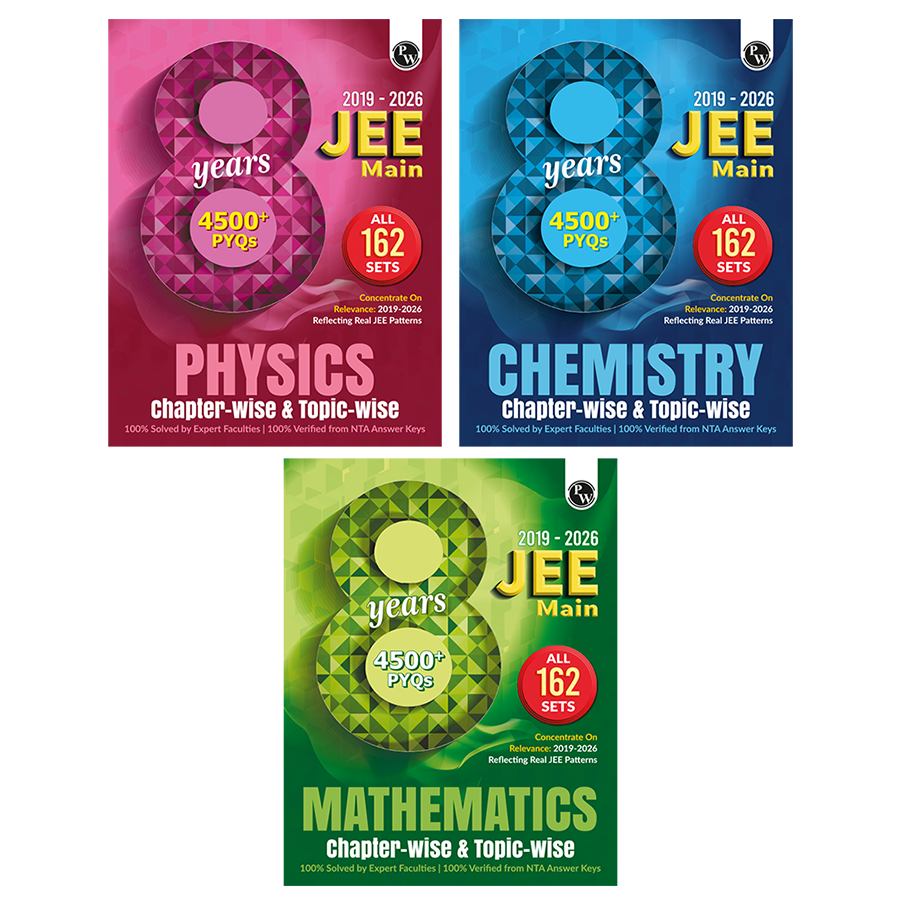
Engineering entrance resources are generally divided into two main tracks. One track concentrates entirely on foundational clarity and speed, while the other builds complex analytical abilities. Knowing these differences helps you avoid buying unnecessary materials. Along with JEE Previous Year Papers, students can better understand question trends, identify important topics, and gradually develop the exam-level thinking required for competitive success.
Focus of Main-Only Materials
Main-only resources are aligned to the official senior secondary curriculum. They help students learn basic formulas, definitions, and the standard routines to solve problems.
-
Speed and Accuracy: These resources contain thousands of direct numerical questions to help you solve problems quickly during timed tests.
-
Direct Applications: The practice exercises focus heavily on the straightforward application of theoretical formulas.
-
Syllabus Boundary: The content stays strictly within the standard school board topics without adding extra theoretical layers.
Focus of Advanced-Ready Materials
Advanced-ready resources assume you already know the basic formulas. They focus on multi-concept problems that require deep logical reasoning.
-
Interlinked Concepts: A single problem might require you to use laws from mechanics, thermodynamics, and calculus simultaneously.
-
Out-of-the-Box Thinking: The questions test how deeply you understand a topic rather than how many formulas you have memorised.
-
Comprehensive Theory: These modules provide comprehensive textual explanations to cover experimental setups and advanced derivations.
Factors to Consider Before Selecting JEE Books
Every student is different in terms of learning speed, starting point, and destination college. You should assess your current level of readiness before selecting specific titles. Along with JEE Mains PYQ practice, students can evaluate their preparation level, understand exam expectations, and identify areas that need additional focus before building a study plan.
Current Mathematical and Analytical Skills
Advanced problems require good calculating skills and very good spatial reasoning skills. If you are confused by very simple algebraic manipulations or the definitions of coordinate geometry, beginning with very complicated material can decrease your confidence. Start with simple application exercises, then go to multi-layered problems.
Available Preparation Time
Time is a crucial factor when planning your study strategy.
-
Two-Year Timeline: Students who start early have enough time to read comprehensive theoretical passages and solve multi-step problems systematically.
-
One-Year or Short-Term Timeline: If you have less than a year, it is often better to focus on precision, formula application, and high-yield topics to get a good rank first.
Primary Academic Target
Be honest about your present goals. If you want to get into the best state-level engineering colleges or certain National Institutes of Technology, then the Main-level pattern should be your main focus. If you are only targeting the cut-off for the Indian Institutes of Technology, then you should start practicing with the advanced-level resources immediately.
Subject-Wise Comparison of JEE Books for Main and Advance
Different subjects require different study strategies. A book that works well for chemistry might not be the right choice for mastering physics or mathematics.
Physics: Formula Application vs Depth of Mechanics
In the introductory screening paper on physics, the questions are often easy. Usually, the answer is found by figuring out the correct values and putting them into a standard formula. But the advanced paper tests the deep physical significance behind those formulae.
|
Feature |
Main-Level Physics Material |
Advanced-Level Physics Material |
|
Question Type |
Direct formula-based numericals |
Variable-based calculus problems |
|
Topic Coverage |
Even distribution across all units |
Heavy focus on complex mechanics and electrodynamics |
|
Derivations |
Summarised steps for quick review |
Comprehensive step-by-step proofs |
Chemistry: Fact Memorisation vs Reaction Mechanisms
The chemistry at the two exam levels is very different. The first test is mostly based on straight facts from normal school textbooks, especially in the inorganic part. The advanced level requires a good knowledge of physical chemistry calculations and detailed organic reaction mechanisms.
-
Inorganic Chemistry: Main-focused resources provide clear trend tables and fact sheets for quick memorisation. Advanced materials explain the exceptions and molecular orbital interactions behind those trends.
-
Organic Chemistry: Basic books teach you to predict the final product of a reaction. Advanced resources require you to understand intermediate states, stereochemistry, and electron shifts.
-
Physical Chemistry: Basic exercises use standard values for direct calculations. Advanced question banks include multi-stage problems with approximate decimal calculations and non-ideal conditions.
Mathematics: Speed Drills vs Structural Proofs
The hardest part is usually said to be maths. Main level mathematics is solving long equations with short tricks, quickly. Advanced mathematics involves the properties of coordinate geometry, complex number systems, and proofs in calculus.
How to Use the JEE Books?
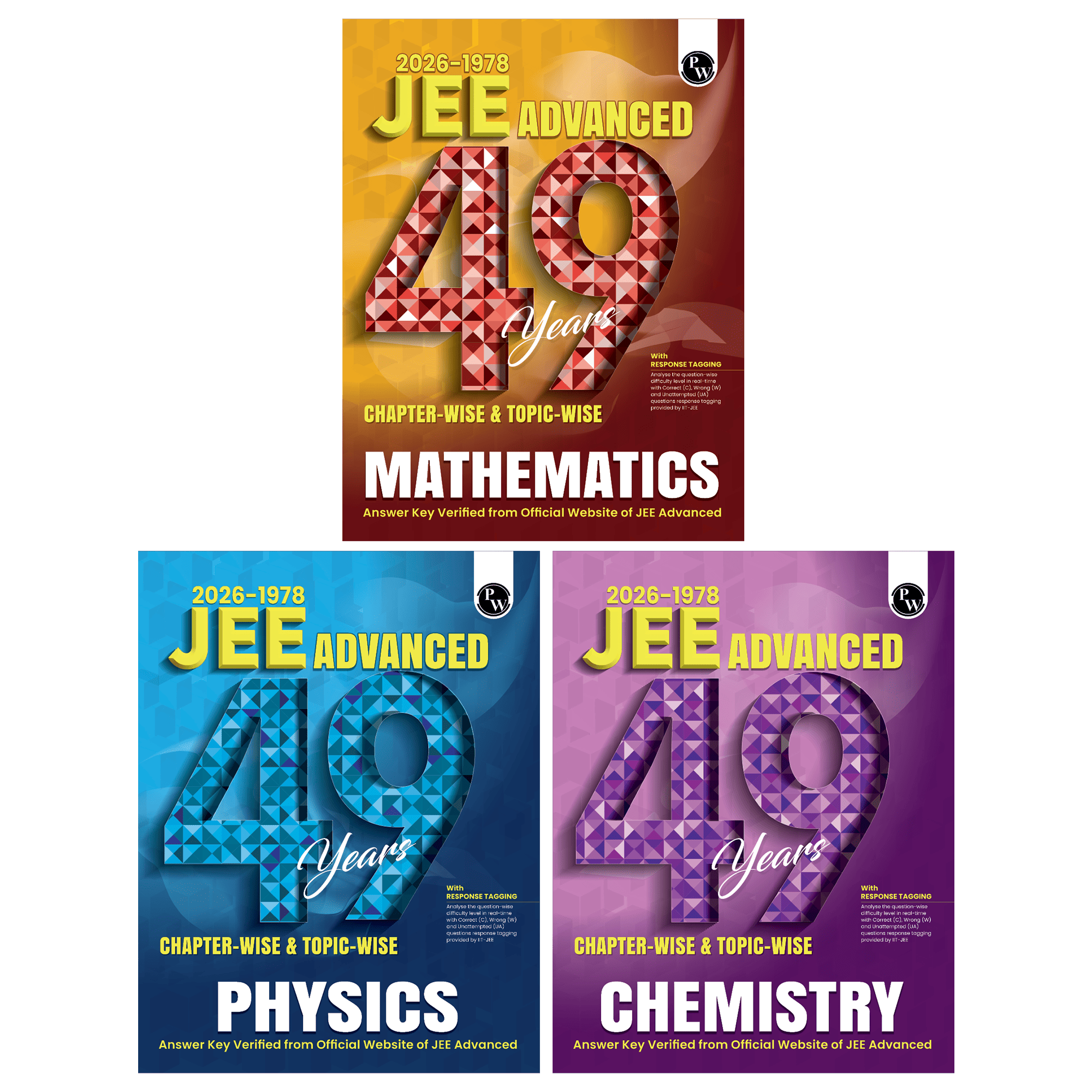
Use JEE preparation books regularly to build concepts, practise questions, and strengthen problem-solving skills. Follow a structured study plan by combining theory, solved examples, exercises, mock tests, and JEE Advanced PYQs for better performance. Solving previous year questions helps students understand exam trends, improve accuracy, and develop confidence for high-level problem solving.
Step 1: Check Your Foundational Clarity
Before buying any new reference materials, complete your standard school textbooks thoroughly. If you can explain core concepts and solve text exercises without looking at the solutions, your foundation is solid. If you struggle with basic definitions, stick to foundational tier study materials first.
Step 2: Analyse Past Examination Trends
Reviewing past question papers helps you understand the actual difficulty level of the exams.
-
Main Trend: The initial screening exam focuses heavily on testing a wide range of topics, requiring you to remember facts and formulas across the entire syllabus.
-
Advanced Trend: The second tier focuses on fewer topics but tests them deeply through multi-correct options, matrix matches, and paragraph-based questions.
Step 3: Match Your Selection with Reliable Study Material
If you want a balanced preparation strategy, look for structured iit JEE books that divide chapters into clear, progressive difficulty levels.
-
Level 1 Exercises: These sections feature single-correct questions that match the initial exam pattern, helping you build speed and core confidence.
-
Level 2 Exercises: These sections introduce multiple-correct options, numerical grid inputs, and comprehension blocks that match the advanced pattern.
-
Previous Years Questions: A reliable workbook should provide separate sections for past screening papers and advanced papers from the last few decades.
Step 4: Avoid Resource Overload
Using too many different reference guides is a common mistake. It is much more effective to solve a single comprehensive workbook four times than to read four different reference books halfway through. Keep your core workspace clean, organized, and limited to one trusted set of learning modules per subject.
How to Balance JEE Books for Class 11 and Class 12
Managing school workloads alongside entrance preparation requires a structured approach to your study materials. Using the right JEE books for class 11 and 12 ensures you build a strong foundation without falling behind in your regular schoolwork.
Managing the Transition in Class 11
The transition from class 10 to higher secondary concepts can feel overwhelming. Many students lose confidence because they choose overly complex study materials too early.
-
First Six Months: Focus on learning core definitions, units, and foundational calculations using structured JEE books for class 11.
-
Mid-Year Assessment: Once you can solve basic chapter-end exercises easily, introduce moderate question banks to build your analytical skills.
-
Topic Focus: Dedicate extra time to foundational chapters like mechanics in physics, mole concepts in chemistry, and basic algebra in mathematics.
Streamlining the Syllabus in Class 12
During your final school year, you must balance board exam preparation, new concepts, and revision of previous topics.
-
Dividing Your Study Time: Use your regular weekdays to learn new class 12 topics, and dedicate weekends to practicing older class 11 chapters.
-
Utilising Practice Sets: Use dedicated books for JEE mains to run weekly timed practice sessions, which will help improve your speed and accuracy.
-
Consolidating Notes: Create short summary sheets containing important formulas, exceptional chemical reactions, and quick mathematical shortcuts.
Read More - Why PW JEE Modules Are Helpful for Repeaters
JEE books FAQs
Can I clear the advanced exam using only books for JEE mains?
Main-focused materials generally lack the complex, multi-layered problems found in the advanced paper. While they help build foundational speed and clarity, you will need dedicated advanced question banks to develop the necessary analytical skills.
How should I use JEE books for class 11 when starting preparation late?
If you are starting late, focus on high-yield foundational chapters first, such as mechanics and basic coordinate geometry. Use structured workbooks to solve the basic exercise levels, then immediately practice past exam papers to save time.
Is it wise to buy separate advanced resources if my basic concepts are weak?
No, buying advanced resources too early can cause unnecessary stress and confusion. Focus on mastering foundational theory and solving direct numerical exercises first before moving on to complex, multi-concept problems.
Do integrated learning modules cover both school boards and entrance patterns?
Yes, well-structured comprehensive modules cover topics from the basic school level up to advanced application tiers. They sort practice exercises into progressive difficulty levels to help you build skills step-by-step.
How often should I practice past exam questions from my preparation books?
You should practice past exam questions directly after finishing the theory and basic exercises of a chapter. Revisit these questions every few weeks during revision sessions to ensure you remember the core concepts.