I Finished a Chapter but Can’t Solve JEE Advanced PYQs—What Next?
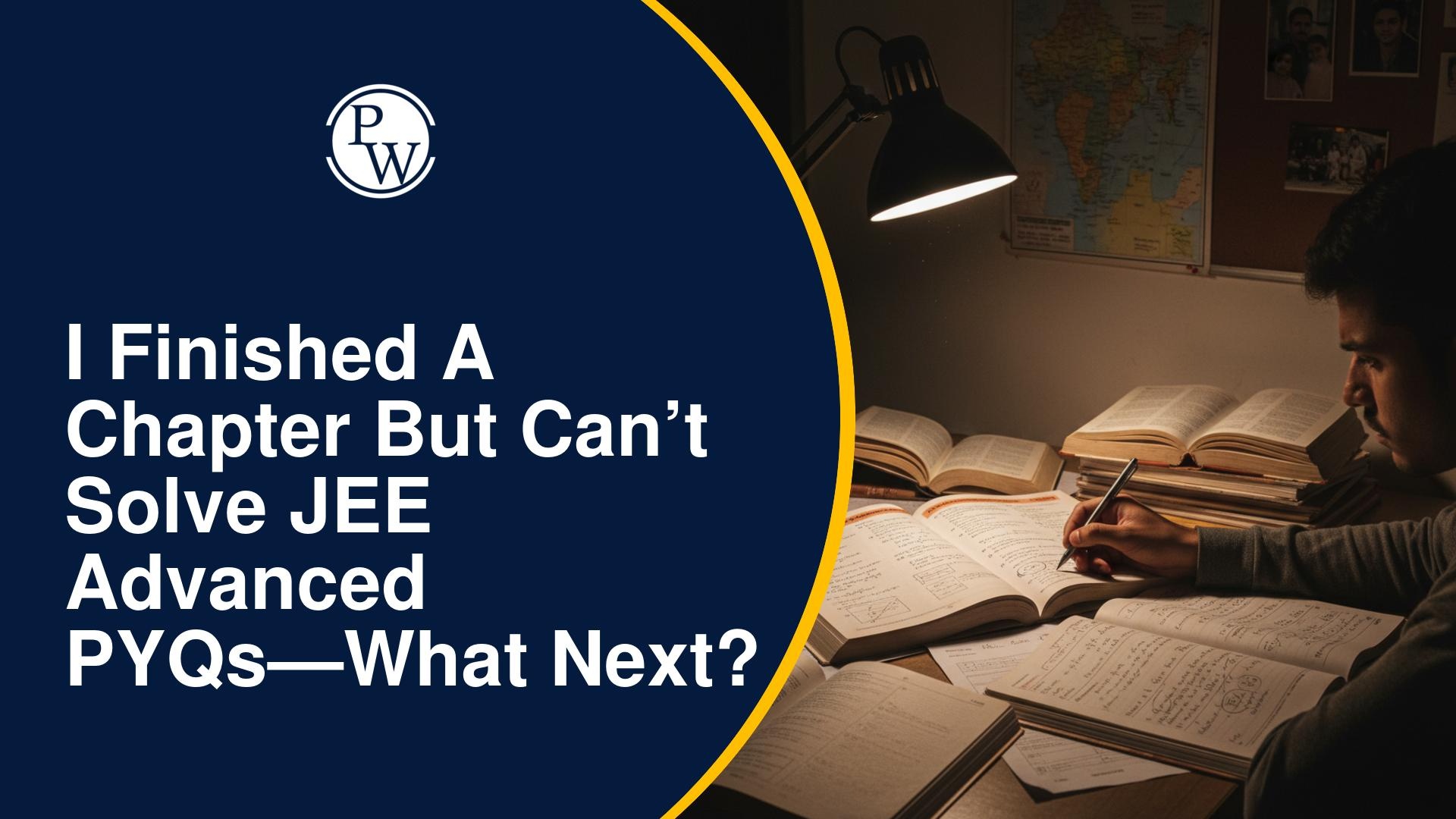
Finished a chapter but still getting stuck while solving questions? The gap between knowing a concept and applying it can be solved through regular problem-solving practice. Use a structured JEE advanced PYQ book to practice previous year questions, understand different question types, and learn step-by-step solving methods.
Chapter-wise and topic-wise practice helps you identify weak areas, understand important trends, and improve your speed and accuracy. Regularly solving JEE previous year papers also builds confidence and helps you become familiar with the JEE Advanced exam pattern, making your overall preparation more focused and effective.
What Is the JEE Advanced PYQ Book?
A JEE Advanced PYQ Book is a useful practice resource that contains questions asked in previous JEE Advanced examinations. It helps students understand the exam pattern, question style, difficulty level, and topics that are commonly tested in Physics, Chemistry, and Mathematics.
Most books arrange questions chapter-wise and topic-wise, allowing students to start practice after completing each chapter. Detailed solutions explain the correct method and help students identify and fix mistakes. Regular practice with a PYQ Book can strengthen concepts, improve problem-solving speed, increase accuracy, and build confidence for the actual JEE Advanced examination.
Features of JEE Advanced PYQ Book
This book brings together years of JEE Advanced questions, detailed solutions, and useful paper analysis in one place. It helps students practise important concepts, understand exam trends, improve accuracy, and prepare with better confidence.
49 Years of JEE Advanced PYQs (1978–2026): Practice questions from 49 years of IIT JEE Advanced Previous Year Questions, covering Physics, Chemistry, and Mathematics. This wide question collection helps students understand how questions have changed over the years and prepare for different question types.
Chapterwise and Topicwise Questions: Find questions arranged according to chapters and topics for easier preparation. Students can choose a particular topic, practice related questions, and revise concepts without searching through complete exam papers.
Step-by-Step Solutions: Every question comes with a clear solution that explains the method used to reach the answer. Solutions based on the official JEE Advanced answer keys help students understand the correct approach and avoid repeated mistakes.
Analysis of the Last 7 Years: Get a detailed review of the last 7 years of JEE Advanced papers. The analysis covers important question patterns, subject-wise weightage, difficulty levels, and changes in the exam style to help students prepare with better planning.
Performance Data from 14 Previous Papers: Study useful performance data from the last 14 papers, including correct, incorrect, unattempted, and partially correct responses. This helps students understand their performance and make better decisions about which questions to attempt during the exam.
Question Trend Analysis: Identify chapters and concepts that have appeared regularly in previous JEE Advanced papers. Understanding these trends helps students decide which topics need more attention and where they should spend more practice time.
Useful for Complete Revision: The book can be used at different stages of preparation, from concept practice to final revision. Students can solve previous questions, check their answers, review mistakes, and strengthen important concepts before the IIT JEE Advanced examination.
Why Solving JEE Advanced PYQs Feels Difficult After Chapter Completion?
Completing a chapter by reading theory or watching lectures gives a foundation, but it rarely prepares you for the multi-concept nature of the actual exam. Many students face a sudden drop in confidence when opening past papers because the questions demand deep logical application rather than direct formula substitution.
-
Gap Between Theory and Application: Standard textbook problems test single formulas, while past papers combine multiple concepts across topics.
-
Lack of Multi-Topic Integration: Questions often bridge topics across chapters, making single-chapter knowledge feel incomplete.
-
Absence of Pattern Familiarity: Without exposure to evolving paper formats, understanding what the question asks becomes time-consuming.
-
Inadequate Practice Resources: Working without a structured JEE advanced PYQ book leaves gaps in identifying topic weightage and step-by-step resolution pathways.
How to Use the JEE Advanced PYQ Book Step by Step?
To transition smoothly from basic concept reading to advanced application, follow a structured problem-solving approach. Building analytical thinking requires patience and a systematic framework. Using JEE Books alongside regular practice can help strengthen conceptual understanding, provide advanced-level questions, and develop the analytical and problem-solving skills needed for JEE preparation.
-
Revisit Core Definitions: Before touching complex papers, re-examine fundamental principles and edge cases within the chapter.
-
Analyze Worked Examples First: Study step-by-step solved solutions to understand how complex constraints are broken down.
-
Attempt Single-Concept Questions: Start with straightforward questions before attempting multi-correct or matrix-match questions.
-
Utilize a Chapter-Wise Resource: Use a specialized PYQ book to filter questions by topic and difficulty level.
-
Review Unsolved Attempt Mechanics: When stuck, identify the exact step where your logic stalled instead of reading the full solution immediately.
How Does JEE Advanced PYQ Book Help with Chapter-Wise Practice?
Randomly jumping into full-length past papers often leads to confusion. Organizing your study sessions by chapters and topics creates a structured learning path that reinforces theory immediately after coverage.
|
Practice Method |
Focus Area |
Primary Benefit |
|
Topic-Wise Separation |
Individual concepts within a chapter |
Isolates weak spots and builds immediate confidence |
|
Chapter-Wise Aggregation |
Full chapter scope across past years |
Helps master chapter-level weightage and question variations |
|
Year-Wise Full Mock Practice |
Complete syllabus under timed conditions |
Builds exam stamina, speed, and real-time decision making |
Structured JEE advanced chapter-wise questions allow you to track performance metrics, identify recurring patterns from 1978 to 2026, and focus revision efforts where they matter most.
How to Use the JEE Advanced PYQ Book in Your Daily Study Plan?
Having a solid PW JEE Advanced and Mains PYQs book is only half the battle; utilizing it systematically determines your progress. Integrate JEE advanced practice into your daily routine using this structured approach:
-
Immediate Chapter Follow-Up: Dedicate 2 to 3 days immediately after completing a chapter exclusively to solving past paper questions.
-
Timed Problem-Solving: Set a timer for every problem set to simulate actual exam pressure and build speed.
-
Error Notebook Maintenance: Record every mistake, missed condition, or calculation error in a dedicated notebook for quick pre-exam review.
-
Trend-Based Priority: Use topic-wise weightage insights provided in your PYQ book to prioritize high-frequency concepts.
-
Periodic Re-Attempts: Mark difficult questions and re-attempt them unassisted after three weeks to test long-term memory retention.
Read More: How to Score 200+ Marks in JEE Advanced?
JEE Advanced PYQ Book FAQs
Why can I not solve questions even after understanding the chapter theory?
Understanding theory gives you the basic concepts, but JEE Advanced questions often require you to connect multiple concepts and apply them in new situations. Regular jee advanced problem solving practice helps you improve analytical thinking, understand how concepts are used, and solve questions accurately within a limited time.
How many years of past papers are sufficient for the exam?
Practicing 49 years of past papers from 1978 to 2026 provides wide coverage of different question types, concepts, difficulty levels, and changing exam patterns. It also helps you understand how questions have evolved and identify topics that need more practice before the final examination.
Should I practice past papers chapter-wise or year-wise first?
Start with chapter-wise and topic-wise practice after completing each chapter. This helps you strengthen individual concepts and identify weak areas. Once you have completed the syllabus, move to full year-wise papers to improve time management, question selection, speed, and accuracy under exam-like conditions.
How does detailed trend analysis help in exam preparation?
Trend analysis helps identify high-weightage chapters, commonly tested concepts, question patterns, and changes in difficulty levels. By studying these trends, you can plan your preparation better, give more time to important topics, and avoid spending too much time on areas that require less attention.
What should I do if I get stuck on a question while practicing?
First, identify the exact step where you are unable to continue and review the related concept. If you still cannot solve it, check the initial steps of the detailed solution instead of reading the complete answer immediately. Then close the solution and try solving the remaining steps yourself.