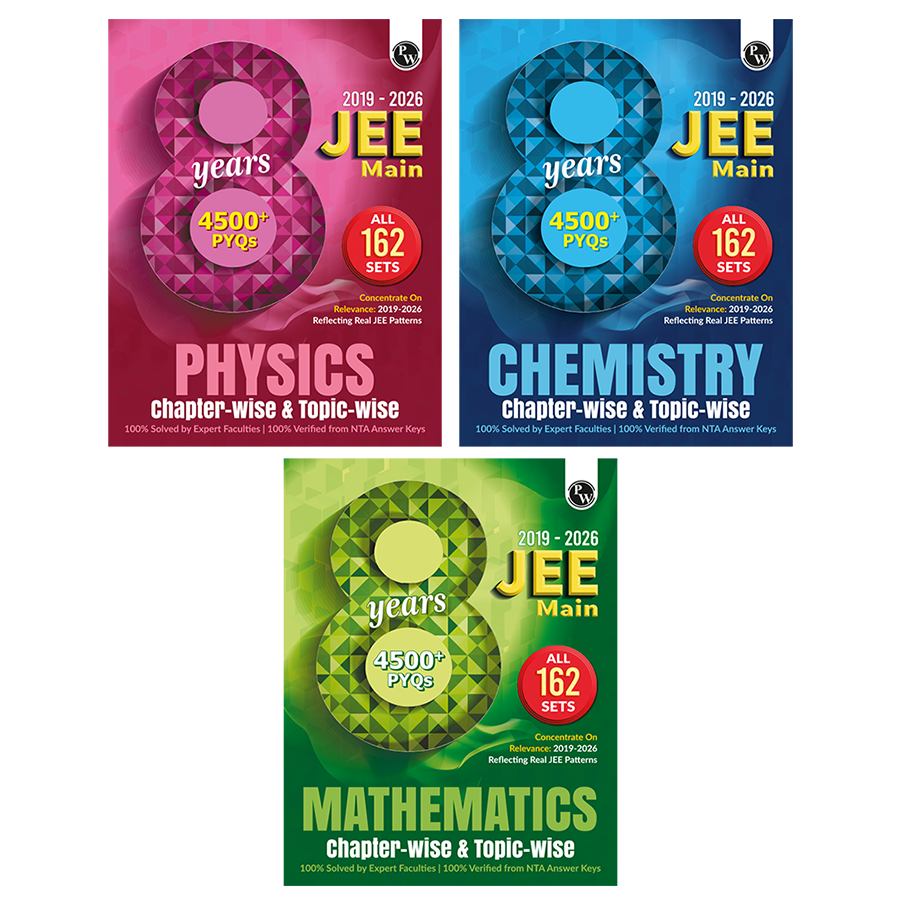
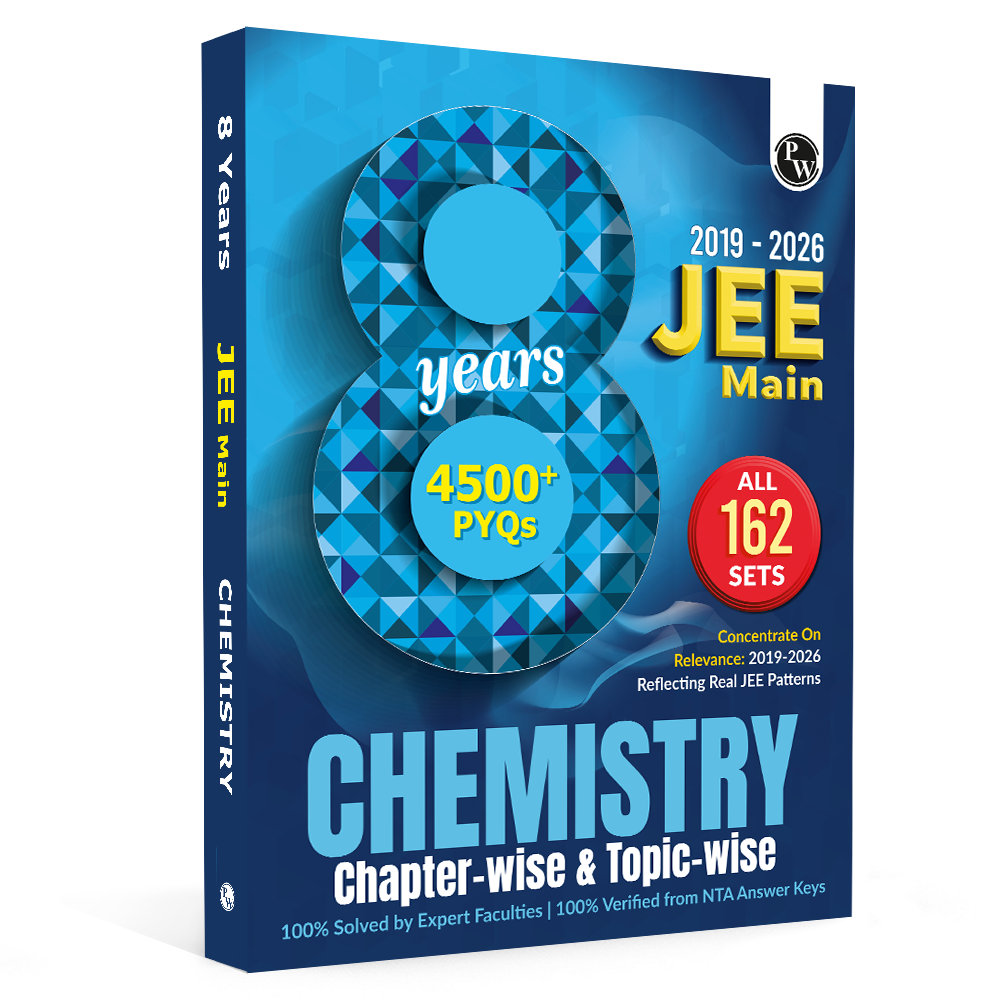
How 8 Years JEE Chemistry PYQ Book Helps You Master Mains-Level Questions
Sitting in a mid-term classroom while looking at a massive stack of unfinished textbooks can feel completely overwhelming. You might have memorised the periodic table trends and written down every single organic reaction mechanism in your notebook, but a distinct anxiety remains.
The solution does not lie in reading more theoretical summaries or highlighted notes. Instead, you must bridge the gap between knowing a chemical property and applying it under strict exam conditions by using real JEE Main PYQ chemistry resources to build core exam confidence.
What Is JEE PYQ Chemistry?
Understanding the precise nature of actual exam problems is the first step toward strategic clarity. The landscape of engineering entrance tests has transformed significantly, shifting from pure rote memorisation to deep conceptual evaluation.
When we look at JEE PYQ chemistry archives, we are looking at real, authenticated questions that have appeared across multiple shifts from recent years.
-
Physical Chemistry: This area evaluates your numerical calculation capabilities, understanding of chemical thermodynamics, equilibrium states, and electrochemistry. It requires absolute mathematical precision.
-
Organic Chemistry: This domain tests multi-step reaction mechanisms, identification of intermediate compounds, and named reactions. It demands logical progression rather than blind guessing.
-
Inorganic Chemistry: This section analyses periodic trends, chemical bonding, coordination compounds, and structural properties. It values systematic reasoning over simple memorisation.
Why Is JEE PYQ Chemistry Important for JEE Main?
Relying solely on theoretical books during your mid-term preparation creates a false sense of security. You might feel you understand a concept perfectly until a tricky multiple-choice or numerical-value problem challenges that belief.
Integrating comprehensive 8 years JEE Main PYQs into your study schedule changes this entirely.
|
Preparation Parameter |
Standard Textbook Questions |
Authentic Solved Archives (2019–2026) |
|
Difficulty Standard |
Often theoretical or overly simplistic. |
Reflects true, complex exam conditions. |
|
Question Format |
Traditional single-option multiple-choice questions. |
Dynamic blend of MCQs and Numerical Value Questions. |
|
Trend Relevance |
May contain outdated syllabus topics. |
Aligned completely with recent year-on-year shifts. |
|
Solution Depth |
Focuses mostly on the final numerical answer. |
Offers comprehensive step-by-step logical verification. |
How JEE PYQ Chemistry Helps in Problem-Solving Skills?
True mastery over science problems requires a balance of speed, structural logic, and quick concept recall. Solving authentic papers helps develop this agility by challenging your mind to switch between unrelated topics instantly.
When you dive into actual chemistry mains questions, you develop key skills:
-
Pattern Recognition: You quickly learn to identify the exact chemical principle hidden within an extended question description.
-
Data Filtration: You become adept at separating useful numerical variables from irrelevant background context.
-
Time Allocation: You learn to solve descriptive inorganic questions in under forty seconds, leaving more time for complex physical chemistry calculations.
What are the High-Weightage Chapters in JEE PYQ Chemistry?
Not all topics carry equal weight in the final score distribution. A strategic student uses data-driven insights to figure out where their efforts will yield the highest returns. Analysing recent paper distributions highlights several areas that require deep, focused attention.
By reviewing chapterwise chemistry PYQs, you can easily identify these essential high-yield sections:
1. Coordination Compounds and Bonding
This area forms the backbone of the inorganic section. Questions regularly focus on crystal field splitting energy, magnetic moments, isomerism, and hybridization states.
2. Chemical and Ionic Equilibrium
A major source of numerical entry problems. Examiners love testing the common ion effect, pH calculations of buffer solutions, and solubility products.
3. Aldehydes, Ketones, and Carboxylic Acids
This organic segment is highly popular for multi-step conversions. You must focus on named reactions like Aldol condensation, Cannizzaro reactions, and Ozonolysis mechanisms.
4. Electrochemistry and Kinetics
These chapters regularly feature calculation-heavy problems. Mastering the Nernst equation, Faraday's laws, and first-order reaction graphs is crucial here.
How to Use JEE PYQ Chemistry?
Simply reading through questions and solutions like a storybook will not yield results. To truly benefit from this JEE previous year papers, you need an active, disciplined strategy.
Here is a step-by-step approach to make your study sessions highly productive:
-
Isolate the Topic: Finish your initial mid-term theory notes for a specific chapter before looking at the archives.
-
Set a Strict Countdown: Allocate exactly two minutes per question. Turn off your mobile phone and remove all external distractions.
-
Solve Without Assistance: Try your absolute best to reach the final numerical answer without looking at the hints or hidden steps.
-
Evaluate the Steps: Review the verified solution methods even if your final answer was correct, as there might be a quicker way to solve it.
-
Maintain an Error Log: Document the specific reason behind every single mistake, noting whether it was a conceptual error or a simple calculation slip.
Study Plan for Using the JEE PYQ Chemistry
Balancing daily school classes, coaching deadlines, and self-study requires a highly structured weekly routine. Below is a practical, balanced six-day study plan designed for your mid-term JEE revision phases.
Phase 1: Topic Dedication (Days 1–2)
Focus entirely on reviewing your theoretical concepts, basic formulas, and essential reaction mechanisms. Make sure your fundamental understanding is solid before moving forward.
Phase 2: Targeted Practice (Days 3–4)
Dive directly into your compiled archive to solve questions in a structured, chapter-by-chapter manner. Aim for a balanced mix of thirty multiple-choice questions and fifteen numerical-value problems each day.
Phase 3: Analysis and Polish (Days 5–6)
Dedicate these sessions to evaluating your performance. Review the error log, re-solve every problem you got wrong, and use this targeted work as your ultimate revision tool.
Tips to Score Better with JEE PYQ Chemistry
Succeeding in competitive exams takes more than just hard work; it requires tactical execution. Here are a few vital tips to help you get the most out of your daily chemistry practice sessions:
-
Prioritise Quality Explanations: Do not settle for JEE books that only provide the final answer key. Work with detailed, error-free step breakdowns that clarify the exact logic behind each step.
-
Emphasise Recent Trends: Start with the papers from recent years and work your way backward. The style of questions asked over the last few terms is the most accurate indicator of your upcoming paper.
-
Re-attempt Difficult Problems: Mark challenging questions with a red pen and revisit them exactly two weeks later to ensure you have truly mastered the concept.
-
Track Your Speed: Use a stopwatch during your sessions to monitor how your average solving speed improves over time.
Common Mistakes to Avoid While Solving JEE PYQ Chemistry
Many students spend hours working through old papers but see little improvement in their mock scores because of poor study habits. Being aware of these common pitfalls can save you months of wasted effort.
-
Reading Solutions Too Quickly
When stuck on a tough question, looking at the answer within seconds deprives your brain of the struggle required to build critical thinking skills. Spend at least five to ten minutes exploring different approaches before checking the solution.
-
Ignoring Numerical Entry Constraints
Many marks are lost not due to poor chemistry concepts, but because students fail to round off their answers to the nearest integer or decimal place as specified. Always read the instructions carefully.
Cherry-Picking Chapters
Skipping complex areas like ionic equilibrium or organic mechanisms while over-practicing easier chapters creates dangerous weak spots. A high score requires well-rounded preparation across all areas.
Read More: JEE Mains PYQs - 8 Years Physics, Chemistry & Maths Strategy
JEE PYQ Chemistry FAQs
How many years of past papers should I solve for the exam?
Focusing on 8 years JEE PYQs gives you the most accurate reflection of the current computer-based exam layout, modern difficulty levels, and recent question types.
Why should I choose a dedicated JEE chemistry PYQ book?
A dedicated JEE chemistry PYQ book organizes questions in a chapter-wise and topic-wise manner, providing error-free solutions that help you understand the exact step breakdowns.
Will practicing chemistry mains questions improve my speed?
Yes, regularly practicing timed chemistry mains questions helps build pattern recognition and quick concept recall, allowing you to complete descriptive sections faster.