How to Use a JEE Advanced PYQ Book in Class 12
Class 12 students often find managing Class 12 boards and class 12 JEE advanced preparation stressful. Attempting questions without a structured plan leads to confusion and poor retention. Applying past questions without topic isolation makes tracking strengths and weaknesses difficult. Solving JEE Advanced level problems demands clear conceptual depth, speed, and precision.
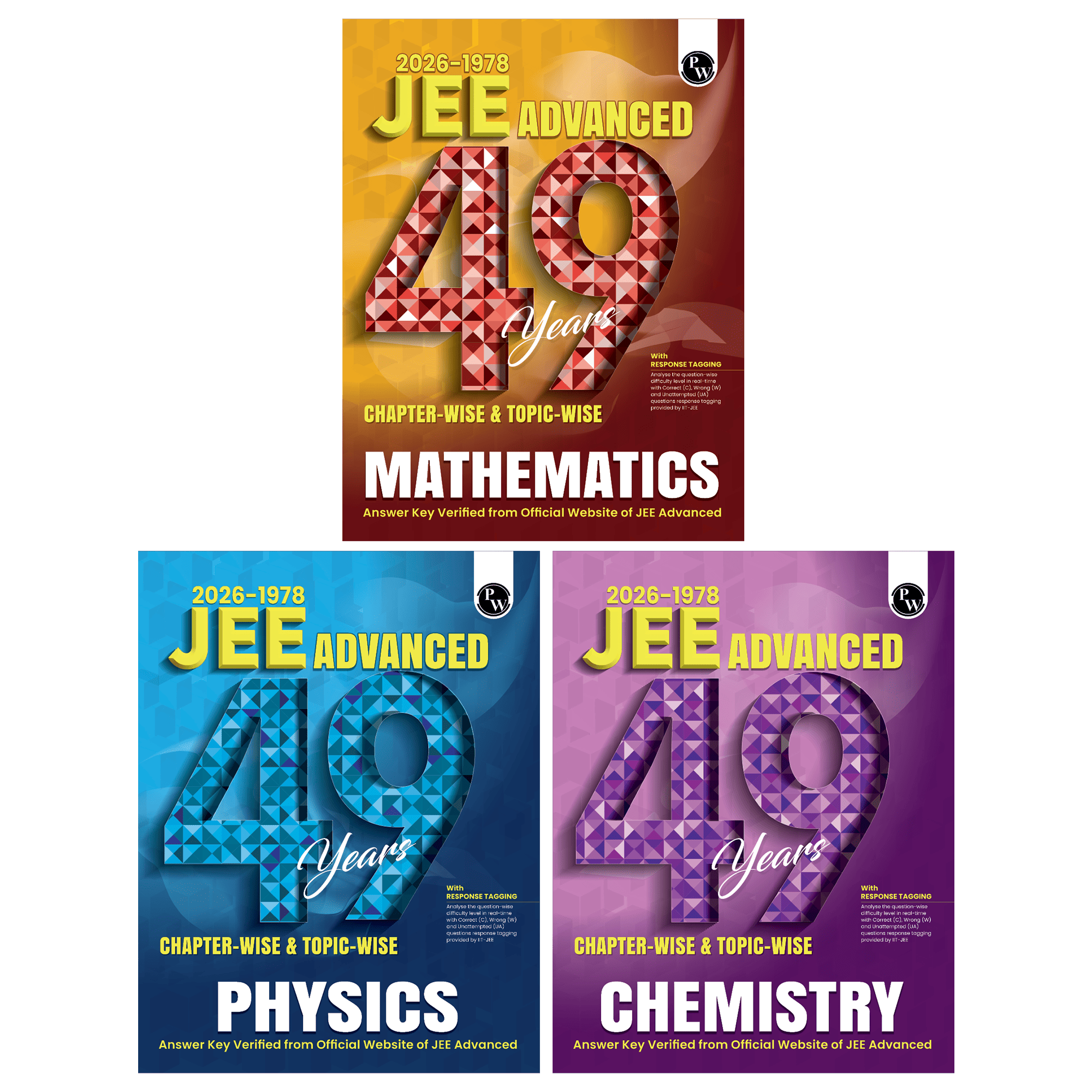
A JEE Advanced PYQ Book resolves these issues by organizing 49 years of questions from 1978 to 2026 into chapterwise and topicwise solved papers. Incorporating a dedicated JEE advanced practice book into daily routines builds problem-solving discipline, builds confidence, and ensures systematic coverage for JEE advanced preparation.
What is the JEE Advanced PYQ Book?
A PYQ Book is a useful practice and revision resource for students preparing for the JEE Advanced exam. It provides previous year questions in chapterwise and topicwise formats, making it easier to practice after completing each topic. Detailed solutions help students understand mistakes and improve their problem-solving skills.
Regular practice with PYQs also helps students understand exam patterns, question types, difficulty levels, and important topics. Using a PYQ Book along with regular study and mock tests can improve accuracy, speed, and confidence for the examination.
Why is a JEE Advanced PYQ Book Important?
Using a specialized PYQ Book provides Class 12 aspirants with a direct look into actual exam expectations. JEE Advanced tests deep conceptual clarity rather than simple memory work. Practicing actual past questions ensures students adapt early to complex problem formats.
-
Understanding Exam Patterns: Analyzing JEE advanced previous year questions reveals how concepts combine across multi-correct, numerical, and matching-type questions.
-
Targeted Revision: Chapterwise and topicwise arrangements keep revision focused on specific Class 12 syllabus sections without overwhelming students.
-
Accuracy Enhancement: Working through detailed step-by-step solutions helps align thought processes with official answer keys.
-
Trend Identification: Reviewing recent exam trends helps identify high-weightage topics across Physics, Chemistry, and Mathematics.
Features of JEE Advanced PYQ Book
Prepare for JEE Advanced with a focused collection of previous year questions, detailed solutions, and useful exam analysis. The JEE books helps students practise chapter-wise, understand paper trends, and improve their overall preparation strategy.
49 Years of JEE Advanced PYQs (1978–2026): Practice a vast collection of IIT JEE Advanced Previous Year Questions covering Physics, Chemistry, and Mathematics. Questions from multiple years help students understand different concepts, question styles, and difficulty levels seen in the examination.
Chapterwise and Topicwise Practice: Find questions arranged by chapters and topics for more focused preparation. This makes it easier to practice a topic after completing it, revise important concepts, and track areas that need more attention across the JEE Advanced syllabus.
Detailed Step-by-Step Solutions: Understand how each question can be solved with clear and detailed explanations. Solutions aligned with official JEE Advanced answer keys help students check their approach, understand mistakes, and develop better problem-solving methods.
Last 7 Years’ Paper Analysis: Get useful insights from the previous 7 years of JEE Advanced papers. Study question trends, subject-wise weightage, difficulty levels, and changes in the exam pattern to make your preparation more focused and planned.
Performance Insights from 14 Papers: Review data from the last 14 papers, including correct, incorrect, unattempted, and partially correct responses. These insights can help students understand question-solving patterns and improve their attempt strategy for the actual examination.
Trend-Based Preparation: Identify important chapters, frequently tested concepts, and high-weightage areas by studying previous paper trends. This helps students prioritize topics and make their IIT JEE Advanced preparation more effective.
Complete Revision and Practice Support: Use the book throughout your preparation for practice, revision, self-assessment, and exam readiness. Solving JEE previous year questions regularly can strengthen concepts, improve speed and accuracy, and build confidence for the IIT JEE Advanced examination.
What Should be the Strategy to Solve a JEE Advanced PYQ Book?
Integrating a PYQ Book into routine Class 12 studies demands a structured approach. Solving questions at the wrong stage creates unnecessary stress and lowers accuracy.
-
Complete Chapter Theory First: Master classroom notes, standard textbook concepts, and basic numerical exercises before touching JEE advanced previous year questions.
-
Solve Topicwise Questions: Open your JEE advanced practice book to the specific topic completed in class. Solve fundamental single-choice questions first to verify basics.
-
Attempt Complex Question Types: Progress to multiple-correct, matrix-match, and integer-type questions to build higher-order problem-solving skills.
-
Cross-Check Solutions: Check your answers against step-by-step solutions aligned with official answer keys to correct flawed reasoning.
-
Mark Difficult Questions: Star or highlight questions that required multiple attempts for seamless end-of-year review.
How to Select the Right JEE Advanced PYQ Book?
Choosing an ideal JEE advanced practice book determines how effectively a student utilizes daily study hours. A comprehensive book set must offer structured content across Physics, Chemistry, and Mathematics.
-
Year Range Coverage: Ensure the PYQ Book covers extensive historical papers, such as 49 years of past questions ranging from 1978 to 2026.
-
Topicwise Segmentation: Look for resources that break chapters down into specific sub-topics for immediate application after classroom learning.
-
Detailed Explanations: Solutions must be complete and mapped accurately to official answer keys to eliminate ambiguity.
-
Performance Insights: Books providing data from recent papers (like performance stats on correct, incorrect, unattempted, and partially correct responses) help benchmark accuracy.
|
Feature |
Importance in Class 12 Preparation |
Benefit to Students |
|
49 Years Coverage (1978–2026) |
Comprehensive collection of real exam items |
Exposes students to classical and modern question styles |
|
Chapterwise & Topicwise Layout |
Structured mapping to Class 12 syllabus |
Allows instant practice right after learning a topic |
|
Detailed Solutions |
Step-by-step explanations |
Clarifies fundamental concepts and corrects logical errors |
|
Trend Analysis Charts |
Identifies subject-wise weightage |
Helps prioritize critical chapters during final revision |
|
14-Paper Performance Data |
Analytics on attempt dynamics |
Teaches risk management and partial marking strategy |
Check Out: JEE Revision Books
JEE Advanced PYQ Book Trends and Performance Data
Effective class 12 JEE advanced preparation involves examining performance trends alongside basic practice. Modern compilation books contain detailed analytics to guide study plans.
Leveraging Last 7 Years Paper Analysis
Exam patterns evolve periodically. Reviewing the last 7 years of solved papers helps students recognize current questioning styles, subject-wise difficulty levels, and emerging formats. Recognizing shift trends prevents wasting time on obsolete question styles while keeping preparation aligned with current standards.
Utilizing 14-Paper Performance Statistics
Performance data across recent test papers highlights common student behavior on specific question types. Reviewing statistics regarding correct, incorrect, unattempted, and partially correct responses helps students gauge problem difficulty accurately. Knowing when to attempt or skip a complex question protects overall scores under strict exam marking schemes.
Subject-Wise Tips for Solving a JEE Advanced PYQ Book
Each subject in the JEE Advanced curriculum demands a distinct analytical approach when working through past paper collections.
Physics
-
Focus on multi-concept questions where mechanics, electrodynamics, or thermodynamics intersect.
-
Work through step-by-step derivations in the solution section to understand underlying principles.
-
Solve numerical-response questions carefully to minimize calculation errors.
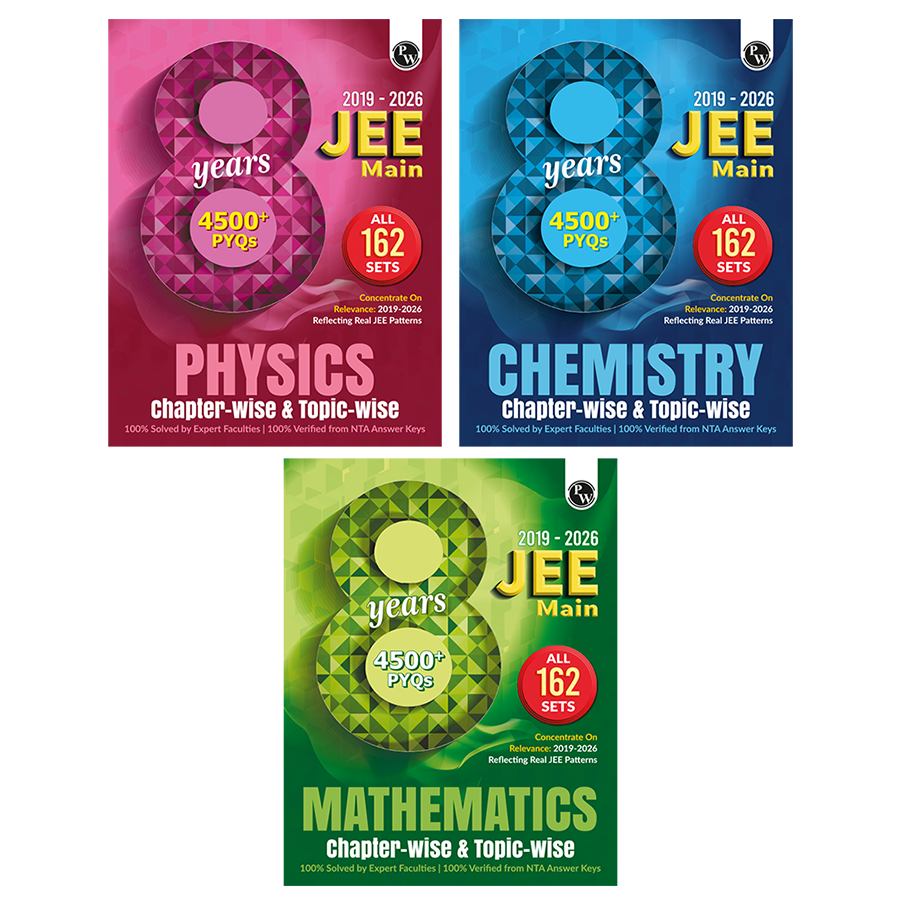
Build confidence in JEE Advanced Physics with the JEE Advanced Physics PYQ 2027 book. It helps students practise authentic exam-level questions, analyse recurring concepts, understand question patterns, and strengthen the multi-step problem-solving skills needed to tackle challenging Physics problems.
Chemistry
-
Physical Chemistry: Practice numerical calculations and verify log/exponential steps using detailed solutions.
-
Organic Chemistry: Trace reaction mechanisms step-by-step rather than memorizing final products.
-
Inorganic Chemistry: Analyze trend-based questions to identify recurring exception patterns in block elements and coordination compounds.
Strengthen your Chemistry preparation with the JEE Advanced Chemistry PYQ 2027 book. Practising previous year questions helps you understand the exam pattern, identify recurring concepts across Physical, Organic, and Inorganic Chemistry, improve accuracy, and develop better problem-solving skills for JEE Advanced.
Mathematics
-
Select multi-correct and calculus-based problems to develop algebraic speed and geometric visualization.
-
Study alternative solution methods provided in the reference explanations to shorten solving times.
-
Track time spent per question to build speed without sacrificing accuracy.
Prepare for the challenging Mathematics section with the JEE Advanced Maths PYQ 2027 book. Regularly solving previous year questions helps you understand recurring concepts, identify important question patterns, strengthen logical thinking, and improve speed and accuracy for the JEE Advanced examination.
Common Mistakes to Avoid When Using a JEE Advanced PYQ Book
Many aspirants misuse their PYQ Book, turning a valuable learning tool into a source of frustration. Avoiding common pitfalls ensures steady academic progress.
-
Reading Solutions Prematurely: Looking at the answer key immediately reduces analytical thinking. Give every question at least two honest attempts before reading explanations.
-
Ignoring Class 11 Topics: Class 12 students often neglect Class 11 chapters. Dedicate weekly revision slots to solve Class 11 questions from your comprehensive JEE advanced practice book.
-
Focusing Only on Simple Questions: Skipping complex multi-correct or paragraph-based items limits preparation scope. Focus on challenging formats to build resilience.
-
Not Re-attempting Errors: Unchecked mistakes tend to repeat. Maintain an error notebook alongside your JEE advanced practice book to document missed concepts.
Read More: How Much Score Is Good in JEE Advanced?
JEE Advanced PYQ Book FAQs
When should Class 12 students start using a JEE Advanced PYQ Book?
Class 12 students should start using a PYQ Book immediately after finishing a chapter or topic in class to reinforce concepts through real exam questions.
How many years of JEE advanced previous year questions are necessary for preparation?
Practicing around 40 to 49 years of JEE advanced previous year questions (from 1978 to 2026) provides complete exposure to basic and modern question trends.
Should I solve Class 11 topics from the PYQ Book during Class 12?
Yes, balancing Class 11 revision with Class 12 topics ensures holistic coverage, as JEE Advanced papers combine concepts from both years.
How does chapterwise and topicwise organization help in JEE advanced preparation?
Chapterwise and topicwise layout breaks down vast syllabus into manageable units, enabling targeted practice and preventing students from feeling overwhelmed.
Can detailed solutions in a JEE advanced practice book improve accuracy?
Yes, studying detailed solutions aligned with official answer keys highlights logical errors, teaches efficient methods, and builds conceptual precision.