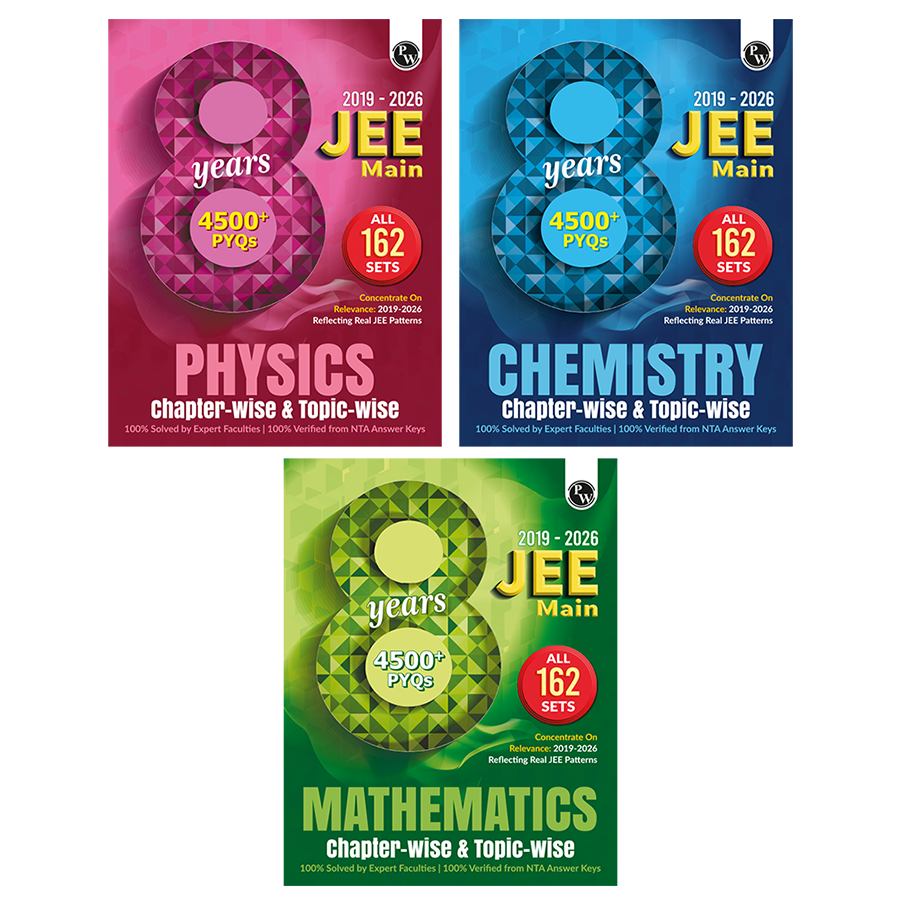
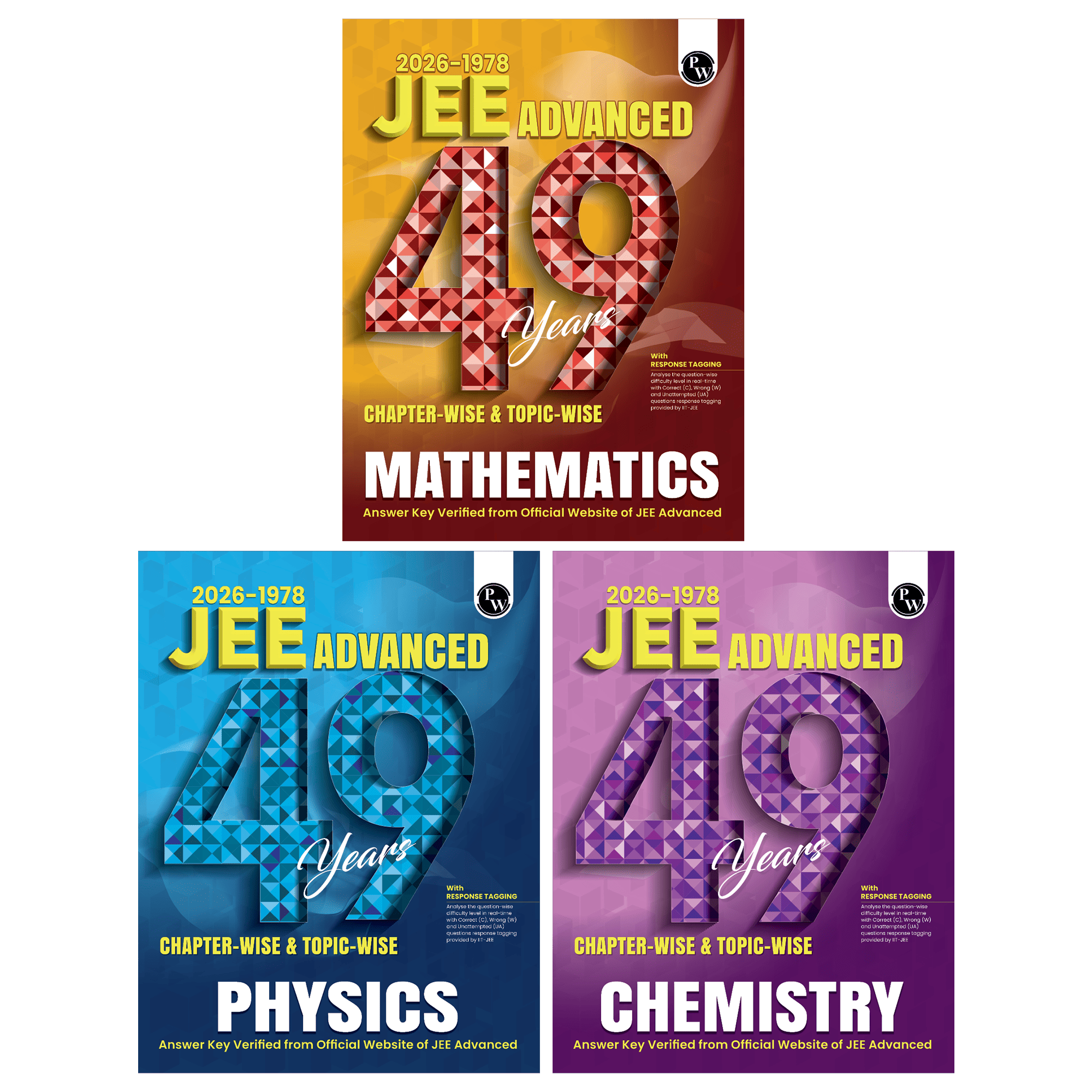
How to Use JEE PYQ Books to Identify NTA's Question-Setting Patterns
Are you finding it tough to predict how the National Testing Agency (NTA) will frame questions for your mid-term preparation? Many students struggle to decode the mind of the paper-setter, often wasting hours on less relevant topics.
By systematically analysing a JEE PYQ book, you can uncover exactly how NTA structures its exams, maps out concepts, and tests your analytical thinking.
What Are NTA's Question-Setting Patterns?
Understanding NTA's pattern means recognizing how the exam body balances the question paper across different difficulty levels and formats. NTA does not just test rote memorisation; it designs papers to evaluate deep conceptual clarity and time management.
When you study past trends, you will see a deliberate mix of straightforward questions, formula-based problems, and complex multi-concept questions. The exam patterns show a shift towards testing application skills, making it critical to know which areas require deep derivation skills and which need quick calculation shortcuts.
Importance of JEE PYQ
Using a dedicated JEE PYQ collection is the single most reliable method to understand the real exam environment. Sample papers can sometimes be unrealistically difficult or simple, but actual past papers show the exact standard set by NTA.
-
Real Exam Physics: Past papers reveal whether questions lean towards theoretical concepts or numerical problems.
-
Balanced Evaluation: You see exactly how the board distributes marks between challenging and direct questions.
-
Language Familiarity: NTA has a specific way of phrasing questions; practicing these helps you avoid misinterpreting questions on exam day.
How JEE PYQ Shows Important Chapters?
Not all chapters carry equal weight in the final exam. A proper review of a JEE PYQ book helps you categorise your syllabus so you can focus heavily on high-yield topics during your mid-term revision.
|
High-Weightage Focus |
Medium-Weightage Focus |
Strategic Practice |
|
Focus on chapters with 3-4 questions every year. |
Target areas with 1-2 consistent questions. |
Track formulas for quick-scoring topics. |
By sorting questions chapter-wise, you can instantly see which units dominate the papers over a multi-year period. This ensures you do not spend too much time on chapters that rarely appear.
How JEE PYQ Helps Find Repeated Topics?
While NTA rarely repeats an exact question word-for-word, the underlying concepts and question frameworks repeat constantly. Identifying these recurring sub-topics saves critical preparation time.
-
Concept Mapping: Notice how specific sub-topics, like definite integration properties or thermodynamics laws, appear every year.
-
Data Alterations: NTA frequently uses previous questions but changes the numerical values or asks you to find a different variable using the same formula.
-
Pattern Mirroring: Working through a JEE Mains previous year question paper helps you learn the exact steps required to solve these standard problem types quickly.
How JEE PYQ Helps to Understand Question Difficulty?
Analysing past trends allows you to gauge the depth of knowledge required for each topic. It keeps you from over-complicating simple concepts or under-preparing for complex ones.
-
JEE Main vs. Advanced: A JEE Main PYQ often tests direct formula applications and speed, whereas a JEE Advanced PYQ demands deep structural understanding and multi-step reasoning.
-
Section-Wise Weight: See how section difficulty varies between Multiple Choice Questions (MCQs) and Numerical Value Questions.
-
Step-by-Step Breakdown: High-quality past paper books offer detailed, expert-verified solutions that show you how to break down highly complex problems into clear, logical steps.
How JEE PYQ Helps in Understanding Question Types?
NTA uses a wide variety of question formats to test different engineering aptitudes. Reviewing past papers helps you build specific strategies for each format you will encounter.
-
Single Correct MCQs: These test your foundational speed and accuracy under time pressure.
-
Comprehension-Based Paragraphs: Found heavily in a JEE Advanced previous year question paper, these require strong analytical skills to extract data from a passage.
-
Numerical and Integer Values: These test your precise calculation skills, as there are no options to help you guess or eliminate answers.
-
Matrix Matching: These check your comprehensive knowledge across multiple sub-topics simultaneously.
How to Use JEE PYQ?
To get the most out of your preparation, you must use your past paper books in a structured, deliberate manner rather than solving questions randomly.
-
Start Immediately After Each Chapter: Once you finish learning a topic, open your chapter-wise book and solve the past questions to check your understanding.
-
Utilise Chapter-Wise Compilations: Focus on one specific unit at a time to strengthen your weak areas before moving on.
-
Attempt Timed Full-Length Papers: Once you cover a major portion of the syllabus, sit down with a full JEE previous year paper and solve it within a strict three-hour limit.
-
Analyse Your Mistakes Thoroughly: Do not just check your final score; look at the step-by-step solutions to find faster methods and correct your conceptual errors.
-
Use Digital PDFs for Quick Revision: Keep a JEE previous year papers pdf on your phone or tablet so you can quickly review questions and formulas when travelling.
Common Mistakes to Avoid While Using JEE PYQ
Many students look at past papers but fail to improve their scores because they use them incorrectly. Along with the right JEE Books, students should use previous year questions strategically instead of treating them as a one-time activity. Avoid these common traps:
-
Reading the Solutions Too Quickly: Never look at the answer keys immediately. Give yourself at least five to ten minutes to solve a difficult problem on your own before checking the solution.
-
Ignoring the Latest Trends: Make sure your materials include recent papers, such as a compiled JEE previous year question paper containing the latest solved papers, to stay aligned with current NTA formatting.
-
Failing to Re-attempt Wrong Answers: If you get a question wrong, mark it down and try solving it again a few days later to ensure you have genuinely mastered the concept.
-
Rushing Without Timing Yourself: Solving questions without a stopwatch builds a false sense of security; always track how many minutes you take per problem.
Read More: JEE Mains Maths PYQ with Solutions PDF
JEE Previous Year Papers FAQs
Are the solutions provided in these past paper books fully verified?
Yes, all solutions provided in these comprehensive past paper books are thoroughly solved and verified step-by-step by subject matter experts to ensure complete conceptual clarity.
Can I access past paper resources in a digital format for mobile study?
Yes, compiled options are available as a JEE previous year papers PDF so you can easily revise questions, check formulas, and study anywhere using your phone, tablet, or laptop.
Do these practice books contain questions for both stages of the engineering exam?
Most advanced series offer dedicated combinations covering both Main and Advanced questions, allowing you to prepare seamlessly for both stages using real exam data.
When is the ideal time to start solving full-length past papers?
You should start solving full-length papers in a timed environment after you have completed a major portion of your syllabus, helping you build realistic time-management skills.