How to Improve JEE Maths Score from 60 to 90+

Mathematics demands absolute precision and a distinct cognitive shift from studying theory to solving problems under strict time limits.
Instead of feeling overwhelmed by the vast syllabus, treat your current performance as a stable baseline. Practising JEE Previous Year Papers can help you understand question patterns, improve problem-solving speed, and identify weak areas. This guide breaks down actionable steps to improve your JEE Maths score without burning out and work towards the 90-plus mark range.
What a JEE Maths Score Represents
A score of 60 indicates that you possess a functional grasp of fundamental formulas and standard problem types, but you are likely losing crucial marks on conceptual depth or speed. At this stage, your preparation lacks the rigorous edge required to tackle multi-concept problems or lengthy algebraic manipulations smoothly.
Moving past this threshold involves identifying whether your lost points stem from conceptual gaps, silly calculation errors, or simply running out of time before attempting easier questions.
-
Evaluate your last three mock test papers to classify every lost mark into calculation slips, conceptual blanks, or skipped questions.
-
Recognize that a 60-mark baseline means your basics are clear; you do not need to relearn the entire syllabus from scratch.
-
Focus on converting your partially solved questions into correct answers by tightening your algebraic and arithmetic execution.
-
Leverage structured JEE Books to revisit standard problem patterns and bridge minor conceptual gaps efficiently.
How to Analyse Your JEE Maths Score at 60 Marks With Precision
Detailed self-evaluation is the single most powerful tool for breaking past a stagnant score and unlocking higher potential. Without looking closely at why you missed specific questions, you will keep repeating the same tactical errors during actual testing sessions. True analysis goes beyond counting right and wrong answers; it maps out your behavioral patterns, emotional control, and time allocation under pressure. By dissecting your performance question by question, you uncover hidden leaks in your preparation that can be patched within weeks.
-
Maintain a dedicated error log notebook to track every mistake made during sectional and full-length mock examinations.
-
Categorize errors into silly mistakes, conceptual misunderstandings, and time-crunch omissions to reveal clear behavioral patterns.
-
Analyze the time spent on questions you eventually got wrong to spot instances where ego kept you stuck on dead-end problems.
-
Utilize structured JEE Notes to cross-check formulas and plug the specific conceptual leaks identified during your paper analysis.
Which Maths Topics Can Help Improve Your JEE Maths Score
Strategic topic selection is vital because not all chapters carry equal weight or demand the same investment of time and energy. To improve your score efficiently, prioritise scoring areas that feature repetitive question patterns and straightforward formula applications.
Practising JEE Main Maths PYQ questions can help you identify frequently tested concepts and become familiar with different question types. High-yield topics can help you secure marks during the exam, leaving more time for challenging calculus or coordinate geometry problems. Balancing high-weightage chapters with your strengths ensures more effective use of your daily study hours.
-
Prioritize scoring units such as Matrices and Determinants, Sequence and Series, and Vector Algebra for reliable, formula-driven questions.
-
Strengthen your grasp of Statistics and Mathematical Reasoning, as these chapters offer guaranteed questions with minimal conceptual overhead.
-
Dedicate focused practice slots to Integral Calculus and Differential Equations, targeting standard integration types frequently tested.
How to Use PYQs and Mock Tests to Increase Your JEE Maths Score
Past papers and simulated exams form the backbone of any serious attempt to elevate performance from intermediate to advanced levels. Solving past archives exposes you directly to the testing agency's mindset, recurring conceptual themes, and the exact phrasing of tricky statements.
When paired with timed practice tests, this habit builds the mental endurance required to maintain clarity and focus throughout a grueling three-hour window. Treating every mock test like the actual exam transforms nervous energy into focused execution.
-
Solve chapter-wise archives featuring 8 Years JEE Main PYQ collections to understand question evolution and recurring patterns.
-
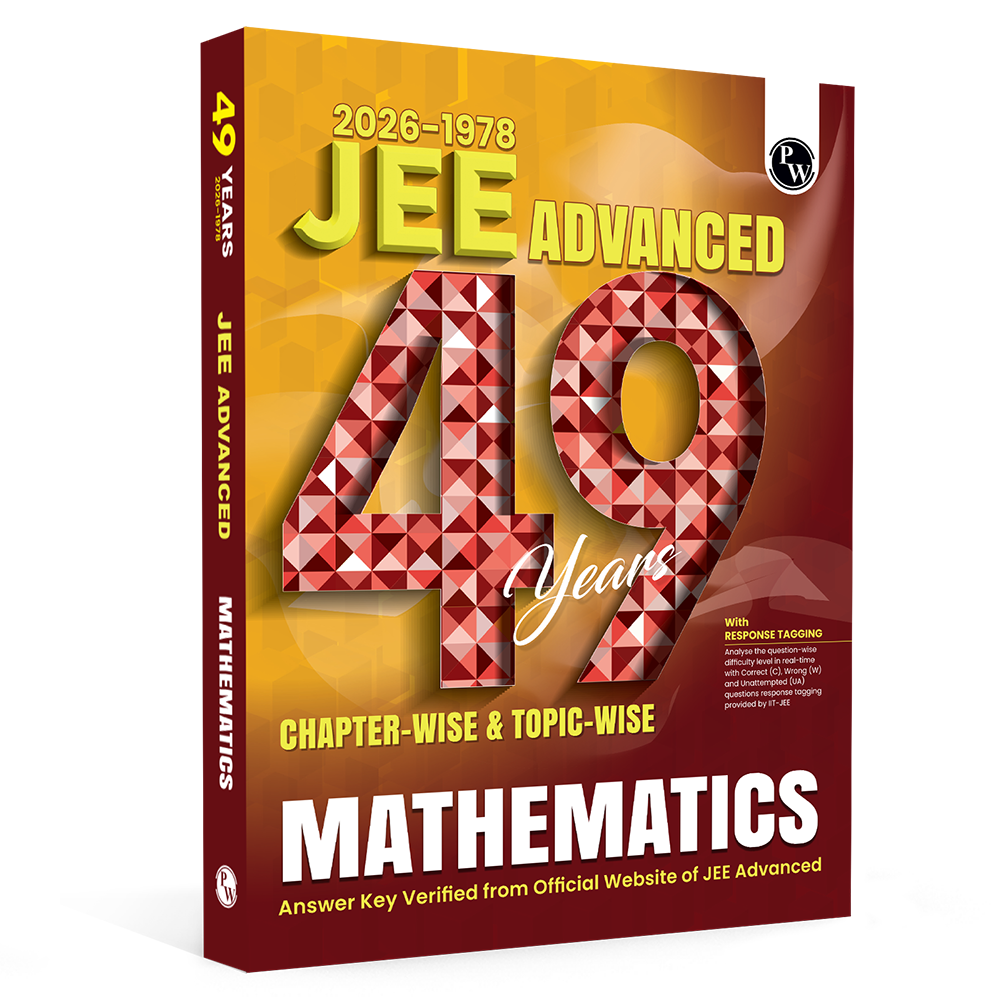
Incorporate comprehensive 49 Years JEE Advanced PYQ practice sets to stretch your analytical boundaries and multi-concept problem-solving.
-
Attempt full-length mock tests under strict exam-day environmental conditions to build mental stamina and time-allocation instincts.
-
Simulate exam pressure by strictly adhering to a 60-minute cap when practicing individual mathematics sections during your revision phase.
You can refer to the official JEE (Main) website for the latest examination-related information and official updates.
How to Improve Speed and Accuracy for a Better JEE Maths Score
Speed in mathematics is never about rushing through calculations; it is the natural byproduct of crystal-clear concepts and familiarity with shortcuts. When your foundational understanding is rock solid, you spend less time hesitating and more time executing clean mathematical steps.
-
Practice mental calculation drills for squares, cubes, standard factorials, and trigonometric values to cut down basic arithmetic time.
-
Adopt structured layout habits on your rough sheets to prevent messy handwriting errors during lengthy algebraic or coordinate geometry steps.
-
Learn to recognize alternative approaches, such as substitution methods or option elimination, to bypass tedious traditional derivations.
-
Track your accuracy percentage weekly, ensuring that your net positive score rises steadily by minimizing negative marking from wild guesses.
Study Strategy to Raise Your JEE Maths Score from 60 to 90 Plus
Transitioning from a moderate score to an elite tier requires a disciplined, cyclical approach to daily study planning and revision. Randomly picking favorite chapters will no longer yield results; your routine must reflect a calculated balance between learning new concepts and reinforcing old ones.
-
Allocate dedicated daily morning slots to mathematics when your cognitive freshness and problem-solving energy peak.
-
Alternate heavy problem-solving days with formula revision sessions to prevent burnout and ensure long-term memory retention.
-
Revise difficult theorems and shortcut formulas weekly using concise flashcards or self-prepared formula handbooks.
Mistakes That Can Lower Your JEE Maths Score and How to Avoid Them
Even brilliant students frequently stumble due to subtle behavioral traps and poor tactical decisions during their preparation or exams. JEE Class 12 Handwritten Notes can help students revise important concepts, strengthen their understanding, and avoid common mistakes. Recognizing these pitfalls early protects you from self-sabotage and preserves hard-earned marks that would otherwise slip away. Avoiding common procedural errors ensures that your actual performance matches your true capability on exam day. Combining effective revision strategies with well-organized handwritten notes helps students stay focused and confident during high-pressure problem-solving sessions.
-
Avoid clinging stubbornly to lengthy questions when you get stuck; learn the art of tactical abandonment to save time.
-
Do not neglect regular revision of earlier chapters while focusing heavily on new, complex topics in your schedule.
-
Refrain from relying solely on passive reading of solved examples instead of actively solving JEE maths questions with your own pen.
-
Never skip the thorough post-test analysis phase, as ignoring your mistakes guarantees you will repeat them in subsequent mocks.
Read More: JEE Important Question Maths With Solutions
JEE Maths Score FAQs
How can I practice effectively to improve my JEE maths score?
Consistent practice requires solving a balanced mix of standard textbook illustrations, chapter-wise archives, and timed sectional tests. Focus on understanding underlying principles rather than memorizing rigid solution templates, and always maintain an error log to track and resolve recurring mistakes during your JEE maths preparation.
Which resources should I use for comprehensive JEE maths practice?
Rely on trusted reference volumes, structured coaching modules, and curated problem banks that offer graded difficulty levels. Ensure your chosen material covers both basic formula application and multi-concept analytical problems to prepare you thoroughly for evolving exam standards during your JEE maths practice.
Is it possible to jump from 60 to 90 plus in a few months?
Yes, moving from 60 to 90 plus is entirely achievable through targeted chapter selection, rigorous past-year paper analysis, and strict time management. By plugging conceptual leaks in high-weightage topics and eliminating silly calculation errors, you can secure significant score jumps within a disciplined study window.
How many hours should I dedicate daily to boost my performance?
Dedicate at least two to three focused hours every day exclusively to mathematical problem-solving, formula revision, and conceptual analysis. Splitting this time between practicing fresh numerical problems and reviewing past mistakes yields the best results for sustainable score growth.