Is One PYQ Book Enough for JEE Advanced Preparation?
Preparing for the Indian Institutes of Technology requires rigorous planning and conceptual depth. Many candidates struggle to select the right study materials, often accumulating dozens of reference articles that lead to confusion and burnout. The primary challenge lies in deciding whether relying on a single dedicated JEE Advanced PYQ Book is sufficient to achieve a top rank.
Importance of JEE Advanced PYQ Book
Choosing a single, authoritative repository of past questions creates a focused study roadmap. When aspirants split their attention across numerous publications, they frequently encounter inconsistent solution styles, repetitive practice sets, and varying difficulty interpretations. A well-curated paper bank eliminates these inefficiencies by providing a unified learning structure tailored directly to the real exam standard.
Studying for competitive engineering entrance exams requires clear time management. Gathering too many reference guides often leads to passive reading rather than active problem solving.
-
Streamlined Study Path: A single comprehensive resource prevents students from jumping between different authors and losing track of completed topics.
-
Uniform Solution Quality: Solutions developed by experienced faculty maintain a consistent analytical methodology across Physics, Chemistry, and Mathematics.
-
Reduced Decision Fatigue: Aspirants spend less time deciding what to solve next and more time engaging with high-value questions.
-
Clear Progress Tracking: Maintaining one primary text makes it straightforward to mark completed chapters and highlight unattempted questions.
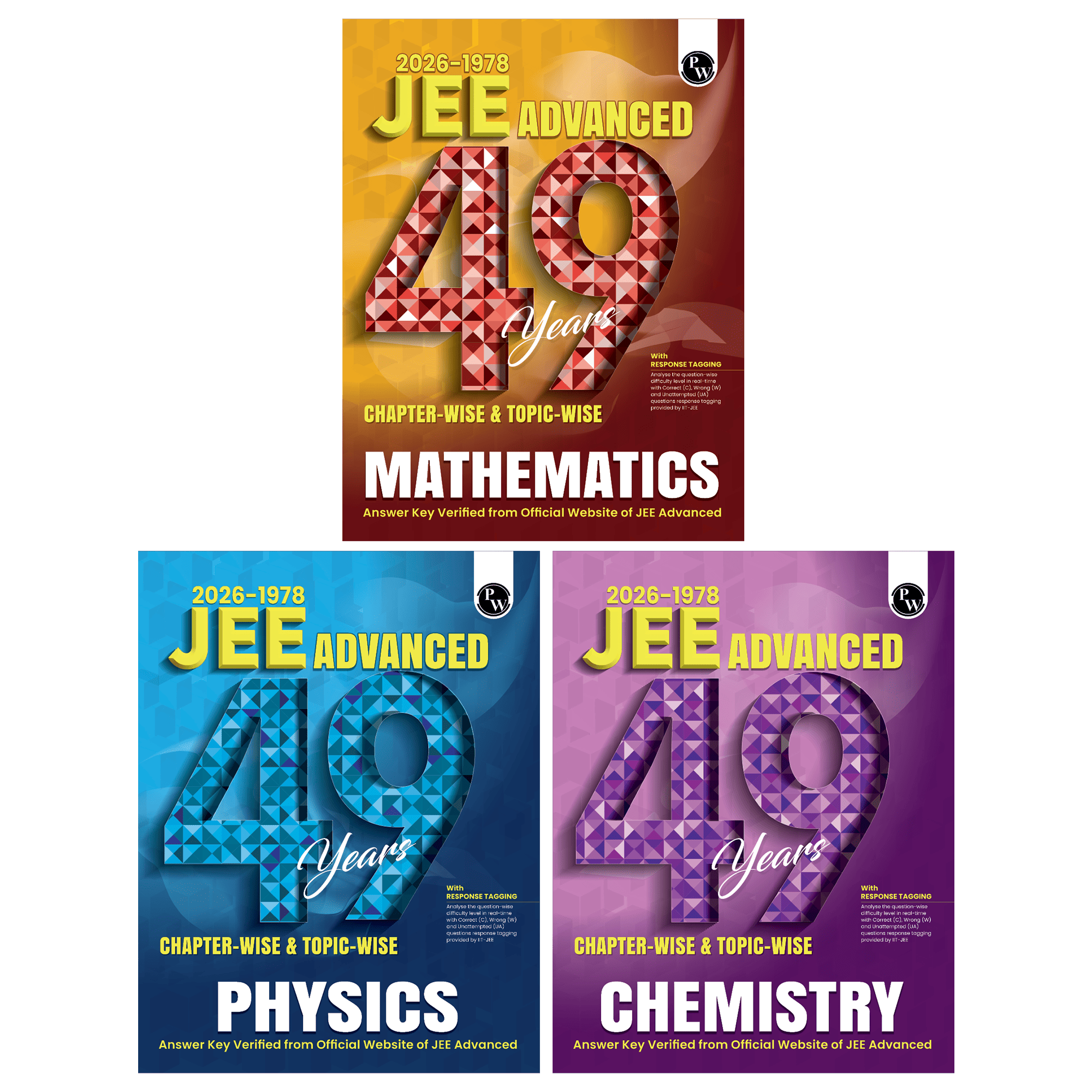
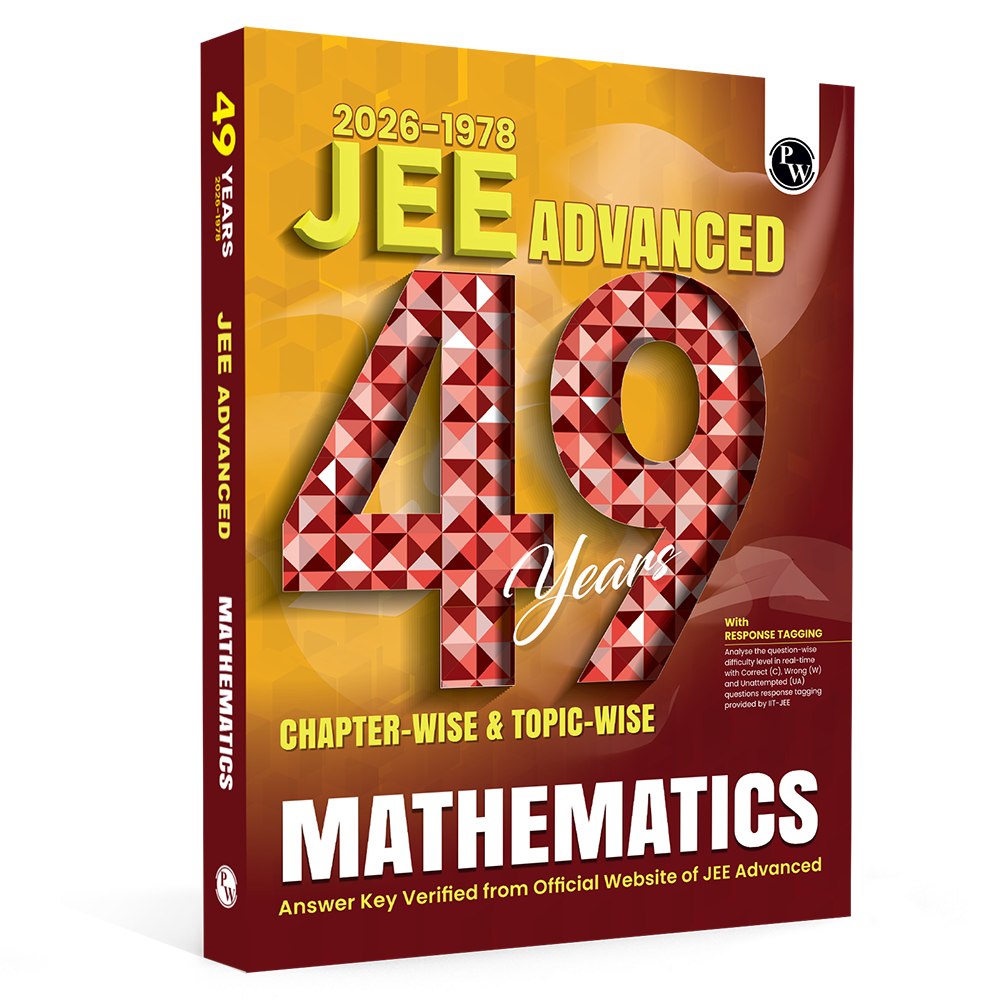
A robust set of past papers spans multiple decades of official testing. For instance, a 49-year collection spanning from 1978 to 2026 captures every historical phase of test development.
|
Feature |
Single Comprehensive PYQ Set |
Multiple Unorganized Sources |
|
Syllabus Span |
Complete coverage from 1978 to 2026 |
Incomplete or overlapping year ranges |
|
Organization |
Chapterwise and topicwise grouping |
Random paper sets requiring sorting |
|
Answer Mapping |
Mapped directly to official answer keys |
Unverified or inconsistent key references |
|
Trend Insights |
Includes 7-year trend and 14-paper data analysis |
Lacks systematic statistical breakdowns |
Working through four decades of questions exposes learners to single-choice, multiple-choice, numerical, matrix-match, and paragraph-based formats. This broad exposure ensures that no question layout feels unfamiliar on exam day.
Features of the JEE Advanced PYQ Book
Success in jee advanced previous year questions requires consistent practice with authentic questions and a clear understanding of the exam's evolving pattern. This JEE books brings together decades of previous year questions, detailed solutions, and trend-based analysis to help you prepare with confidence.
-
49 Years of JEE Advanced PYQs (1978–2026): Access a comprehensive collection of Previous Year Questions covering Physics, Chemistry, and Mathematics from nearly five decades of the JEE Advanced examination.
-
Chapterwise & Topicwise Practice: Study questions arranged chapterwise and topicwise for focused learning, concept mastery, and efficient revision across the complete syllabus.
-
Accurate Step-by-Step Solutions: Understand every question with detailed, easy-to-follow solutions prepared in line with the official JEE Advanced answer keys.
-
Last 7 Years' Exam Analysis: Explore recent question trends, chapter-wise weightage, subject-wise distribution, and difficulty levels to prepare more strategically.
-
Performance Insights from the Last 14 Papers: Analyse data on correct, incorrect, partially correct, and unattempted questions to understand scoring patterns and improve your exam approach.
-
High-Weightage Topic Analysis: Identify frequently tested concepts and important chapters to focus your preparation on areas that matter most.
-
Build Strong Concepts: Reinforce fundamental concepts through authentic previous year questions that strengthen analytical thinking and problem-solving ability.
-
Complete Revision & Self-Assessment Tool: Use the book for systematic revision, regular self-evaluation, and final preparation before the JEE Advanced examination.
What to Look for in a JEE Advanced PYQ Book?
Not all compilation sets offer equal educational value. quality paper banks go beyond printing questions and basic answer keys. They serve as self-assessment tools by embedding detailed explanations, historical weightage distributions, and performance metrics that help students identify conceptual blind spots.
Step-by-Step Solved Papers and Mapped Answer Keys
Accuracy remains paramount when reviewing past papers. Explanations must align precisely with the official marking criteria released by the organizing body.
-
Authentic Key Verification: Answer keys mapped directly to official records prevent candidates from learning flawed shortcut methods or incorrect concepts.
-
Conceptual Step Breakdown: Detailed solutions illustrate every step of the derivation, highlighting fundamental formulas and logical transitions.
-
Alternative Methodologies: Quality compilations demonstrate multiple analytical avenues for complex Physics problems or multi-step Organic Chemistry syntheses.
-
Error Prevention Notes: Annotations call out common calculation errors and conceptual traps where candidates typically lose marks.
Trend-Based Learning and Subject Weightage Charts
Exam patterns evolve over time, but core concept weightage often exhibits predictable patterns. In-depth analysis of the last 7 years' papers helps students understand which topics appear consistently.
-
Physics Focus: Mechanics, Electrodynamics, and Modern Physics frequently yield high-value multi-correct questions.
-
Chemistry Distribution: Systematic breakdowns separate Physical Chemistry numericals from Organic reaction mechanisms and Inorganic periodic trends.
-
Mathematics Rigour: Calculus, Coordinate Geometry, and Vectors/3D Geometry require structured practice to master lengthy calculations.
By analysing historical paper trends, students allocate revision hours proportionally to high-yielding topics rather than spending equal time on low-frequency chapters.
How Does a JEE Advanced PYQ Book Improve Chapterwise Revision?
Orderly preparation relies on topicwise division. Attempting full-length historical papers early in the preparation cycle can cause unnecessary frustration if certain syllabus topics remain uncovered. Categorising questions by chapter allows candidates to integrate JEE previous year paper solving alongside ongoing classroom lectures.
Targeted Topicwise Problem Solving
Chapterwise grouping transforms past exam problems into topical practice modules. As soon as a student completes a topic like Thermodynamics or Complex Numbers in class, they can immediately solve all historical questions related to that specific topic.
-
Immediate Application: Concepts learned in theory classes are reinforced through immediate exposure to exam-level problems.
-
Gradual Difficulty Progression: Students observe how basic definitions from earlier decades evolved into multi-concept questions in recent years.
-
Targeted Weakness Identification: If a student struggles with a specific topicwise section, they can immediately review that isolated theory before moving forward.
This structured approach makes JEE advanced practice systematic, ensuring every topic is tested against real exam standards before moving to the next subject area.
Performance Data Insights Across Historical Papers
Modern compilation books incorporate performance metrics derived from recent examination rounds. Reviewing performance statistics from recent papers provides real context on question difficulty.
Raw Marks Analysis -> Category Tagging -> Speed Evaluation -> Targeted Re-attempt
Understanding how candidates performed on specific questions offers clear strategic advantages:
-
Identifying High-Accuracy Questions: Questions with high national accuracy scores represent mandatory scoring opportunities that every aspirant must master.
-
Recognising Trick Questions: Problems with high error rates highlight subtle conceptual traps, teaching students when to exercise caution or skip an unpromising question.
-
Evaluating Unattempted Rates: High unattempted percentages indicate time-consuming or complex questions, helping students develop realistic time allocation habits.
Integrating statistical insights into daily PYQ preparation transforms simple practice into strategic exam conditioning.
How to Use a JEE Advanced PYQ Book for Mock Tests?
While a comprehensive past paper set forms the core of practice, relying solely on un-timed paper solving is incomplete. Real exam success requires a combination of topicwise practice and full-length timed mock tests.
Exam Temperament and Speed
Solving questions at a study desk differs significantly from attempting a 3-hour computer-based test. Students must combine past paper books with full-length timed tests to adapt to exam pressure.
-
Phase 1 - Topic Learning: Master individual chapters using topicwise past questions to build deep conceptual clarity.
-
Phase 2 - Timed Sets: Solve 15 to 20 past questions in a timed 60-minute session to build speed and calculation discipline.
-
Phase 3 - Full Mock Integration: Take full 3-hour test papers to develop stamina, focus, and cross-subject switching skills.
-
Phase 4 - Post-Test Review: Re-solve missed mock test questions using the step-by-step explanations in your solved reference guide.
Standard Textbooks with Solved Repositories
A single paper bank supplies all required past exam questions, but foundational learning requires standard reference material. Conceptual understanding begins with standard JEE books, followed by immediate past paper verification.
Standard Concept Study -> Solved Past Papers -> Error Analysis -> Target Revision
Textbooks build theory, definitions, and basic numerical methods. The solved paper set then acts as the ultimate test of application, proving whether the theory was understood at an advanced analytical level.
Strengthen your JEE preparation with the JEE Main & Advanced PYQ Combo 2027, featuring 49 years of JEE Advanced PYQs (1978–2026) and 162 JEE Main sets (2019–2026). The chapter-wise and topic-wise solved papers help you understand exam trends, practise authentic questions, identify important concepts, and improve your problem-solving approach for both JEE Main and JEE Advanced 2027.
How to Get the Good Results from a JEE Advanced PYQ Book?
To extract maximum value from one paper set, students should adopt a multi-pass practice framework rather than solving the book once and putting it away. Repeated engagement with authentic past questions builds deep problem-solving intuition.
A structured three-pass approach ensures complete mastery over every question in the collection:
-
First Pass (Initial Learning): Attempt all questions topicwise without looking at the solutions. Mark questions solved correctly on the first attempt, those solved with difficulty, and those requiring solution hints.
-
Second Pass (Mid-Year Revision): Re-attempt only the marked difficult and incorrect questions. Focus on verifying whether the conceptual error was fully resolved.
-
Third Pass (Final Polish): Review selected high-weightage questions from the last 7 to 10 years during the final month before the exam to sharpen speed and confidence.
Maintaining an error log alongside past paper practice turns mistakes into learning opportunities.
|
Error Type |
Cause |
Corrective Action |
|
Calculation Slip |
Rushed algebraic manipulation or misreading units |
Practice step-by-step working on scratch paper |
|
Conceptual Gap |
Incorrect formula selection or fundamental misunderstanding |
Re-read theoretical concepts in standard textbooks |
|
Misread Question |
Overlooking negative signs, constraints, or options |
Underline key variables and constraints while reading |
|
Time Out |
Spending too long on a complex, low-yield problem |
Implement a strict 3-minute evaluation rule per question |
By pairing a single, high-quality compilation of solved past papers with disciplined error analysis, candidates gain everything necessary to master exam patterns, refine problem-solving accuracy, and achieve top performance on exam day.
Read More: JEE Syllabus 2026 And Exam Pattern
JEE Advanced PYQ Book FAQs
Is a single JEE Advanced PYQ Book enough for top ranks?
Yes, a comprehensive book covering 49 years of chapterwise solved papers provides complete exposure to all question types, difficulty levels, and concept patterns needed for exam success.
How many years of past papers are required for PYQ preparation?
Covering at least 40 to 49 years of past papers ensures aspirants understand both historical conceptual foundations and recent evolving question formats.
Why are topicwise solved papers better than yearwise papers?
Topicwise collections allow students to revise past questions immediately after finishing a chapter in class, making daily revision structured and efficient.
Should I buy separate JEE books for theory and practice?
Standard reference books build foundational theory, while a dedicated past paper set provides authentic exam-level problem-solving practice and trend analysis.
How does trend analysis in past paper books help aspirants?
Trend analysis highlights subject-wise weightage and high-yielding chapters over recent years, helping students allocate their study hours strategically.