How JEE Advanced Chemistry PYQ Book Covers Tricky Reasoning-Based Questions
Many students find that memorising formulas and basic reactions is simply not enough to crack the highly analytical landscape of the joint entrance test. The challenge lies in connecting different areas of chemistry to solve a single, complex problem.
This is where having a dedicated JEE Advanced PYQ chemistry resource becomes essential. Rather than offering mere answer keys, a high-quality past-paper compilation trains your mind to spot patterns, dissect molecular behaviour, and apply logical reasoning.
By studying the structured breakdowns of past questions, you can transform your approach from passive memorisation into active, logical deduction.
What Is JEE Advanced PYQ Chemistry?
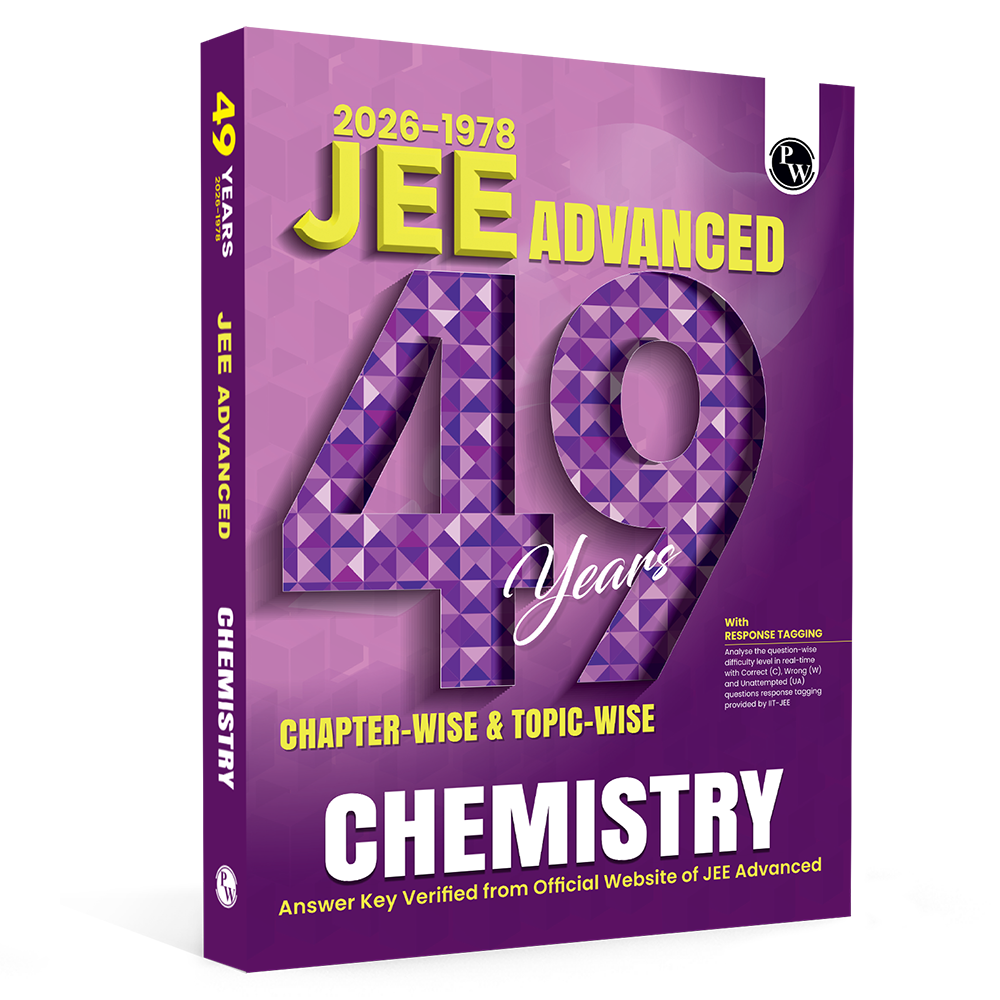
At its core, a JEE Advanced PYQ chemistry book is a structured archive of real past exam papers spanning from 1978 to 2026. Unlike standard question banks, this resource categorises past papers into specific chapters and topics. This logical division ensures you do not have to wait to complete the entire syllabus before attempting actual exam-level problems.
Instead of overwhelming you with a chaotic mix of concepts, the chapter-wise and topic-wise organization allows you to practice targeted problems right after finishing a particular topic. This makes JEE Advanced chemistry PYQs an indispensable tool for verifying your understanding of individual topics like coordination compounds, thermodynamics, or chemical kinetics.
Additionally, this compilation provides detailed solutions that align with official answer keys. It bridges the gap between basic theory and the complex reasoning required to solve Advanced chemistry questions, making it a complete practice manual.
Features of JEE Advanced PYQ Chemistry
Understanding the structure of a premium past-paper book helps you make the most of your revision sessions. The JEE books are designed with several key analytical features to streamline your preparation:
-
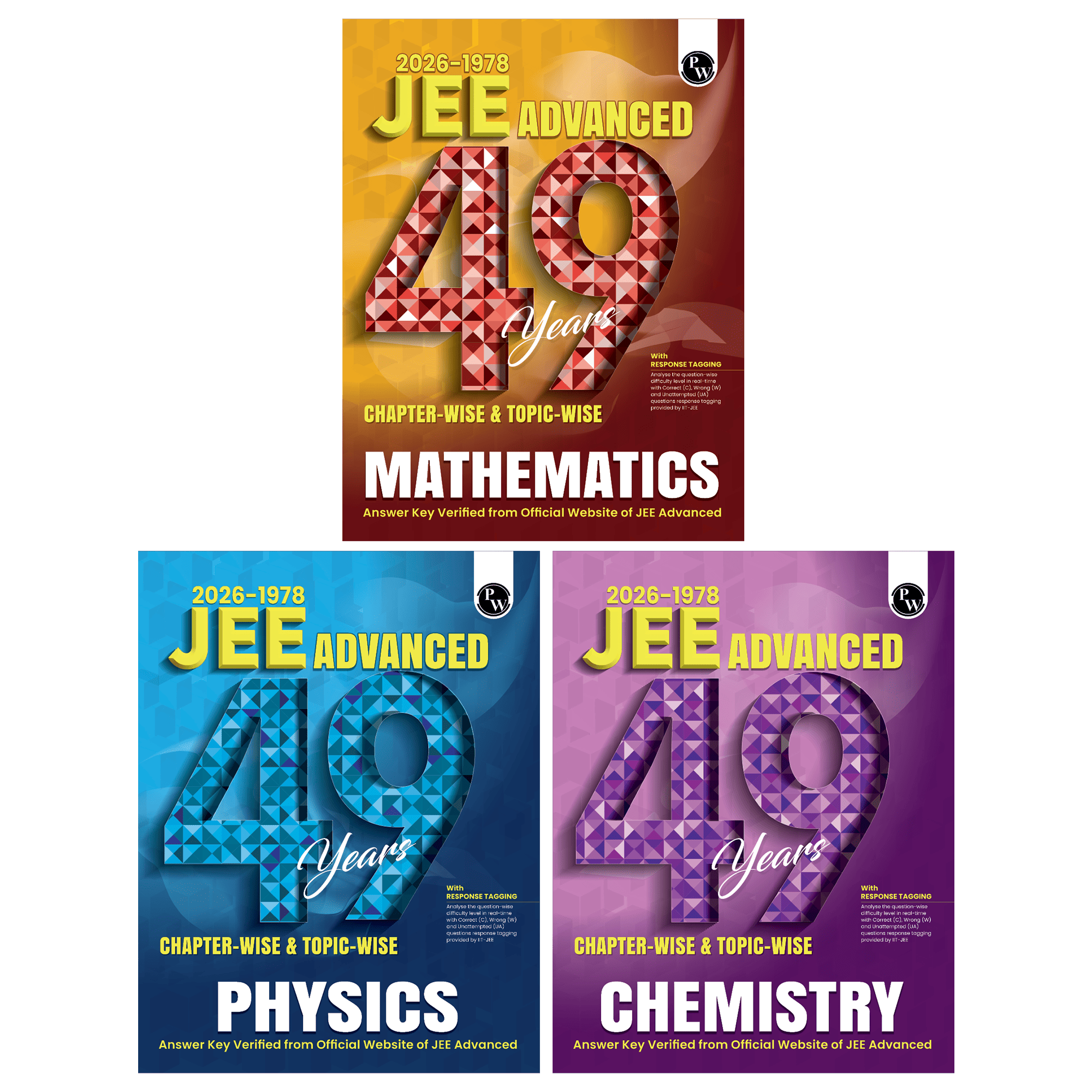
49 Years of Chapterwise & Topicwise Solved Papers (1978–2026): Access a massive, authentic library of previous-year questions covering nearly five decades of exams.
-
Step-by-Step Detailed Solutions: Every question is accompanied by a systematic explanation to help you understand the core logic, build accuracy, and eliminate guesswork.
-
In-Depth Analysis of the Last 7 Years' Papers: Get clear trend charts showing changing exam patterns, difficulty levels, and subject-wise weightage to keep your practice highly focused.
-
Performance Data from the Last 14 Papers: Review statistical insights detailing correct, incorrect, unattempted, and partially correct responses to help you build an effective exam-day strategy.
-
Trend-Based Learning Layout: Easily identify high-weightage chapters and recurring concepts to ensure you prioritise the most important areas.
How Does JEE Advanced PYQ Chemistry Improve Chemical Reasoning?
Tricky reasoning-based questions are the true deciders of your rank in the examination. These problems test your ability to apply theoretical concepts to unfamiliar scenarios rather than just asking you to recall facts. Here is how a structured JEE Advanced PYQ book helps you develop these critical thinking skills:
1. Demystifying Multi-Concept Problems
Many questions combine concepts from physical, organic, and inorganic chemistry. For example, a question might ask you to calculate an equilibrium constant (physical) and then use that value to explain the stability of a coordination complex (inorganic). The detailed explanations in a JEE Advanced PYQ chemistry book break these complex problems down into smaller, manageable steps.
2. Deconstructing Assertion-Reason Questions
Inorganic chemistry frequently uses assertion-reason questions to test your depth of understanding. A reliable past-paper compilation does not just tell you if a statement is true or false; it explains the exact molecular cause-and-effect relationship, such as why a certain transition metal exhibits a specific magnetic property.
3. Enhancing Reaction Mechanism Visualization
Organic chemistry relies heavily on predicting reaction pathways under different conditions. By studying the step-by-step visual mechanisms provided in the solutions, you learn exactly why a nucleophile attacks a specific position or how steric hindrance influences the final product.
Important Topics Covered in the JEE Advanced PYQ Chemistry
To make your study sessions as efficient as possible, it is wise to focus on chapters that consistently appear in the exam. The table below highlights the key areas where reasoning-based chemistry questions are most common:
|
Chemistry Division |
High-Weightage Chapters |
Type of Reasoning Tested |
|
Physical Chemistry |
Chemical & Ionic Equilibrium, Thermodynamics, Electrochemistry |
Graphical interpretation, mathematical derivation, state-function changes. |
|
Organic Chemistry |
Reaction Mechanisms (GOC), Carbonyl Compounds, Biomolecules |
Acid-base strength comparison, nucleophilic substitution pathways, stereochemistry. |
|
Inorganic Chemistry |
Coordination Compounds, p-Block Elements, Chemical Bonding |
Hybridisation, magnetic behaviours, molecular orbital theory, anomalous trends. |
How to Use JEE Advanced PYQ Chemistry?
To get the good results from your JEE Advanced PYQ chemistry book, you need a systematic approach rather than just reading through the questions and answers.
1. Master the Theory First
Never jump straight into previous year questions without a solid understanding of the theory. Study your classroom notes, understand the primary formulas, and then open your past-paper book for concept practice.
2. Solve Independently Before Checking Solutions
When you encounter a problem, give yourself at least five to ten minutes of uninterrupted thinking time. Try to scribble down the reaction, write out the formula, or draw the organic structure. Checking the solution immediately prevents your brain from developing its own problem-solving pathways.
3. Study the Explanations Carefully
Once you finish a problem—whether your answer was correct or incorrect—read through the detailed solutions. You might find a faster calculation method, a simpler logical shortcut, or a crucial exception that you missed in your initial attempt.
For more effective concept revision, pair your PYQ practice with the JEE Handwritten Notes Combo Set of 3 Books. These concise handwritten notes cover Physics, Chemistry, and Mathematics with key concepts, formulas, shortcuts, and quick revision points, helping you strengthen fundamentals, revise efficiently, and perform better in both JEE Main and JEE Advanced.
Study Strategy for Using JEE Advanced PYQ Chemistry
Integrating past papers into your daily study routine is the most effective way to build confidence and consistency.
-
Create Topic-wise Study Blocks: After finishing a chapter like 'Aldehydes and Ketones', spend the next two days solving only the organic chemistry previous year questions for that specific topic. This reinforces the concepts while they are still fresh in your mind.
-
Analyse Historical Trends: Use the 7-year trend analysis charts included in the book to spot which topics are growing in importance. This helps you allocate your study time more effectively.
-
Review Your Mistakes Regularly: Keep a dedicated notebook to record the reasoning-based questions you got wrong. Revisit these specific questions every two weeks to make sure you have fully understood the underlying concepts.
Tips to Solve JEE Advanced PYQ Chemistry
Tackling highly analytical chemistry questions requires a calm mind and a systematic approach. Here are some practical tips to keep in mind:
-
Read Every Word in the Question: The exam often includes subtle hints in the text, such as "dilute conditions," "cold temperature," or "excess reagent." Missing these small details can completely change your final answer.
-
Use the Elimination Method: For multiple-choice questions with one or more correct options, try to rule out incorrect options based on fundamental chemical rules, such as octet violations or incorrect oxidation states.
-
Write Out Organic Mechanisms: Do not try to predict the final organic product purely in your head. Sketch out the intermediates, check for possible carbocation rearrangements, and identify the most stable pathway on paper.
-
Pay Close Attention to Units: Physical chemistry calculations often require you to convert units, such as changing Joules to kilo-Joules or millilitres to litres. Double-check your units before writing down your final answer.
To strengthen your preparation further, practise with the JEE Main 2026 Session Solved Papers, which provide authentic exam questions with detailed solutions based on the latest exam pattern. Solving these papers helps improve conceptual clarity, time management, and problem-solving accuracy while preparing for both JEE Main and JEE Advanced.
Common Mistakes to Avoid While Solving JEE Advanced PYQ Chemistry
Even the most dedicated students can fall into common traps when preparing with past papers. Being aware of these pitfalls will help you avoid them:
-
Memorising Solutions: The exact same questions rarely repeat in the exam. Memorising the answer to a physical chemistry question won't help you; you must understand the core concept and formula application.
-
Ignoring Organic Stereochemistry: Many students draw flat structures and miss how substituents are arranged in 3D space. This often leads to choosing the wrong isomer in multi-step organic synthesis questions.
-
Neglecting Qualitative Analysis: Salt analysis and qualitative inorganic tests are often skipped because they require memorisation. However, these topics regularly appear in high-scoring reasoning questions and should not be ignored.
-
Overlooking the Performance Data: Skipping the performance statistics from the last 14 papers is a missed opportunity. These statistics show you where other students typically lose marks, helping you avoid the same mistakes.
Read More: JEE Previous Year Question Paper with Solutions
JEE Advanced PYQ Chemistry FAQs
Q1: How far back should I go when solving Advanced chemistry questions?
A1: It is highly recommended to cover the full 49 years of past papers (1978–2026). This gives you a complete view of how exam patterns and question styles have evolved over the decades.
Q2: Can solving JEE Advanced chemistry PYQs help me score well if I only have a basic understanding of the theory?
A2: Past papers are excellent for concept practice, but they work best when combined with a solid theoretical foundation. You should always study your core concepts before attempting these highly analytical questions.
Q3: Why are reasoning-based chemistry questions considered so difficult to solve?
A3: These questions often combine multiple concepts from different chapters, requiring you to think logically rather than just recall facts.