JEE Advanced Limits and Continuity PYQ Preparation with PW Book
Mastering calculus requires rigorous practice, particularly when dealing with complex functions, indeterminate forms, and graphical interpretations found in engineering entrance tests. Aspirants often struggle to bridge the gap between textbook theory and actual examination problems.
Utilizing structured resources like the JEE Advanced Limits and Continuity PYQ compilation helps candidates understand evaluation techniques, standard expansions, and logical deductions required for top ranks.
What are JEE Advanced Limits and Continuity PYQ?
Calculus forms a major chunk of the mathematics paper, and calculus problems frequently test your ability to evaluate indeterminate states using standard theorems. Practicing PYQs allow students to encounter diverse problem patterns framed over decades.
-
Indeterminate Forms: Questions regularly feature expressions yielding zero over zero or infinity over infinity formats.
-
Standard Expansions: Taylor and Maclaurin series expansions simplify complicated algebraic and trigonometric functions.
-
Squeeze Theorem: Sandwich theorem problems test inequalities and functional Limits efficiently.
Working through past archives builds familiarity with tricky modifications. Candidates must look beyond standard formula memorisation and focus on logical manipulation.
Features of a JEE Advanced Limits and Continuity PYQ Book
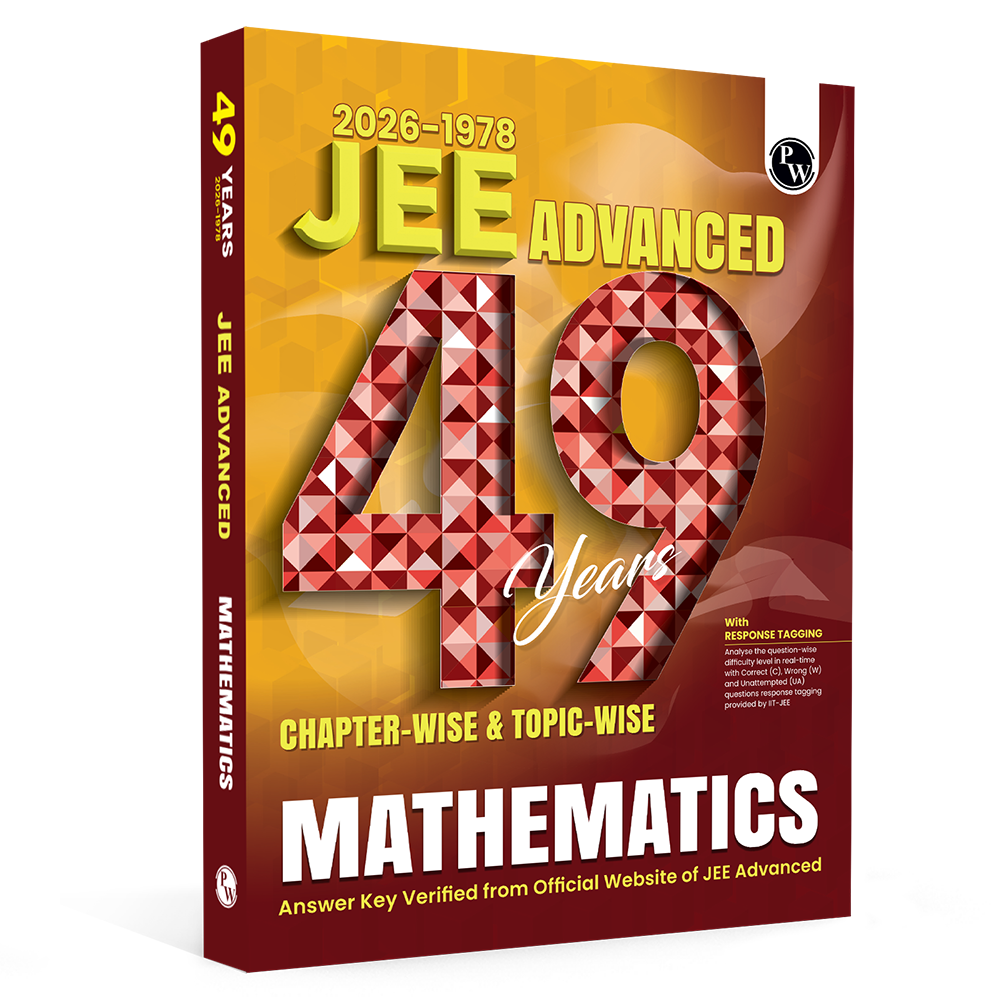
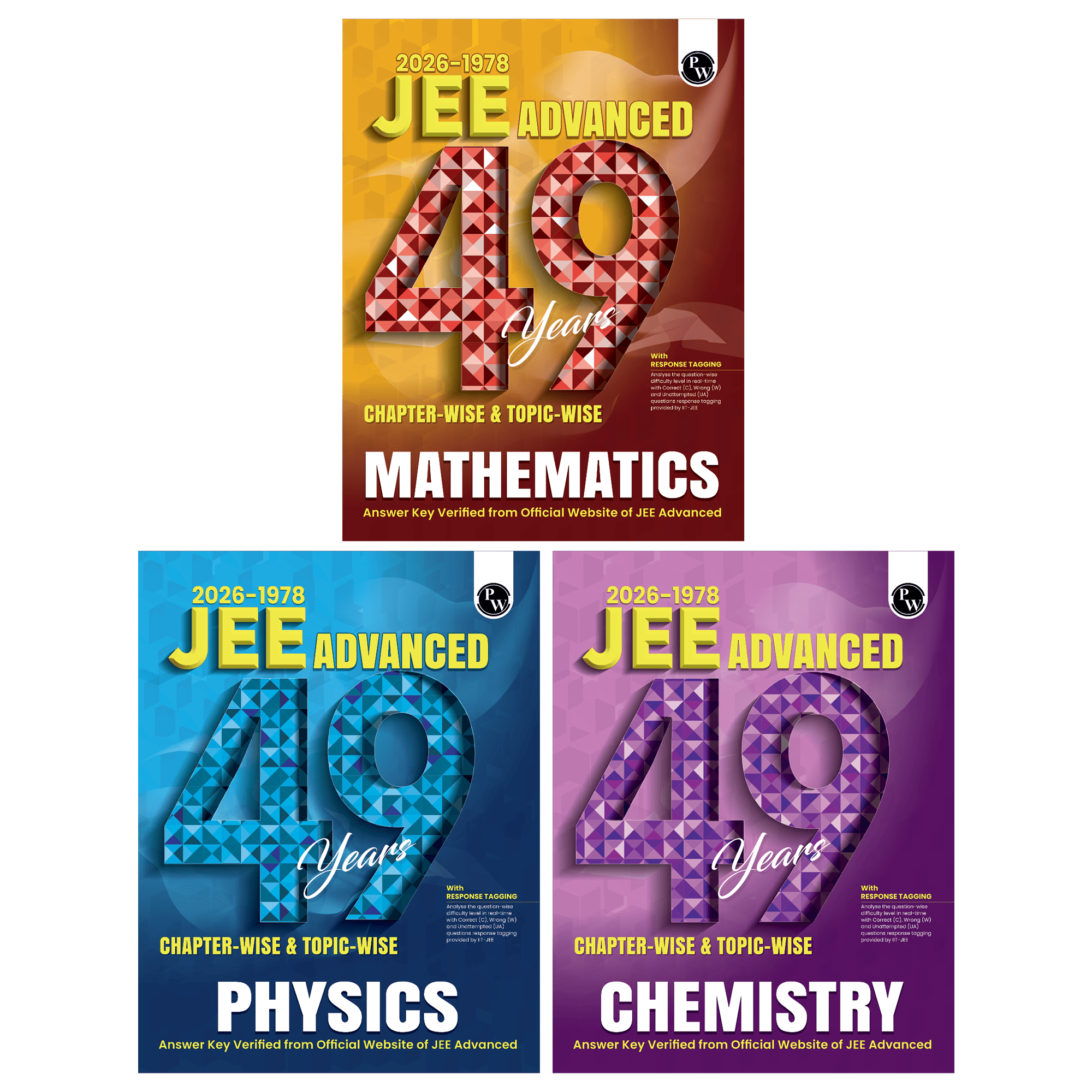
Prepare Mathematics with 49 years of JEE previous year questions, detailed solutions, and useful analysis of recent JEE Advanced papers.
The book helps you practice important topics, understand exam trends, and improve your problem-solving skills.
-
49 Years of JEE Advanced Mathematics PYQs (1978–2026): Get a wide collection of IIT JEE Advanced Maths Previous Year Questions from 1978 to 2026. It covers important chapters and topics for complete practice.
-
Chapterwise & Topicwise Organization: Questions are arranged chapterwise and topicwise for focused preparation. This makes it easier to learn concepts, practice specific topics, and revise the JEE Advanced Mathematics syllabus.
-
Detailed Solutions with Official Answer Key Alignment: Every question includes a clear, step-by-step solution based on the official answer key. This helps you understand the solving method and improve conceptual clarity and accuracy.
-
In-Depth Analysis of the Last 7 Years’ Papers: Study the latest seven years of papers to understand JEE Advanced exam trends, topic weightage, difficulty levels, and changes in question patterns.
-
Performance Analysis of the Last 14 Papers: Review performance data from the last 14 papers, including correct, incorrect, unattempted, and partially correct responses. This helps you identify mistakes and build a better exam strategy.
What Concepts are Covered in JEE Advanced Limits and Continuity PYQ?
Every serious aspirant must dissect core theorems before attempting high-level problem sets. Limits and Continuity JEE questions demand absolute clarity regarding left-hand Limits, right-hand Limits, and differentiability criteria.
-
Existence of Limit: The left-hand limit must equal the right-hand limit and yield a finite value.
-
Continuity Conditions: A function is continuous at a point if its limit matches the functional value at that exact point.
-
DisContinuity Types: Categorising removable, jump, and essential discontinuities helps solve multi-correct assertion-type problems.
Practising these concepts systematically ensures that unexpected twists in exam patterns do not derail your confidence inside the computer-based testing environment.
How Does JEE Advanced Limits and Continuity PYQ Help in Preparation?
Structured preparation relies heavily on authentic archives and comprehensive solutions. The official JEE advanced maths PYQ resource provided by Physics Wallah offers chapterwise and topicwise solved papers spanning multiple decades.
-
Chapterwise Arrangement: Organises practice systematically from basic Limits to advanced functional equations.
-
Detailed Explanations: Step-by-step methodologies improve conceptual accuracy and reduce calculation errors.
-
Trend Insights: Highlights high-weightage sub-topics, helping learners optimize their revision schedules.
Utilising a reliable JEE previous year papers transforms chaotic revision into a targeted strategy, ensuring complete coverage of calculus modules without missing vital nuances.
How to Solve JEE Advanced Limits and Continuity PYQ Effectively?
Solving older questions requires a planned approach instead of random practice. Analyzing Limits and Continuity previous year questions helps students understand common question patterns, repeated concepts, and the level of difficulty. It also shows how Limits may be connected with Continuity, differentiability, and other calculus topics.
-
Attempt Independently: First solve every question without checking the solution. Give yourself enough time to understand the problem, choose the right method, and complete the calculation on your own.
-
Focus on Concepts: Do not only remember the final answer. Understand why a particular limit method, identity, or Continuity condition is used in the question.
-
Error Tracking: Maintain a separate notebook for conceptual and calculation mistakes. Write down the correct method beside each mistake so you can revise it later.
-
Time Management: Track the time taken for each question, especially for lengthy or multi-step problems. This helps you become faster without reducing accuracy.
-
Compare Solutions: After attempting a question, check the solution and look for a shorter or easier method. This can help improve your problem-solving approach.
-
Repeat Difficult Questions: Reattempt questions that you got wrong after a few days. Solving them again without help can show whether you have actually understood the concept.
Consistent tracking of incorrect attempts, regular revision with JEE books, and timed practice can steadily improve accuracy and confidence in mock tests and final examinations.
How to Build a JEE Advanced Limits and Continuity PYQ Preparation Strategy?
A strong study plan should include concept revision, formula practice, and regular problem-solving. Good Limits and Continuity preparation helps students connect basic concepts with questions that require multiple steps and careful calculations.
-
Daily Revision: Revise standard limit identities, important formulas, and the conditions for using L'Hopital's rule. Regular revision helps you recall formulas quickly during the exam.
-
Practice Different Question Types: Solve direct formula-based questions along with questions involving algebraic Limits, Continuity at a point, piecewise functions, and parameter-based problems.
-
Multi-Topic Integration: Practice questions where Continuity is linked with differentiability, derivatives, or other calculus topics. This improves your ability to handle mixed-concept questions.
-
Timed Practice: Set a fixed time for solving a group of questions. This helps improve calculation speed while reducing the chances of spending too much time on one problem.
-
Self-Assessment: Take regular chapter tests and review every wrong answer. Identify whether the mistake happened because of a formula, concept, calculation, or lack of time.
-
Maintain an Error Log: Write down repeated mistakes and revise them before starting a new practice session. This can help improve accuracy over time.
Balancing speed and accuracy is important for scoring well in engineering entrance exams. Regular practice, quick revision, and proper mistake analysis can make your Limits and Continuity preparation more effective.
Read More: JEE Advanced Chapter Wise Weightage 2026
JEE Advanced Limits and Continuity PYQ FAQs
What makes practicing JEE Advanced Limits and Continuity PYQ essential for IIT aspirants?
Practicing PYQ exposes students to the exact depth, trickery, and conceptual complexity expected by testing authorities, helping them master standard expansions and indeterminate forms efficiently.
How does the official JEE Advanced Maths PYQ book help in structuring daily revision?
The official JEE Advanced Maths PYQ book offers chapterwise and topicwise solved papers with step-by-step solutions, enabling targeted practice and systematic performance tracking.
Which core sub-topics appear frequently in Limits and Continuity JEE questions?
Commonly tested areas in Limits and Continuity JEE questions include the evaluation of 1-to-the-power-infinity forms, sandwich theorem applications, functional equations, and classification of discontinuities.
Why is a dedicated JEE Advanced PYQ book preferred over random online worksheets?
A curated JEE advanced PYQ book ensures authenticity, official answer key alignment, and structured error analysis, preventing students from wasting time on irrelevant or unverified question patterns.
How can candidates improve accuracy during their Limits and Continuity preparation?
Effective Limits and Continuity preparation requires combining formula revision with rigorous evaluation of past archives, careful error logging, and timed mock tests to enhance problem-solving speed and precision.