Using JEE Advanced Maths PYQ Book for Multi-Step Question Practice
Many students find themselves completely stuck when trying to link coordinate geometry with calculus under exam-hall pressure. This common problem occurs because standard textbooks rarely train you to think across multiple concepts at the same time.
To bridge this gap, integrating a structured JEE Advanced PYQ maths resource into your daily study routine is absolutely essential. By systematically working through real, historical examination papers, you learn how to untangle complex problem networks.
Overview of JEE Advanced PYQ Maths
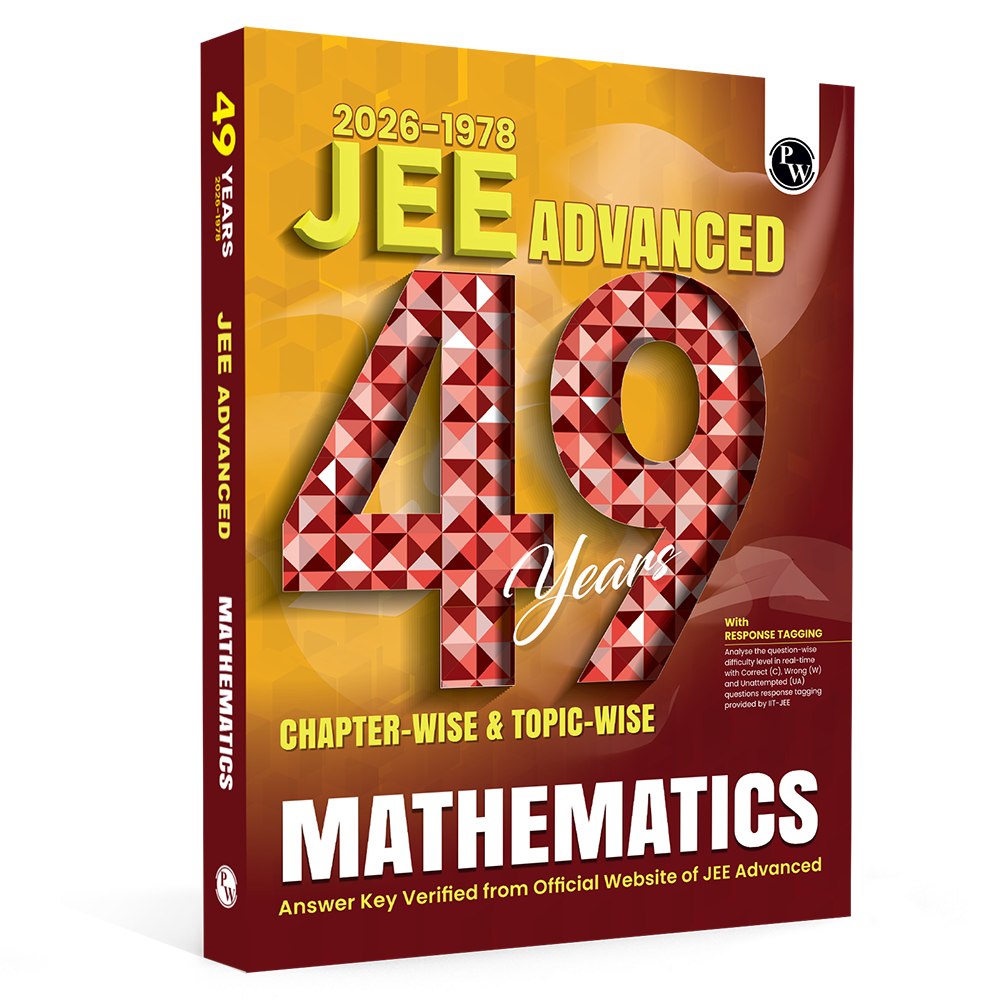
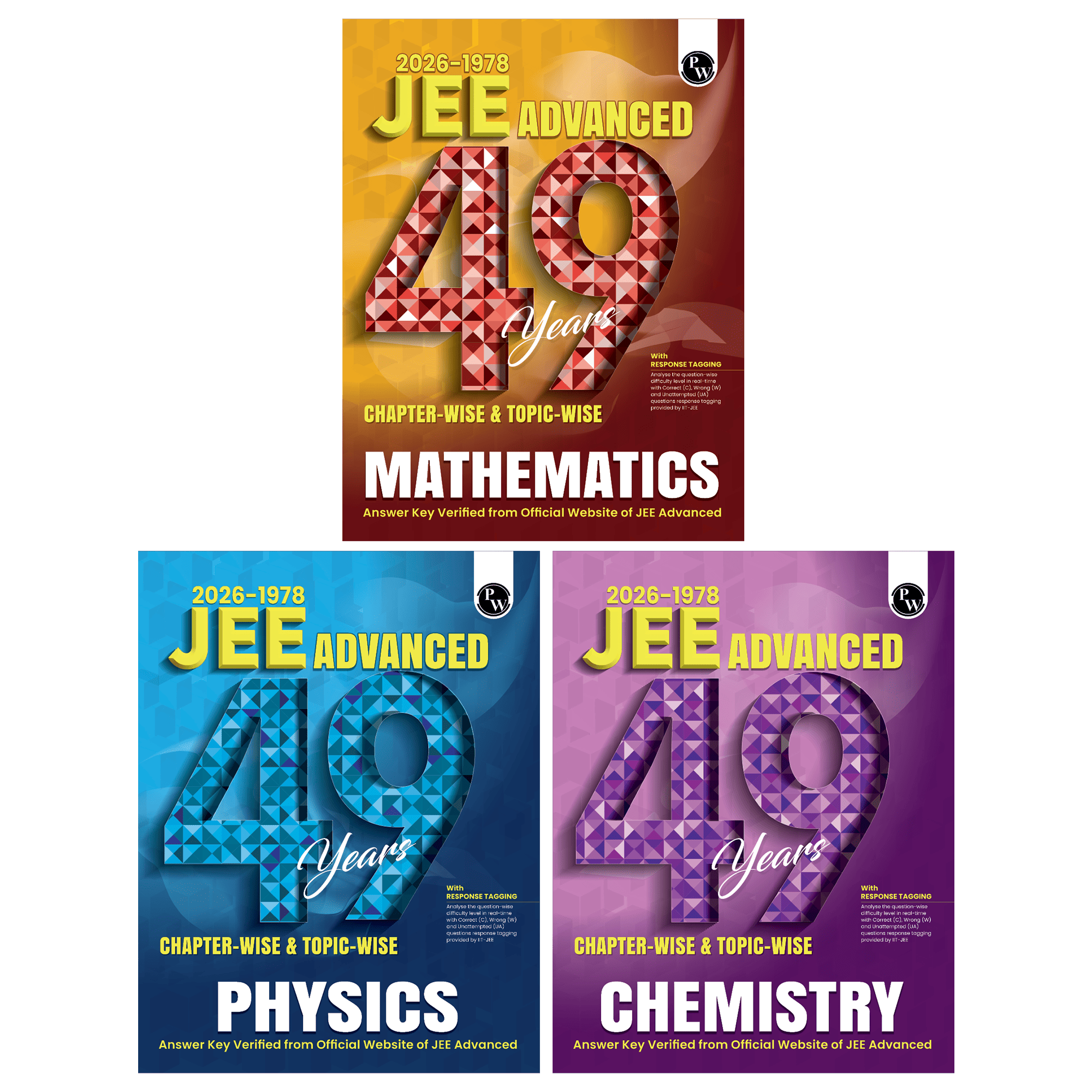
When tackling the mathematics syllabus for this highly competitive engineering entrance test, having a compilation of past papers is a fundamental necessity. A robust collection of JEE Advanced PYQ maths comprises historical questions spanning from 1978 to 2026.
This 49-year span gives you an unparalleled library of problems that have actually been asked in the examination hall over several generations.
-
Chapterwise and Topicwise Categorisation: You do not have to wait to finish the entire syllabus before touching past papers. As soon as you finish a single topic like Quadratic Equations, you can dive straight into its historical questions.
-
Step-by-Step Solutions: Every single problem is paired with a clear, logical explanation that aligns precisely with official answer keys. This helps you understand the thought process required behind every step.
-
Trend Analysis of Last 7 Years: Gives you a detailed look at which areas have seen a surge in weightage and how question styles have changed recently.
-
Performance Statistics of Last 14 Papers: Provide critical data on correct, incorrect, unattempted, and partially correct answer trends to help you formulate a realistic scoring strategy.
|
Feature |
Details |
Benefit |
|
Syllabus Coverage |
49 Years of Past Papers (1978–2026) |
Exhaustive practice bank covering all pattern shifts |
|
Structure |
Chapterwise & Topicwise Solved Papers |
Target specific weaknesses immediately |
|
Detailed Explanations |
Step-by-Step alignment with official keys |
Build conceptual clarity and clear doubts |
|
Trend Insights |
Last 7 Years Trend Analysis |
Identify high-weightage modern patterns |
Why Is JEE Advanced PYQ Maths Important for Advanced Preparation?
The IIT entrance examination is famous for testing depth over rote memory. Standard practice problems often test a single concept in a straightforward manner. However, the actual exam demands superior maths problem solving capabilities that allow you to combine multiple topics like probability, matrices, and calculus in a single question.
1. Decoupling Complex, Interconnected Concepts
A typical question in this exam rarely remains confined to one chapter. For instance, a calculus question might require you to find the limit of a sum, which first needs to be simplified using sequence and series formulas, followed by properties of definite integration. Working through past questions teaches you how to decouple these layers.
2. Understanding the Examiner's Mindset
By studying 49 years JEE Advanced previous year paper, you begin to see patterns in how examiners create traps. You learn where students commonly make silly mistakes, such as missing boundary conditions in inequalities or forgetting to check if a function is continuous before applying Rolle's Theorem.
3. Managing Negative Marking
With different marking schemes (such as single correct, multiple correct, paragraph type, and numerical grid), managing risk is crucial. The performance data from the last 14 papers included in a high-quality guide helps you see which question formats are historically high-yield and which ones carry the highest risk of negative marks.
Topics Covered in JEE Advanced PYQ Maths
A truly comprehensive JEE Advanced PYQ maths resource covers the entire scope of the advanced syllabus, divided systematically into manageable segments. This structured approach ensures no topic is left to chance.
1. Algebra
Algebra forms the backbone of your scoring potential. The question bank categorises algebra into:
-
Quadratic Equations and Expressions
-
Complex Numbers (often merged with geometry)
-
Matrices and Determinants (highly scoring, featuring a multi-step system of equations)
-
Probability and Combinatorics (famous for tricky, logical calculations)
2. Calculus
Calculus represents the highest weightage block in the examination. The PYQ book organises these into:
-
Limits, Continuity, and Differentiability
-
Application of Derivatives (maxima, minima, tangents, and normals)
-
Definite and Indefinite Integration
-
Differential Equations (focusing on linear differential equations and variable separable forms)
3. Coordinate Geometry and Vectors
These visual topics require a mix of algebraic calculation and spatial imagination.
-
Straight Lines and Circles
-
Conic Sections (Parabola, Ellipse, and Hyperbola)
-
Vector Algebra and Three-Dimensional Geometry (3D)
How to Use JEE Advanced PYQ Maths for Better Practice?
Simply buying a JEE books and reading the solutions will not improve your score. You must engage with the material actively. Here is a step-by-step approach to cracking multi step maths questions using your past year paper resources.
Step 1: Attempt the Problem Blindly
Do not look at the solution right away. Give yourself at least 8 to 10 minutes per question. Try different angles—if an algebraic method fails, try a graphical approach.
Step 2: Analyse Your Blockages
If you get stuck, identify exactly where your progress halted:
-
Did you fail to start the problem because you forgot a formula?
-
Did you make an algebraic or calculation error midway?
-
Did you struggle to link two different concepts together?
Step 3: Consult the Detailed Solution
Open the step-by-step solution provided in your guide. Compare your method with the book's method. Often, the book will show a more elegant, shorter route that saves precious minutes during the actual exam.
How is the Study Plan for Using the JEE Advanced PYQ Maths?
A structured study routine ensures that you cover all 49 years of past questions without feeling overwhelmed. This phase-wise strategy helps you execute a thorough JEE revision of your maths syllabus.
Phase 1: Topic-Wise Integration (During Ongoing Classes)
As your teachers cover a topic in class, solve the corresponding past questions from the book immediately.
-
Goal: Complete at least 70% of the past questions for the active topic.
-
Focus: Understand the basic application of formulas and basic multi-step linkages.
Phase 2: Decoupled Mock Practice (3–4 Months Before the Exam)
Start taking small, topic-wise tests using the past papers. For example, select 15 questions from Coordinate Geometry, set a timer for 45 minutes, and solve them under exam conditions.
-
Goal: Build speed and improve accuracy under time pressure.
-
Focus: Learn when to skip highly tedious or time-consuming calculations.
Phase 3: Full-Length Historical Re-runs (Last 2 Months)
Use the trend analysis and performance data from the last 14 years to select specific paper sets. Sit down for a full 3-hour stretch and solve an entire maths section from a previous year's paper.
-
Goal: Develop physical and mental stamina.
-
Focus: Perfect your question selection strategy to maximise your positive score.
How to do Exam Practice with JEE Advanced PYQ Maths?
To systematically work through these extensive JEE PYQ resources, you need a clear, daily execution plan. This structured plan keeps your preparation consistent and measurable.
-
Monday & Tuesday (Concept Consolidation): Review your class notes, key formulas, and derivations. Solve basic practice problems to warm up.
-
Wednesday & Thursday (Targeted PYQ Session): Solve 25 to 30 past questions from your book. Ensure you cover multiple question types (single-option correct, multiple-option correct, and integer type).
-
Friday (Deep-Dive Analysis): Spend time analyzing the solutions to the questions you got wrong or took too long to solve. Identify the short methods or alternative steps outlined in the book.
-
Saturday (Timed Test): Put together a mini-test of 10 highly challenging past questions. Set a strict 30-minute timer.
-
Sunday (Rest and Revision): Revise your Mistake Register and re-attempt the questions you failed earlier in the week.
Common Mistakes to Avoid While Solving JEE Advanced PYQ Maths
Even the most dedicated students can stumble if they use past papers incorrectly. Avoid these common pitfalls to make the most of your preparation:
-
Looking at Solutions Too Quickly: Looking at the answer keys within 2 minutes of starting a problem deprives your brain of the struggle required to build deep analytical pathways. Always fight with the problem first.
-
Ignoring the Trend Analysis: Spending equal time on topics that are rarely asked and those that are heavily tested is counterproductive. Use the last 7 years' trend analysis to focus your energy on high-weightage chapters like Vectors, 3D, and Definite Integration.
-
Practising Without a Timer: The actual exam is not just a test of knowledge; it is a test of speed and decision-making under pressure. Doing open-ended, untimed practice can make you slow on the big day.
-
Skipping the Old Subjective Questions: Many students skip the older, subjective questions from the 1980s and 1990s because they think the format is outdated. In reality, modern multi-step questions are often modified versions of these classic subjective problems.
-
Neglecting Multiple Correct Options: Multiple-choice questions with one or more correct options are highly challenging. Students often stop solving after finding one correct option, missing out on partial marks or getting negative marks due to incomplete evaluation. Always verify every option systematically.
Read More: How to Score 200+ Marks in JEE Advanced?
JEE Advanced PYQ Maths FAQs
How does using a JEE Advanced PYQ maths book help with multi-step algebra questions?
A dedicated book organizes past questions by topic and provides detailed, step-by-step solutions. This structure helps you see exactly how different algebraic concepts are linked together, allowing you to master complex, multi-step problem-solving.
Are older questions from 1980 to 2000 still relevant for modern papers?
Yes. Although the exam format has changed, the underlying mathematical principles remain identical. Many modern, highly complex numerical questions are directly inspired by classic subjective problems from the older papers.
Should I practice chapter-wise or solve full past papers first?
You should start with chapter-wise practice while completing your syllabus. Once you have covered at least 80% of the chapters, transition to solving full-length papers under timed conditions to build exam stamina.