Why JEE Advanced Physics Needs a Different PYQ Strategy Than Mains
Many aspirants realise too late that the physics problems here cannot be solved by simply memorising formulas or rushing through questions. The real challenge lies in untangling complex, multi-layered scenarios that blend several distinct topics together.
To bridge this gap, you need a highly specialised approach to your revision. Developing a targeted plan for JEE Advanced PYQ Physics is the only way to adapt to this higher difficulty tier. This guide breaks down exactly why your current preparation style must change to handle these challenging multi-concept exam problems.
What Is JEE Advanced PYQ Physics?
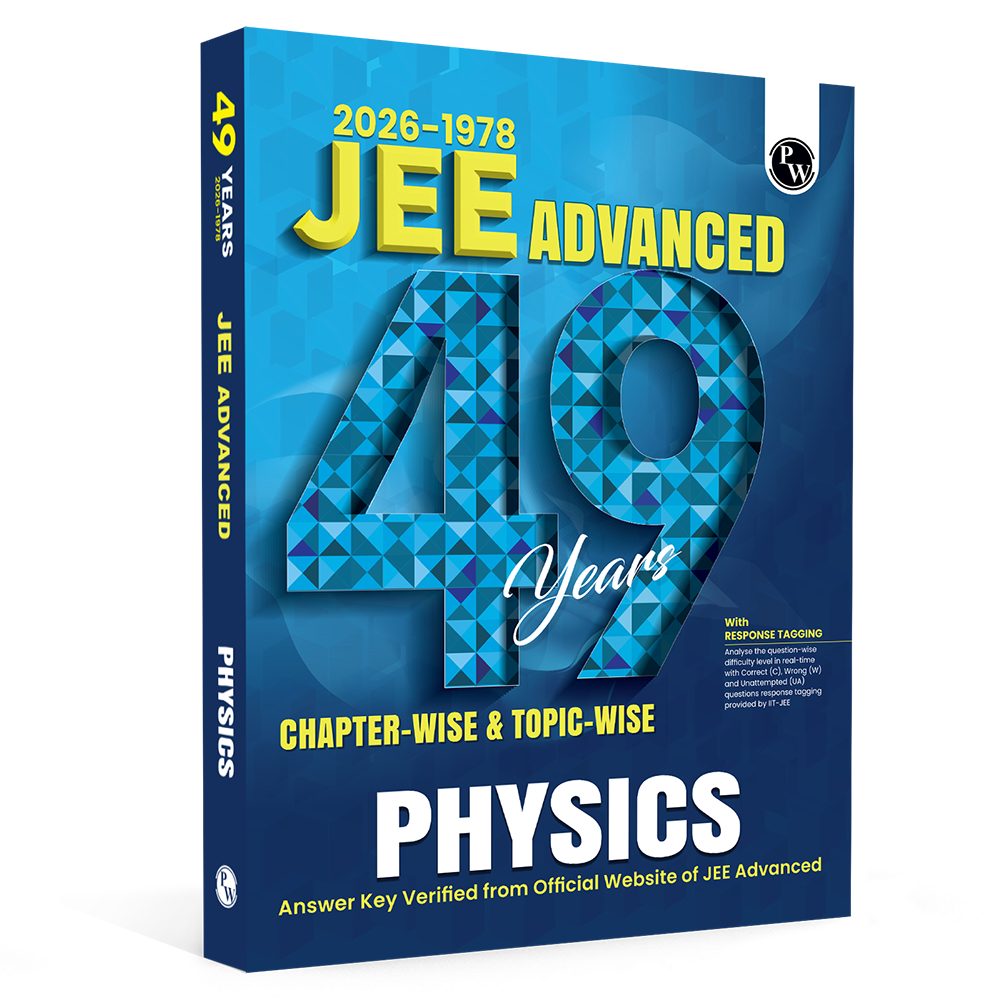
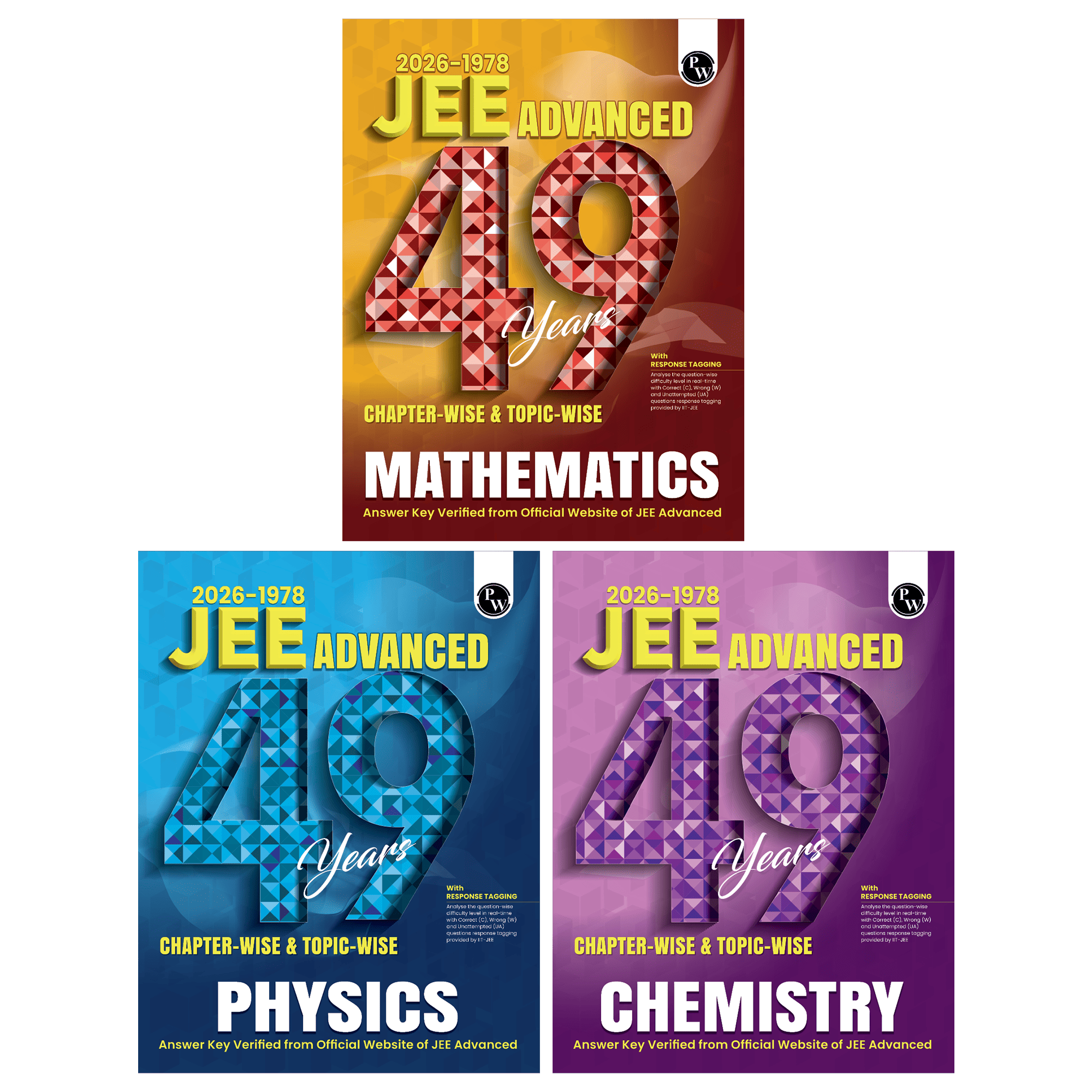
The JEE Advanced PYQ Physics resource is an exhaustive archive containing 49 years of actual engineering entrance exam questions spanning from 1978 to 2026. Rather than presenting a random assortment of difficult problems, this compilation structures nearly five decades of authentic papers into targeted chapter-wise and topic-wise divisions.
It serves as a definitive practice tool specifically curated to help students decode the evolving patterns of the nation's toughest engineering exam.
Unlike standard mock questions that might rely on artificial complexity, these previous year questions provide an exact reflection of what the examination board expects. Every single question tests the boundaries of conceptual understanding, making it an essential repository for authentic self-assessment.
Features of JEE Advanced PYQ Physics
A structured archive of JEE previous year papers provides foundational tools designed to change how you approach challenging scientific principles:
-
49 Years of Comprehensive Coverage (1978–2026): It spans forty-nine years of authentic questions across the complete syllabus, ensuring no historical trend or question style is overlooked.
-
Chapterwise and Topicwise Organisation: The layout breaks down massive units into microscopic topics, allowing you to align your practice directly with your current lecture schedule.
-
Step-by-Step Detailed Solutions: Every question comes paired with precise, logical explanations that perfectly align with official answer keys to build mathematical and analytical accuracy.
-
In-Depth Analysis of the Last 7 Years’ Papers: The resource delivers specific trend analysis charts highlighting changing subject-wise weightage, precise difficulty levels, and evolving patterns.
-
Performance Data from the Last 14 Papers: It integrates insights detailing historical statistics for correct, incorrect, unattempted, and partially correct responses to help shape a realistic examination temperament.
-
Trend-Based Learning Framework: This structure allows you to immediately spot high-weightage chapters and frequently asked conceptual combinations for highly targeted practice.
Why Is JEE Advanced PYQ Physics Different from JEE Main?
Using the same study strategy for both examinations is a common mistake that can slow progress during the final stages of preparation. A comparison of JEE Main and JEE Advanced Physics PYQs shows that the differences extend far beyond the level of difficulty.
The following analysis highlights the key operational differences between JEE Main and JEE Advanced Physics questions. To prepare effectively for both examinations, students should also use JEE Books, which provide comprehensive theory, concept-building exercises, worked examples, and chapter-wise practice. Combining strong conceptual learning with previous year question analysis helps develop analytical thinking, improve problem-solving ability, and build a solid foundation for success in both JEE Main and JEE Advanced.
|
Feature Parameter |
Joint Entrance Examination (Mains) |
Joint Entrance Examination (Advanced) |
|
Conceptual Depth |
Evaluates quick recollection and single-formula application. |
Tests multi-layered concept based preparation across multiple distinct chapters. |
|
Question Structure |
Single correct options dominate the paper format. |
Multiple correct options, numerical matrix matches, and comprehension passages. |
|
Time Allocation |
High speed required with roughly two minutes per question. |
Generous time limits allowing deep analytical reasoning per problem. |
|
Variable Patterns |
Follows a predictable structure across shifts. |
Highly volatile marking schemes with unpredictable negative marking risks. |
How to Use JEE Advanced PYQ Physics?
To extract true value from the JEE Advanced PYQ Physics archives, you must treat them as diagnostic learning instruments rather than simple assignment sheets. Jumping straight into forty-nine years of past papers without a clear structural framework leads to unnecessary cognitive fatigue.
Phase 1: Topic-Level Integration
Do not wait to complete the entire syllabus before opening the JEE Advanced PYQ. As soon as you finish a chapter like Rotational Mechanics or Electrostatics, immediately open the topic-wise sections. Solve the older subjective questions first to establish baseline conceptual clarity before moving to modern objective formats.
Phase 2: Mixed-Concept Synthesis
Advanced papers rarely present questions from an isolated topic. A single thermodynamics question might require a deep understanding of work-energy theorems or fluid pressure. Use the chapter-wise layouts to deliberately bridge different areas of study, tracking how distinct formulas interact under extreme problem conditions.
Study Plan for Using the JEE Advanced PYQ Physics
Achieving a top rank requires an organised timeline that transitions from fundamental skill-building to real-time exam simulations. A highly structured JEE Advanced strategy divides your timeline into three clear, actionable steps:
-
Isolate High-Weightage Trends: Begin by reviewing the dedicated trend analysis charts from the past 7 years of papers. Identify which subtopics consistently appear in multiple-correct formats, ensuring your revision focuses heavily on these high-yield areas.
-
Deconstruct Partial Marking Data: Study the historical performance metrics drawn from the last 14 papers. Reviewing the statistics for typical incorrect and partially correct answers teaches you exactly when to attempt a complex option and when to step away to save marks.
-
Timed Section-Wise Execution: Switch from untimed practice to strictly timed windows during the final months. Isolate the Physics sections of past papers and attempt them in exact ninety-minute blocks to simulate real exam pressure and build endurance.
Tips to Solve JEE Advanced PYQ Physics Questions
Tackling highly complex, advanced questions demands methodical execution rather than raw mathematical calculation. When you face an intricate problem, employ these structural practices to navigate through the steps safely:
-
Deconstruct the System First: Before writing down any formulas, visualize the physical scenario. Draw a comprehensive free-body diagram or schematic layout to track variables accurately.
-
Identify the Overlapping Principles: State clearly which distinct laws apply to the problem. Note down where conservation of momentum transitions into energy conservation or field interactions.
-
Isolate Multiple Correct Choices Separately: Treat every single option in a multiple-correct question as an independent true-or-false statement. Never make assumptions based on finding a single match.
-
Verify Limiting Cases: Check your final derived equations by substituting extreme values (such as setting a variable to zero or infinity) to see if the physical system behaves logically.
-
Track the Units Precisely: Maintain absolute clarity with dimensions throughout multi-step derivations to catch algebraic errors before completing final numerical calculations.
To make revision more effective, pair your PYQ practice with JEE Revision Books, which provide concise theory, formula sheets, concept summaries, and quick revision notes. Using revision books alongside JEE Advanced PYQs helps reinforce core concepts, improve problem-solving speed, and build confidence for the examination.
Common Mistakes While Solving JEE Advanced PYQ Physics
Even highly dedicated students frequently fall into predictable traps that limit their score potential. Recognizing these systematic errors during your physics revision cycles allows you to fix weak habits before exam day:
-
Memorising Specific Solutions: Treating a past paper as a question to be memorized rather than a methodology to be analyzed destroys its educational utility.
-
Rushing Through the Text: Advanced problems hide vital constraints in small words like "smooth," "conducting," or "slowly." Skipping these terms completely invalidates your mathematical setup.
-
Ignoring Partial Marking Systems: Misunderstanding the risk-to-reward ratio of complex marking schemes often leads to excessive guessing, wiping out positive gains with heavy negative marks.
-
Over-Reliance on Shortcuts: Trying to use quick tricks or short formulas instead of building a proper step-by-step derivation fails completely when examiners introduce unique structural variations.
Read More: How to Score 200+ Marks in JEE Advanced?
JEE Advanced PYQ Physics FAQs
1. How does the JEE Advanced PYQ Physics archive help with changing exam patterns?
The archive maps out structural trends across 49 years of past papers, giving you clear insights into shifting difficulty levels and topic weightings. This long-term overview ensures you are never surprised by sudden changes in question styles or marking schemes.
2. Can I rely solely on standard study guides without a dedicated JEE Advanced strategy?
Standard study guides often focus heavily on repetitive, single-concept formulas. A proper strategy built around authentic past papers is absolutely necessary to learn how multiple topics are combined into complex, multi-layered questions.
3. Why is an authentic physics PYQ comparison important for engineering aspirants?
It reveals the major shift in focus between the two main engineering entry tests. While one exam prioritizes quick calculations, the other demands deep analytical reasoning, helping you budget your study hours effectively.