How JEE Advanced Physics PYQ Book Prepares You for Tougher Concept Questions
When standard textbooks fail to explain multi-layered mechanics or electrodynamics problems, students lose confidence and feel overwhelmed by the sheer volume of topics. Simply memorizing formulas does not work when the actual exam demands deep application across mixed chapters.
Utilizing an authentic JEE adavanced PYQ physics textbook bridges the gap between basic theory and actual exam-level complexity. By tackling real problems from past testing cycles, you learn to break down tough scenarios systematically.
This article outlines how strategic practice with previous papers transforms your analytical thinking and ensures you are fully prepared for exam day.
What Is JEE Advanced PYQ Physics?
A dedicated JEE Advanced PYQ physics resource is a highly structured compilation of authentic engineering entrance questions spanning past decades.
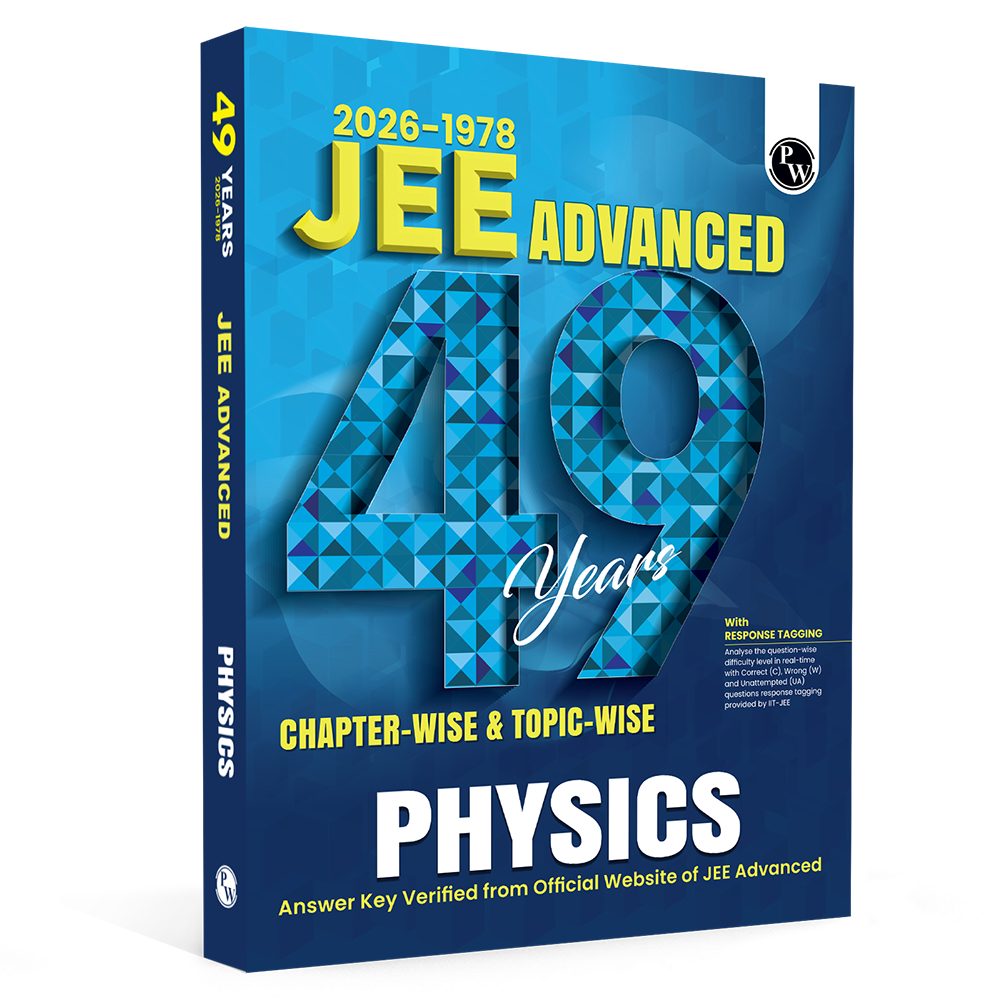
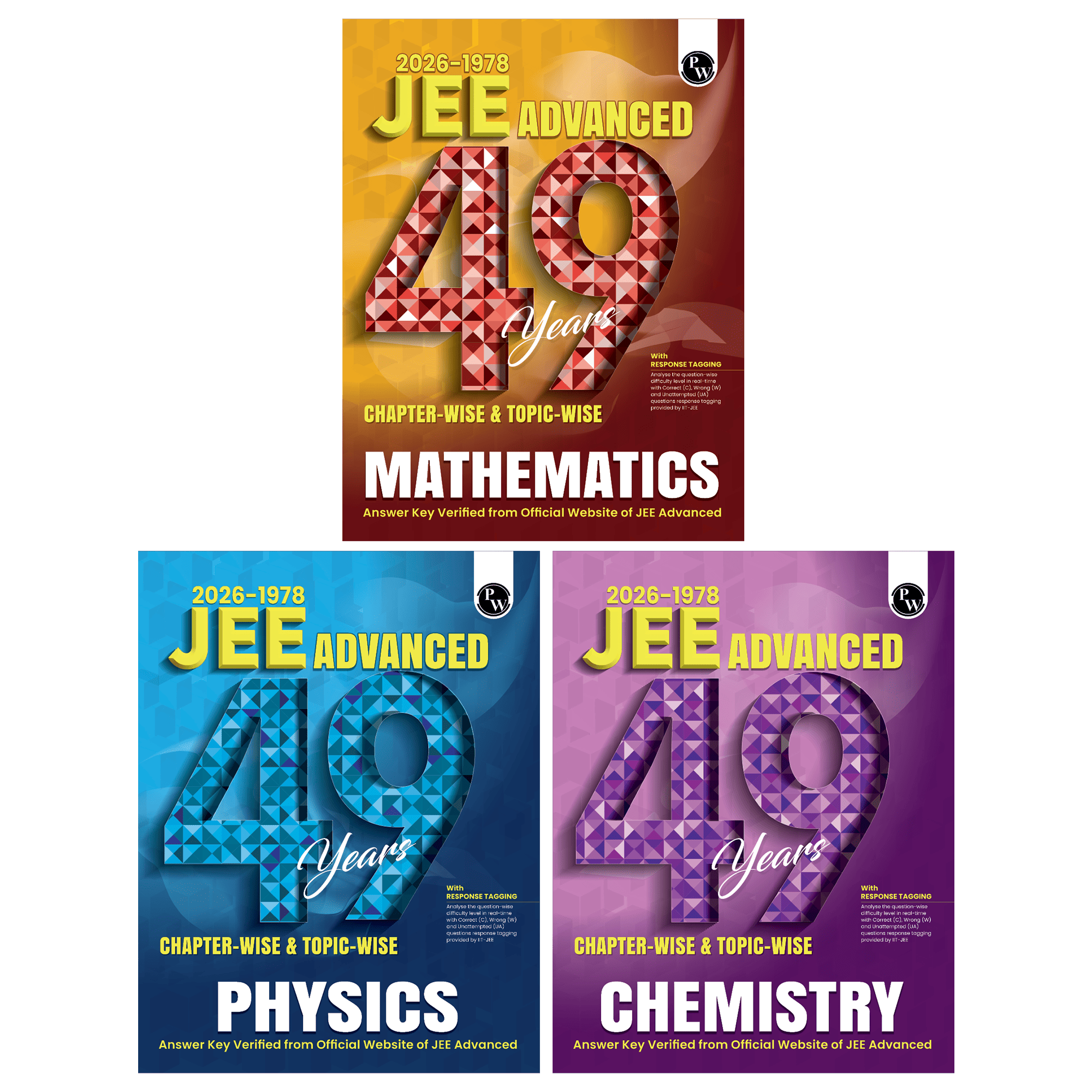
This specific compilation aggregates 49 years of past papers, covering the extensive timeline from 1978 to 2026. Instead of presenting papers in a chaotic chronological sequence, these resources divide the content systematically to streamline your daily study sessions.
Features of the JEE Advanced PYQ Physics
Engineering aspirants often struggle because ordinary practice drills do not mirror the actual exam environment. Relying on authentic JEE advanced PYQ physics papers changes how you approach your daily routine.
It introduces you directly to the rigorous standard maintained by paper setters over nearly five decades.
|
Feature |
Impact on Competitive Readiness |
|
49-Year Archive (1978-2026) |
Offers an exhaustive library of challenging historical problem variations. |
|
7-Year Deep Trend Analysis |
Highlights recent shifts in weightage, topic priorities, and difficulty metrics. |
|
14-Year Performance Metrics |
Provides statistical insights into typical student errors and unattempted sections. |
Using these resources transforms standard JEE Advanced preparation by highlighting exactly how formulas mutate across different testing cycles. You stop memorizing facts and start evaluating variables like a seasoned analyst. It moves your focus from simple repetition to highly strategic, data-backed learning.
How Does JEE Advanced PYQ Physics Improve Concept Clarity?
True concept based physics demands that a student look at an entirely new problem statement and successfully isolate the underlying physical laws. A premium JEE previous year paper manual guides this mental transformation through multi-layered pedagogical tools.
-
Step-by-Step Derivation Workouts
The detailed solutions do not merely state an option. They unpack the transition from fundamental laws to final calculation stages. This prevents you from guessing and teaches you the exact logic required to solve complex problems.
-
Variable Interaction Maps
You learn how thermodynamic principles merge with fluid mechanics, which is a hallmark of advanced physics questions. Seeing these connections in past papers trains your brain to expect the unexpected.
-
Accuracy Calibration
By comparing your raw attempts against the verified key, you instantly spot errors in sign conventions or vector notation. This regular feedback loop sharpens your analytical skills significantly.
This analytical approach ensures you develop the cognitive elasticity required to handle unpredictable, hybrid problems on exam day. You build the exact confidence needed to face questions that combine three or four different subtopics into a single numerical.
JEE Books provide comprehensive coverage of the JEE syllabus with detailed theory, chapter-wise practice questions, solved examples, and concept-building exercises. Designed for both JEE Main and JEE Advanced, these JEE books help strengthen fundamentals, improve problem-solving skills, and build confidence for exam success.
Topics Covered in JEE Advanced PYQ Physics
A comprehensive JEE advanced PYQ physics textbook covers the entire historical syllabus, organizing decades of challenging questions into logical segments. The structure ensures that no topic from the past 49 years is left unaddressed.
1. Mechanics
This domain involves rigorous problems focusing on rotational dynamics, work-energy theorems, gravitation, and properties of matter. These questions usually test your ability to balance multiple forces simultaneously.
2. Electrodynamics
These are high-weightage concepts involving Gauss’s Law, complex circuit networks, electromagnetic induction, and alternating currents. The questions often require deep spatial visualization.
3. Optics & Modern Physics
This includes analytical challenges dealing with wave optics interference, nuclear transformations, and dual-nature models. This section is highly scoring if your fundamentals are secure.
4. Thermodynamics
These problems connect kinetic theory, heat transfer mechanisms, and cyclical engine loops. They test how well you understand energy conservation.
How to Use JEE Advanced PYQ Physics?
Simply owning an exhaustive volume of JEE Advanced PYQs will not improve your scores unless you adopt a deliberate, systemic study method. You need to treat the resource as a strategic diagnostic tool rather than a regular question bank.
1. Isolate by Sub-Topic
Never attempt a 50-question block indiscriminately. Filter the volume down to your specific weekly focus area, such as circular motion or capacitance.
2. Enforce a Strict Countdown
Allocate exactly three minutes per single-option correct item and five minutes for complex multi-correct matrices. This discipline simulates realistic exam pressure and builds your speed.
3. Attempt Without Assistance
Spend at least ten minutes wrestling with a tough query before looking at the explanation. If you look at the solution too quickly, you miss the chance to develop your own problem-solving pathways.
4. Document Structural Insights
Use the trend charts included in the book to mark down high-yield formulas that recur across different decades. Keep a separate error log to track the questions you got wrong on your first attempt.
Study Plan for Using the JEE Advanced PYQ Physics
Integrating previous year questions into your weekly study plan ensures consistent progress throughout the academic session. It changes random study sessions into a goal-oriented routine.
|
Phase Focus |
Activity Type |
Target Material |
|
Day 1 - 2: Foundation |
Topicwise Drill |
Historical Papers (1978–2010) |
|
Day 3 - 4: Strategy |
Trend Adaptation |
Recent 7-Year Papers |
|
Day 5: Evaluation |
Performance Tracking |
14-Year Data Matrix |
|
Day 6 - 7: Optimization |
Error Rectification |
Weak Concept Reviews |
Common Mistakes to Avoid While Solving JEE Advanced PYQ Physics
Many students fail to get the full value out of their JEE Advanced PYQ Physics resources due to poor study habits. Recognizing these pitfalls early saves significant time and keeps your preparation trackable. To strengthen your revision alongside PYQ practice, use JEE Revision Books that provide concise theory, formula summaries, and key concepts for quick recall. Combining focused revision with regular PYQ practice helps improve conceptual clarity, reduce repetitive mistakes, and build confidence for the JEE Advanced examination.
-
Reverse Engineering Solutions
Reading the answer booklet first and convincing yourself that you understood the logic without actually performing the calculations yourself. This creates a false sense of security that breaks down during the actual exam.
-
Ignoring the Historical Archive
Restricting your focus exclusively to recent assessments while bypassing excellent, conceptually demanding problems from the 1980s and 1990s. Older questions often contain pure, unaltered conceptual challenges that test your foundational roots.
-
Neglecting Statistical Metrics
Failing to cross-reference your personal mistakes with the 14-year performance data charts. If you do not check which options are common traps, you are highly likely to repeat those exact errors under exam pressure.
Read More: How to Use Physics JEE Advanced PYQs Chapter wise for Efficient Exam Prep
JEE Advanced PYQ Physics FAQs
Q1: How many past years are included in the chapterwise JEE Advanced PYQ physics archive?
A1: The database contains 49 years of comprehensive, verified historical papers spanning from 1978 to 2026.
Q2: Can solving these specific JEE Advanced Physics PYQs clarify new, unseen conceptual formats?
A2: Yes, the step-by-step breakdown maps out complex variables, which directly builds the mental agility needed to tackle unique, concept based physics problems.
Q3: Does this reference framework provide accurate data regarding exam trends?
A3: The volume includes a dedicated deep analysis of the last 7 years of papers alongside 14 years of student performance data to highlight key exam trends.
Q4: Should I use this volume for regular physics practice or save it only for final revision?
A4: Because it uses a chapter-wise and topic-wise organization, it works best when integrated into your daily routine throughout your JEE Advanced preparation.