JEE Main Preparation Going Wrong? 10 Things to Check

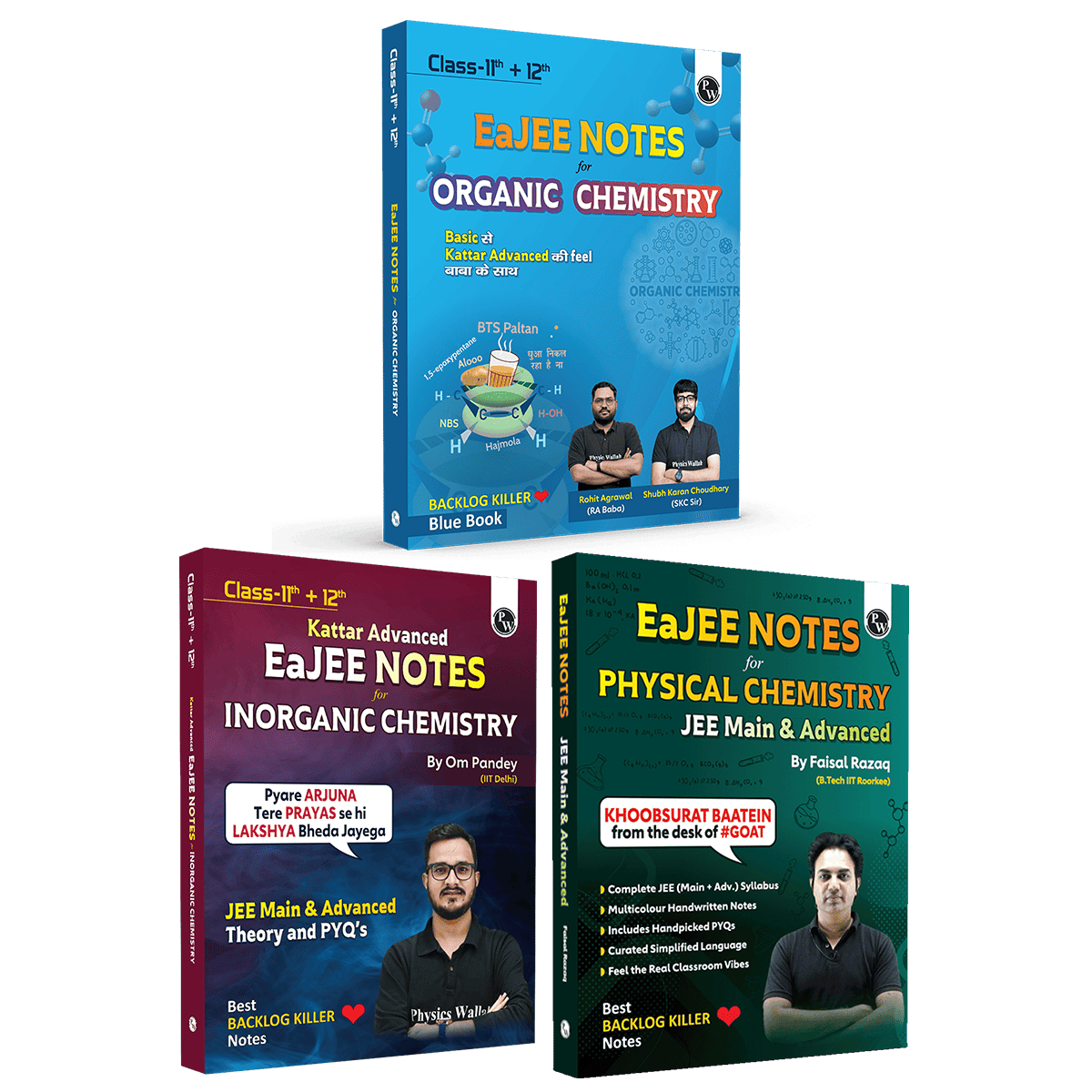
If your grades are not improving, then your JEE Main preparation could be taking the wrong direction due to some subtle flaws that have not been fixed. Using JEE Books with a clear study strategy can help you identify and address these gaps early, which can make a significant difference in your preparation. Most students face problems in the absence of a clear and systematic JEE Main study strategy that tackles conceptual inadequacies. Understanding these mistakes and using JEE Books for focused practice can help turn your preparation into real score gains on test day.
10 Common Mistakes to Avoid in JEE Main Preparation
Even with a well-planned study schedule, certain mistakes can slow down your progress and affect your overall score. Identifying these issues early can help you make timely changes to your preparation strategy. The following points highlight common pitfalls students should watch for during their preparation. Reviewing them regularly can help you stay focused and avoid repeating the same mistakes.
1. Overloading Your Study Resources
Accumulating a massive pile of reference books often creates more confusion than clarity. Many aspirants jump between multiple authors for a single topic, which breaks the continuity of learning.
-
The Problem: Collecting too many unread books breeds anxiety and splits your attention across conflicting methodologies.
-
The Solution: Restrict your core resources to reliable modules and standard NCERT text. Quality practice always trumps sheer quantity when building conceptual depth.
2. Ignoring the Power of Previous Year Questions
Skipping past exam archives is a critical blunder. Without evaluating past trends, your JEE Main preparation mistakes will repeatedly manifest as unexpected time drains during the actual test.
-
The Problem: Treating JEE previous years questions as an afterthought rather than a primary diagnostic tool.
-
The Solution: Integrate chapterwise solved papers into your weekly routine to spot recurring question patterns.
3. Lacking a Structured Daily Schedule
Random study hours without a fixed timetable invite procrastination. Effective preparation thrives on consistency rather than sporadic marathon study sessions.
-
The Problem: Studying topics haphazardly without tracking daily or weekly milestones.
-
The Solution: Draft a balanced study plan that assigns specific blocks for Physics, Chemistry, and Mathematics, ensuring equal coverage.
4. Neglecting Chemistry NCERT Lines
Many high-scoring aspirants lose crucial ranks simply by undermining the theoretical depth of inorganic and organic chemistry sections.
-
The Problem: Treating chemistry text as secondary to heavy numerical problem-solving.
-
The Solution: Read every line of NCERT chemistry thoroughly, as direct conceptual statements frequently appear in the computer-based test.
5. Failing to Analyse Mock Test Performance
Writing mock tests is only half the battle. If you fail to review your mistakes, you are bound to repeat them under exam pressure.
-
The Problem: Checking only the final score and moving directly to the next test.
-
The Solution: Spend double the duration of the test analysing incorrect answers, conceptual blunders, and time management leaks.
6. Procrastinating on Difficult Topics
Sweeping challenging concepts under the rug creates massive panic as the examination date draws closer.
-
The Problem: Sticking only to comfortable chapters while avoiding high-weightage complex topics.
-
The Solution: Tackle intimidating chapters early with expert guidance and targeted problem sets to turn weaknesses into scoring strengths.
7. Poor Time Allocation During Practice
Solving complex numerical problems without tracking time builds bad habits that penalize you during timed assessments.
-
The Problem: Taking an hour to solve a single physics or math puzzle without clock constraints.
-
The Solution: Practice questions under strict timer conditions to build the reflex needed for rapid problem-solving.
8. Relying Solely on Passive Learning
Watching endless video lectures without picking up a pen leads to an illusion of competence.
-
The Problem: Believing that understanding a concept on screen equals the ability to solve it independently.
-
The Solution: Balance lecture hours with active derivation, handwritten notes, and rigorous numerical practice.
9. Ignoring Physical Health and Sleep Cycles
Exhausting your body through sleep deprivation drastically reduces cognitive retention and calculation accuracy.
-
The Problem: Pulling frequent all-nighters that destroy memory consolidation and focus.
-
The Solution: Protect your biological clock by securing seven to eight hours of sleep daily to keep your mind sharp.
10. Failing to Adapt Your Strategy Over Time
Sticking rigidly to a broken approach just because you started with it will stall your growth.
-
The Problem: Refusing to modify your study techniques despite stagnant test scores.
-
The Solution: Assess your monthly progress objectively and refine your JEE Main preparation strategy based on performance feedback.
Check Out: JEE Revision Books
JEE Main Preparation Diagnostic Table and Warning Signs
A regular review of your preparation can help identify gaps before they affect overall performance. The following table highlights common warning signs and the corrective steps students can take. Use it as a quick self-check during your preparation.
|
Performance Area |
Diagnostic Indicator |
Immediate Corrective Action |
|
Material Usage |
Shifting between three or more books |
Standardize to single core module |
|
Test Review |
Ignoring incorrect answers list |
Build a dedicated error log notebook |
|
Syllabus Pace |
Skipping inorganic chemistry pages |
Read two chapters of NCERT daily |
Mindset Tips for Better JEE Main Preparation
The break-through is a change from passive worry to active problem-solving. If your scores plateau, looking at each bad mock score as data rather than a personal failure can help keep you emotionally level. Targeted revisions are a better use of your energy and save mental endurance, unlike relearning full courses. Consistent action will always be better than intermittent spurts of intense motivation. Trust the courses, they are created to help you avoid burnout triggers and to ensure sustainable academic improvement. Maintain a disciplined study schedule.
How to Track Your JEE Main Preparation Progress
You are better off with a preparation strategy if you can tell if it’s actually making a difference to your performance. Don’t just track your fake test scores, but also keep a tab on your accuracy, questions attempted, time spent and the type of mistakes you are making in each chapter. This allows you to see whether the problem is conceptual understanding, math errors, question choice or time management.
Prepare a simple weekly progress sheet with columns for Physics, Chemistry and Mathematics. Keep track of chapters you have studied, questions you have attempted, exam scores and areas that require revision. For every question answered incorrectly, determine if the error was due to a forgotten formula, a poor notion, a calculation error, or misunderstanding of the question. A weekly review of this record may uncover patterns not apparent from your overall score.
You can also create minor milestones instead of focusing on your final JEE Main result. For example, try to enhance the accuracy in a particular chapter or try to lessen the time taken to solve a series of problems. This strategy makes your preparation a process of continual improvement, where each test gives you specific advice on what to focus on next.
Read More: JEE Important Questions Chemistry 2026 with Solutions
JEE Main FAQs
What are the most common JEE Main mistakes to avoid?
Some of the common mistakes are not referring to the previous year question papers, using too many scattered study materials, not analyzing practice exams and ignoring NCERT Chemistry books. By streamlining your resources you prevent cognitive overload.
How can I build an effective JEE Main study plan?
A balanced study plan should distribute daily hours equally among Physics, Chemistry and Mathematics. Dedicated periods for regular revision, formula memorization and weekly full-length mocks.
Is NCERT enough for complete JEE Main preparation?
Ncert is the basis and can’t be ignored especially for Chemistry. But for Physics and Mathematics, students need extra practice books and well-structured problem modules for advanced application to score well.
Why are previous year questions crucial for preparation tips?
Practicing from prior papers gets you familiar with the pattern of testing, focuses on high-weightage chapters which are repeated, and prepares your brain to handle the time efficiently within the real exam limits.
How should beginners learn how to prepare for jee main?
Beginners should start early by understanding the official syllabus, gathering limited and trusted study materials, establishing a disciplined daily timetable, and focusing heavily on core concept clarity.