How JEE Modules are Structured to Build from Basics to Advanced-Level Problems

For many aspirants, the problem is to clear the engineering entrance exam itself, as they find it difficult to transition from textbook theories to complex problem-solving. One of the main reasons for this difficulty is the lack of sequential preparation material, creating gaps in the clarity of important concepts.
The answer to this problem lies in quality JEE modules, which offer a well-defined route through the entire syllabus. These books simplify deep subjects into simple topics, so you develop the skills naturally.
Importance of Structured JEE Modules
Cracking a high-level exam requires a study routine that values deep analytical mastery over simple memorisation. The primary design behind elite coaching material relies on progressive advancement, ensuring you never feel lost between easy definitions and multi-concept calculations.
The Gradual Stepping Stone Framework
Chapters are intentionally mapped to make sure your brain handles fresh information in a logical sequence.
-
Starting with fundamental definitions using simple, direct language.
-
Moving to basic numeric formulas with direct, single-step questions.
-
Advancing to analytical questions that blend multiple core concepts together.
-
Completing chapters with complex, exam-level application tests.
Segmenting Concepts for Better Focus
Long chapters are split into smaller sections to avoid cognitive overload. This means you have to be 100% good at that narrow concept before moving on to the next connected piece.
How is the JEE Modules Layout?
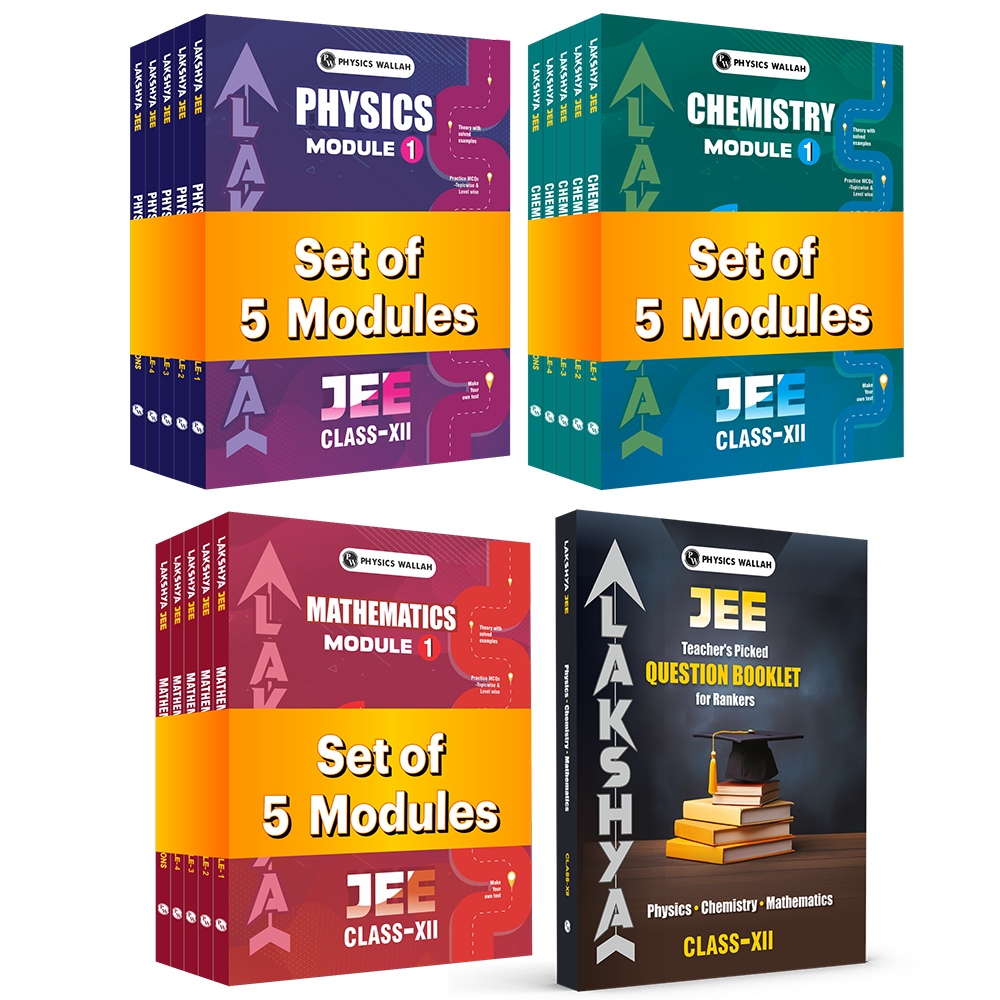
A systematic framework keeps your preparation organised. Every single unit follows a predictable, highly functional layout engineered to improve your speed and logical processing. Resources such as the Lakshya JEE Class 12th Combo PCM 2026 further support structured learning by helping students maintain consistency, revise effectively, and balance preparation across all subjects.
Detailed Theoretical Explanations
The first pages are dedicated entirely to giving you the maximum conceptual clarity. They explain complex laws and responses without using fancy academic words. Key rules, exceptions and core assumptions are highlighted for visual impact so that you never miss the small details examiners use to test students.
Curated Examples with Detailed Solutions
Right after the theory text, you will find several solved questions. These examples are arranged in increasing order of difficulty. They show you exactly how to apply your formulas, teaching you the ideal methodology to approach questions without making silly calculation errors.
Quick Revision Summaries
Every chapter ends with a short overview page that collects vital equations, shortcuts, and core points. This functions as a helpful tool for quick revision right before your routine weekend practice tests or full-length mock papers.
How to Use JEE Modules in Class 11?
The shift from secondary school to higher secondary education is a famously steep learning curve. The syllabus expands rapidly, and the depth of questions changes completely.
Using a dedicated JEE module class 11 pack helps you cross this massive gap smoothly. The material concentrates heavily on mechanics in Physics, physical chemistry rules, and basic calculus or coordinate algebra in Mathematics. These specific domains form the structural backbone of the entire competitive syllabus.
When selecting study resources, look for highly rated class 11 modules for JEE that focus heavily on strengthening fundamentals. These books spend extra time breaking down vectors, basic integration, and chemical bonding, ensuring your foundation stays solid for tougher upcoming topics.
JEE Modules Exercises Across Multiple Levels
The primary benefit of these educational sets lies in their practice sections. Exercises are separated into clear tiers to test and stretch your problem-solving limits systematically.
|
Exercise Tier |
Specific Focus Area |
Target Question Style |
|
Level 1 |
Primary Concepts & Board Prep |
Single-choice objective, direct formula application |
|
Level 2 |
Entrance Main Standard |
Multi-correct choices, logical matrix matching |
|
Level 3 |
Advanced Engineering Challenges |
Integer answers, paragraph-based multi-steps |
Level 1: Building Foundational Confidence
This section contains direct questions that confirm whether you understand standard definitions and can apply formulas properly. Completing these sheets correctly provides an initial confidence boost and ensures you pick up easy marks on standard questions.
Level 2: Rising to Main Level Standards
Here, the problems require you to link two different concepts within the same chapter. The phrasing becomes trickier, making option-elimination methods highly useful for quickly finding the correct choice.
Level 3: Conquering Advanced Questions
This is the ultimate training ground for top ranks. These problems are analytical and usually demand ideas from entirely different chapters. For instance, you might need to use a thermal property along with a vector equation to solve a single problem.
How to Use JEE Modules?
As you enter the final year of preparation, time management becomes highly critical. You must master challenging new topics while regularly reviewing your earlier coursework.
Utilizing a specific PW modules class 12 JEE set allows you to handle complex subjects like electrodynamics, calculus, and organic synthesis effectively. These booklets are designed to save time by integrating key first-year concepts straight into current daily lessons.
Comprehensive packages like the JEE module class 12 series focus on high-yielding subjects that dominate the actual question papers. They provide deep analytical breakdowns and advanced mathematical derivations that match the current design of the entrance exam perfectly.
JEE Modules vs Textbooks
While standard reference books are excellent for slow theoretical reading, they are rarely optimised for the strict time limits of engineering competitive exams.
-
Exam-Oriented Layout: Every line and equation fits the actual exam blueprint, which cuts out unnecessary, non-essential reading.
-
Organised Past Questions: JEE Previous years questions are sorted by specific topic and chapter, letting you see exactly how trends have shifted over the last few years.
-
Speed-Optimised Practice: Training sets are calibrated to boost your speed and accuracy under realistic, timed conditions.
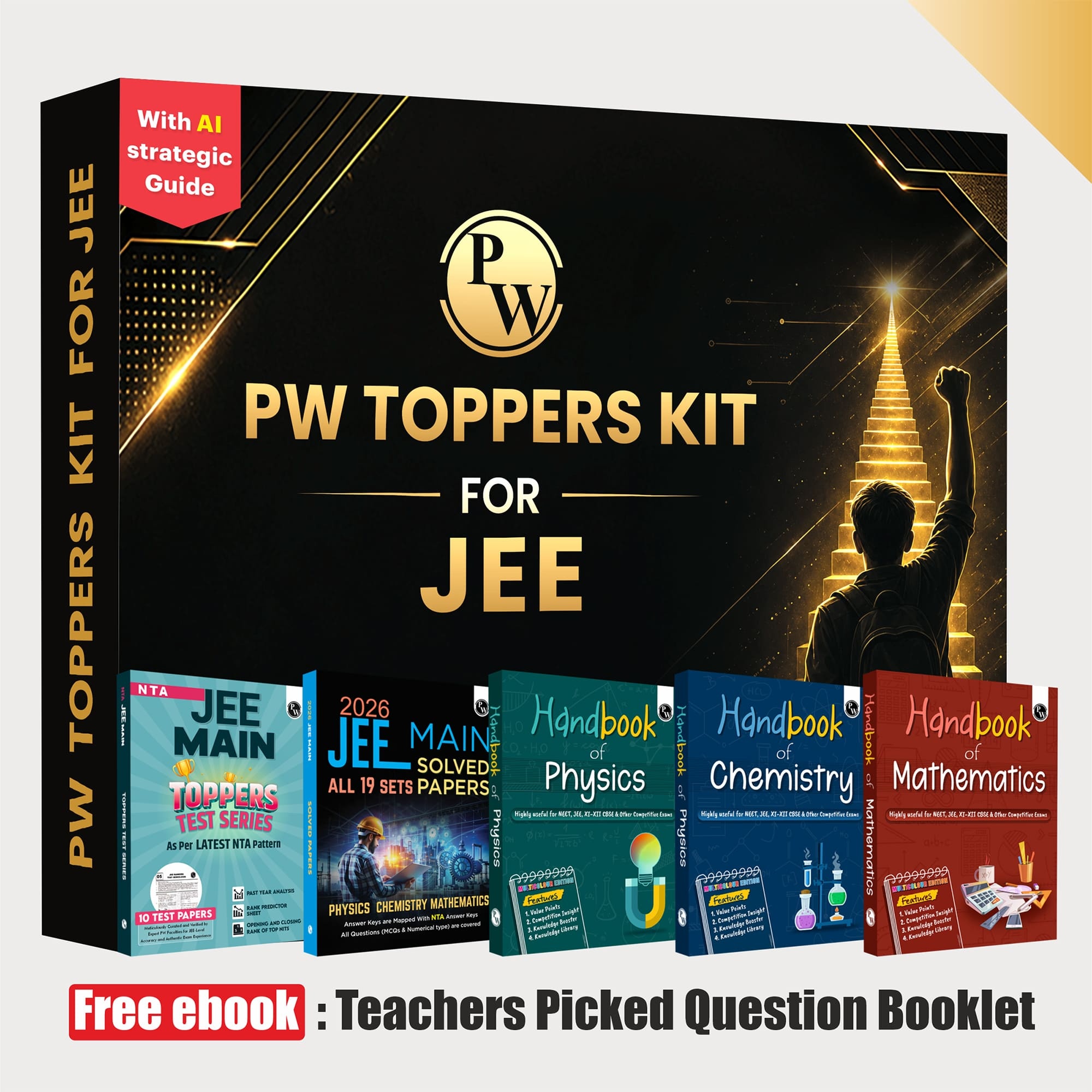
If you are looking for highly recommended, structured tools that follow this exact student-friendly framework, you can explore the extensive selection available in the PW modules for JEE collection.
Tips for Using JEE Modules
Simply buying top-tier learning materials will not guarantee results; you must know how to use them efficiently through your preparation timeline.
Avoid Skipping Practice Tiers
Never skip straight to Advanced questions out of impatience. Always complete the core theory text and Level 1 questions first. Missing basic steps leaves hidden gaps in your knowledge, causing you to get stuck on tougher steps later.
Maintaining an Active Error Log
Whenever you find a problem difficult, mark it with a distinct highlighter color. Keep a separate workbook where you write out the correct logic for that specific question. Return to these marked questions during your monthly revision hours.
Solving Under Strict Time Limits
When practicing Level 2 and Level 3 questions, always use a countdown timer. Aim to solve around twenty questions in approximately forty-five minutes. This builds the mental endurance needed to handle extreme time constraints on exam day.
Read More: The Ultimate JEE Advanced Study Plan Using PW Modules
JEE Modules FAQs
1. How do JEE modules help students who have weak basic concepts?
These books are organized to build your knowledge step-by-step. They start with simple explanations, elementary formulas, and direct solved examples before introducing any complex problems, making them ideal for improving basic concepts.
2. Can I use a single PW JEE modules pack to prepare for both Main and Advanced tiers?
Yes, a complete PW JEE modules pack covers both exam tiers. It includes separated assignments designed for the direct conceptual needs of the Main paper as well as the deep, analytical questions found in the Advanced test.
3. Is it necessary to review Class 11 books while studying the Class 12 syllabus?
Yes, a major portion of the final entrance exam contains topics from your first year. Using targeted study tools helps keep those older chapters fresh while you handle your current, advanced Class 12 coursework.
4. What makes specialized entry-level engineering packages better than school textbooks?
School textbooks focus mostly on subjective descriptions and descriptive board exam answers. Specialized entrance packages prioritize objective problem-solving methods, time-saving shortcuts, and integrated multi-concept practice.
5. What is the best way to solve the different exercise levels inside the booklets?
You should always maintain a strict linear path. Read the theory notes first, check the basic solved examples, finish the single-correct objective questions, and then try the multi-step advanced questions.