What JEE PYQ Books are Available and Which Covers Main vs Advanced
Many aspirants struggle to balance daily learning while trying to understand exactly how these concepts are tested in the actual examination hall. Solving an authentic JEE Previous Year Papers collection bridges this gap by turning passive theoretical knowledge into exam-ready problem-solving skills.
Choosing the right book ensures you do not waste valuable time on outdated patterns or irrelevant questions. This guide breaks down the best past year resources available, helping you choose between targeted tier practice and long-term historical question banks to make your study hours highly productive.
Overview of JEE PYQ Books
A standard JEE PYQ compilation serves as an essential diagnostic tool for engineering aspirants looking to gauge their actual exam readiness. These curated resources compile authentic questions from past engineering entrance examinations, allowing you to track changes in question formats and marking schemes over the years.
By systematically analyzing these papers, you can map out high-weightage sections and understand the specific cognitive depth required for different exam tiers.
Using a comprehensive JEE previous year question paper set helps you move away from rote memorisation and forces your brain into active recall. The mid-term period is the ideal time to embed these past papers into your weekly study schedule.
Features of a JEE PYQ Book
An effective past year book must provide structured support to make your self-study sessions highly productive. High-quality resources include specific structural elements that elevate them above a basic list of old exam questions:
-
Comprehensive Question Formats: The books integrate single correct options, multiple correct options, integer-type inputs, and numerical value questions to mirror the true layout of the exam.
-
Comprehension-Based Variations: Dedicated sections feature paragraph-based MCQs and matching-type formats to build advanced analytical skills.
-
Recent Solved Papers: They include fully solved papers from the latest testing cycles, such as the 2024 session, providing accurate insight into modern difficulty levels.
-
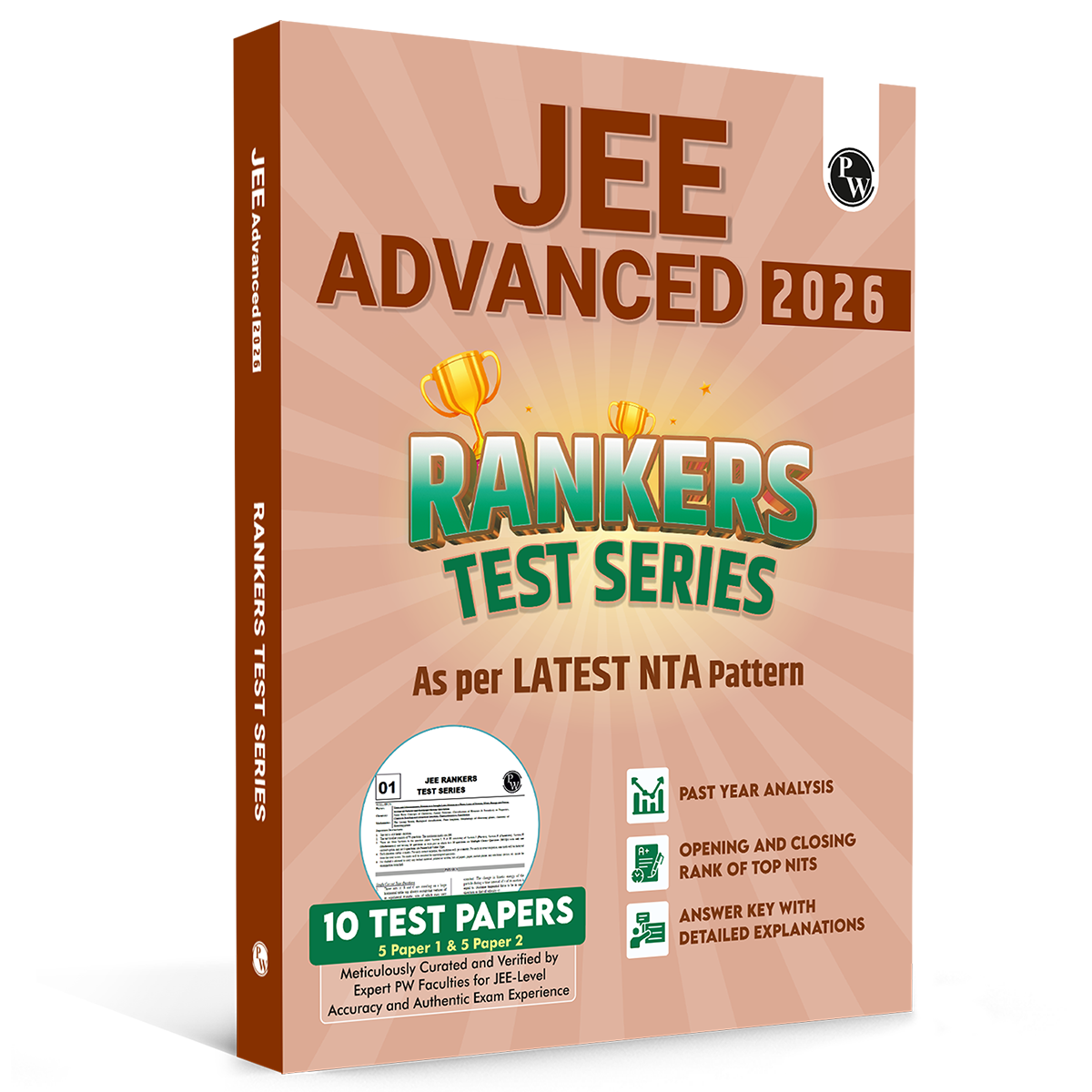
Full-Length Mock Tests: Built-in mock exams based on the latest official pattern give you a realistic simulation of the actual pressure inside the exam hall.
-
Chapter-Wise Sorting: Questions are systematically arranged by topic, allowing you to complete a classroom chapter and immediately test yourself on that specific unit.
-
Step-by-Step Solutions: Every question is paired with verified, detailed explanations to clarify the underlying concept rather than just providing a raw answer key.
Best Book Options for JEE PYQ Main
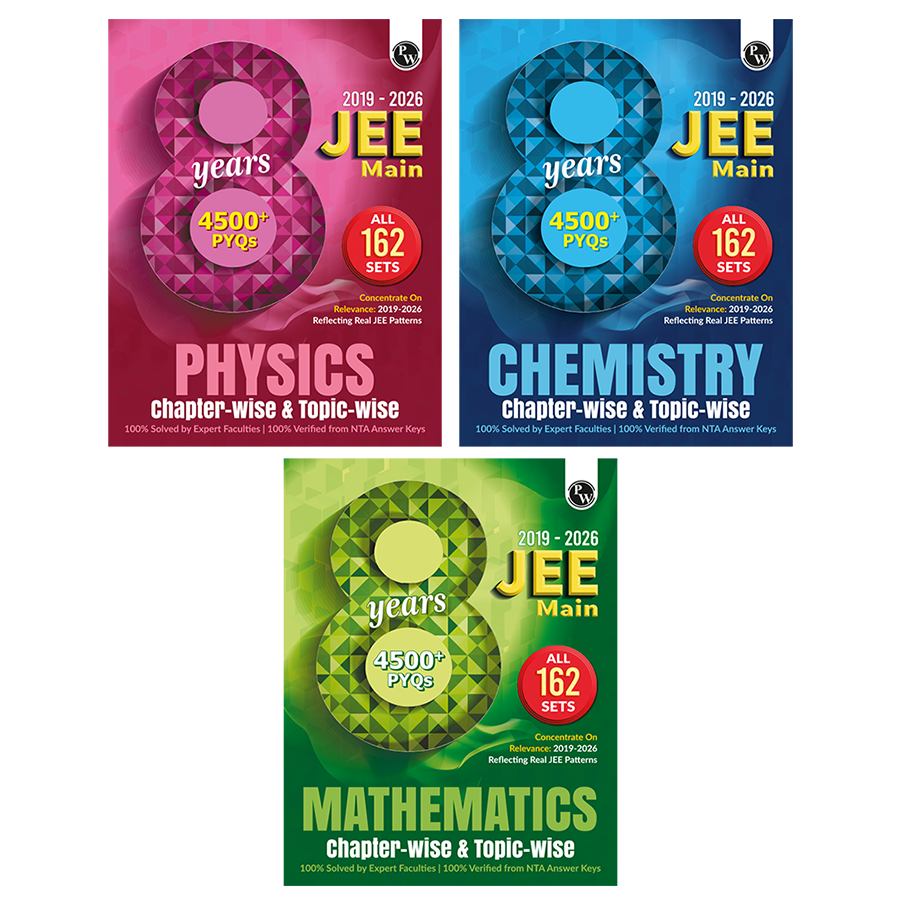
When your primary focus during the mid-term is clearing the first tier of the engineering entrance exam, you need a resource tailored strictly to its specific difficulty level and fast-paced format. The 8 Years JEE Mains PYQ compilation is designed precisely for this phase of your preparation journey.
1. 8 Years Main Combo PackThis combo brings together all the essential papers from recent online testing cycles. It provides an excellent baseline for speed, helping you identify which chapters dominate the initial screening round.
2. Individual Subject Editions
If you find that a specific subject is pulling down your overall mock scores, you can opt for standalone books. These are available as:
-
8 Years Main Mathematics Chapter-wise and Topic-wise Solved Papers
-
8 Years Main Physics Chapter-wise and Topic-wise Solved Papers
-
8 Years Main Chemistry Chapter-wise and Topic-wise Solved Papers
These Main editions compile over 4500 past year questions spanning 162 total question sets from recent online computer-based tests.
The collection focuses heavily on modern exam trends, making it an excellent tool for boosting your calculation speed, refining your option elimination techniques, and handling the specific numerical value formats unique to the Main exam.
Best Book Options for JEE PYQ Advanced
The second tier of the engineering entrance exam demands a massive leap in conceptual depth, multi-concept application, and mental stamina.
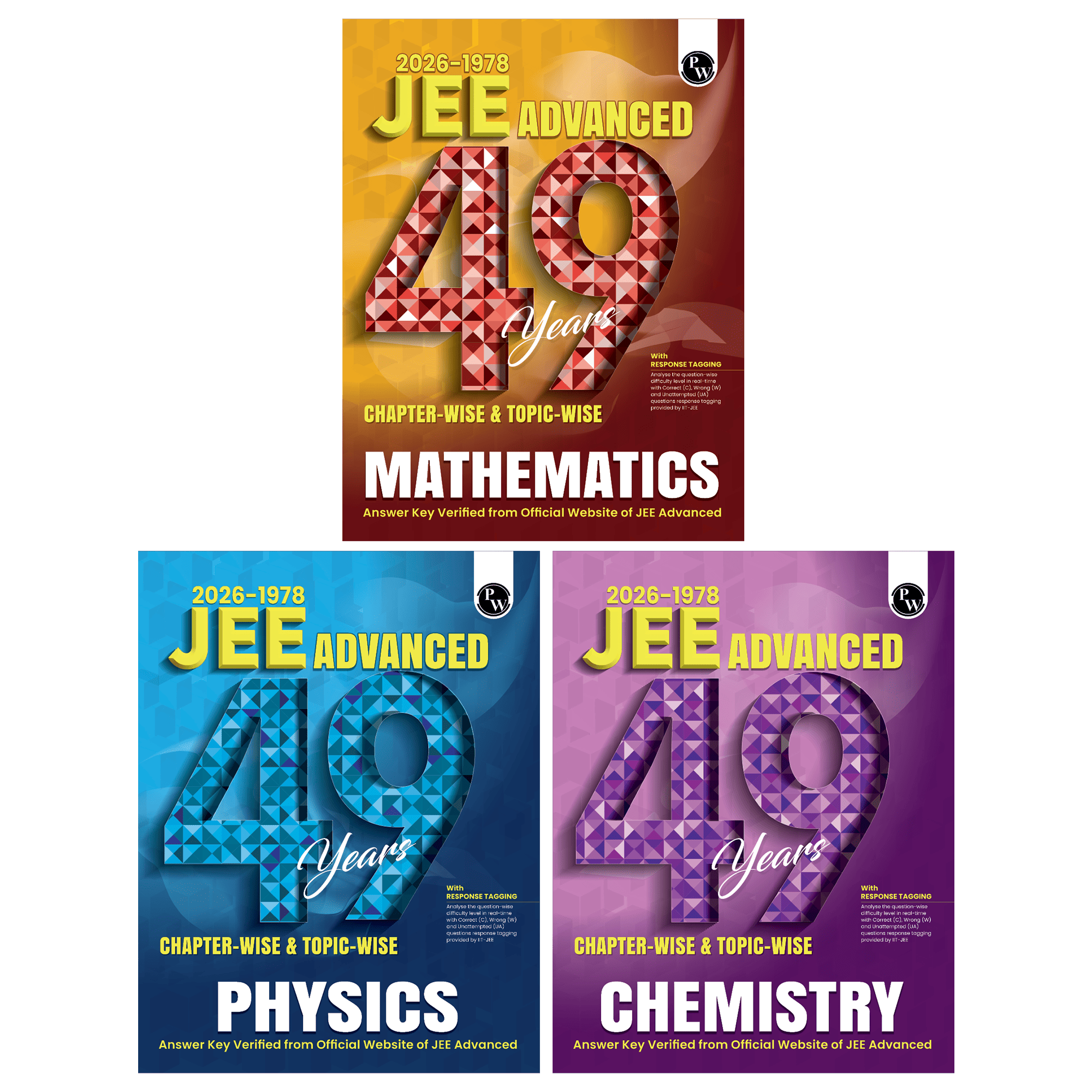
To tackle this challenge, aspirants require extensive historical data to trace how complex topics have evolved over decades. The 49 Years JEE Advanced PYQs provides this deep, comprehensive archive.
1. 49 Years Advanced Combo Pack
This comprehensive compilation groups nearly five decades of elite engineering questions into one unified set. It allows you to see the complete evolution of complex problem-solving patterns.
2. Subject-Specific Advanced BooksTo master the deep analytical thinking required by the premier Indian Institutes of Technology (IITs), you can dive into separate subject volumes:
-
49 Years Advanced Mathematics Chapter-wise and Topic-wise Solved Papers
-
49 Years Advanced Physics Chapter-wise and Topic-wise Solved Papers
-
49 Years Advanced Chemistry Chapter-wise and Topic-wise Solved Papers
These editions go back nearly five decades, offering an unparalleled repository of highly complex problems. They are absolutely crucial for mastering subjective entries, multiple-choice options, and matrix-match questions.
Chapter-wise vs Year-wise Format for JEE PYQ
Choosing how your past questions are organized drastically changes how well you retain information during the mid-term period.
1. The Chapter-wise Layout
This structure organizes past questions directly by specific chapters and subtopics. It is highly beneficial during the mid-term because you can finish a topic in class and instantly solve the corresponding past questions. This targeted approach solidifies your grasp of specific concepts and highlights areas that need immediate re-study.
2. The Year-wise Layout
This format presents past papers exactly as they appeared in the actual exam hall for a specific calendar year. This layout is ideal for late-stage preparation, closer to the final exam dates.
It helps you practice overall time management, teaches you how to switch mindsets smoothly between different subjects, and trains your brain to skip exceptionally difficult questions to secure a better aggregate score.
Differences in JEE PYQ Main and Advanced
Understanding the structural differences between the two exam tiers helps you allocate your valuable study time more effectively during your mid-term revisions. Using a well-organized JEE Revision Book can further support this process by helping you revise formulas, consolidate concepts, and focus on high-priority topics without getting overwhelmed by lengthy study material.
-
Conceptual Depth and Problem Complexity
The Main tier focusing heavily on speed, precise formula application, and high accuracy across a broad range of topics. In contrast, the Advanced tier demands deep conceptual integration, where a single problem might require you to combine principles from three different chapters across physics and mathematics.
-
Question Layouts and Scoring Risks
Main exams utilize a predictable mix of single correct MCQs and straightforward numerical value questions. The Advanced exam introduces unpredictable multi-correct options, complex paragraph comprehension, and intricate matrix matching, often accompanied by negative marking schemes that require careful risk management.
-
Historical Archive Requirements
To prepare effectively for Main, reviewing recent years (such as the 8 Years series) is usually enough to capture current computer-based testing shifts. However, for Advanced, a long-term historical archive (like the 49 Years series) is essential to master the classical, deep concepts that examiners love to reinvent.
How to Choose the Right JEE PYQ Book?
Selecting the ideal past year resource depends heavily on your current preparation phase, your strengths, and your final target goals.
-
Assess Your Current Syllabus Progress: If you are midway through your coursework, pick chapter-wise books so you can practice topics sequentially without running into unlearned material.
-
Identify Your Primary Target: If your immediate goal is clearing the baseline cutoff and securing a reliable NIT seat, prioritize the 8 Years Main resource to maximize your solving speed.
-
Evaluate Conceptual Depth: If you have already mastered foundational concepts and want to target an elite IIT seat, invest your time heavily in the 49 Years Advanced subject books.
-
Check for Detailed Explanations: Always ensure the book provides step-by-step solutions rather than just a basic answer key, so you can learn from your mistakes independently.
Read More: JEE Mains Maths PYQ with Solutions PDF
JEE PYQ Book FAQs
How should I use a JEE PYQ book during my mid-term preparation?
The right approach is to use it right after completing a chapter in class. Start with the chapter-wise sections of the Main papers to build your foundational confidence, then move on to the Advanced problems to master deeper conceptual applications.
Are online JEE past year papers better than printed books?
Printed books are generally superior for focused, distraction-free study sessions. However, keeping a JEE previous year papers PDF on your digital devices is highly convenient for quick conceptual reviews during travel or short breaks.
Why is a 49-year history useful for the JEE advanced exam?
The advanced tier frequently tests deep foundational concepts through unique, multi-layered problems. Having access to a long history of past questions exposes you to classical problem-solving techniques that are rarely found in shorter, recent compilations.
Do these JEE past year books include mock tests?
Yes, high-quality books include full-length mock exams modeled after the latest official testing patterns. This allows you to simulate a realistic exam environment after you finish your chapter-wise preparation.