How to Revise JEE Topics Faster with Lakshya Modules
Revising for JEE Main and Advanced while managing Class 12 board exams often feels like a race against time. Many students find themselves buried under a mountain of scattered notes, struggling to figure out which topics require immediate attention and which can wait.
This pressure often leads to a pile-up of concepts where practice feels disorganised and mock test scores don't reflect the hours of hard work put in.
To bridge this gap, the JEE Lakshya modules offer a structured pathway, specifically designed to help Class 12 students regain control over their preparation and speed up their revision process without compromising on depth or clarity.
Check Out: JEE Modules
Overview of JEE Lakshya Modules for Class 12
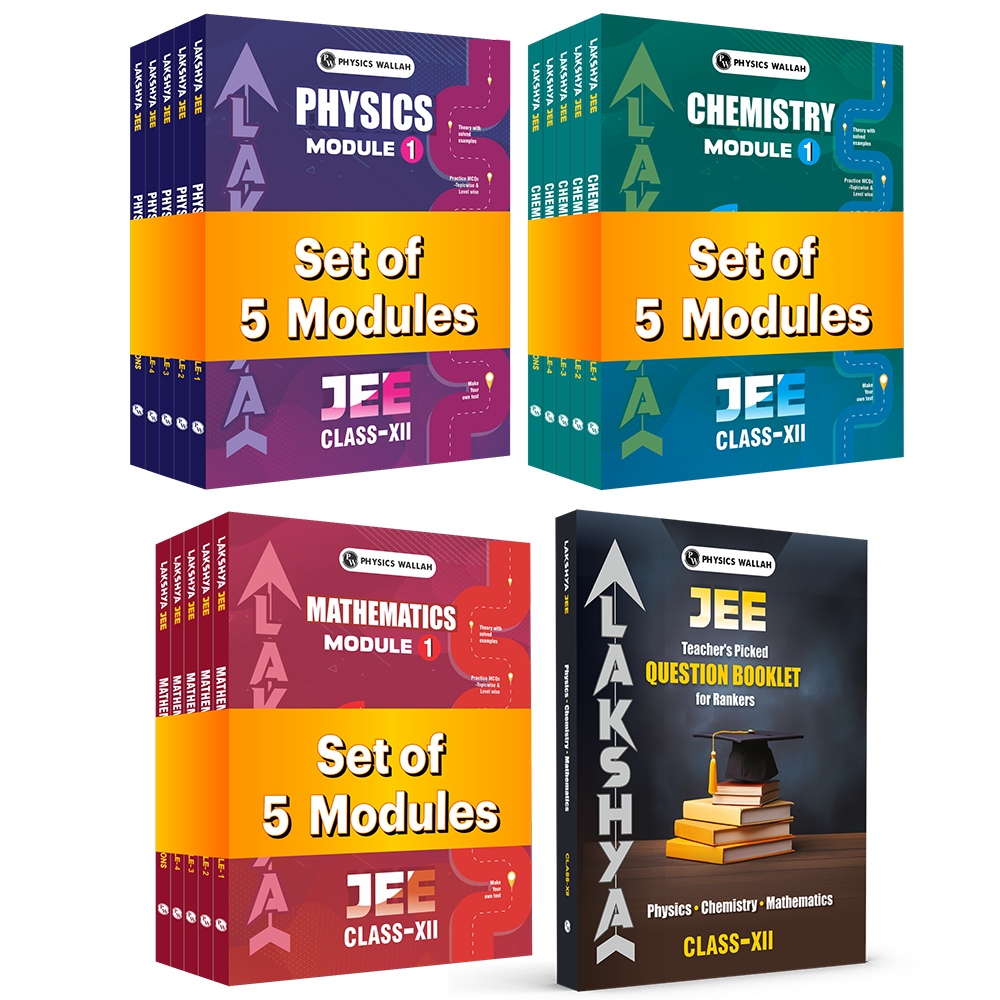
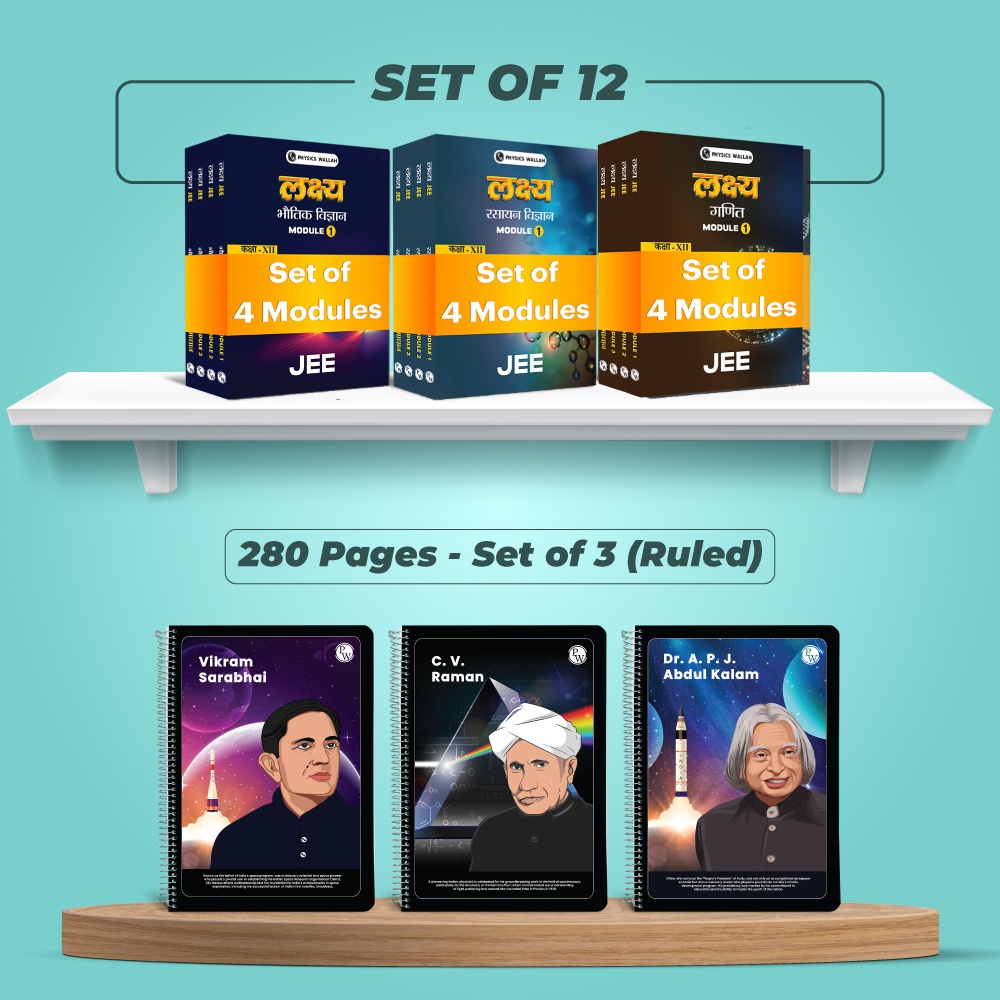
The modules serve as a comprehensive 16-book combo set tailored for the 2026 examination cycle. This set includes dedicated modules for Physics, Chemistry, and Mathematics, along with a specialised Questions Booklet and a Solutions Combo.
The primary goal of these modules is to provide a seamless transition from clarity of basic concepts to the rigorous requirements of JEE Advanced.
By aligning with the latest exam patterns, this module ensures that students do not waste time on irrelevant content. Instead, they focus on high-impact topics identified through a 7-year analysis of JEE Main papers. This analytical approach helps students prioritise their daily study hours effectively during the crucial mid-term phase.
Features of JEE Lakshya Modules
The effectiveness of these JEE Lakshya modules lies in their unique pedagogical structure. Each book is broken down into specific sections that cater to different stages of learning and revision:
-
Engaging Chapter Openers: Every chapter begins with introductory conversations and riddles. This approach sparks curiosity and builds an intuitive understanding before diving into complex theories.
-
Exam-Oriented Theory: The theory is kept simple and supported by in-text solved examples. This creates a strong link between understanding a concept and knowing how to apply it to a problem.
-
Topic-wise CYU (Check Your Understanding): After every concept, you find 10-20 questions for immediate self-assessment. This ensures you don’t move to the next topic with lingering doubts.
-
Multi-Level Exercise Sets:
-
Prarambh Section: Focuses on strengthening fundamentals and core concepts.
-
Prabal Section: Contains JEE Main-level questions focused on application, accuracy, and time management.
-
Parikshit Section: Includes Advanced-level problems for deep understanding and multi-concept reasoning.
-
SETU (Bridge) Exercise: A specialised section consisting of 30-50 medium-level questions designed to bridge the gap between JEE Main and Advanced difficulty.
How JEE Lakshya Modules Help Students
Revision is not just about re-reading; it is about active recall and targeted practice. These modules facilitate faster revision through several strategic tools:
1. Strategic Weightage Analysis
The modules provide chapter-wise weightage based on the last seven years of JEE Main papers. When you are short on time, you can use these modules to focus on high-yield chapters first. This prevents the common mistake of spending too much time on low-weightage topics.
2. Topper’s Choice Revision Booklet
Included in the JEE modules is a Best Questions Booklet. It contains 100-150 high-probability questions per chapter, along with essential formulas and short notes. This is a massive time-saver during the mid-term season when you need to refresh an entire chapter in under an hour.
3. QR-Based "Make Your Own Test"
One of the most innovative features is the ability to create personalised tests. By scanning a QR code, you can generate a test of 15, 30, or 60 questions from any three chapters. This helps you practice exactly what you are weak in, rather than following a generic test schedule.
Benefits of Using JEE Lakshya Modules
Using the Lakshya JEE module offers several advantages that go beyond standard textbooks.
-
Batch Alignment: These modules are completely aligned with the course, ensuring that what you learn in class is exactly what you practice in your modules.
-
Complete Pattern Coverage: The exercises cover every possible question type, including multiple-choice, match-the-column, comprehension-based, numerical, integer, and range-based questions.
-
Step-by-Step Solutions: The detailed solutions booklet provides clarity on the logic behind each answer. This reduces the time spent being stuck on a single problem and waiting for a teacher's help.
-
Confidence Building: By solving PW JEE modules, which include Challenger Problems, you push your performance limits. Tackling high-difficulty, thought-provoking questions builds the mental stamina required for the actual exam day.
How to Use JEE Lakshya Modules to Improve Scores
To see a visible jump in your scores, you must use the modules systematically rather than randomly picking questions.
-
Read the Theory Summaries: Start by going through the exam-oriented theory sections to refresh your memory on key definitions and laws.
-
Solve the CYU Questions: Do not skip the "Check Your Understanding" blocks. They act as a filter; if you can't solve these, you need to re-read the theory before moving to the exercises.
-
Prioritise Prabal and Parikshit: For JEE Main, focus heavily on the Prabal section. As you gain confidence, move to the Parikshit section to sharpen your multi-concept reasoning.
-
Analyse Your Mistakes: Use the solutions booklet to understand where your logic failed. Was it a calculation error or a conceptual gap? Identifying this is key to score improvement.
-
Use SETU for Consistency: Use the SETU exercise as a daily drill to ensure you are comfortable moving between different difficulty levels.
Check Out: JEE Previous Year Papers
When to Use JEE Lakshya Modules for Best Results
Timing is everything in JEE preparation. The aspirants should integrate these modules into their routine at specific intervals:
-
During Mid-Terms: This is the best time to use the chapter-end tests. These 45-minute, 1-hour individual tests help you gauge your retention of the Class 12 syllabus while it is still fresh.
-
After completing a chapter: Immediately after a coaching lecture, solve the Prarambh section to lock in the fundamentals.
-
During Weekend Revision: Use the QR-based test feature every Sunday to revise the topics covered throughout the week.
-
Pre-Exam Phase: In the month leading up to JEE Main, the Best Questions Booklet should be your primary resource for quick formula revision and solving high-probability questions.
Study Strategy Plan with JEE Lakshya Modules
A structured plan ensures that you cover all three subjects equally. Here is a suggested weekly strategy for Lakshya JEE 2026 students:
|
Day |
Subject |
Focus Area within Module |
|
Monday & Tuesday |
Physics |
Focus on theory, solved examples, and Prarambh exercises. |
|
Wednesday & Thursday |
Chemistry |
Use CYU questions for organic/inorganic and Prabal for physical chemistry. |
|
Friday |
Mathematics |
Solve SETU exercises and the Parikshit section for complex problem-solving. |
|
Saturday |
Mixed Revision |
Use the "Make Your Own Test" feature for a 180-minute full-length practice. |
|
Sunday |
Analysis |
Review solutions for all incorrect answers from the week’s practice. |
Read More: How to Use JEE Lakshya Class 12 Modules for Physics Preparation?
JEE Lakshya Modules FAQs
Q1: Are the JEE Lakshya modules enough for JEE Advanced preparation?
Yes, the modules include the Parikshit section and SETU exercises, which are specifically designed to bridge the gap between Main and Advanced. They also feature Challenger Problems that provide high-difficulty practice for Advanced-level reasoning.
Q2: How does the Lakshya JEE 2026 module help in Class 12 board exams?
While the focus is on JEE, the clear theory explanations and fundamental questions in the Prarambh section help build a strong base for Class 12 boards, as they clarify the core concepts required for subjective answers.
Q3: What is included in the PW JEE modules combo set?
The combo set typically includes 15 to 16 books covering Physics, Chemistry, and Mathematics modules, along with a dedicated Best Questions Booklet (Revision Booklet) and a Solutions Combo.
Q4: How can I use the Lakshya JEE module for fast revision?
You can use the chapter-wise weightage analysis to pick important topics and then solve the 100-150 high-probability questions from the Best Questions Booklet to refresh your concepts quickly.
Q5: Is the Lakshya JEE content updated?
Yes, the 2026 edition is fully aligned with the latest JEE Main and Advanced patterns, including recent paper analysis and new question types introduced by the exam conducting bodies.