Who should Start JEE Modules from Class 11 vs who should wait for Class 12

Your comfort level with your academic concepts and your clarity with your fundamentals will decide when you should start your holistic competitive preparation. The students of Class 11 with good basics should start early to spread out the massive syllabus load.
Starting your engineering entrance preparation brings up a critical question regarding the right study material timeline. Many aspirants wonder when to dive into specialized JEE Modules to get ahead without burning out. A structured approach helps students build concepts gradually, maintain consistency, and avoid last-minute pressure while preparing for competitive exams.
Importance of JEE Modules
Starting JEE modules helps students build strong concepts, improve problem-solving skills, and understand advanced question patterns gradually. It gives aspirants enough time to practice, revise, and strengthen weak areas before the exam. Early module practice also reduces pressure in Class 12 by spreading the syllabus across two years.
Difference Between JEE Modules and School Textbooks
Standard school textbooks are based on theoretical definitions, derivations, and subjective questions meant for board examinations. Specialized entrance preparation resources shift the entire focus to multiple-choice questions, assertion-reasoning problems, and multi-concept numerical exercises.
These comprehensive learning packages break down vast syllabi into structured units. Each chapter contains detailed topic-wise breakdowns followed by graded exercise levels that move from simple foundational checks to highly advanced analytical problems.
Who Should Start Solving JEE Modules in Class 11?
Beginning your practice early works brilliantly if you have already established a strong academic rhythm. If you fit the profiles described below, introducing a JEE module class 11 routine early will maximize your chances of success.
Students with Strong Conceptual Clarity from Class 10
If you have scored well and thoroughly understood your high school mathematics and science topics, you possess the basic analytical tools required for higher-level applications. Topics like quadratic equations, coordinate geometry, and basic mechanics require strong linear thinking, which you can easily build upon.
Aspirants Aiming for a Top All-India Rank
Securing a position at the absolute top requires solving highly complex, integrated problems. Achieving this level of speed and accuracy demands an estimated two years of continuous, daily practice. Starting in your first senior year gives you around twenty-four months to master every tiny variation in the question patterns.
Disciplined Self-Studiers with Good Time Management
If you can easily manage a daily self-study routine of approximately five to six hours outside of your regular school hours, you are ready for advanced workloads. You can use class 11 modules for JEE to practice problems simultaneously as your school teachers cover the respective topics in class.
Who Should Avoid Starting JEE Modules in Class 11?
Forcing an early start when you are not academically prepared can backfire, leading to severe discouragement. Waiting until your final year of school is a highly practical and successful strategy for several groups of students.
Students Still Mastering Core Board Exam Fundamentals
If you find the transition from class 10 to class 11 physics, chemistry, or mathematics difficult, your priority must be your school textbooks. Attempting complex competitive questions without a firm grasp of basic definitions leads to guesswork and incorrect habits.
Candidates Facing Extreme Academic Stress
The sudden increase in the volume of the syllabus in senior school shocks many students. If you feel overwhelmed by daily assignments and school assessments, adding thousands of competitive questions will increase your anxiety. Waiting allows you to build a steady routine first before introducing heavy PW modules for JEE into your schedule.
Students Transitioning from Different Regional Boards
Some state or regional boards follow a different sequence of topics than the central competitive syllabus. If your school curriculum does not align with the entrance timeline, taking a year to align your knowledge base ensures you do not face significant conceptual gaps when using advanced resources.
Advantages and Disadvantages of JEE Modules for Class 11 and 12
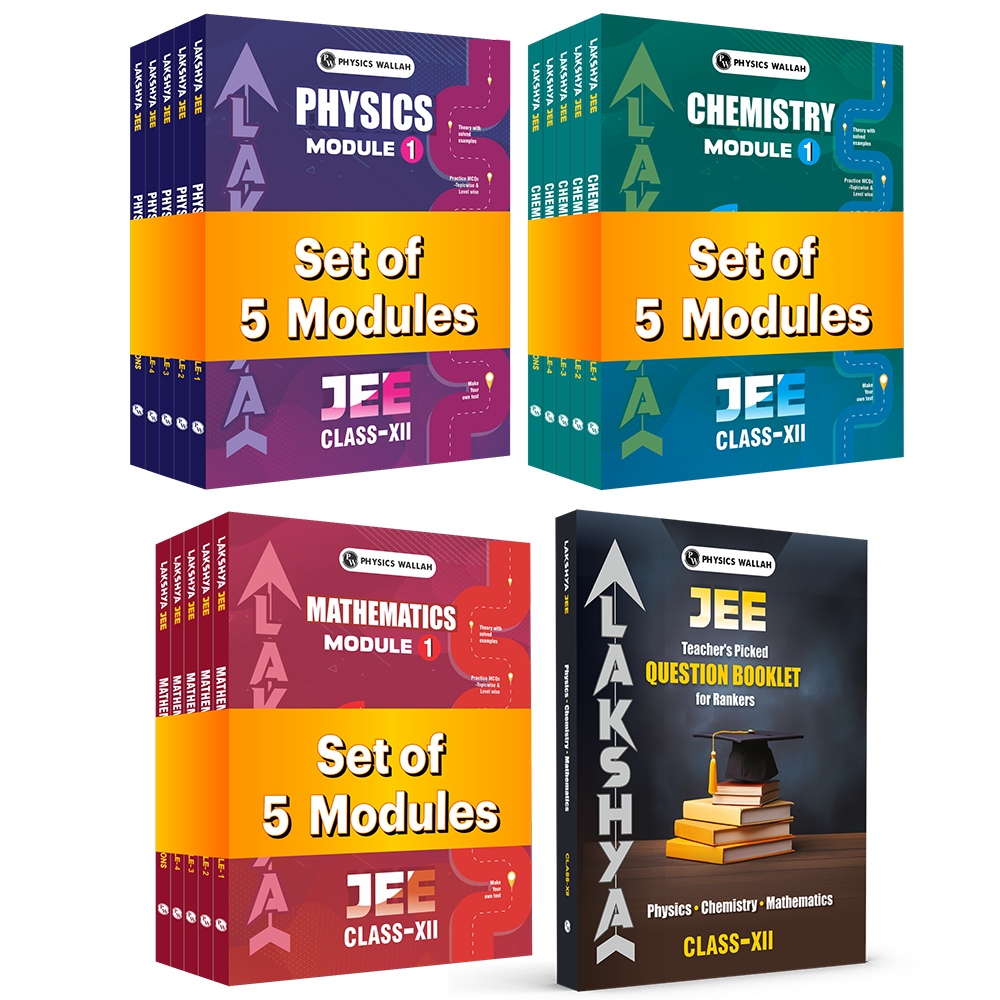
Making the right choice requires weighing how each option impacts your daily study routine, your mental health, and your eventual performance. Along with this, the Lakshya JEE Class 12th Combo PCM 2026 can help students maintain a structured study plan, balance preparation across subjects, and stay consistent throughout their JEE journey.
|
Preparation Parameter |
Starting in Class 11 |
Waiting until Class 12 |
|
Total Practice Time |
Approximately 24 months |
Around 12 months |
|
Daily Workload |
Balanced, around 3-4 hours |
Intense, around 6-8 hours |
|
Syllabus Pace |
Gradual and deeply analytical |
Accelerated and highly targeted |
|
Revision Window |
Estimated 4 to 5 months |
Around 1 to 2 months |
|
Impact on School Marks |
Requires steady balance |
Highly integrated with boards |
How to Manage Class 11 and Class 12 Syllabus with JEE Modules?
Regardless of when you start, managing the volume of chapters efficiently prevents panic during the final exam months. The key is using structured materials systematically to avoid wasting precious study hours.
Mastering the First-Year Foundation
If you start early, focus heavily on high-weightage chapters like mechanics, chemical bonding, and coordinate geometry. Using a dedicated PW JEE modules package helps you filter out irrelevant out-of-syllabus questions, keeping your preparation focused strictly on the latest exam trends.
Accelerating Progress in the Final Year
For those who start later or need to cover backlog topics, efficiency becomes your primary weapon. When you begin working on the PW modules class 12 JEE sets, you must adopt a parallel revision strategy. Spend your weekdays mastering current class 12 topics and reserve your weekends to clear old class 11 concepts.
-
Set a strict weekly goal to complete one current chapter and half an old chapter.
-
Focus on solving the previous year's questions section first to understand the exact difficulty level.
-
Avoid reading multiple theory books; stick to one high-quality resource and spend more time practicing numerical questions.
Using a systematic tool like the JEE module class 12 set ensures that your final year practice covers both the advanced current topics and the essential first-year revisions simultaneously. Along with JEE PYQs, students can strengthen concept application, understand question patterns, and improve accuracy through regular practice of previous years’ exam questions.
Things to Check Before Buying JEE Modules for Preparation
Not all study resources are created equal. Using unorganized question banks can waste your time on outdated patterns or unnecessarily lengthy calculations that do not appear in the actual test.
-
Layered Exercise Levels: The material must guide you smoothly from basic formula application to multi-concept problems.
-
Detailed Step-by-Step Solutions: Written explanations help you identify the exact step where your logic failed.
-
Formula Cheat Sheets: Short summaries at the beginning of each unit save massive amounts of time during last-minute revisions.
Read More: How Many Attempts for JEE Mains Exam?
JEE Modules FAQs
Can a student clear the entrance exam if they only start using JEE modules in Class 12?
Yes, many students clear the exam by starting their dedicated preparation in Class 12. This approach requires around seven to eight hours of focused daily study and a highly disciplined schedule to cover the combined syllabus of both years within approximately twelve months.
Why are school textbooks insufficient for clearing competitive engineering exams?
School textbooks are designed to help you write descriptive, subjective answers and derive formulas for school board exams. Competitive exams test your ability to apply multiple concepts simultaneously under tight time constraints, which requires specialized practice.
Is it beneficial to solve class 11 modules for JEE during summer vacations?
Yes, utilizing your vacation time to solve foundational modules is an excellent strategy. It allows you to practice numerical problems without the daily pressure of school homework, attendance, project submissions, and weekly tests.
What should I do if I get stuck on difficult questions in the JEE module class 12 books?
If you consistently get stuck, pause and review the core theoretical concepts of that specific topic. Avoid looking at the solution immediately; try the problem at least three times using different approaches before checking the answer key.
How many questions should I practice daily from my entrance modules?
You should aim to solve approximately forty to fifty high-quality questions every day. Distribute these questions evenly across Physics, Chemistry, and Mathematics to maintain uniform progress and avoid falling behind in any single subject.