How to Use PW JEE Advanced PYQ Book After Completing a Chapter?
Completing a chapter in your lectures or textbooks gives you basic conceptual clarity, but applying those ideas to complex problems is where real learning occurs. Many students make the mistake of attempting past questions without a clear strategy, leading to frustration, wasted time, and poor retention.
Using your PW JEE Advanced PYQ Book immediately after finishing a topic helps bridge the gap between theoretical knowledge and actual exam requirements. This article explains how to integrate previous year questions into your routine to boost accuracy, time management, and test scores.
Overview of PW JEE Advanced PYQ Book
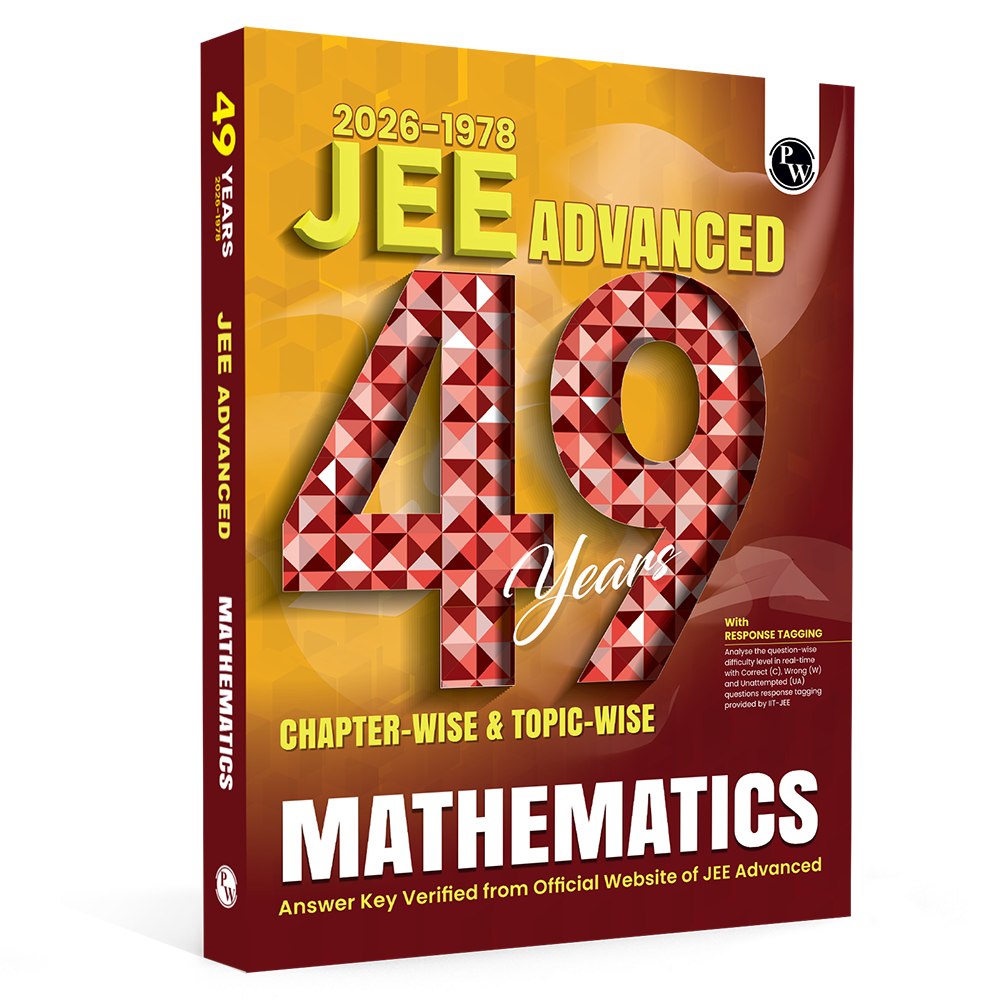
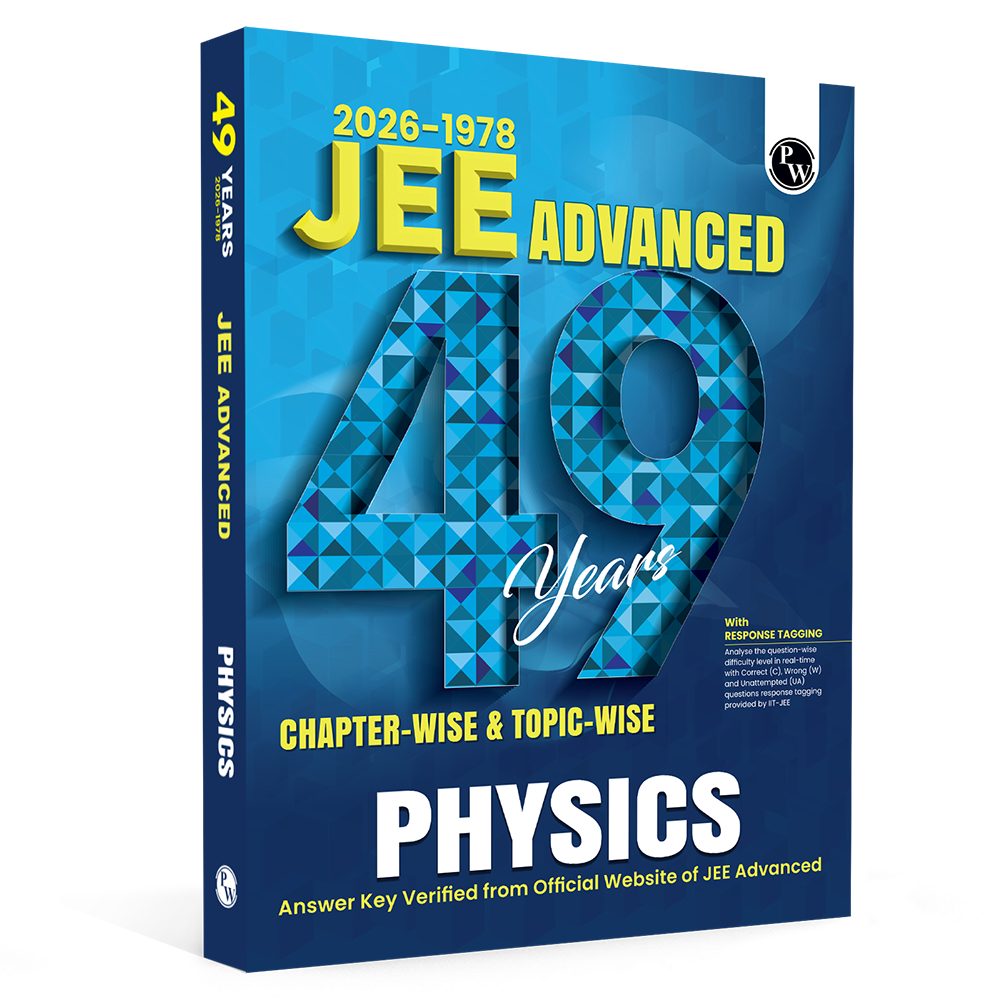
The PYQ Book is a useful practice book for students preparing for the JEE Advanced exam. It includes 49 years of previous year questions from 1978 to 2026, arranged chapter-wise and topic-wise for easy practice. The book covers Physics, Chemistry, and Mathematics with detailed solutions and recent paper analysis.
It also includes trend analysis from the last 7 years and performance data from the last 14 papers. Students can use the book to understand question patterns, find weak topics, improve accuracy, and prepare better for the JEE Advanced exam.
Key Features of PW JEE Advanced PYQ Book Set
Prepare for JEE Advanced with a well-structured PYQ book set covering past exam questions, detailed solutions, and paper analysis. Alongside PYQ practice, JEE Books can help strengthen concepts, provide additional exam-level practice, and improve problem-solving skills. Together, these resources help students understand important topics, identify exam trends, and prepare more effectively for JEE Advanced.
49 Years of JEE Advanced PYQs (1978–2026): Get a complete collection of IIT JEE Advanced Previous Year Questions from 1978 to 2026. The book covers important Physics, Chemistry, and Mathematics questions to help students understand concepts and practice questions from different exam years.
Chapterwise & Topicwise Organization: Questions are arranged chapterwise and topicwise for focused preparation. This structure helps students study one concept at a time, identify weak areas, and revise the complete JEE Advanced syllabus in an organized way.
Detailed Solutions: Get clear, step-by-step solutions for the questions to understand the correct approach. The solutions are aligned with official JEE Advanced answer keys and help students improve accuracy, clear doubts, and build stronger conceptual understanding.
In-Depth Analysis of the Last 7 Years’ Papers: Study detailed analysis of the previous 7 years of JEE Advanced papers. Understand question trends, subject-wise weightage, difficulty levels, important topics, and changes in the exam pattern to plan your preparation effectively.
Performance Data from the Last 14 Papers: Analyze performance details from the last 14 papers, including correct, incorrect, unattempted, and partially correct responses. This data helps students understand common mistakes, improve question selection, and develop a better strategy for the actual examination.
Trend-Based Learning: Identify frequently asked concepts, important chapters, and high-weightage topics through previous paper trends. This helps students focus their study time on important areas and supports smarter IIT JEE Advanced preparation.
Comprehensive Revision Resource: Use the book for regular practice, concept strengthening, self-assessment, and final revision. Solving JEE Advanced PYQs regularly helps students understand the question style, improve speed and accuracy, and build confidence for the IIT JEE Advanced examination.
What Should be the Strategy to Solve PW JEE Advanced PYQ Book?
To get maximum benefits from your JEE Advanced practice, follow a systematic approach rather than solving questions randomly.
1. Complete Chapter Theory and Basic Practice First
Before opening your past year questions book, ensure you have attended all chapter lectures, prepared revision notes, and solved basic practice sheets. Attempting past year questions without foundational clarity leads to low confidence.
-
Finish textbook readings and class notes carefully.
-
Solve standard chapter exercises to ensure basic formula recall.
-
Keep a short-notes notebook open for quick formula verification.
2. Begin with Topic-Wise Question Subsets
The PYQ Book divides past questions into specific topics within each chapter. Start with the exact sub-topic you just finished to maintain focus.
-
Select 10 to 15 questions from the specific topic you studied.
-
Work through single-choice correct questions first before tackling multiple-choice or matrix-match questions.
-
Do not check solutions immediately after reading a question.
3. Implement Timed Practice Runs
Simulate exam conditions during your JEE previous year questions practice sessions. Allocate fixed time limits based on question types to build speed and pressure handling.
-
Allow 3 to 4 minutes per single-correct question.
-
Set 5 to 6 minutes for numerical, paragraph-based, or multiple-correct questions.
-
Use a simple stopwatch to monitor your overall speed without causing unnecessary anxiety.
4. Review Step-by-Step Solutions and Analyze Performance Data
Evaluating your work is the most critical step of solving JEE Advanced practice materials. The detailed solutions and performance data in the book help you identify recurring mistakes.
-
Compare your solving steps with the step-by-step solutions provided in the book.
-
Categorize your incorrect answers into conceptual errors, calculation mistakes, or misread questions.
-
Review performance data statistics from past papers to understand common trap areas.
How to Find Weak Topics with PW JEE Advanced PYQ Book?
The PYQ Book provides detailed trend analysis of past papers. Leveraging this data helps streamline your revision cycle effectively.
Utilize Last 7 Years Paper Analysis
The last 7 years of exam papers reflect the latest trends, difficulty variations, and question formats set by various IITs.
-
Identify high-weightage chapters and recurring question styles.
-
Pay special attention to modern question types like numerical value and multi-correct formats.
-
Adjust your study hours according to subject-wise weightage insights.
Track Performance Statistics from Last 14 Papers
Understanding performance metrics across correct, incorrect, unattempted, and partially correct responses prevents repeat mistakes during actual exams.
-
Incorrect Attempts: Highlight concepts that need immediate theory re-visiting.
-
Unattempted Questions: Note topics where problem recognition took too long.
-
Partially Correct Responses: Refine your approach to multi-correct options to avoid negative marking.
Subject-Wise Study Plan for PW JEE Advanced PYQ Book
Each subject requires a unique problem-solving approach when working through past paper questions.
PW JEE Advanced PYQ Book Subject-Wise Approach
|
Subject |
Key Approach |
|
Physics |
Focus on core principles; solve multi-step problems; use diagrams; avoid formula memorisation |
|
Chemistry |
Physical: Focus on calculations; Organic: Understand reaction mechanisms; Inorganic: Learn direct trends and facts |
|
Mathematics |
Identify key patterns; practise multi-concept problems; use step-by-step solutions |
Physics
Physics questions test deep conceptual understanding and multi-step reasoning. Practising with the JEE Advanced Physics PYQ 2027 book can help students work through authentic previous year questions, understand recurring concepts, analyse question patterns, and improve their problem-solving accuracy.
-
Focus on fundamental principles rather than memorizing formulas.
-
Draw clear diagrams and identify boundary conditions before writing equations.
-
Practice multi-concept questions where mechanics, thermodynamics, or electromagnetism overlap.
Chemistry
Chemistry demands a balanced strategy across Physical, Organic, and Inorganic branches. Using the JEE Advanced Chemistry PYQ 2027 book alongside regular revision can help students practise authentic exam-level questions, understand recurring concepts, identify weak areas, and improve accuracy across all three branches.
-
Physical Chemistry: Focus on calculation accuracy, unit conversions, and step-by-step numerical application.
-
Organic Chemistry: Work through reaction mechanisms, electron displacement effects, and multi-step syntheses.
-
Inorganic Chemistry: Analyze trend-based questions and exceptions directly aligned with official answer keys.
Mathematics
Mathematics questions evaluate algebraic manipulation, spatial visualisation, and logical deduction. Practising with the JEE Advanced Maths PYQ 2027 book can help students work through authentic previous year questions, understand recurring concepts, identify important question patterns, and improve their problem-solving accuracy.
-
Identify structural patterns in questions before attempting lengthy calculations.
-
Master step-wise working to earn partial marks where applicable.
-
Re-solve tricky calculus, algebra, and coordinate geometry problems multiple times.
How to Add PW JEE Advanced PYQ Book to Your Daily Study Plan?
Systematic planning ensures you complete your past questions without falling behind on ongoing coaching classes.
-
Daily Practice Block (45–60 Minutes): Reserve a fixed daily slot to solve 10 to 12 questions from the chapter completed that week.
-
Weekly Error Revision: Set aside 2 hours every Sunday to re-attempt questions you marked incorrect during the week.
-
Monthly Trend Review: Cross-check your completed chapters against the trend analysis tables to confirm major topics are covered.
-
Pre-Mock Test Brush-Up: Re-solve book-marked tough questions 2 days before taking any full-length mock examination.
Mistakes to Avoid When Using PW JEE Advanced PYQ Book
To maximize your output from your JEE Advanced PYQ book, avoid these common study habits:
-
Checking Solutions Too Soon: Looking at answers within 30 seconds weakens your critical thinking and problem-solving stamina.
-
Skipping Older Questions: The 49-year span (1978–2026) contains fundamental classic questions that strengthen core concepts.
-
Ignoring Attempt Analysis: Marking answers as right or wrong without reading the step-by-step explanations leads to stagnant scores.
-
Practicing Without Time Limits: Solving questions casually without tracking time fails to prepare you for actual exam pressure.
-
Not Re-attempting Wrong Questions: Leaving incorrect questions unvisited guarantees repeating the same errors in full-length mock tests.
Read More: How to Score 200+ Marks in JEE Advanced?
PW JEE Advanced PYQ Book FAQs
How many years of questions are included in the PW JEE Advanced PYQ Book?
The book covers 49 years of authentic questions from 1978 to 2026 organized chapter-wise jee advanced PYQs and topic-wise across Physics, Chemistry, and Mathematics.
Should I solve the JEE Advanced PYQ book before or after completing chapter exercises?
You should complete basic textbook theory and fundamental practice exercises first, then immediately use the PYQ book to apply concepts to real exam-level questions.
How does chapter-wise organization help in JEE Advanced preparation?
Chapter-wise organization allows you to solve relevant past questions immediately after finishing a topic, ensuring targeted preparation without waiting to complete the entire syllabus.
Are detailed solutions provided for all questions in the book?
Yes, the book includes step-by-step solutions aligned with official answer keys, helping you understand core concepts and correct step-wise approaches.
Does the book contain trend analysis for recent exam papers?
Yes, it includes in-depth paper analysis of the last 7 years and performance data statistics from the last 14 papers to highlight high-weightage topics and common trap areas.