Weak in JEE Prep? Arjuna Modules Can Help You Improve

Many students feel overwhelmed when they start their Class 11 journey. The jump from Class 10 to the JEE level is massive. You might find that your concepts feel scattered, or perhaps you spend hours studying, but your practice feels incomplete.
It is common to see that your mock test scores do not match the effort you put in. Managing Physics, Chemistry, and Mathematics together is a challenge that leads to burnout if you do not have the right resources. If you are currently in your mid-term phase and feeling the pressure, using the JEE Arjuna modules can be the turning point you need.
These JEE modules are designed to bring structure and clarity to your Class 11 preparation, helping you move from basic fundamentals to advanced problem-solving smoothly.
Overview of the JEE Arjuna Modules for Class 11
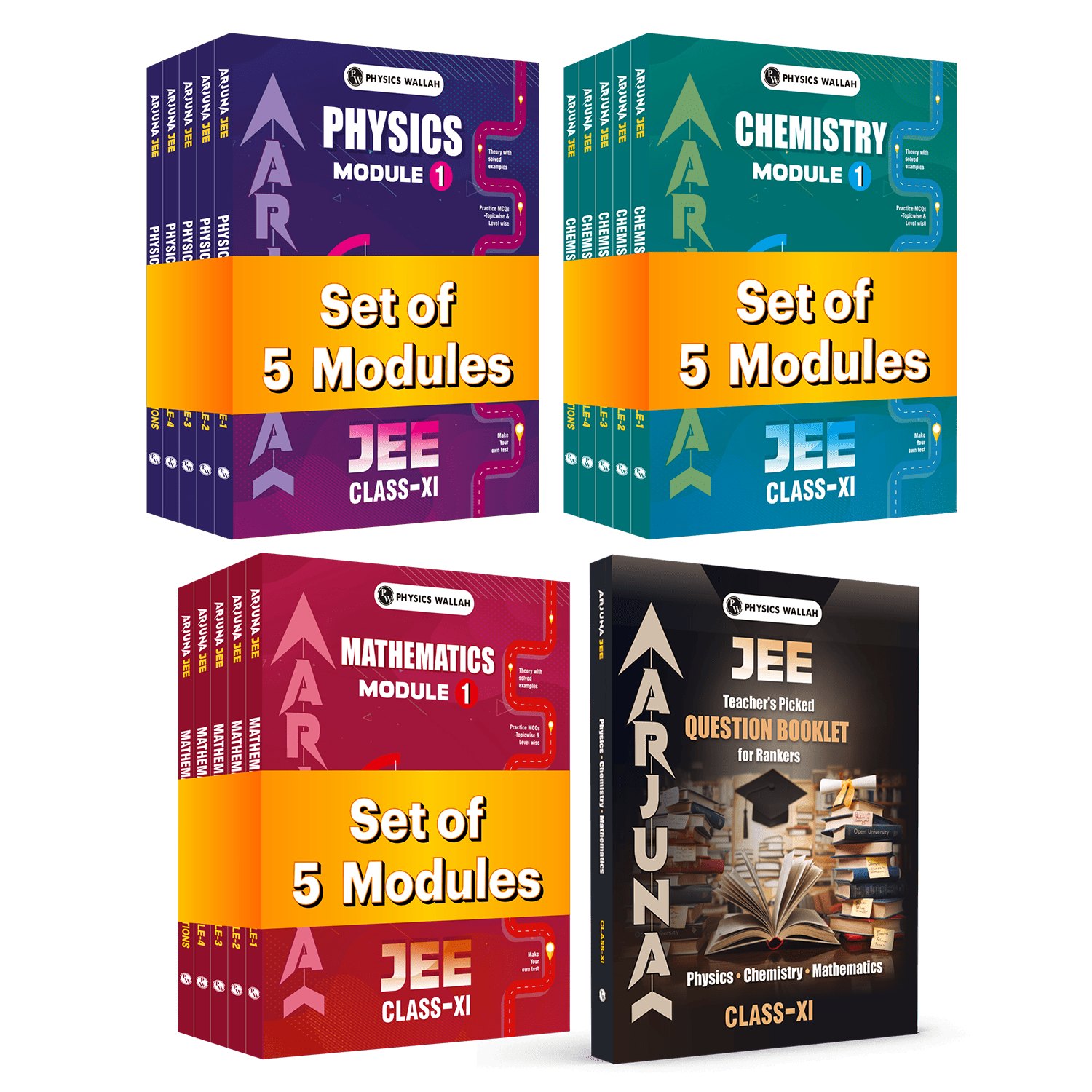
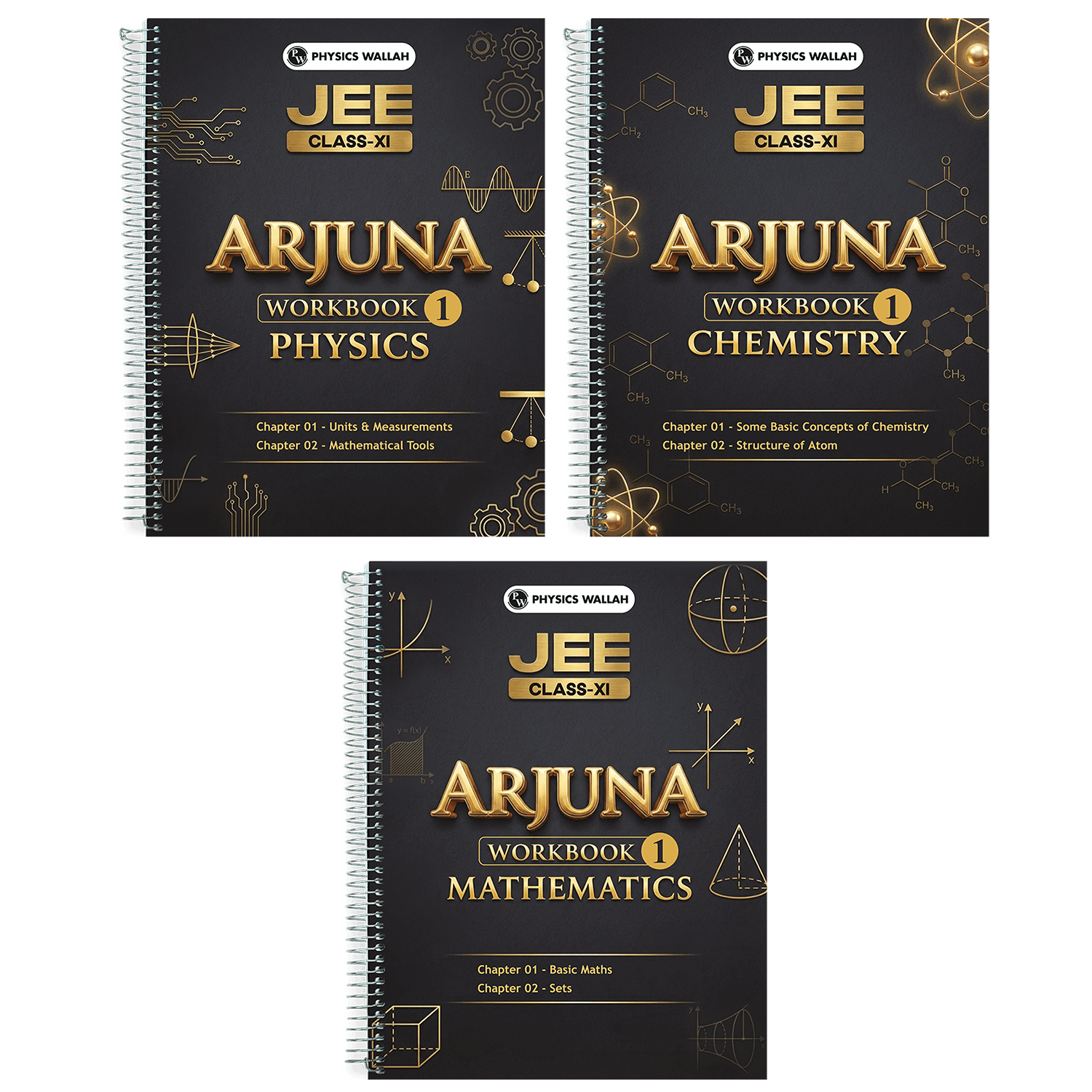
The JEE Arjuna modules are a complete 16-book combo set tailored for the 2026 exam cycle. This set is not just a collection of books; it is a strategically designed system. It includes comprehensive modules for Physics, Chemistry, and Mathematics, along with a dedicated JEE Question Booklet with solutions.
The primary goal of the module is to align your school learning with the competitive requirements of JEE Main and Advanced. Built on a proven concept-to-application approach, these books allow you to progress confidently.
Whether you are just starting a chapter or revising for your mid-terms, these modules for JEE provide smart prioritisation through chapter-wise weightage based on the last seven years of JEE Main papers.
Features of the JEE Arjuna Modules
When you look for modules for JEE, you expect a balance between theory and practice. The Arjuna JEE 2026 module provides exactly that through several distinct sections:
1. Engaging Chapter Openers
Every chapter starts with introductory conversations and riddles. This approach helps spark curiosity and builds an intuitive understanding of the topic before you dive into the complex formulas.
2. Clear and Structured Theory
The theory in the Arjuna JEE 2026 modules uses simple language. It includes in-text solved examples that create a strong link between a concept and its application. This is vital for Class 11 students who often get lost in technical jargon.
3. Topic-wise Practice Sections
-
Check Your Understanding: Short questions after each concept to reinforce learning instantly.
-
Prarambh Section: Specific exercises aimed at building a rock-solid conceptual foundation.
-
Prabal Section: JEE Main-level questions that focus on improving your accuracy, speed, and time management.
-
Parikshit Section: Advanced-level problems for deep understanding and multi-concept reasoning.
4. Bridge to Advanced Success
The Setu (Bridge) Section is a unique feature of the PW Arjuna JEE 2026 set. It ensures a smooth transition from JEE Main level difficulty to JEE Advanced level, preventing the "difficulty shock" many students face.
How JEE Arjuna Modules Help Students Improve
Improving your score requires more than just reading; it requires systematic practice. These modules help you bridge the gap between "knowing" and "solving."
-
Complete Pattern Coverage: The modules include multi-correct, match the column, comprehension-based, numerical, integer, and range-based questions. This ensures you are ready for any surprise the exam might throw at you.
-
JEE Past Year Questions: You get insight into exam trends and frequently tested concepts by solving actual previous years' questions integrated into the modules.
-
PW Challenger Problems: For those aiming for a top rank, these high-difficulty questions push your problem-solving limits.
-
Fast Revision & Clarity: The set includes a Topper’s Choice Revision Booklet and a Detailed Solutions Booklet. This is especially helpful during mid-term exams when you need to revise quickly.
Check Out: JEE Previous Year Papers
How to Use JEE Arjuna Modules for Improving Scores
To get the most out of your Arjuna JEE module class 11, you need a plan. Just owning the books will not increase your marks; you must interact with the content correctly.
-
Read the Theory and Solve In-Text Examples: Do not skip the solved examples. They show you the "how" behind the "what." Use these modules to understand the logic first.
-
Immediate Feedback: After finishing a sub-topic, immediately solve the "Check Your Understanding" questions. This locks the concept in your long-term memory.
-
Step-by-Step Exercise Solving: Start with the Prarambh section. Once you feel confident, move to Prabal. Do not jump to Parikshit until you have mastered the Main-level questions.
-
Use the QR-Based Tests: A standout feature of the module is the "Make Your Own Test" facility. Use the QR codes to create personalised JEE Main-level tests at the end of each chapter to track your progress.
-
Focus on Weightage: Use the chapter-wise weightage analysis provided in the modules to decide which chapters need more of your time.
When to Use JEE Arjuna Modules During Your Prep
Timing is crucial in JEE preparation. Since the Class 11 syllabus is the base for JEE modules class 12, you should start using these modules as early as possible.
-
During Daily Classes: Use these modules alongside your daily lectures. When a teacher finishes a topic, they find the corresponding section in the module and practice.
-
Mid-Term Revision: If you feel weak in certain topics during your midterms, go back to the Prarambh sections to clear your doubts.
-
Weekend Backlog Clearing: Use the JEE modules to catch up on topics you might have missed or misunderstood during the week.
-
Before Mock Tests: Solve the Prabal and Parikshit sections specifically in the week leading up to a major mock test.
Check Out: JEE Test series
Study Strategy Plan with JEE Arjuna Modules
Creating a roadmap helps in reducing anxiety. Here is a simple 3-step strategy to integrate these modules for JEE into your routine:
|
Phase |
Focus Area |
Action Step |
|
Foundation |
Theory & Prarambh |
Focus on understanding "Why" and "How". Complete all foundation exercises. |
|
Speed Building |
Prabal & PYQs |
Solve questions with a timer. Use the JEE Main-level questions to improve speed. |
|
Advanced Mastery |
Parikshit & Challenger |
Focus on multi-concept problems. Use the Setu section to bridge the gap. |
By following this structure, you ensure that you are not just finishing the syllabus but mastering it. The JEE modules class 11 journey is a marathon, and these modules act as your training manual. Whether you are dealing with the complexities of Rotational Mechanics or the intricacies of Organic Chemistry, having a consistent source of practice like the PW modules for JEE makes the process manageable.
Read More: Features of PW JEE Arjuna Class 11 Modules for Exam Preparation
Arjuna JEE module class 11 FAQs
What is included in the Arjuna JEE module class 11 combo?
The combo includes 16 books in total, covering 5 modules each for Physics, Chemistry, and Mathematics, plus a dedicated JEE Question Booklet with solutions specifically designed for the 2026 edition.
Are the JEE Arjuna modules enough for JEE Advanced?
Yes, the modules include specific sections designed to tackle the high-level, multi-concept reasoning required for JEE Advanced.
How do the PW modules for JEE help in revision?
The modules include a Topper’s Choice Revision Booklet and chapter-wise weightage analysis, allowing you to focus on high-impact topics and revise key formulas quickly before exams.
Can I use these modules for my Class 11 school exams?
While the primary focus is on modules for competitive prep, the clear theory and solved examples are excellent for building the conceptual clarity needed for school midterms and finals.
What is the "Make Your Own Test" feature in Arjuna JEE 2026?
This is a QR-based feature located at the end of each chapter. By scanning it, you can create personalised JEE Main-level tests to evaluate your understanding of that specific chapter.