What is the EAJEE Handwritten Notes Organic Chemistry and Who are Rohit Sir and SKC Sir
Preparing for national engineering entrance exams requires absolute clarity on reaction mechanisms, reagents, and conversions. Many students struggle to balance complex textbook theory with actual exam-oriented problem-solving. This is where comprehensive JEE organic chemistry notes play a vital role. The EaJEE Handwritten Notes for Organic Chemistry by Rohit Sir and SKC Sir offer a practical solution.
JEE Organic Chemistry Notes Overview
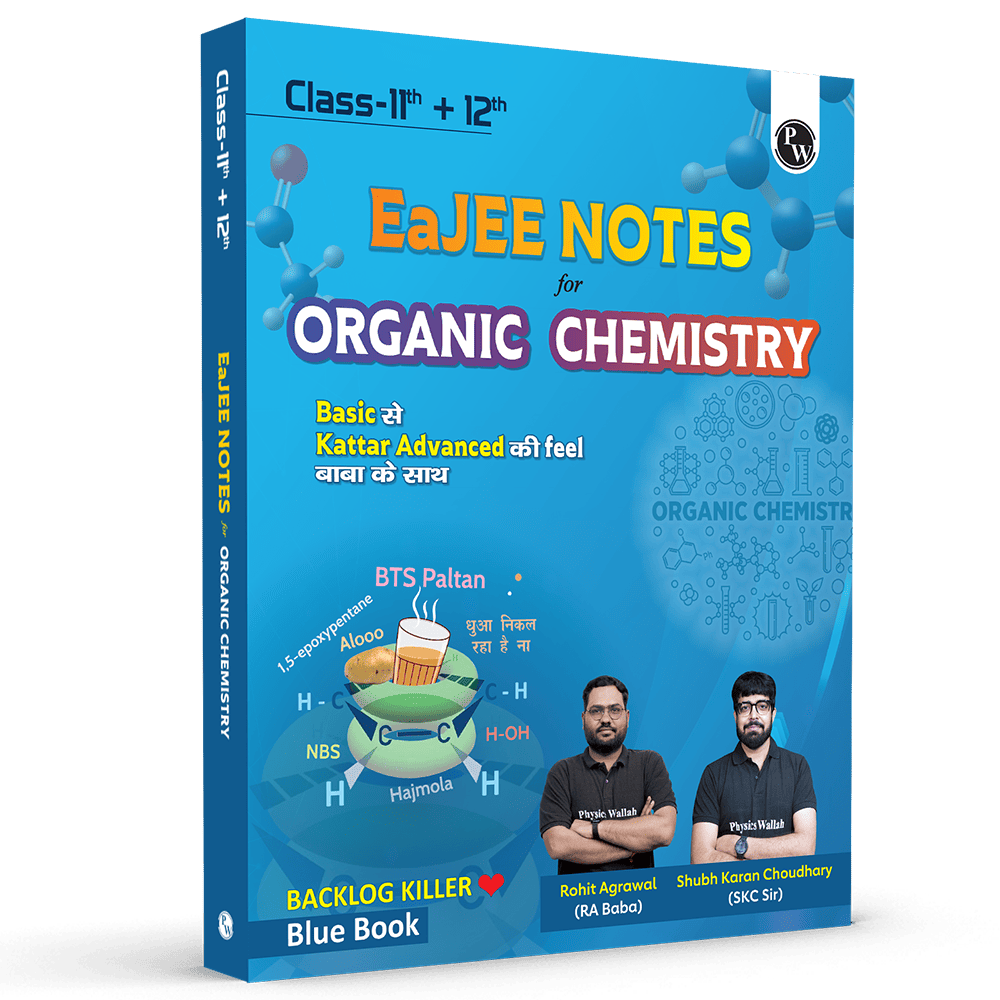
The EaJEE Handwritten Notes are a complete preparation material for the engineering aspirants. This book written by experienced faculty members Rohit Sir and Shubh Sir (also known colloquially as SKC Sir) deals with the organic chemistry syllabus for Class 11 and Class 12.
The resource acts as a bridge between foundational concepts and advanced applications. It stands out because it brings a "real classroom vibe" experience directly to the reader, making it feel as if a personal mentor is guiding them through every reaction.
The notes are meticulously organized to help students track their progress systematically while ensuring they build a rock-solid foundation for competitive exams.
What Is Included in the JEE Organic Chemistry Notes?
Understanding what a resource contains helps you integrate it smoothly into your daily revision routine. This specific JEE revision book packs a massive amount of academic content into a single volume:
-
Class 11 and Class 12 Syllabus Coverage: Complete topic-wise distribution ensuring no gap is left between school-level concepts and competitive patterns.
-
Detailed Reaction Mechanisms: Step-by-step pathways for every essential chemical reaction, removing the need for rote memorisation.
-
Over 3000 Practice Questions: A diverse and expansive collection of practice problems to test conceptual application immediately after reading a topic.
-
Previous Year Questions (PYQs): Handpicked actual exam questions integrated contextually to familiarise students with real exam trends and difficulty levels.
-
Special Characteristics of Reactions (BTS): Unique, insightful breakdowns that explain the inner workings and specific behaviors of particular reactions.
-
Quick Reference Appendix: A thoughtfully curated section at the back of the book designed to help you look up formulas, rules, and reagents instantly.
Features of the JEE Organic Chemistry Notes
The layout and design of a study guide determine how long a student can focus without experiencing cognitive fatigue. The features of these chemistry notes are tailored to enhance engagement:
1. Multicoloured Handwritten Presentation
The entire book uses multicoloured handwritten notes. This design replicates authentic student notes, which makes complex molecular structures and multi-step mechanisms visually engaging and significantly easier to remember.
2. In-Depth Explanations with Killer Practice
Every single topic features deep-dive theoretical explanations followed by what the authors call "killer practice". This immediate transition from theory to problem-solving ensures that concepts move from your short-term memory to long-term understanding.
3. Chapterwise and Topicwise Categorisation
The material is completely segmented. This systematic division allows you to target specific weak areas instead of flipping through massive, unorganised chapters.
Benefits of JEE Organic Chemistry Notes
Using specialised chemistry notes offers distinct advantages over standard, wordy reference textbooks:
-
Saves Time During Revision: Instead of highlighting thousands of pages in a textbook, you get pre-synthesised, high-yield material that reduces your revision time by half.
-
Simplifies Complex Mechanisms: Organic chemistry becomes intimidating when mechanisms look like a maze. These notes break them down into linear, logical steps.
-
Builds Exam-Level Accuracy: With 3000 questions and integrated PYQs, you learn how to avoid common traps set by examiners.
-
Enhances Visual Memory: The strategic use of colours for bonds, arrows, and lone pairs helps your brain recall reaction pathways effortlessly during the actual exam.
Who Should Use the JEE Organic Chemistry Notes?
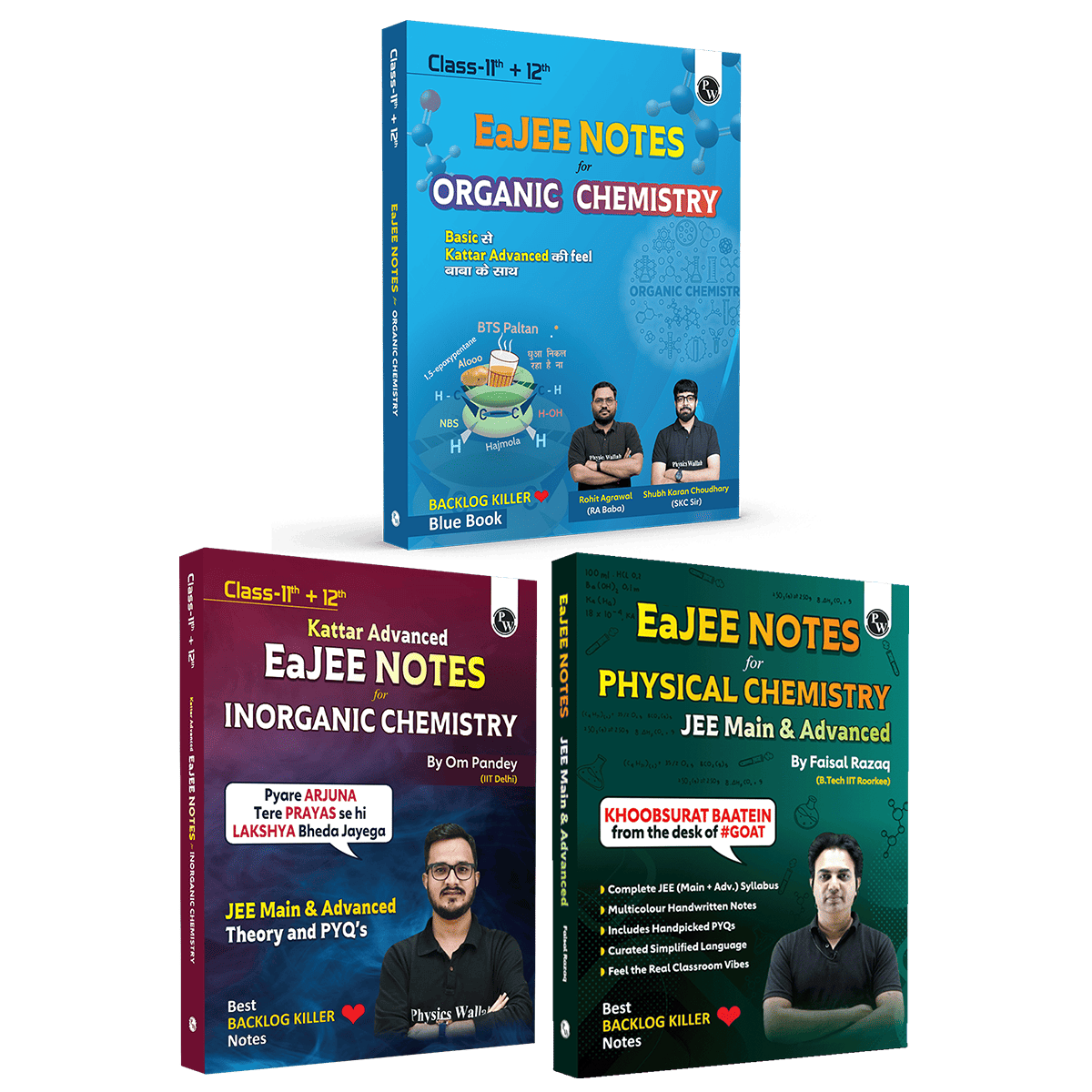
This resource is not limited to a single category of students. It serves as an excellent companion for several groups of engineering aspirants. Resources such as EaJEE Handwritten Notes For Organic, Inorganic, Physical Chemistry Combo Set of 3 Books can support structured learning, faster revision, and better concept retention across Chemistry preparation.
-
Class 11 Students: Those who want to build a perfect foundation in Basic Principles and Hydrocarbons right from the start.
-
Class 12 Students: Candidates who need to learn advanced topics like Aldehydes, Ketones, and Biomolecules while keeping their Class 11 concepts fresh.
-
Droppers and Repeaters: Students who need a "backlog killer" resource to quickly cover missing or weak chapters without re-watching hours of lectures.
-
Self-Study Aspirants: Learners working independently who require clear, mentor-like explanations without external assistance.
How to Use the JEE Organic Chemistry Notes?
To gain the maximum benefit from this book, you must adopt a systematic approach rather than reading it passively like a novel.
First, align the book with your primary lectures. If your teacher covers a specific mechanism today, open the corresponding topic in the chemistry notes the same evening. Read through the handwritten explanation and observe how the colours separate the reagents from the main carbon chain.
Second, pay close attention to the special characteristics of reactions (BTS) sections. These segments highlight exceptions, steric hindrance factors, and electronic effects that frequently appear in tricky multiple-choice questions.
Study Plan with JEE Organic Chemistry Notes
A structured routine turns a good book into a powerful rank booster. Here is an effective study strategy you can implement:
Phase 1: Conceptual Alignment
Spend 30 minutes reading the chapterwise summaries provided in the book. This gives you a clear mental map of the functional groups and reactions you are about to study.
Phase 2: Active Problem Solving
Do not just look at the solutions of the 3000 practice questions. Cover the answers, attempt the questions yourself on a scratch pad, and then cross-verify your methodology with the book's step-by-step pathways.
Phase 3: Systematic Revision Cycles
Utilise the quick reference appendix every alternate weekend. Use it to run through names of reactions, special reagents, and specific testing conditions to prevent your knowledge from fading.
Common Mistakes While Using JEE Organic Chemistry Notes
Even with the right JEE books, incorrect habits can limit your progress. Avoid these common pitfalls:
-
Skipping the Practice Questions: Reading the theory without solving the built-in questions defeats the purpose of an interactive workbook.
-
Memorising Without Understanding Mechanisms: Trying to memorise the final products instead of understanding the movement of electrons shown in the notes will hurt your scores in advanced multi-step conversions.
-
Neglecting the Appendix: Forgetting to use the quick reference appendix for last-minute revisions often leads to confusion regarding reagents during mock tests.
Read More: JEE Important Questions Chemistry 2026 with Solutions
JEE Organic Chemistry Notes FAQs
1. Does this book cover the syllabus for both main and advanced engineering exams?
Yes, the book is structured to take your preparation from basic concepts all the way to advanced levels. It contains comprehensive theory, diverse mechanisms, and handpicked practice questions tailored perfectly for organic chemistry for JEE advanced.
2. Can I use this book to clear my old backlogs in chemistry?
Absolutely. The clear, topicwise structure makes it an excellent backlog killer. It allows you to study isolated topics independently, making it easier to understand organic chemistry for JEE main without feeling overwhelmed by previous chapters.
3. How do the practice questions help in tracking exam trends?
The book contains an extensive collection of over 3000 practice problems. By incorporating contextually relevant previous year questions directly into the text, it provides high-yield JEE chapterwise organic chemistry notes that reflect real exam patterns.
4. Are these notes typed or written by hand?
The book features premium JEE organic chemistry handwritten notes presented in a vibrant, multicoloured format. This design replicates an authentic classroom feel, enhancing visual memory and making structural formulas easier to read.