When Class 11 students should start the Arjuna JEE Modules — first week or later
Many struggle to manage Physics, Chemistry, and Mathematics simultaneously because school textbooks do not match the application-level depth needed for competitive exams. To bridge this gap, having the right study material from day one is essential.
Starting with the Arjuna JEE Class 11 modules right from the first week ensures you build a disciplined routine, align your preparation with the latest exam patterns, and stay ahead of the competition. Following a structured JEE Modules approach also helps students move systematically from concept clarity to question practice and regular revision, creating a stronger foundation for long-term exam preparation.
What Are the Arjuna JEE Class 11 Modules?
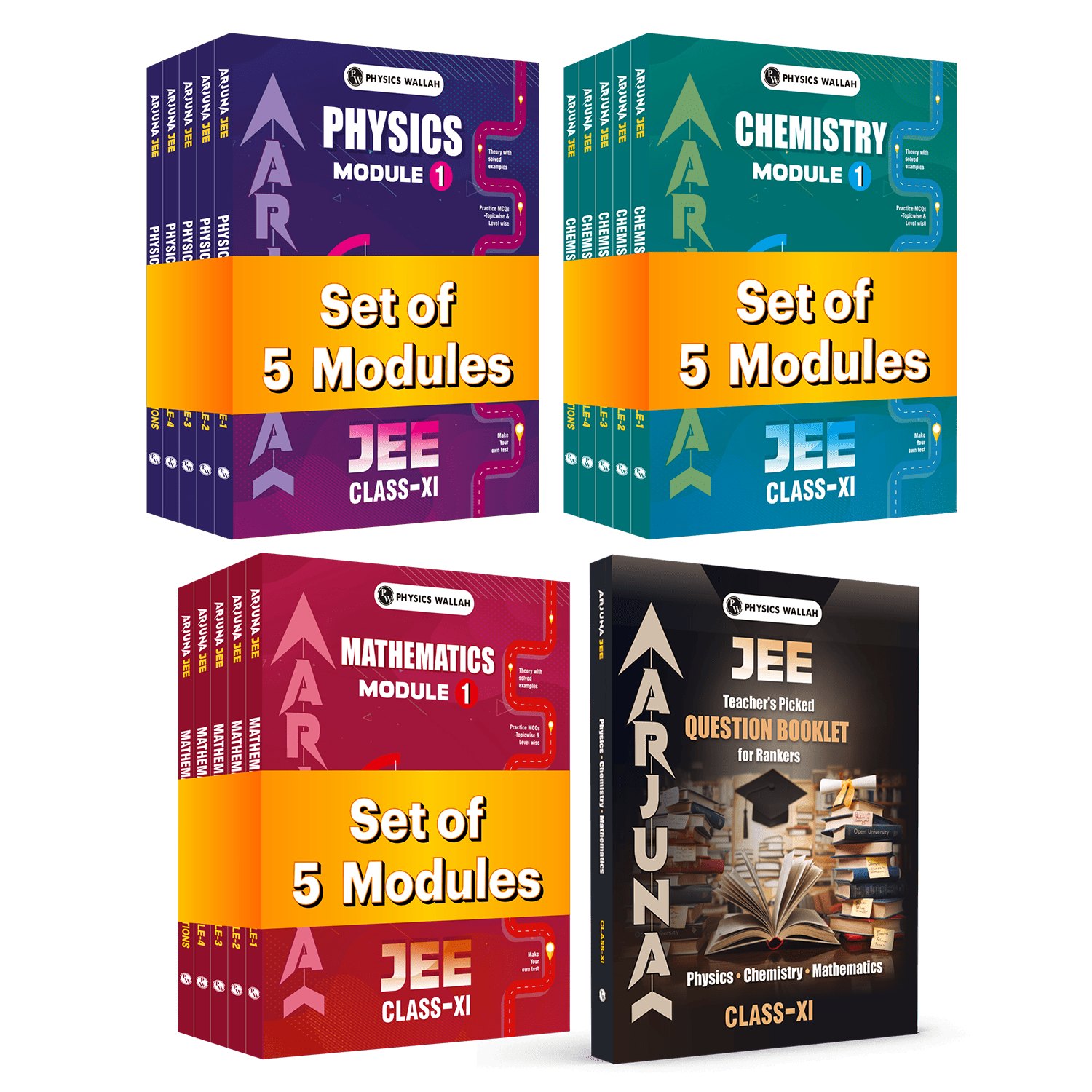
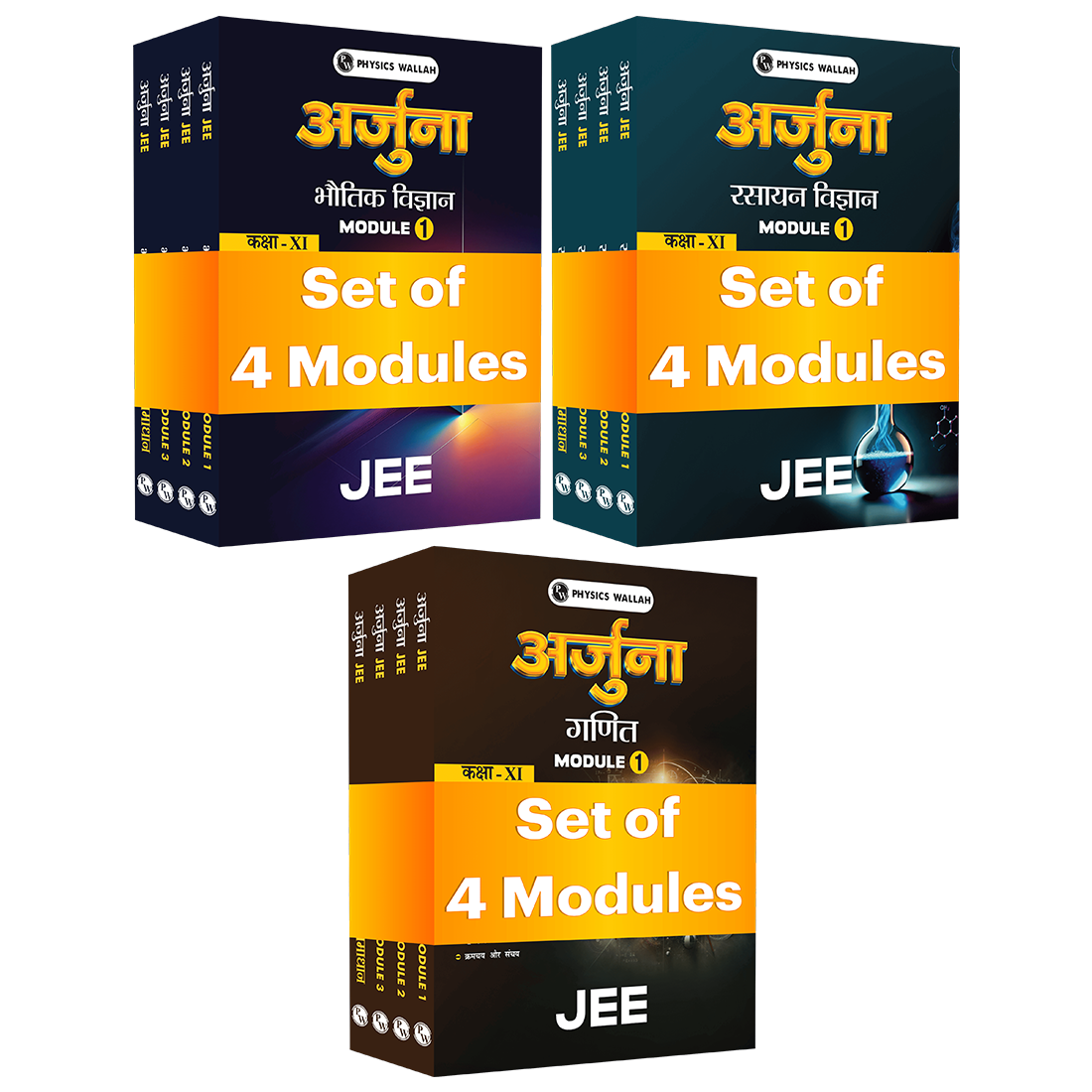
The Arjuna JEE class 11 modules are a comprehensive 16-book combo set specifically engineered for students targeting JEE Main and Advanced. This package includes structured study material split across five modules, each for Physics, Chemistry, and Mathematics, along with a dedicated Teacher's Pick Question Booklet with Solutions.
Designed around a proven concept-to-application approach, these books help students progress systematically from fundamental concepts to high-level problem-solving.
The content is broken down into highly specialized segments within each chapter to ensure 360-degree preparation:
-
Engaging Chapter Openers: Every chapter begins with introductory conversations and riddles designed to spark curiosity and build an intuitive understanding of complex topics.
-
Clear and Structured Theory: The core concepts are explained in simple, lucid language, accompanied by in-text solved examples to establish a strong concept-application linkage.
-
Check Your Understanding: Short, topic-wise questions are placed immediately after each concept to reinforce learning instantly and improve overall accuracy.
Benefits of Starting the Arjuna JEE Class 11 Modules Early
Acquiring your Arjuna JEE class 11 modules in the very first week of the academic session gives you a massive competitive advantage. The early weeks of Class 11 introduce foundational chapters like Vectors, Basic Mathematics, and Mole Concept. If these fundamentals are weak, understanding subsequent chapters becomes nearly impossible.
Here is how an early start with the Arjuna JEE class 11 modules transforms your preparation:
Establishing a Structured Routine
When you start in the first week, you can map your daily lectures directly to the structured theory and solved examples in the books. This synchronization prevents confusion and keeps your self-study aligned with your regular classes.
Ample Time for Multi-Tiered Practice
The extensive exercise sections—ranging from Prarambh to Parikshit—require consistent effort. Starting early means you do not have to skip the high-level challenger problems or the past year questions due to a shortage of time later in the year.
Better Time Management and Speed
JEE is not just about knowing the answers; it is about solving them quickly. Engaging with the Prabal section right from the start helps you develop fast calculation habits and smart elimination techniques long before the actual test series begins.
When is the Best Time to Start the Arjuna JEE Class 11 Modules?
While starting on day one is ideal, many students receive their Arjuna JEE class 11 modules a few weeks or months into the session. This delay typically happens due to late admissions, confusion over choosing the right modules for JEE, or waiting to finish basic school reference books first. If you find yourself in this situation, it is entirely possible to catch up, provided you adapt your strategy.
The main risk of starting later is the accumulation of backlogs. If your classes have progressed to complex topics like Rotational Mechanics or Thermodynamics while you are still trying to buy your JEE modules class 11 set, the sudden pressure can cause panic. Students starting late often make the mistake of skipping the theory and jumping straight into the exercises, which ruins their conceptual clarity.
If you are beginning later in the term, you must prioritize chapters based on their weightage. Use the built-in 7-year paper analysis provided in the books to identify high-yield chapters. Focus heavily on clearing the basic theory and solving the Check Your Understanding and Prarambh sections first, before attempting the advanced question sets.
How to Choose the Right Time for Arjuna JEE Class 11 Modules?
Determining the right time to dive into your Arjuna JEE class 11 modules depends entirely on your current academic readiness and familiarity with basic concepts.
|
Student Academic Status |
Ideal Timing to Start Modules |
Recommended Action Plan |
|
Strong baseline in Class 10 maths and science |
First week of Class 11 |
Begin reading the theory immediately and solve topic-wise questions alongside daily lectures. |
|
Changing boards or weak foundational basics |
Week 2 or Week 3 of Class 11 |
Spend the first 10 days balancing basics, then integrate the modules step-by-step. |
|
Late admission into coaching or preparation |
Mid-session / Immediate purchase |
Skip extensive reading of known topics; focus directly on solved examples and basic exercises. |
The absolute best time to pick up the Arjuna JEE module Class 11 set is during the first week of your formal coaching or school session.
This ensures that your self-study matches the pace of your teachers. If you are a student transitioning to Arjuna JEE 2026, waiting too long means missing out on the systematic phase-wise growth that these books are designed to provide. To strengthen this learning cycle further, students can complement their preparation with the Arjuna JEE Workbook Set 3 2026, which adds structured practice and helps reinforce concepts through chapter-wise problem-solving alongside the main modules.
Study Plan for the Arjuna JEE Class 11 Modules
To get the most out of your Arjuna JEE class 11 modules, you need a systematic plan rather than a random reading habit. Having high-quality JEE modules is only half the battle; knowing how to navigate through the theory and exercises systematically determines your ultimate rank.
Phase 1: Conceptual Alignment (Daily)
Read the structured theory immediately after attending your live or recorded lecture. Do not look at the solved examples as mere text; hide the solutions, try to solve them yourself first, and then compare your approach with the booklet.
Phase 2: Topic-Wise Reinforcement (Weekly)
As soon as a topic concludes, solve the Check Your Understanding questions. Once the entire chapter is finished, dedicate your weekend to completing the Prarambh and Prabal sections to solidify your grip on JEE Main-level questions.
Phase 3: Advanced Transition and Testing (Bi-Weekly)
Move into the Setu section to upgrade your problem-solving level, followed by the Parikshit section for multi-concept advanced questions. At the end of every two weeks, scan the QR code to use the 'Make Your Own Test' feature, simulating a real exam environment to evaluate your weak areas.
Mistakes to Avoid While Using the Arjuna JEE Class 11 Modules
Even with the right PW modules for JEE, students often fall into common traps that hamper their progress. Avoiding these frequent errors will keep your Arjuna JEE 2026 preparation efficient and stress-free.
-
Skipping the Foundational Sections: Many students directly jump to advanced questions in the Parikshit section without solving the Prarambh section. This creates gaps in basic conceptual applications.
-
Ignoring the Detailed Solutions: When a student gets an answer wrong, they often just look at the correct option without reading the step-by-step explanation booklet. Understanding the method behind the solution is vital for learning.
-
Hoarding Too Many Reference Books: Relying on multiple modules for JEE simultaneously leads to cognitive overload. Stick strictly to your core modules and complete them thoroughly before glancing at external sources.
-
Neglecting the Revision Booklets: Leaving the Topper’s Choice JEE Revision Book for the very end of the year is a mistake. Use it regularly before every minor test to keep past chapters fresh in your memory.
-
Not Tracking Weak Areas: Failing to bookmark the difficult challenger problems makes final revision chaotic. Always mark tough questions during your first attempt so you can revisit them easily before exams.
Arjuna JEE Class 11 Modules FAQs
Can I use the Arjuna JEE class 11 modules for school exam preparation too?
Yes, the modules are perfectly suited for school exams. The Prarambh section focuses on building a strong foundational base and conceptual clarity, which aligns well with the subjective requirements of school tests alongside competitive preparation.
How does the Setu section help in the Arjuna JEE module class 11 set?
The Setu (Bridge) section acts as a structural stepping stone. It helps students transition smoothly from the straightforward, single-concept questions of JEE Main to the highly complex, multi-layered problem-solving required for JEE Advanced.
Is it necessary to buy separate books for JEE Advanced if I have these modules?
No, it is not necessary. The combo package contains dedicated advanced-level segments, including the Parikshit section and high-difficulty challenger problems, making it a comprehensive, self-sufficient solution for both tiers of the engineering exam.
When should I start using the revision booklets included in the combo?
You should use the revision booklets regularly throughout the year. Instead of waiting for the final syllabus completion, use them to revise previous chapters every time you have a weekly or monthly mock test.
What should I do if I start using the PW Arjuna JEE 2026 modules late?
If you start late, prioritize your chapters based on the provided 7-year weightage analysis. Focus on mastering the basic theory and completing the Prarambh and Prabal exercises first to secure your core marks before moving to advanced problems.