Why Recent JEE Maths PYQs Reveal Current Exam Difficulty Level
You are spending hours solving standard questions, but you still feel anxious about whether your current practice matches what will actually appear on the test day. This is a very common challenge for engineering aspirants who struggle to assess the shifting standards of mathematical evaluation.
The gap between standard textbook problems and the actual test environment widens every year. To bridge this gap, evaluating actual past test items becomes essential. A focused analysis of JEE Main PYQ maths resources reveals the exact tactical changes, question weights, and complex structures that define the modern test.
What Is JEE PYQ Maths?
The term refers to the official past year papers specifically curated for the mathematics section of the Joint Entrance Examination. Instead of relying on simulated or predicted mock items, these resources compile the actual questions set by the official examination body over consecutive execution cycles.
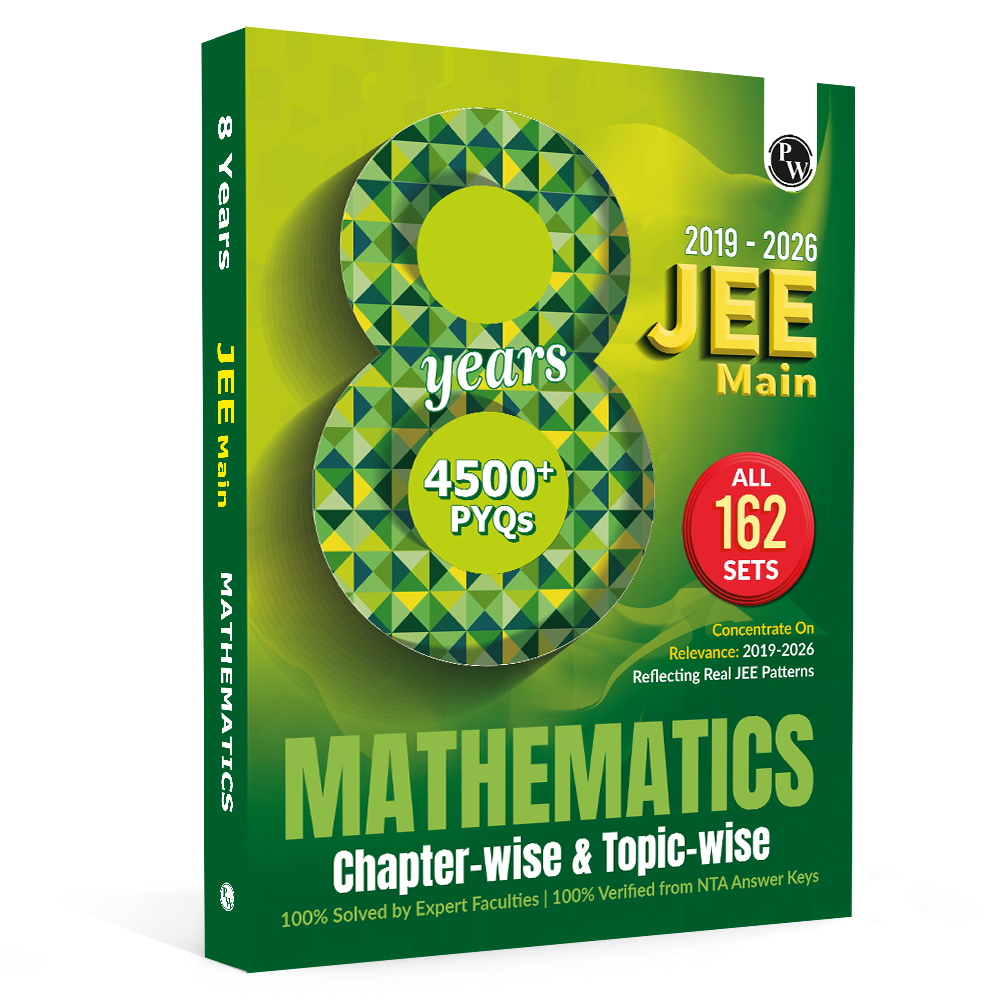
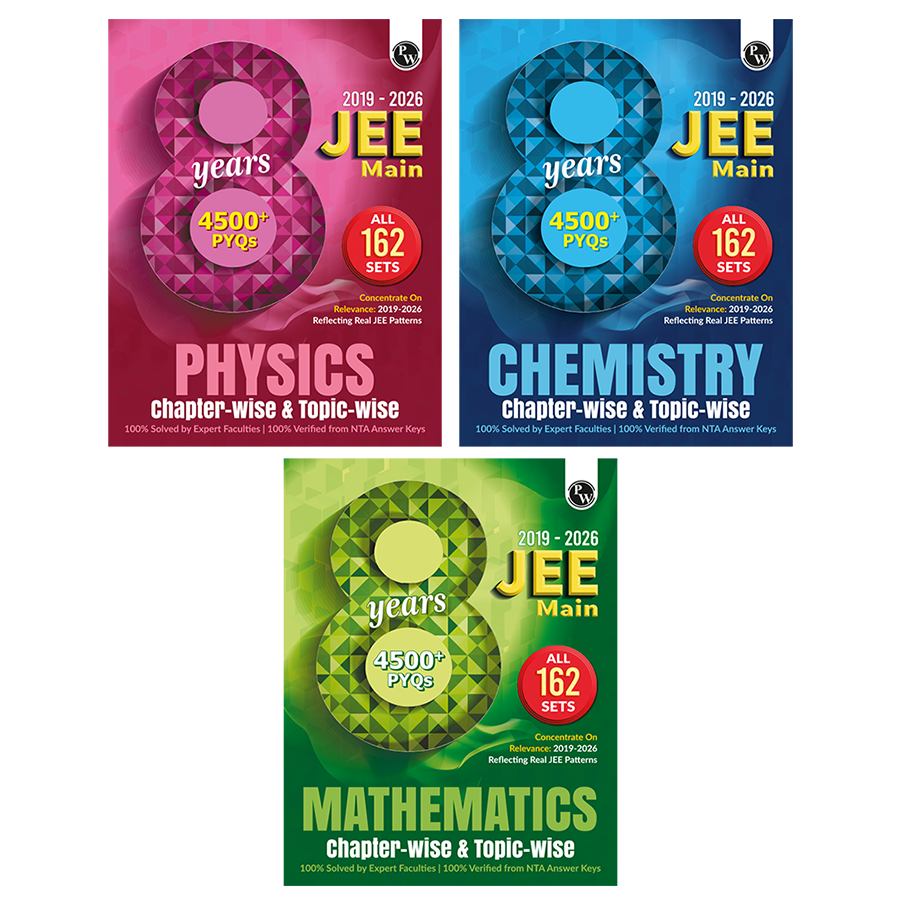
High-quality compilations bring together all 162 sets of shift-wise papers spanning recent years, providing an authentic look into the evaluation system.
These collections are structured to serve as an exact mirror of the engineering entrance portal. A comprehensive package includes:
-
Shift-Wise Distributions: Questions organized exactly as they appeared across different morning and evening sessions.
-
Diverse Formats: A balanced mix of Multiple Choice Questions (MCQs) and Numerical Value Questions.
-
Verified Solutions: Comprehensive, error-free explanations designed to reveal step-by-step logical breakthroughs.
Which JEE PYQ Maths Chapters Are More Difficult?
An objective look at JEE past papers shows that the difficulty is not distributed evenly across the syllabus. Certain chapters consistently require advanced problem-solving skills and deeper critical thinking. Reviewing a JEE PYQ maths collection helps you identify which modules need extra attention and deeper study.
The table below classifies major chapters based on their recent structural complexity and question presentation:
|
Chapter Category |
Complexity Level |
Primary Focus Areas |
|
Calculus (Definite Integrals, Differential Equations) |
High |
Multi-step integration properties, area under curves, boundary value problems. |
|
Algebra (Permutations, Matrices, Probability) |
High |
Complex counting conditions, properties of determinants, conditional probability theorems. |
|
Coordinate Geometry (Conics, Vectors, 3D) |
Medium to High |
Vector triple products, shortest distance between lines, intersection of conic sections. |
|
Trigonometry & Sequences |
Medium |
Inverse trigonometric transformations, summation of series, telescopic methods. |
How Can JEE PYQ Maths Improve Your Speed?
Knowing the concepts well is only half the battle; success also requires managing your time effectively under pressure. Many students fail to finish the section not because they lack knowledge, but because they spend too much time on lengthy calculations.
Practicing with genuine JEE mains maths past papers helps you develop better pacing and time management.
Regular practice with JEE Main PYQ improves your speed through several key mechanisms:
-
Quick Pattern Recognition: Working with multiple years of shift papers helps you recognize question archetypes quickly, reducing the time spent understanding the problem.
-
Efficient Calculation Habits: Working through structured, error-free solutions helps you learn shorter algebraic pathways and cleaner simplification steps.
-
Strategic Time Allocation: You learn to quickly distinguish between short, direct questions and lengthy, time-consuming calculations, allowing you to choose which problems to solve first.
How to Use JEE PYQ Maths for Better Preparation?
Simply reading through past questions like a storybook will not yield significant results. To get the most value out of your previous year questions, you need a structured, active learning approach. Turning these documents into diagnostic tools is key to improving your problem-solving skills.
First, always treat these past papers as timed, simulated exams. Sit in a quiet room, set a countdown timer, and solve the questions without looking at the solutions. This practice builds the mental stamina needed for the actual test day.
Second, use a topic-wise practice approach. After finishing a specific chapter from your standard textbooks, immediately solve the past questions from that chapter over the last eight years. This builds a strong bridge between theoretical concepts and practical exam application, solidifying your understanding early on.
Benefits of Using the JEE PYQ Maths Important
Relying solely on traditional theoretical practice can leave you unprepared for the actual test environment. The overall JEE maths exam pattern undergoes regular thematic adjustments, making recent past questions highly valuable JEE Books. They show you the precise depth of conceptual clarity required to clear the modern cut-off marks.
Evaluating past items from recent years is highly beneficial for several key reasons:
-
Real-Time Trend Alignment
The exam has moved away from straightforward, single-formula questions. By analyzing recent maths PYQs, you get a clear view of the current trends, highlighting how different sub-topics are combined within a single problem.
-
Authentic Standards
Mock question banks can sometimes be inaccurately easy or unnecessarily complex. Working directly with official past questions ensures your daily practice perfectly aligns with the actual difficulty level analysis of the real exam.
-
Strategic Prioritisation
Not all segments of the syllabus carry equal weight. A systematic review allows you to perform a smart weightage analysis, helping you identify high-priority chapters so you can allocate your study time more effectively.
Study Plan for Using the JEE PYQ Maths
Balancing your revision schedules requires a clear, step-by-step plan. A chaotic approach often leads to half-prepared chapters and missed topics. Below is a structured four-stage plan designed to integrate past questions smoothly into your daily maths preparation routines.
Stage 1: The Chapter-Wise Review (Weeks 1–4)
-
Focus on studying one specific topic at a time.
-
Solve the corresponding past questions from the 2019–2026 sets right after finishing the theory.
-
Aim to solve at least 30 to 40 past questions per chapter to ensure a solid foundation.
Stage 2: Mixed-Shift Simulations (Weeks 5–8)
-
Move away from chapter-segregated questions and practice using full shift-wise papers.
-
Take full three-hour mock sessions containing a realistic mix of MCQs and numerical questions.
-
Maintain a strict environment without any external disturbances.
Stage 3: Error Log Analysis (Weeks 9–10)
-
Review your incorrect answers using detailed, error-free reference solutions.
-
Write down the specific reason for each mistake, noting whether it was a conceptual error, a calculation mistake, or a misread question.
-
Re-solve the flagged questions after three days to ensure you have mastered the concept.
Stage 4: High-Yield Revision (Final Weeks)
-
Revisit high-priority, heavily weighted chapters identified during your trend analysis.
-
Review formulas and notes for complex topics like Calculus and Algebra.
-
Take short, timed quizzes to keep your problem-solving speed sharp.
Common Mistakes to Avoid While Using the JEE PYQ Maths
Even when using the right past paper resources, certain bad habits can slow down your progress. Being aware of these common traps helps you get the most out of your study sessions.
Avoid these common preparation mistakes:
-
Focusing Only on Recent Years: While papers from the last two seasons show the latest trends, ignoring the full eight-year range deprives you of seeing the wider variety of questions that could appear.
-
Neglecting Numerical Value Questions: Many students focus too much on multiple-choice options. Numerical questions require exact accuracy since there are no options to help guide your steps.
-
Skipping the Analysis Phase: Simply checking your final score without reviewing your incorrect answers makes the practice much less effective. The real growth happens when you deeply analyze your mistakes.
Read More: JEE Important Question Maths With Solutions
JEE PYQ Maths FAQs
How many years of JEE PYQ maths should I practice?
You should focus on practicing the last 8 years of papers, specifically covering the sets from 2019 to 2026. This range provides an accurate reflection of the current JEE maths exam pattern and covers all major shift variations.
Are recent maths PYQs enough to get a high score?
They are highly effective for understanding the difficulty level analysis and practicing question formats. However, you must pair them with solid conceptual learning and regular mock tests to achieve a top score.
Why is the difficulty level of JEE mains Maths increasing?
The evaluation framework puts a stronger emphasis on critical thinking and conceptual depth. Examiners frequently combine multiple topics into a single problem, making the questions more complex.