Why Recent-Year Physics PYQs Are Crucial for JEE Mains 2027
Struggling to clear your concepts while solving complex numerical tracking shifts can feel incredibly overwhelming when the engineering entrance test looms closer. Many students spend hours reading theories but freeze during the actual test because their practice does not match the level of difficulty in the live test.
If you want to clear the upcoming engineering exam, you must change your approach and focus heavily on JEE Main PYQ physics. Relying on outdated questions will only waste your energy. This comprehensive guide breaks down how to use past papers effectively, analyse recent trends, and build an error-free practice schedule to secure a top percentile in your upcoming exam.
What Is JEE PYQ Physics?
JEE PYQ physics refers to the compilation of actual questions asked in the Joint Entrance Examination over the past few years. Instead of random practice question banks, these are the real questions designed by the official exam body to test an aspirant's analytical skills.
A proper collection of JEE PYQ physics resources contains:
-
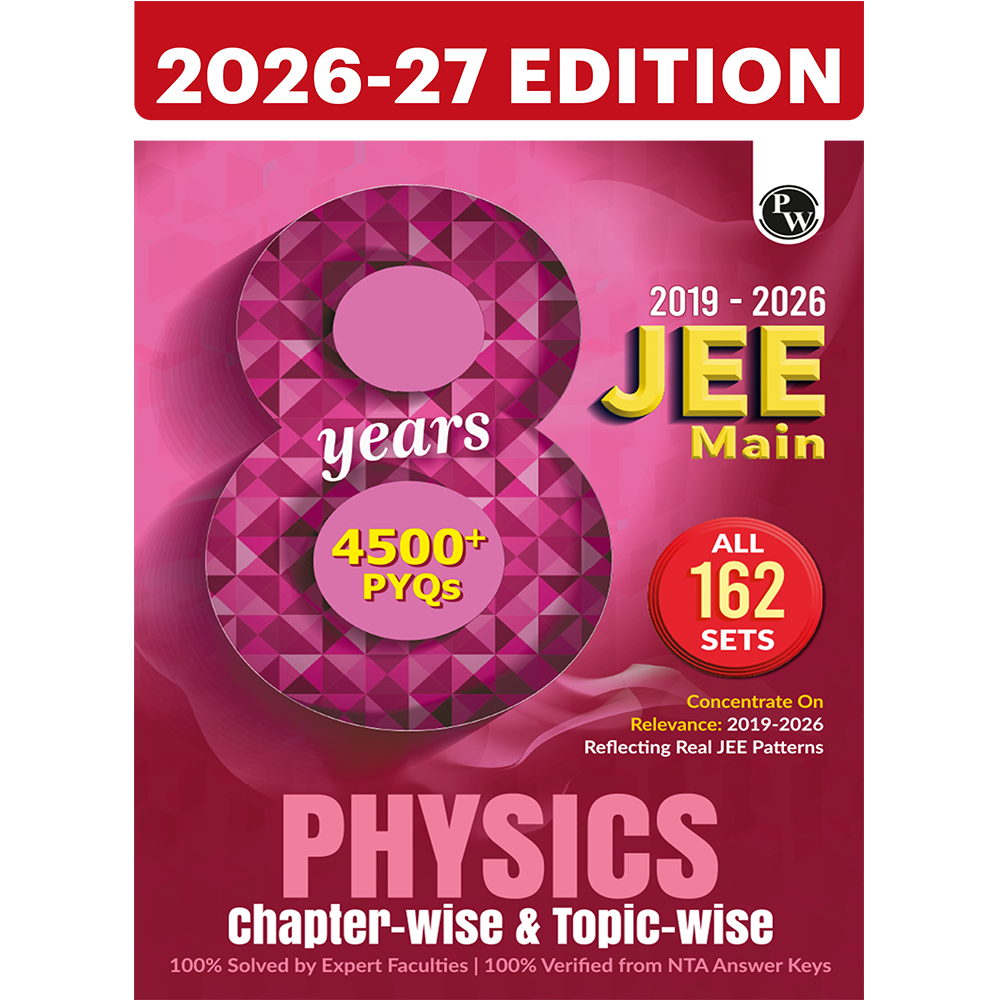
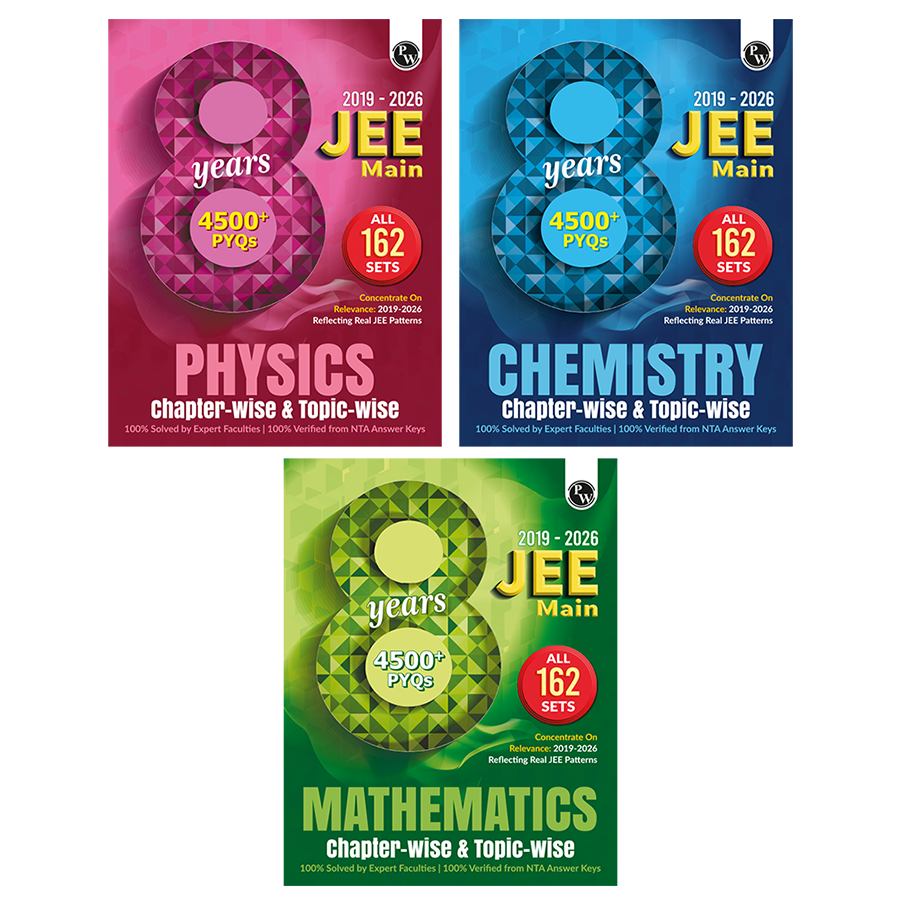
Meticulously organized papers: A compilation spanning 8 years from 2019 to 2026, offering a vast repository of authentic papers.
-
Massive shift coverage: Access to all 162 sets of previous years' solved papers, which captures every single variance in the test format.
-
Extensive question bank: More than 13500+ total questions across subjects, translating to over 4500+ specific physics questions to practice.
-
Multiple formats: A comprehensive question variety that includes both Multiple Choice Questions (MCQs) and Numerical Value Questions.
To strengthen your preparation further, pair PYQ practice with JEE Books, which provide comprehensive theory, concept-building exercises, chapter-wise practice, and detailed explanations. Combining conceptual learning with previous year questions helps improve accuracy, reinforce fundamentals, and build confidence for both JEE Main and JEE Advanced.
How to Use JEE PYQ Physics?
Simply reading through solutions like a storybook will not improve your performance. You need an active, structured method to make JEE PYQ physics work for your final score.
|
Step |
Action Item |
Intended Outcome |
|
1 |
Chapter Isolation |
Solve questions sorted by topic right after finishing a chapter. |
|
2 |
Time-Bound Solving |
Set a timer for every shift paper to simulate real exam pressure. |
|
3 |
Deep Error Mapping |
Review detailed error-free solutions to understand the logic gaps. |
|
4 |
Periodic Re-attempts |
Re-solve marked difficult questions every few weeks. |
When To Use JEE PYQ Physics?
Timing your practice is just as vital as the practice itself. Incorporating JEE Main PYQ at the wrong stage of your schedule can lead to frustration or a false sense of security.
1. During Daily Chapterwise Revision
As you progress through your regular JEE mains preparation, use these authentic papers for structured chapterwise revision. Every single time you finish revising your classroom notes, open the past 8 years' compilation to see if you can solve the real questions without looking at the hints.
2. During the Final Revision Phase
In the final months leading up to the test, you should transition completely to solving full shift-wise papers. With 162 total sets available, you have more than enough papers to treat as actual diagnostic tests. This phase should focus entirely on building endurance and improving speed across all chapters simultaneously.
Benefits of Using the JEE PYQ Physics for JEE Mains 2027
The engineering entrance test evolves continuously, making older questions from the early 2000s less relevant to current students. Focusing on JEE PYQ physics from recent years keeps your revision perfectly aligned with the real difficulty level of the modern test.
-
Understanding the Latest Exam Pattern
The structure of the test has changed significantly over the last decade. By analysing the 162 sets from 2019 to 2026, you get a clear look at the actual exam pattern currently in use. It reveals the exact balance between conceptual MCQs and the precise integer-type numerical problems that often decide the final ranks.
-
Adapting to Modern JEE Physics Trends
The weightage given to specific chapters changes over time. Tracking modern JEE physics trends through recent questions tells you exactly which sub-topics are heavily penalised or highly rewarded. This ensures you do not waste precious weeks mastering a topic that only yields one minor question, allowing you to plan your preparation strategically.
-
Smart Weightage Analysis
You cannot treat every single chapter with the same level of intensity if you want to rank high. Evaluating the recent physics PYQs provides a smart weightage analysis. It helps you isolate high-priority topics instantly, ensuring your daily energy goes into sections that guarantee maximum points.
Study Plan for Using the JEE PYQ Physics
To systematically cover all 4500+ physics questions without burning out, you need a clear operational strategy. This step-by-step framework helps you integrate past question sets into your weekly routine seamlessly.
Phase 1: The Integration Mapping (Months 1–6)
-
Align with lectures: Map your current coaching schedule directly to the JEE past papers.
-
Solve target numbers: Aim for at least 30 to 40 past questions per topic immediately after completing the theory.
-
Highlight unique applications: Circle the problems that required a unique mathematical trick or an uncommon derivation step.
Phase 2: Full Shift Simulation (Months 7–9)
-
Switch to full sets: Start solving complete 30-question sets from specific morning or evening shifts.
-
Maintain exam conditions: Sit in a quiet room, avoid using calculators, and complete the papers within the strict allocated time limit.
-
Analyze the solutions: Spend at least one hour reviewing the 13500+ detailed, error-free solutions to correct your calculation methods.
Tips to Score Better with JEE PYQ Physics
Simply tracking your scores will not push you past the competitive cut-offs. You need specific tactics to extract every ounce of value from your JEE PYQ physics book collection.
-
Master the detailed solutions: Do not stop when you get a wrong answer. Dive deep into the in-depth and accurate solutions provided for all 4500+ questions for clear understanding and better practice.
-
Train for both paper formats: Dedicate separate practice sessions for standard MCQs and challenging Numerical Value Questions. The numerical questions require absolute calculation precision since there are no options to guess from.
-
Study the real difficulty level: Avoid wasting time on irrelevant, hyper-complex foreign university questions. Solve questions matching the actual difficulty level of the test to keep your confidence high and balanced.
Check Out: JEE Test series
Common Mistakes To Avoid While Using the JEE PYQ Physics
Even dedicated students can fail to see progress if they fall into common preparation traps. Watch out for these habitual mistakes when using JEE PYQ physics resources.
-
Memorizing the answers: Memorizing the steps or the final numeric value of a 2024 or 2025 question will not help you. Focus on the core physical principles behind the solution, as the numbers will change completely in the future test.
-
Ignoring the detailed explanations: Skipping the error-free explanations because your final answer matched by pure luck is dangerous. The provided solution might show a much shorter, smarter method that saves you minutes during the real exam.
-
Skipping the tough shifts: Avoiding the difficult paper sets from 2022 or 2023 out of fear will leave you unprepared. Facing the toughest shifts builds the mental resilience needed to handle any surprises the examiners throw at you.
Read More: How Many Hours to Study for IIT JEE?
JEE PYQ Physics FAQs
How many shift papers are included in the recent 8-year collection?
The collection includes all 162 sets of shift-wise previous years' solved papers spanning from 2019 to 2026. This massive variety ensures you cover every single variation of the modern computer-based exam pattern.
Why should I prioritize recent physics PYQs over very old questions?
Focusing on recent physics PYQs helps you stay perfectly aligned with the latest JEE physics trends and actual difficulty levels. Older questions often follow obsolete patterns that no longer match the current balance of numerical and conceptual challenges.
How does the topic-wise practice approach benefit my revision?
A topic-wise practice approach allows you to conduct a targeted chapterwise revision right after you finish studying a concept. It strengthens your foundational understanding systematically before you attempt full-length mock tests.