Why Recent-Year PYQs Matter More for JEE Chemistry Trend Analysis
Many students spend hours reading reference chapters without knowing if their practice matches what actually appears on test day. The National Testing Agency (NTA) has shifted question styles across multiple shift papers over recent seasons, making older paper patterns less reliable.
Focusing on JEE Main chemistry PYQ solves this challenge by connecting conceptual study directly with real test expectations. Analyzing recent shift papers helps aspirants identify recurring themes, spot exact difficulty standards, and build necessary test-taking stamina.
What Is JEE PYQ Chemistry?
JEE PYQ chemistry refers to the official collection of chemistry previous year questions administered in real engineering entrance tests across multiple session shifts.
Rather than relying on generic practice exercises, solving actual shift papers gives candidates direct exposure to authentic question formats.
-
Coverage of Question Types: Includes both Multiple Choice Questions (MCQs) and Numerical Value Questions used in official testing.
-
Shift Paper Depth: Encompasses all shift papers across multiple testing sessions, providing comprehensive exposure to real test setups.
-
Detailed Explanations: Accompanied by in-depth, error-free solutions to ensure absolute clarity on fundamental concepts.
-
NTA Alignment: Matches the exact exam pattern analysis set by official answer keys and testing standards.
Why Are Recent-Year JEE PYQ Chemistry Questions More Important?
Analyzing modern paper trends is essential because question framing has evolved significantly. Older test papers from decades past often reflect outdated evaluation formats. Relying heavily on JEE PYQ chemistry from 2019 to 2026 offers distinct strategic advantages:
1. Reflects Current Testing Standards
Papers set between 2019 and 2026 mirror the current shift-wise testing model accurately. Practicing recent year JEE PYQs ensures aspirants stay aligned with actual testing standards rather than obsolete question styles.
2. Tracks Multi-Year Concept Patterns
Examining multiple consecutive testing sessions reveals clear weightage shifts. Students can identify which sub-topics appear consistently across nearly every shift paper.
3. Provides Realistic Difficulty Benchmarks
Solving modern JEE mains chemistry shift papers helps candidates evaluate their true readiness against exact testing levels. This eliminates surprises on test day and sharpens real-time decision-making.
High-Weightage Topics in JEE PYQ Chemistry
Smart revision requires prioritizing sections that carry the highest marks weightage. Past paper data reveals clear trends across physical, organic, and inorganic branches:
|
Chemistry Branch |
High-Priority Topics |
Primary Question Type |
|
Physical Chemistry |
Thermodynamics, Chemical Kinetics |
Numerical Value Questions |
|
Organic Chemistry |
General Organic Chemistry (GOC), Name Reactions |
MCQs & Reaction Sequences |
|
Inorganic Chemistry |
Coordination Compounds, Chemical Bonding, p-Block |
Direct NCERT Line-Based Questions |
Organizing practice through JEE Main previous year questions helps candidates focus their energy on topics that offer maximum scoring potential.
How to Analyse Patterns with JEE PYQ Chemistry
Randomly solving questions without structure limits your preparation potential. To gain real insight from JEE PYQ chemistry, students should follow a systematic analytical process:
-
Categorise by Chapter: Group past paper items systematically to perform focused chapterwise revision.
-
Spot Recurring Formulas: Highlight chemical kinetics and thermodynamic equations that appear repeatedly in integer-type sections.
-
Map NCERT Direct Connections: Note specific lines in inorganic textbook chapters that form the basis for direct shift paper questions.
-
Evaluate Multi-Shift Variations: Examine how a single core concept is rephrased across different morning and evening shifts.
How to Use JEE PYQ Chemistry for Revision
Using JEE PYQ Chemistry as an active testing tool is far more effective than passive reading. Implementing structured revision methods accelerates recall speed and strengthens conceptual understanding during the final phase of preparation.
To maximise your results, combine PYQ practice with JEE Books, which provide comprehensive theory, chapter-wise concept explanations, solved examples, and exam-oriented practice questions. Studying concepts through JEE books before solving previous year questions helps reinforce fundamentals, improve accuracy, and prepare effectively for both JEE Main and JEE Advanced.
1. Timed Session Runs
Solve 30 to 40 questions in a strict time-bound setting to simulate genuine exam hall pressure and build speed.
2. Targeted Weak-Spot Elimination
Track every incorrectly answered question in a notebook to identify weak sub-topics and review underlying theory immediately.
3. Concept Mapping
Link tricky reaction mechanisms back to short notes to reinforce conceptual clarity and retention.
Study Strategy Plan with JEE PYQ Chemistry
A disciplined daily routine ensures total coverage of high-priority areas before test day. Follow this step-by-step strategy:
-
Step 1: Complete Foundation Theory: Review core notes and NCERT lines thoroughly before attempting questions.
-
Step 2: Solve Topic-Wise Sets: Work through chapter-organized practice sets to solidify conceptual understanding.
-
Step 3: Analyze JEE chemistry trends: Compare questions from 2019 through 2026 to track variations in difficulty and topic emphasis.
-
Step 4: Conduct Error Audits: Review detailed solutions to correct logical mistakes and improve accuracy.
-
Step 5: Full Paper Simulation: Attempt entire shift papers in full 3-hour blocks to build stamina and master time management.
Common Mistakes While Solving JEE PYQ Chemistry
Avoid these frequent practice traps during end-term preparation:
-
Relying Outdated Question Trends: Focusing heavily on pre-2019 papers causes candidates to miss modern shift-wise formats.
-
Reading Solutions Prematurely: Looking at solution keys before attempting a problem reduces critical thinking development.
-
Ignoring Numerical Integer Types: Neglecting integer-based Physical Chemistry practice leads to avoidable mark loss on test day.
-
Skipping Error Audits: Moving on to new chapters without analyzing wrong answers prevents real skill improvement.
Read More: JEE Important Questions Chemistry 2026 with Solutions
JEE PYQ Chemistry FAQs
1. How many past years should I cover for JEE PYQ chemistry?
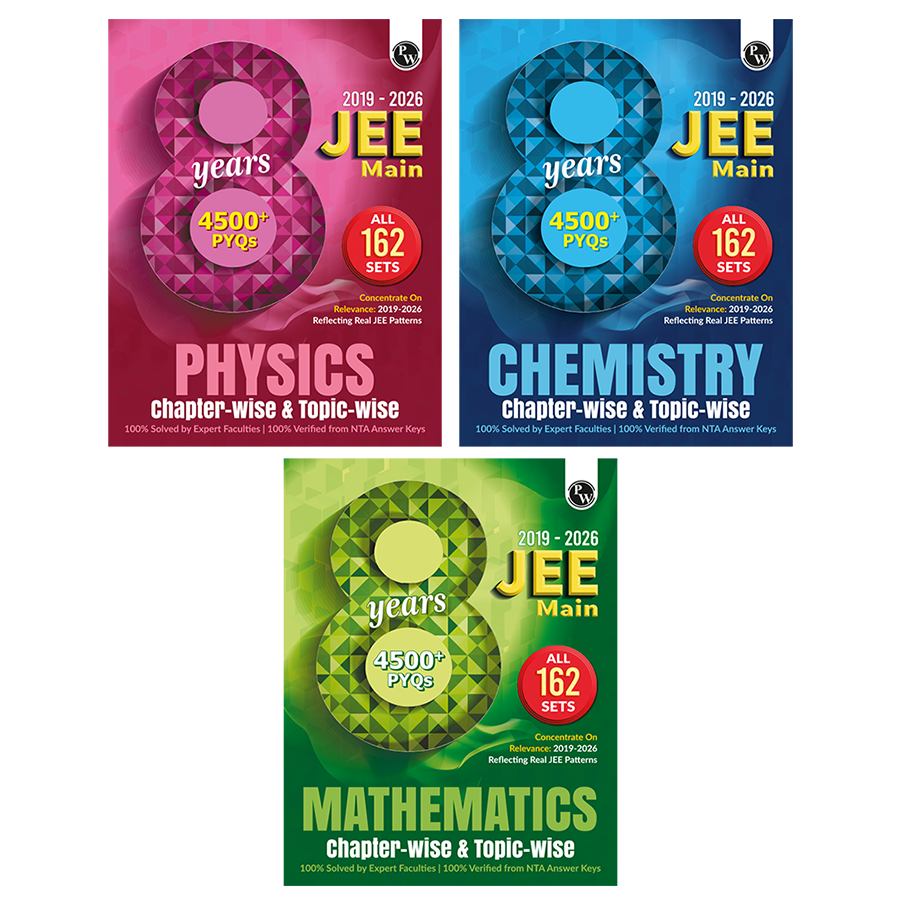
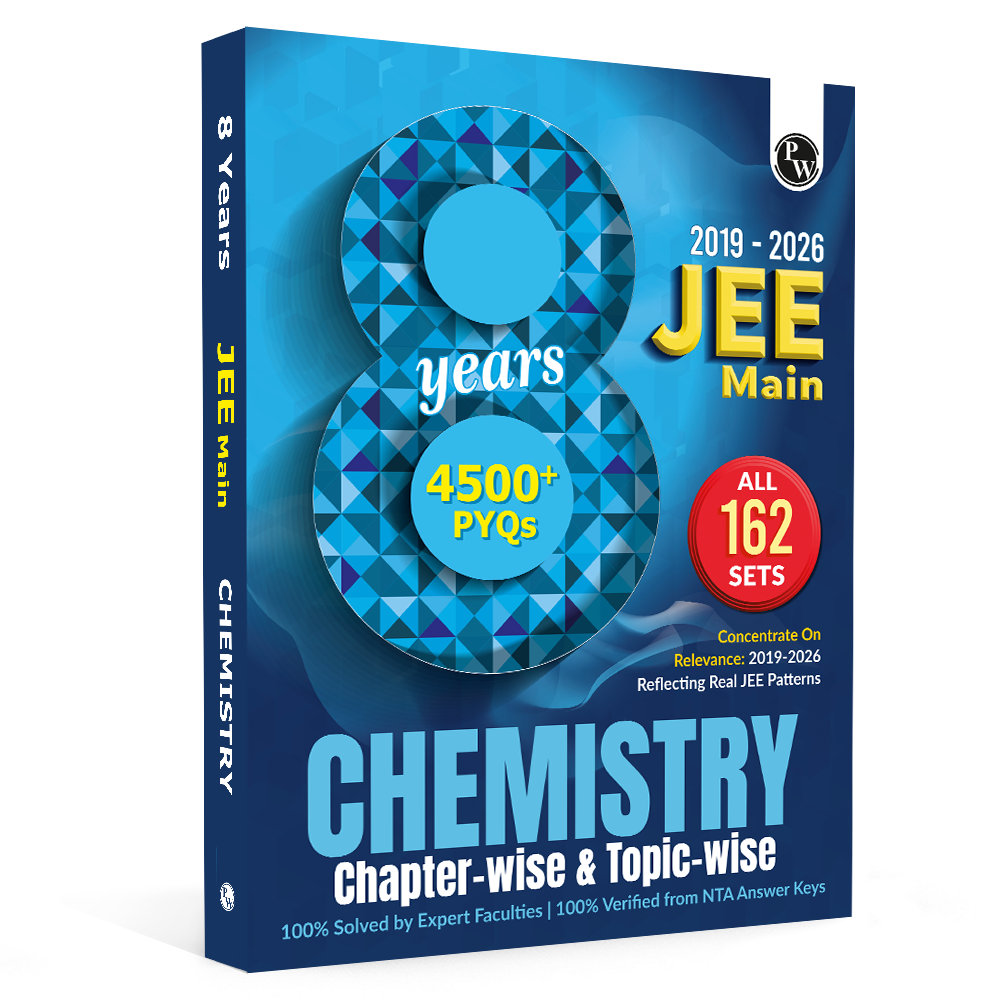
Focusing on papers from 2019 to 2026 is ideal. This range includes 162 shift papers that reflect current testing standards, modern difficulty scaling, and present-day question formats.
2. Is inorganic chemistry in JEE PYQ chemistry strictly NCERT-based?
Yes, past paper analysis shows that most inorganic chemistry questions are taken directly from NCERT lines. Marking past questions directly in your textbook helps focus final revision.
3. Should I solve JEE PYQ chemistry chapterwise or paperwise?
Start by practicing questions chapterwise to strengthen individual topics. During final revision, switch to solving full shift papers in timed 3-hour blocks to build test-day stamina.
4. How do numerical value questions differ in recent shift papers?
Recent shift papers place heavy emphasis on Physical Chemistry integer-type questions in topics like Thermodynamics and Chemical Kinetics, making formula precision crucial.
5. Why are recent years more reliable for identifying JEE chemistry trends?
Recent papers account for shift-wise testing dynamics and modern NTA question styles, providing an accurate view of topic weightage and difficulty standards.