KCET Chemistry 2027 Preparation Strategy with PW Book
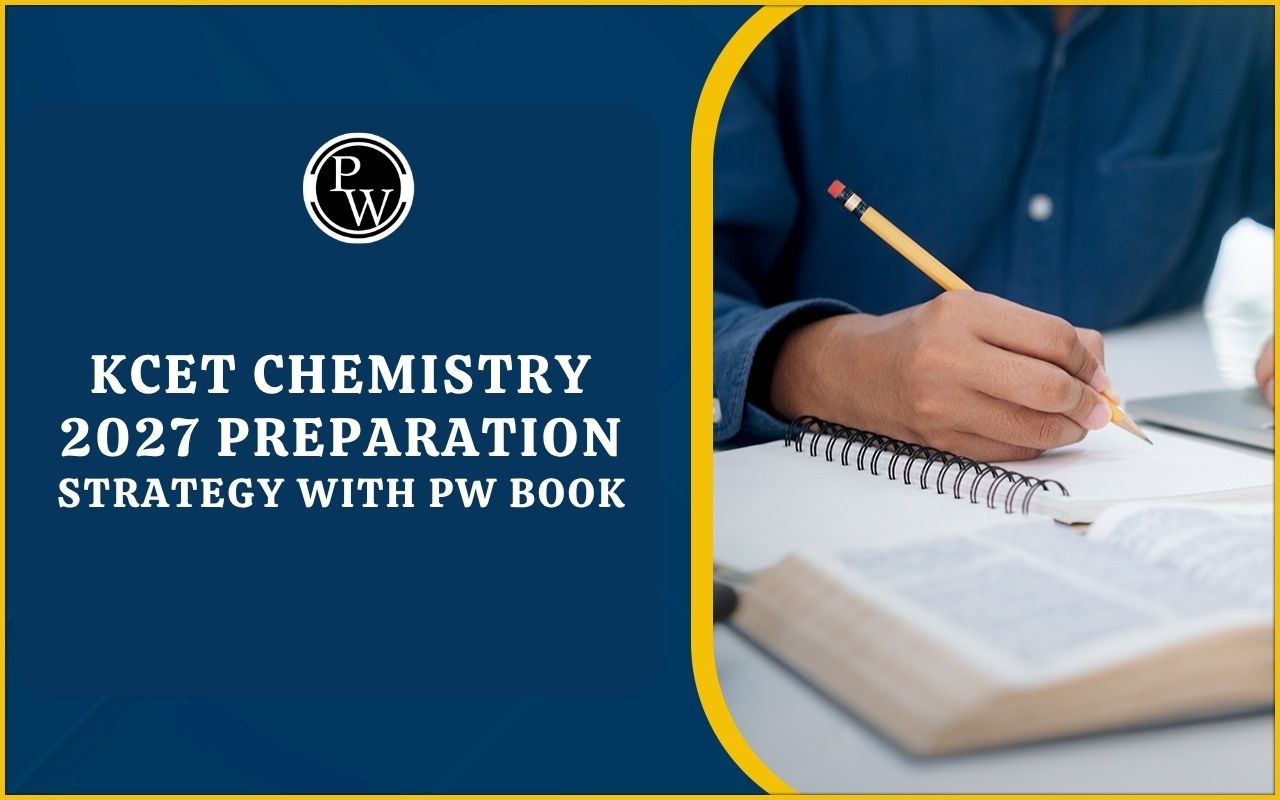
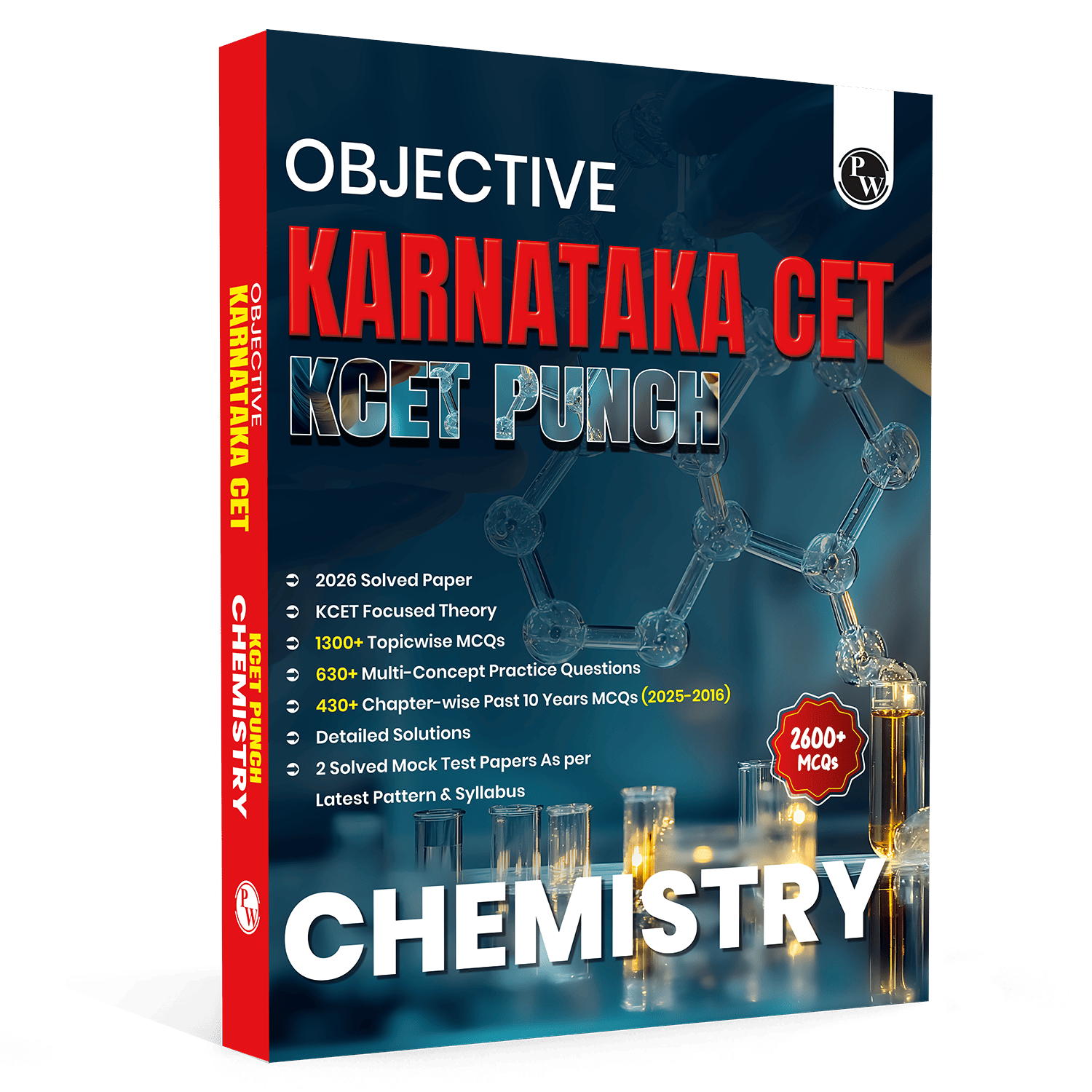
Karnataka Common Entrance Test aspirants face the challenge of balancing Board exams and speedy question-solving. To create a robust foundation, you need focused resources, planned milestones, and consistent revision. A well-structured KCET Chemistry preparation strategy, supported by a Chemistry Book for KCET Exam, will help candidates organise their study hours, reinforce key topics, and grasp basic concepts efficiently.
KCET Chemistry Preparation Strategy and Syllabus for 2027
To understand the admission test, the first step is to have a complete comprehension of the prescribed curriculum. The Karnataka Examinations Authority has set questions straight from the 1st and 2nd PUC textbooks. You should consider these basic units as absolute to have a reliable KCET chemistry preparation strategy.
-
Syllabus match: Karnataka pre-university education rules will be followed only.
-
Core Distribution: Weightage is equally distributed in Class 11 and Class 12 Chapters.
-
Conceptual Depth: Directly theoretical inquiries need a crystal clear knowledge of the lines of the text.
Allocating time wisely prevents last-minute panic. Treat your textbooks as primary guides while mapping out daily study targets.
Choosing the Right Books for Your KCET Chemistry Preparation Strategy
Good reading material decides your path in competitive examinations. Using poor guides might lead to confusion and wasted time. Using these tools as a part of your KCET Chemistry preparation strategy will get you to practice as per the current norms of the test.
-
NCERT Integration: Textbooks published by NCERT form the base of every single question.
-
Advanced Practice Sets: Utilize dedicated resource manuals featuring extensive question banks.
-
Structured Material: Look for volumes containing chapter summaries and formula sheets.
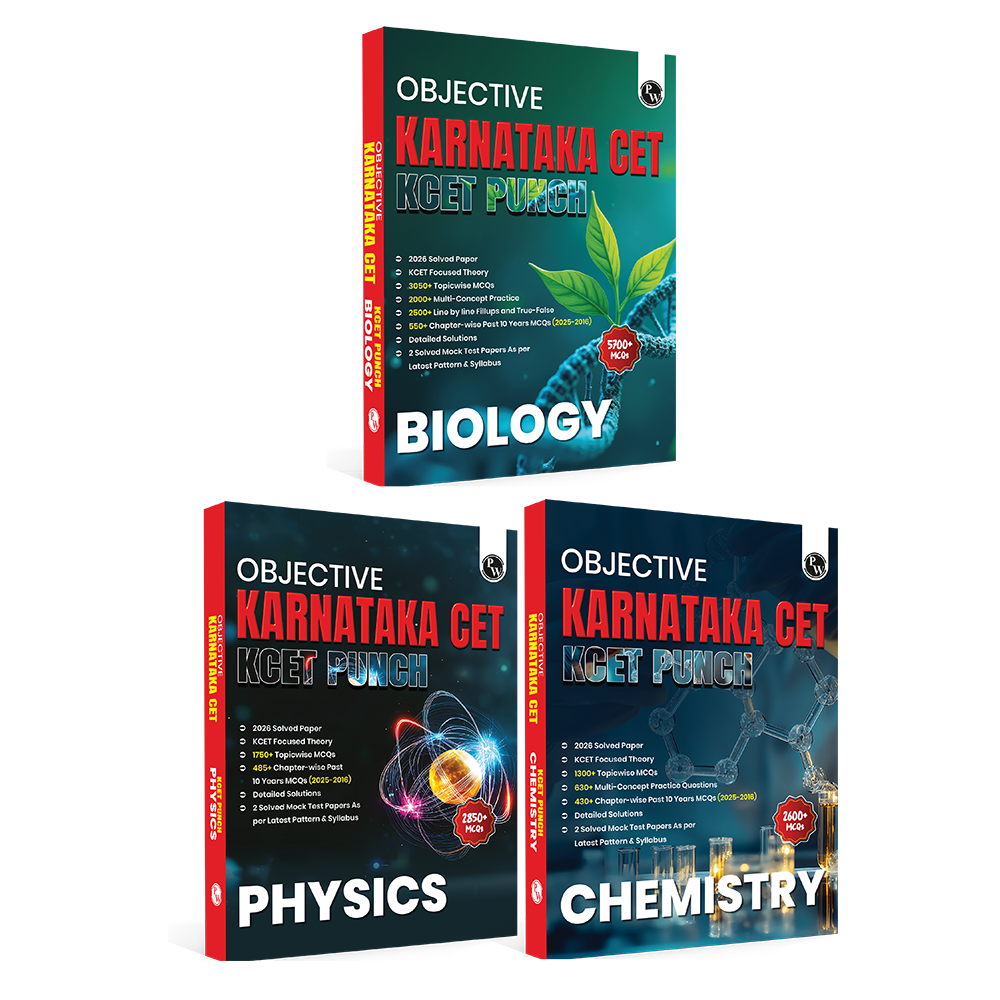
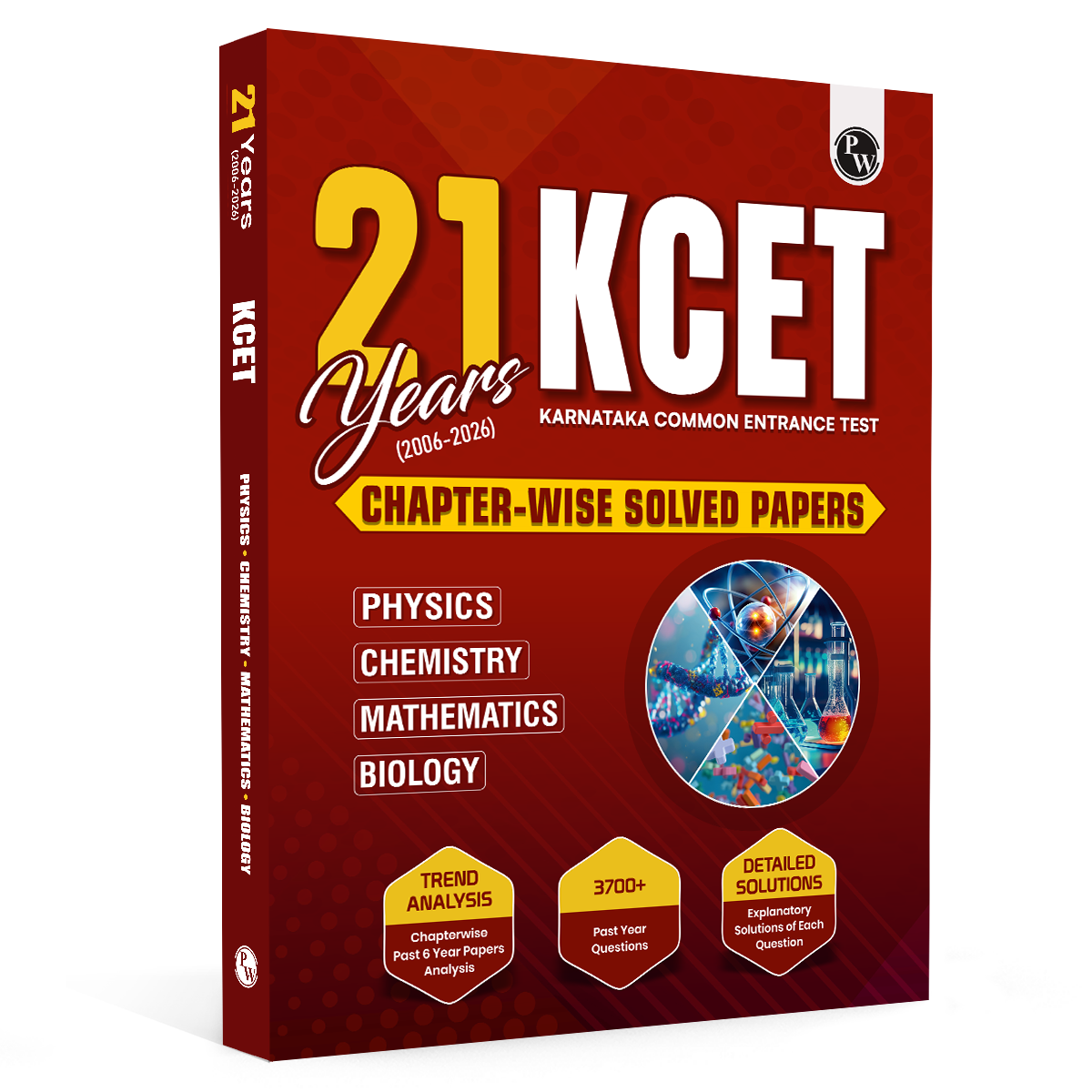
Analytical thinking is enhanced by using validated reference material. For effective preparation, use KCET Books along with regular textbooks and specialist practice guides.
Building a KCET Chemistry Study Plan for 2027 Preparation
It is better to be consistent than to study for the KCET Chemistry exam irregularly in marathon sessions. A realistic timeline encourages the students to break the syllabus into smaller tasks, revise crucial subjects consistently and leave enough time for practice assessments. A good KCET chemistry preparation strategy would be a mix between concept acquisition, MCQ practice, revision and self-assessment, without unnecessarily adding to the study strain.
-
Daily Allocation: Allocate about two hours to Chemistry which will involve revision of concepts, formulae, reactions and practice of MCQs.
-
Chapter Wise Planning: Break down bigger chapters into smaller subjects and set goals for every study session.
-
Weekly Milestones: Try to complete reasonable amount of chapters every week and then do short self-tests.
-
Regular practice of MCQs: After completing each lesson solve some KCET level questions to test your understanding and increase your speed.
-
Revision Blocks: Allocate specific time each week to review chapters, formulas, reactions and essential ideas already covered.
-
Track your mistakes: Have a notebook where you write down the questions you got wrong, and look over these in your revision sessions.
-
Backlog Management: Keep buffer time in the schedule to complete unfinished topics without disturbing the next week's targets.
-
Mock Test Practice: Include timed tests regularly to improve accuracy, question selection, and time management.
-
Flexible Scheduling: Adjust the timetable based on your progress instead of following unrealistic daily targets.
KCET Chemistry Study Plan
The following table gives a simple structure that students can adjust according to their syllabus, preparation level, and available study time.
|
Study Period |
Main Focus |
Suggested Task |
|
Daily |
Concepts + Practice |
Revise topics and solve MCQs |
|
Weekly |
Chapter Completion |
Finish planned chapters and take a short test |
|
Weekend |
Revision |
Review formulas, reactions, and mistakes |
|
Every 2–3 Weeks |
Self-Assessment |
Attempt a timed Chemistry test |
|
Monthly |
Progress Check |
Identify weak chapters and update the study plan |
Breaking the syllabus into smaller targets makes preparation more manageable and helps students maintain steady progress. Following these milestones consistently can also leave sufficient time for revision and mock-test practice before the KCET exam.
Important Chapters for KCET Chemistry Preparation Strategy
Certain sections carry higher weightage and appear more frequently in past exams. Identifying these high-yielding areas allows you to maximize your scoring potential efficiently. An effective preparation strategy highlights these critical units for priority learning.
-
Physical Chemistry: Focus heavily on Chemical Kinetics, Electrochemistry, and Solutions.
-
Organic Chemistry: Learn Name Reactions, Reaction Mechanisms, and Functional Groups.
-
Inorganic Chemistry: Pay close attention to Coordination Compounds and the p-Block elements.
Prioritizing high-weightage topics ensures that you secure maximum marks with minimal friction. Revisit these core chapters frequently during your revision cycle.
Using KCET Chemistry PYQs and MCQs in Your Preparation Strategy
Speed, accuracy, and familiarity with objective questions are important for performing well in KCET Chemistry. Regular practice with KCET PYQs helps students understand how concepts have been tested in previous exams, while MCQs provide additional practice across different topics and question types. Combining both resources can help students move from concept learning to timed problem-solving.
-
Solve Previous-Year Questions: Practise PYQs chapter-wise after completing each topic to understand question patterns and identify frequently tested concepts.
-
Practise Topic-Wise MCQs: Solve MCQs after revising a chapter to check conceptual understanding and improve recall.
-
Use Timed Practice: Set a fixed time for practice sets to improve solving speed and avoid spending too long on one question.
-
Attempt Full-Length Tests: Regularly solve complete Chemistry sections under exam-like conditions to build confidence and improve time management.
-
Analyse Incorrect Answers: Check every wrong response and identify whether the mistake came from a concept gap, calculation error, or misreading the question.
-
Maintain an Error Notebook: Record difficult questions, confusing concepts, formulas, reactions, and repeated mistakes for quick revision.
-
Track Accuracy: Note your scores and accuracy after each practice session to measure improvement over time.
-
Reattempt Difficult Questions: Solve previously incorrect questions again after revision to check whether the concept has been understood.
-
Mix Different Question Types: Practise conceptual, numerical, reaction-based, and application-based MCQs instead of focusing on only one format.
-
Revise Before Retesting: After identifying weak areas, revise the related concepts and attempt another set of questions to measure improvement.
A Simple Practice Cycle
Learn the concept → Solve KCET chemistry MCQs → Attempt KCET chemistry PYQs → Analyse mistakes → Revise weak areas → Retest
Targeted practice turns passive reading into active learning. Regular exposure to PYQs and MCQs can improve question familiarity, strengthen retention, and help students approach the actual examination with greater confidence.
Read More: How to Use PW KCET Punch Chemistry for Exam Preparation
KCET Chemistry PYQs FAQs
What is the right kcet chemistry preparation strategy for beginners?
A strong kcet chemistry preparation strategy starts with thorough textbook reading, followed by systematic numerical practice, regular revision of important reactions, and solving timed mock papers to boost exam temperament.
Which KCET chemistry books 2027 should I follow?
Candidates must prioritize standard PUC textbooks alongside specialized practice resources like the PW Objective NCERT Punch series, which offer extensive question sets and detailed chapter summaries for competitive exams.
How do I create an effective study plan?
An ideal study plan divides the 1st and 2nd PUC syllabus into weekly blocks, allocating specific slots for physical, organic, and inorganic topics alongside dedicated revision and self-evaluation days.
Why are KCET chemistry important chapters crucial for scoring?
Focusing on important chapters such as Electrochemistry, Coordination Compounds, and Organic Name Reactions allows students to target high-yield areas that historically carry maximum weightage in the exam.
How can solving KCET chemistry MCQs and PYQs help?
Regularly practicing PYQs and MCQs improves calculation speed, familiarizes aspirants with repeating question trends, and sharply reduces calculation errors under strict time limits.