Complete Strategy to Prepare KCET PCB

Passing the KCET PCB exam is a major milestone for students in Karnataka who want to study Pharmacy, Agriculture, or Veterinary Science. The main problem is finding a way to get ready for the board exams and the KCET at the same time.
This article gives you a clear, doable plan for getting through all the important chapters while keeping your mind sharp for the last stretch. By using this systematic method, you may change your preparation from messy to professional.
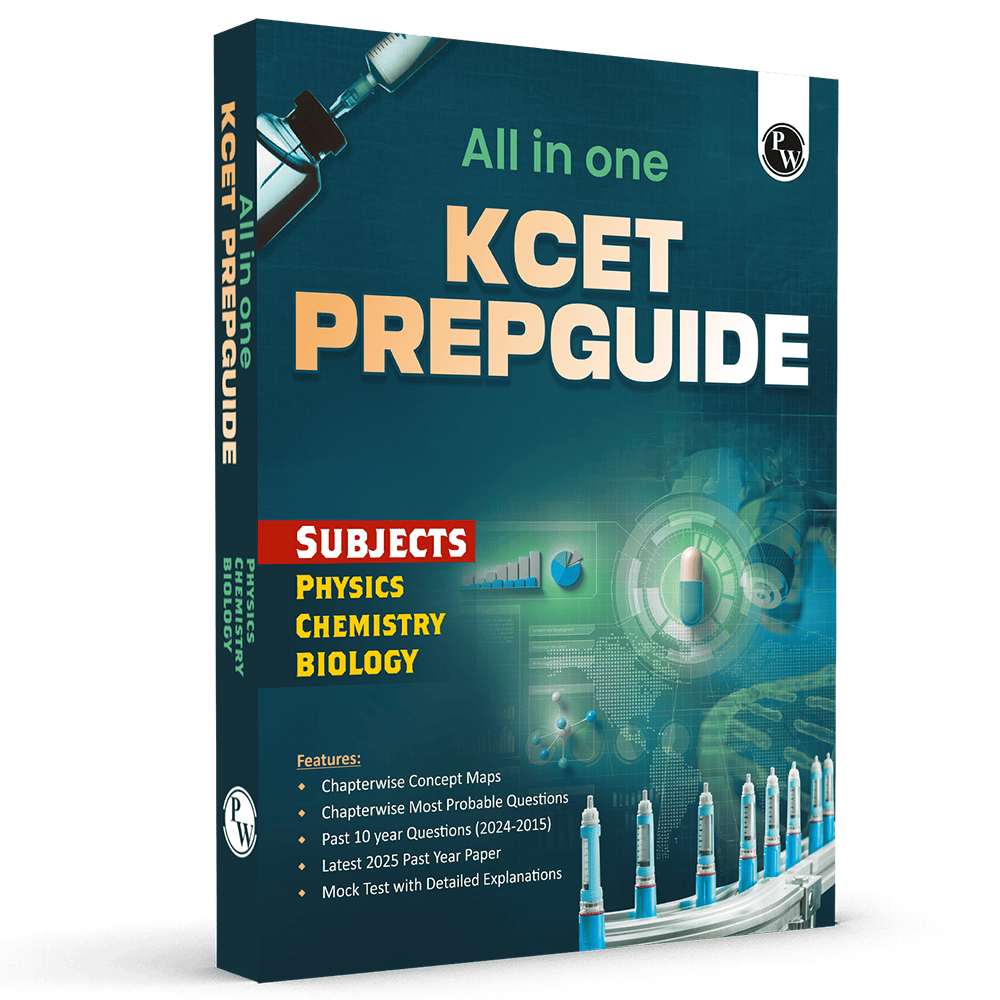
Check Out: KCET Books
KCET PCB Exam Pattern
You need to know what the battlefield is like before you read. There are three different papers in the KCET PCB: Physics, Chemistry, and Biology. There are 60 marks for each subject, and each paper takes 60 minutes to complete. If you know how to utilise it, not having to worry about getting points taken away is a big plus. But since you only have one minute to answer each question, speed and accuracy are your good friends.
KCET PCB Preparation Strategy
A winning KCET PCB preparation strategy isn't just about studying hard; it’s about studying smart. You need to divide your timeline into three phases: Foundation, Intensive Practice, and Final Revision.
Phase 1: Foundation and Concept Clarity
Start with the NCERT or Karnataka PUC textbooks. These are the "bibles" for KCET.
-
Biology: Focus on diagrams, scientific names, and cycles.
-
Chemistry: Divide your time between Physical (formulas), Organic (mechanisms), and Inorganic (trends).
-
Physics: Understand the derivation logic so you can apply formulas to various numerical scenarios.
Phase 2: Subject-Wise Focus
Your KCET PCB success depends on how you handle the nuances of each subject. Physics often acts as the "rank decider" because students find the numericals challenging. Biology is usually the scoring subject where you can save time to invest in Physics or Chemistry.
KCET PCB Important Topics
Not all chapters are created equal. To maximise your score, prioritise these KCET PCB important topics:
Physics:
-
Electrostatics and Current Electricity
-
Optics (Ray and Wave)
-
Modern Physics
-
Thermodynamics
Chemistry:
-
Chemical Bonding
-
p-Block and d-Block Elements
-
Solutions and Electrochemistry
-
Hydrocarbons and Biomolecules
Biology:
-
Genetics and Evolution
-
Human and Plant Physiology
-
Reproduction
-
Ecology and Environment
KCET PCB Previous Year Questions
If you want to understand the examiner's mind, look at the past. Solving KCET PCB previous year questions is the most effective way to identify recurring patterns. Often, the logic behind a question remains the same even if the values change.
-
Analyse Trends: Notice which topics have appeared every year for the last decade.
-
Self-Assessment: Use these papers as timed tests to see where you stand.
-
Doubt Clearance: Every time you get a question wrong, go back to the theory and fix the conceptual gap immediately.
KCET PCB Revision Strategy
As the exam gets closer, your KCET PCB revision strategy should change from reading new chapters to going over what you already know.
-
Quick Notes: Make one-page summaries of each chapter that include the most important formulas and terms.
-
Flashcards: Use these for Chemistry reagents and Biology words.
-
Sheets of Formulas: Make a notebook just for Physics formulas and look through them every day.
-
Active Recall: Instead of just reading, try to describe an idea out loud without glancing at your book.
KCET PCB Mock Test Preparation
If you can't handle stress, all the knowledge in the world won't help you. This is where the KCET PCB mock test preparation comes in. There are many benefits to taking full-length mocks.
-
Stamina Building: You need to be mentally strong to sit for three hours straight (with breaks).
-
Time Management: You learn which questions to skip and which ones to try first.
-
Elimination Technique: Mock tests let you practice "educated guessing" and the process of elimination because there are no negative marks.
-
Round 1: The first round is to answer direct, formula-based questions first (30–40 seconds each).
-
Round 2: Work on problems that aren't too hard and need 2–3 logical stages.
-
Round 3: Use the last ten minutes to do hard math problems and make intelligent guesses (since no negative marking).
-
Simulate "Non-Ideal" Conditions: Don't always study in a room that is completely quiet. Instead, prepare for the unpredictable settings of an exam hall and take some practice tests with a little background noise or slightly greater temperatures.
-
Master the OMR Rhythm: Don't wait until the last five minutes to fill in 60 answers. Try the "Page-by-Page" bubbling method: solve one page of the question paper, then fill in the circles that go with it. This lowers the chance of making mistakes in alignment.
-
The 60-Second Rule: If you can't find a clear way to solve a question in less than 70 seconds, skip it right away. If you waste time on one "ego question" in the KCET PCB, you lose three easy marks later on in the paper.
Check Out: KCET PYQ Book For Exam
KCET PCB Post-Exam Analysis
Taking 20 mocks is useless if you don't spend time analysing them. After every test, categorise your mistakes:
-
Conceptual Errors: You didn't know the theory. (Action: Re-read the chapter).
-
Silly Mistakes: You misread "incorrect" for "correct". (Action: Practice mindful reading).
-
Time Management Issues: You left 10 questions unattempted. (Action: Improve Round 1 speed).
KCET PCB Tips
Success in the KCET PCB is a marathon, not a sprint. Consistency in following your schedule will yield better results than occasional 15-hour study bursts. Stay focused on the goal, keep practising, and your dream college will be within reach.
-
Stay Calm: Panic leads to silly mistakes in easy questions.
-
Read Carefully: Sometimes "not" or "incorrect" is hidden in the question.
-
Fill the OMR Properly: Do not leave the bubbling for the last minute; do it page by page.
Read More: KCET Chapter Wise Weightage 2026
KCET PCB Previous Year Questions FAQs
1. How to score 150 + in KCET PCB?
If you want to get high marks, you need to master the Karnataka PUC textbooks and practise KCET PCB previous year questions rigorously. Prioritise speed, as each question is only allotted 60 seconds.
2. Is NCERT sufficient for KCET PCB preparation strategy?
Yes, NCERT covers most of the syllabus. However, practising with a dedicated guide helps you get accustomed to the specific MCQ format and difficulty level of the Karnataka CET.
3. What are the important topics for Physics in KCET PCB?
The most important topics are Electrostatics, Current Electricity, Optics and Modern Physics. These chapters are the one which carry maximum weightage in the exam.
4. How many KCET PCB mock tests should I give?
During your KCET PCB mock test preparation phase, try to solve at least 10-15 full-length mock tests. This is good for getting used to the time limits and the pressure of the exams.
5. When should I begin my revision strategy for KCET PCB?
Ideally, you should start a proper revision at least two months before the exam. Keep the concepts fresh in your mind by using short notes and formula sheets.