15 Fun Maths Activities for Kids to Improve Calculation and Problem-Solving Skills
Many kids struggle to find excitement in traditional textbook exercises, often finding repetitive calculations intimidating or uninspiring. When basic arithmetic feels like a chore, confidence drops, and mathematical reasoning suffers. Introducing interactive maths activities for kids changes this narrative completely.
By incorporating hands-on practice, engaging cards, and visual learning tools, kids can explore numbers dynamically, turning abstract challenges into rewarding accomplishments that spark genuine curiosity.
Importance of Maths Activities for Kids
Interactive maths activities for kids play a critical role in bridging the gap between theoretical rules and practical understanding. Early learners thrive when they can touch, arrange, and visualize numerical relationships rather than merely memorising steps on paper.
Hands-on learning through dedicated kits, such as interactive learning boards and task sets, transforms routine practice into an immersive STEM experience. These physical interactions foster:
15 Maths Activities for Kids to Improve Calculation Skills
Here are 15 dynamic maths activities for kids designed to boost speed, accuracy, and reasoning using interactive methods, double-sided learning boards, and structured challenge sets.
1. Interactive Addition Board Challenges
Using a double-sided interactive learning board, children place number tokens to complete missing addends. This hands-on method makes additional concepts concrete and boosts calculation speed.
2. Subtraction Accuracy Race
Kids work with timed quiz cards to solve subtraction problems accurately. Using physical boards to track differences helps children visualize how numbers decrease.
3. Multiplication Array Building
Children arrange interactive counters or pegs into rows and columns on a board. This visually demonstrates multiplication as repeated addition and makes times tables easier to memorize.
4. Interactive Division Grouping
Learners take a set quantity of tokens and divide them into equal sections on a learning board. This activity clearly demonstrates how division breaks quantities into equal parts.
5. Ascending Order Number Sorting
Using mixed number cards, children physically arrange values from smallest to largest on a board. This builds strong numerical sequencing and place-value awareness.
6. Descending Order Number Sorting
Children practice sorting numbers from largest to smallest. This activity strengthens number sense and helps learners compare multi-digit values confidently.
7. Average Mean Calculation Tasks
Kids draw interactive quiz cards featuring small groups of numbers. They sum the total and divide by the count on their learning board to understand how averages work.
8. Factor and Multiple Matching
Using dedicated activity cards, children identify all factors for a given number and place matching tokens on their board, turning abstract factor trees into a tangible task.
9. Odd, Even, and Prime Number Classification
Children sort number tokens into designated board zones based on whether they are odd, even, or prime. This activity builds quick pattern recognition and numerical classification skills.
10. Shape and Geometry Spatial Sorting
Using geometric board layouts, kids explore properties of basic shapes. Visualizing sides, angles, and symmetry improves spatial reasoning and geometric confidence.
11. Timed Quiz Card Sprint
Children complete 15 interactive quiz cards covering fundamental operations against a gentle timer. This exercise builds mental agility and improves exam performance.
12. Double-Sided Board Challenge
kids solve a calculation on one side of an interactive board, then flip it over to check their work or attempt an advanced variation, encouraging self-directed learning.
13. Reverse Calculation Mystery
Give children a target final answer on their board and have them choose the correct numbers and mathematical operators from their kit to create a matching equation.
14. Target Number Daily Challenge
Set a specific target number each day. Children use addition, subtraction, or multiplication cards to find as many different combinations as possible that reach the goal.
15. STEM Interactive Quiz Relay
Turn learning into a step-by-step game where children solve sequential arithmetic quiz cards to navigate through an interactive board setup from start to finish.
How to Use Maths Activities for Kids for Better Problem-Solving
Using maths activities for kids effectively requires a structured approach that moves from basic manipulation to independent thinking. Combining structured components, such as instruction guides, interactive boards, and quiz cards, creates a guided path toward mathematical mastery. Kids activity kits can further support this process by making maths learning more engaging, interactive, and hands-on.
|
Step |
Focus Area |
Activity Description |
Learning Outcome |
|
Step 1 |
Introduction |
Review simple guidelines using an introductory instruction sheet. |
Clear understanding of rules without feeling overwhelmed. |
|
Step 2 |
Hands-On Exploration |
Manipulating tokens and board layouts to solve basic arithmetic. |
Develops visual memory and concrete understanding. |
|
Step 3 |
Structured Practice |
Working through structured task cards systematically. |
Increases calculation accuracy and speed. |
|
Step 4 |
Self-Correction |
Comparing board arrangements with answer keys to check work. |
Encourages independent learning and critical thinking. |
|
Step 5 |
Application |
Solving multi-step word or logic problems independently. |
Builds real-world problem-solving abilities. |
Combining these steps ensures that children do not just memorize formulas, but deeply understand how to apply mathematical reasoning across various contexts.
When to Try Different Maths Activities for Kids
Choosing the right time and setting for maths activities for kids ensures maximum engagement and optimal learning outcomes. Different environments benefit from specific task structures:
-
Home Practice Sessions: Short 15-to-20-minute daily sessions using double-sided boards help reinforce lessons learned during the school day without creating fatigue.
-
Classroom Group Work: Collaborative activities using quiz cards encourage peer discussion, communication, and collective problem-solving.
-
Homeschooling Environments: Structured STEM kits offer a complete curriculum supplement, providing hands-on tools for daily mathematics units.
-
Weekend STEM Discovery: Interactive board tasks act as enjoyable educational games during leisure hours, keeping young minds active.
-
Exam Preparation and Revision: Focused sessions with target arithmetic cards offer quick refresher practice that reduces test-related stress.
Tips to Make Maths Activities for Kids More Fun
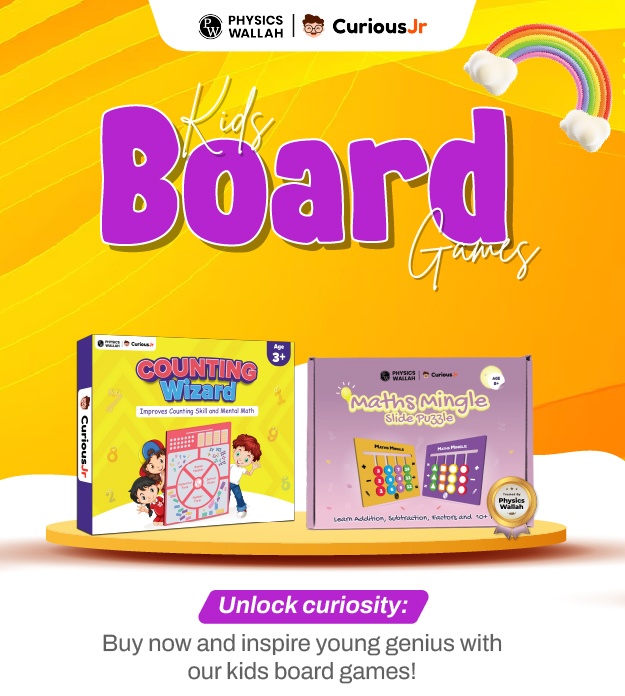
Keeping children engaged during mathematical practice requires variety, positive reinforcement, and interactive elements. Tools such as the Counting Wizard can make number practice more engaging and hands-on. Here are practical ways to enhance enjoyment during maths activities for kids:
-
Incorporate Playful Competition: Introduce a friendly timer or score tracker during quiz card exercises to motivate children to beat their personal bests.
-
Use Tactile Learning Tools: Interactive boards, colorful tokens, and physical cards turn abstract numbers into a tangible game environment.
-
Connect Exercises to Everyday Scenarios: Relate board-based calculations to real-life situations, such as tallying store items, tracking sports scores, or dividing snacks.
-
Rotate Activity Cards Regularly: Switch between sorting tasks, factor matching, and geometric challenges to keep every session feeling novel.
-
Celebrate Progress and Effort: Praise the logic and effort used to solve a problem rather than focusing solely on speed or getting the right answer.
-
Encourage Peer Learning: Allow siblings or friends to work together on double-sided boards to promote teamwork and verbal explanations of math concepts.
Common Mistakes to Avoid During Maths Activities for Kids
While maths activities for kids are designed to make learning enjoyable, certain approach errors can diminish their effectiveness. Avoid these common pitfalls to ensure positive results:
-
Overwhelming the Learner: Introducing complex tasks without working through basic instruction steps can cause confusion and frustration.
-
Focusing Exclusively on Speed: Prioritizing quick answers over correct methods often leads to careless mistakes and weak conceptual understanding.
-
Ignoring Physical Learning Tools: Relying only on pen-and-paper drills misses out on the cognitive benefits offered by hands-on learning boards and interactive sets.
-
Skipping the Verification Step: Allowing children to move on without checking their work prevents them from learning how to identify and correct mistakes independently.
-
Enforcing Inflexible Study Routines: Rigid, lengthy sessions can lead to burnout; keeping activities flexible and concise maintains enthusiasm.
Read More: Importance of Maths Games for Kids
Maths Activities for Kids FAQs
What age group benefits most from interactive maths activities for kids?
Children across early primary and upper elementary ages benefit significantly, as these hands-on tasks scale easily from basic addition to advanced factor and average calculations.
How do maths games for kids improve problem solving?
By offering tactile tools like interactive boards and quiz cards, children visualize numerical relationships clearly, building logical deduction skills needed for complex problem-solving.
Can calculation activities for kids reduce math anxiety?
Yes, using interactive components transforms formal practice into play, providing a low-pressure environment where children can experiment, self-correct, and build confidence naturally.
How often should kids engage in maths problem solving activities?
Short daily sessions lasting 15 to 20 minutes offer ideal consistency, keeping concepts fresh without causing mental fatigue or overwhelming the learner.
Do interactive learning kits support classroom and home study?
Absolutly; versatile tools like double-sided boards and structured activity sets adapt seamlessly to independent home revision, homeschooling lessons, or group classroom tasks.