How to Choose a Science Experiment Kit Based on Your Child’s Interest?

Finding educational resources that genuinely capture a young learner's attention can often feel challenging for parents and mentors. Many students struggle to connect with theoretical textbook concepts, finding them dry and difficult to remember when learning lacks practical application.
Introducing a science experiment kit bridges this gap by turning abstract scientific principles into exciting, tangible discoveries right at home. By selecting a package that aligns directly with what fascinates your child, you can spark a lifelong passion for inquiry, exploration, and academic growth without any added stress.
Importance of a Science Experiment Kit
Every child possesses a unique way of looking at the world around them. Some love building structures, while others enjoy mixing safe household substances or observing living plants and creatures.
Paying attention to these natural inclinations helps you choose a science experiment kit for kids that sustains engagement over extended periods. When children work on topics they already find fascinating, motivation rises naturally without requiring constant supervision from adults.
-
Personalised Engagement: Tailoring activities to personal hobbies prevents boredom and keeps young minds deeply focused on the task at hand.
-
Better Comprehension: Practical application transforms confusing textbook theory into clear, memorable lessons.
-
Confidence Boosting: Successfully completing a project built around a favourite theme builds independent problem-solving skills.
-
Sustained Curiosity: Interest-driven projects encourage children to ask deeper questions and seek out additional knowledge independently.
Which Science Experiment Kit Suits Physics and Chemistry Interests
Children who love questioning how mechanical objects move or how different materials react together will thrive with specific types of packages. A dedicated science kit for kids focused on physical sciences usually includes circuit components, magnets, or safe chemical compounds. These materials allow learners to witness laws of motion, electricity, and chemical transformations firsthand.
-
Physics Exploration: Look for components that let students build simple electrical circuits, test magnetism, or explore force and gravity.
-
Chemistry Exploration: Choose sets featuring safe reagents, test tubes, and measuring tools to observe exciting color changes and bubbling reactions.
-
Guided Safety: Always ensure that any chosen chemistry or physics bundle includes clear safety goggles and non-toxic elements for secure exploration.
-
Practical Application: Connecting classroom physics formulas to real working circuits solidifies foundational mathematical and scientific concepts.
How to Choose a Science Experiment Kit Based on Your Child’s Favourite Topics
Mapping out a selection strategy requires looking closely at what sparks joy during playtime or school projects. If a student frequently asks questions about stars, gadgets, or ecosystems, your shopping list becomes much clearer. A well-chosen kids experiment kit should directly mirror these specific passions to maintain high enthusiasm levels.
-
Identify Core Curiosity: Notice whether your child prefers mechanical assembly, biological observation, or chemical mixtures.
-
Match Project Types: Select a science kit for children that provides structured activities matching those exact thematic preferences.
-
Check Material Inclusions: Verify that all required equipment is supplied inside the box so learning can begin immediately without extra shopping trips.
-
Evaluate Long-Term Value: Opt for boxes that offer multiple varied activities rather than a single trick to keep educational momentum alive.
Best Science Experiment Kit Ideas for Children Who Enjoy Biology and Nature
Youngsters who feel drawn to living things, ecosystems, and environmental science require a different approach to hands-on learning. Instead of electrical wires or chemical vials, a proper STEM kit for kids geared towards natural sciences will focus on observation, plant growth, and environmental tracking.
-
Plant Growth Studies: Kits that let students plant seeds, monitor root development, and track cellular structures under magnification.
-
Environmental Science: Projects focusing on water filtration, weather cycles, or soil composition analysis.
-
Detailed Manuals: Ensure the box contains step-by-step booklets explaining ecological relationships in a simple, child-friendly manner.
-
Outdoor Integration: Many nature-focused sets encourage backyard exploration, blending physical activity with biological study.
How to Match a Science Experiment Kit With Your Child’s Age and Skill Level
Buying an overly advanced or overly simplistic product can lead to frustration or disinterest. A proper science activity kit must match the student's current developmental stage, reading ability, and school curriculum level.
Age grading ensures that instructions remain easy to follow and safety measures are appropriate for their dexterity.
-
Early Learners: Focus on sensory exploration, large pieces, and basic cause-and-effect activities.
-
Middle School Students: Choose sets designed for Class 6-10 students that align closely with standard academic topics in physics, chemistry, and biology.
-
Independent Execution: Look for packages featuring straightforward manuals or video tutorials that allow students to work safely on their own.
-
Scalable Complexity: Select options that allow for open-ended modifications as the child grows more confident in their abilities.
How to Use a Science Experiment Kit to Build Regular Learning Habits
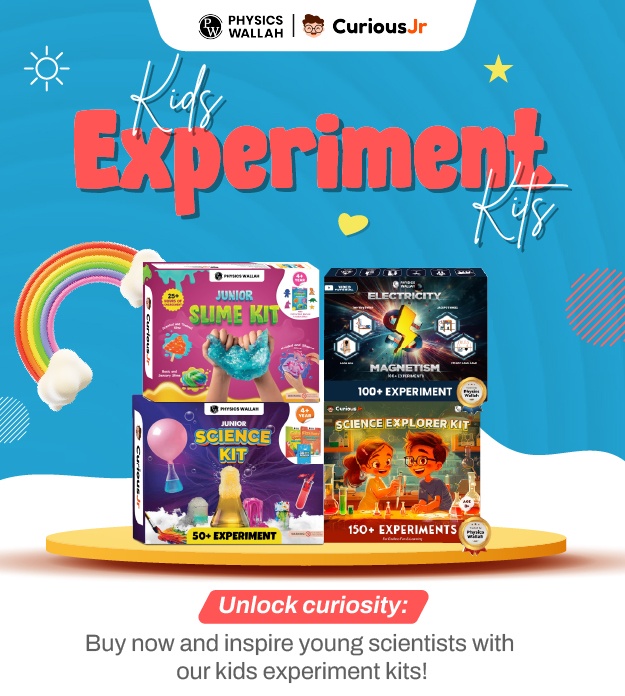
Owning a great educational box, such as Kids Experiment Kits, is only the first step; establishing a consistent routine turns occasional play into deeper understanding. Setting aside dedicated time each week for hands-on activities helps reinforce school concepts naturally.
- Create a Routine: Dedicate a specific weekend hour or weekday afternoon for guided exploration using Kids Experiment Kits.
- Maintain Safety Measures: Always wear safety glasses, keep workspaces tidy, and follow instructions closely.
- Encourage Questions: Ask children to explain what they observed during the activity to boost analytical thinking and retention.
- Document Findings: Have students maintain a small laboratory notebook to record predictions, observations, and final conclusions.
Mistakes to Avoid When Choosing a Science Experiment Kit
Navigating the market for educational tools can sometimes lead to common pitfalls. Avoiding these errors ensures you invest in a product that provides genuine educational value rather than sitting unused on a shelf.
-
Ignoring Age Recommendations: Buying a complex set for a young child or a too-simple set for an older student causes immediate boredom.
-
Overlooking Safety Standards: Failing to check for non-toxic labels and protective equipment puts safety at risk.
-
Skipping Instruction Quality: Choosing boxes with confusing manuals makes independent learning nearly impossible.
-
Focusing Solely on Novelty: Avoid kits that rely purely on flashy gimmicks rather than sound foundational science concepts.
Science Experiment Kit FAQs
1. What is a science experiment kit?
A science experiment kit contains materials and instructions for conducting hands-on science experiments at home or in class.
2. Is the science experiment kit suitable for all ages?
Different packages cater to various age groups, such as Class 6-10, featuring activities aligned with standard educational curricula.
3. What subjects do these experiment kits cover?
They typically cover physics, chemistry, biology, and electronics, ensuring a comprehensive learning experience for students.
4. Do science experiment kits come with instructions?
Yes, quality kits include detailed manuals and easy-to-follow instructions, making experiments simple and enjoyable.
5. Are kids experiment kits safe to use?
Reputable kits prioritise safety by providing non-toxic materials and clear guidelines for conducting activities without risk.