Electricity and Magnetism Projects for School: Easy Practical Ideas

Understanding complex physics topics through textbooks alone often leaves students feeling overwhelmed when tackling practical assignments. Preparing engaging physics projects for school requires clear step-by-step guidance and reliable materials that make abstract energy concepts simple, safe, and exciting to explore.
By applying interactive methods to electricity and magnetism projects, young researchers can bridge the gap between theoretical knowledge and real-world application.
Importance of Electricity and Magnetism Projects
Electricity and magnetism projects help students understand difficult physics concepts through simple hands-on activities. They improve problem-solving, logical thinking, creativity, observation, and practical science skills. Building circuits, testing magnets, and creating electromagnets also helps students connect classroom learning with real-life applications and develop greater interest in STEM subjects.
Features of Electricity and Magnetism Projects Kit
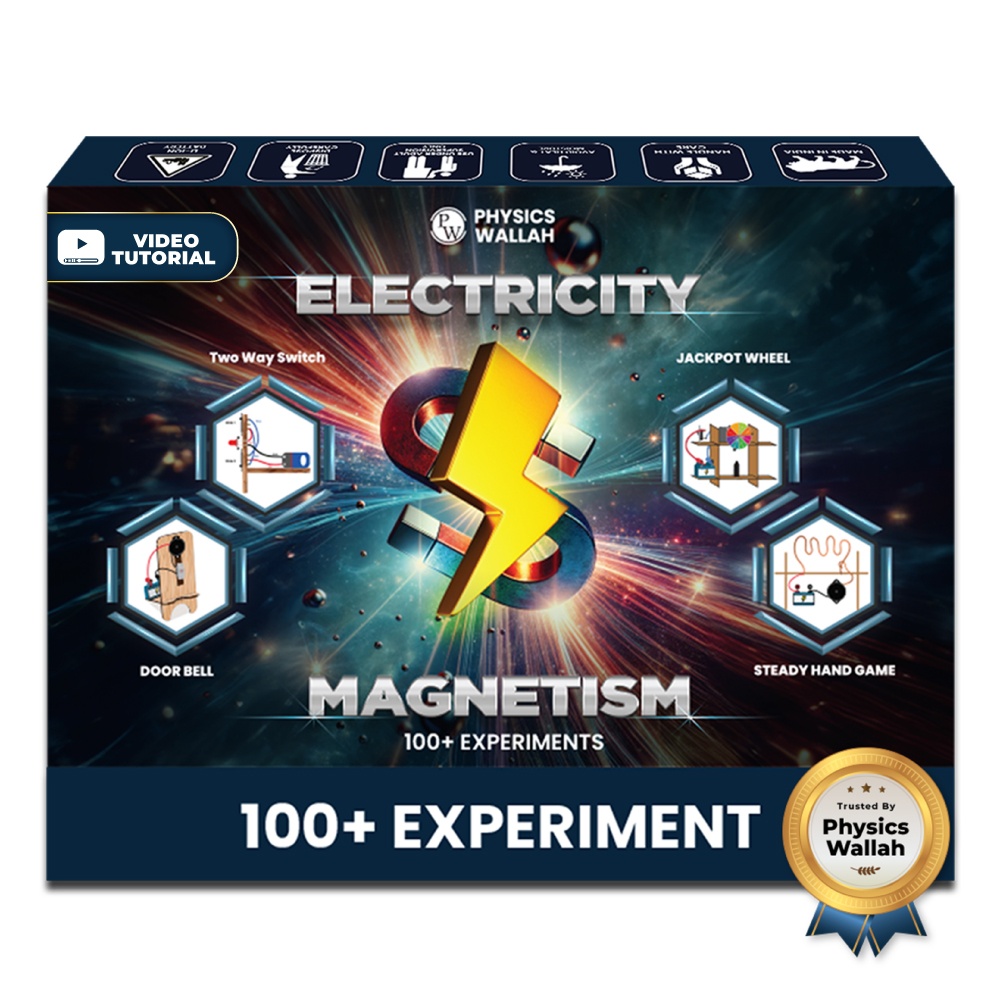
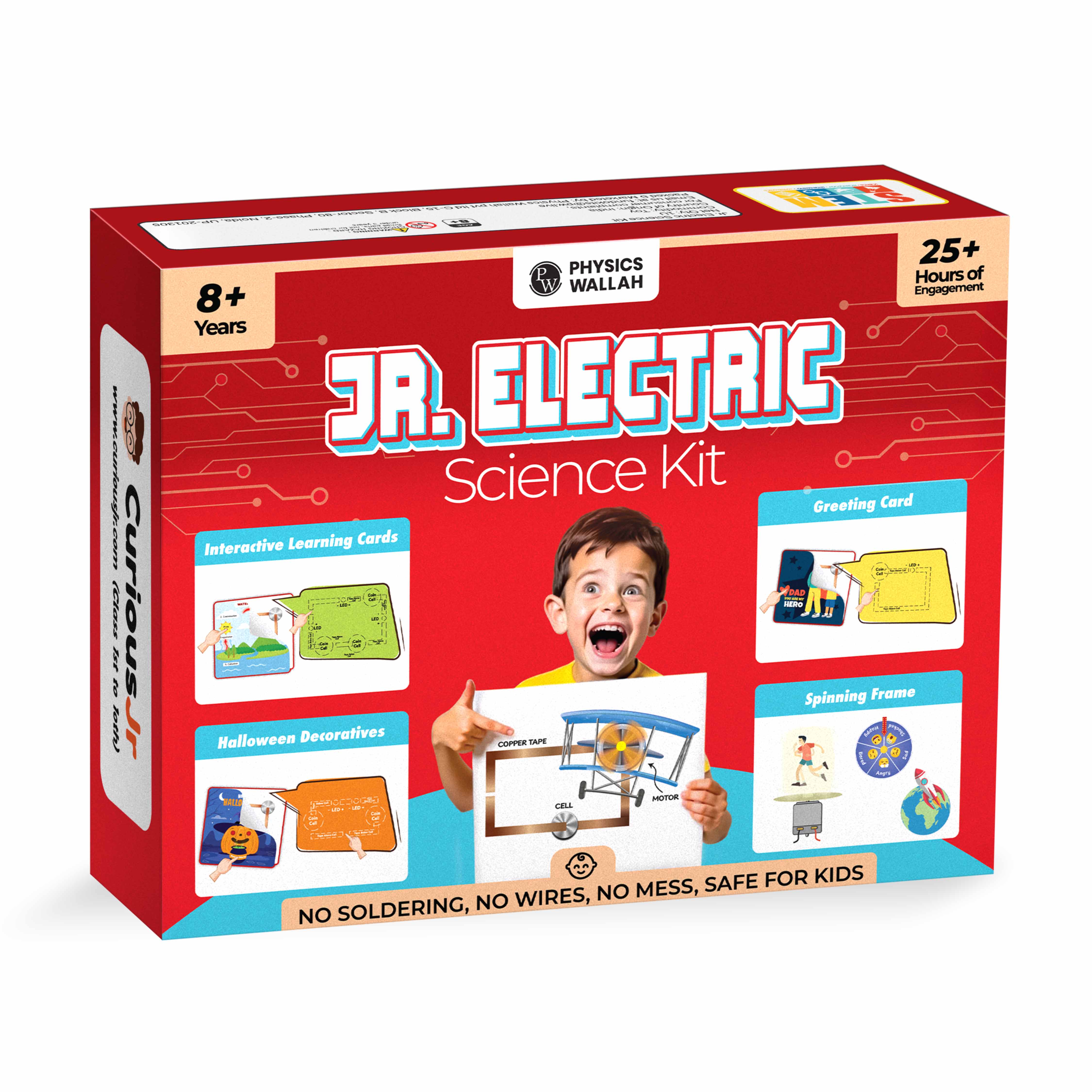
Make science more exciting with a hands-on Electricity & Magnetism Science Project Kit designed to help children explore different concepts through simple experiments. It combines learning, discovery, and fun to encourage young minds to understand how science works.
15+ Experiments to Explore
Perform 15+ different science activities with one kit and repeat experiments to observe different results. Children can spend more time exploring concepts instead of completing just one activity.
Discover Electricity and Magnetism
Learn about circuits, static electricity, magnets, electromagnets, conductors, insulators, water conductivity, electrical energy, sound energy, and heating effects through practical demonstrations.
Practical Learning Experience
The kit turns basic science theories into activities children can see and perform. This helps them understand concepts more clearly and remember what they learn through direct experience.
Explore Real Science Applications
Children can discover how scientific ideas are connected to common objects and everyday situations. This makes classroom concepts more interesting and helps them understand the practical use of science.
Encourages Curiosity and Experimentation
The activities motivate children to ask questions, make observations, test ideas, and find answers. This supports curiosity, logical thinking, creativity, reasoning, and problem-solving skills.
Guided Learning for Young Scientists
The included instruction guide provides simple steps for completing the experiments. Children can follow the process, observe what happens, and understand the science behind each activity.
Easy Activity-Based Learning
The experiments are designed to provide an engaging learning experience without making science feel difficult or boring. The hands-on format encourages children to participate actively in every activity.
Supports STEM Skill Development
By working with circuits, magnets, electricity, and energy, children get an early introduction to STEM learning. The activities can help build interest in science, technology, engineering, and related subjects.
Ideal Educational Gift for Kids
This science experiment kit makes a thoughtful birthday gift, return gift, STEM toy, educational toy, or activity kit for children who enjoy experimenting, discovering new concepts, and learning through play.
Simple Electricity and Magnetism Projects for Elementary Students
Beginning a practical science journey starts with fundamental physical phenomena. Early learners build confidence by working with static charges, simple electrical pathways, and basic magnetic forces using child-friendly components.
Exploring Static Electricity and Charge Transfer
Static electricity demonstrates how charges move between objects without needing an external power source like a battery. Students can observe electrostatic forces through simple interactions that cause light items to move or attract.
-
Rub a plastic rod or balloon against a piece of wool fabric to gather negative electrical charges.
-
Bring the charged object close to small bits of paper or lightweight plastic objects without touching them.
-
Watch as the neutral objects react instantly, jumping toward the charged material due to electrostatic attraction.
This quick experiment proves that invisible forces exist around charged objects, offering a perfect introduction to broader electrical topics.
Constructing Open and Closed Circuits
Understanding electric current requires a clear view of how energy moves through a completed pathway. A basic circuit demonstrates how current flows from a power source to an output device like a small light bulb or buzzer.
-
Attach connection wires securely to the positive and negative terminals of a low-voltage battery.
-
Connect one wire directly to a mini bulb holder to create a single path.
-
Leave one end of the circuit unattached to observe an open circuit state where no current flows.
-
Touch the final wire to the contact point to complete a closed circuit, immediately illuminating the light bulb.
Testing Conductors and Insulators
Not all substances allow electrical current to travel through them easily. Students can build a testing loop to classify everyday items into conductors or insulators.
-
Set up an open circuit using a low-voltage battery and a small signal indicator like a buzzer or lamp.
-
Insert sample items into the open gap to bridge the connection. Test materials such as metal paperclips, plastic rulers, wooden sticks, copper coins, and rubber erasers.
-
Record whether the indicator turns on when each object completes the bridge. Metal items act as efficient conductors, whereas plastic, wood, and rubber block current flow as effective insulators.
Electricity and Magnetism Projects for Middle School Students
As students progress into middle school, science assignments require a deeper look at how energy forms interact with one another. Incorporating multi-step electricity projects kits helps learners grasp conversion mechanisms, sound production, and liquid conductivity.
Energy Conversion: Electrical to Mechanical and Sound
Electrical energy easily transforms into other forms of physical energy. Building simple devices that generate motion or sound illustrates the core principles of modern electronics and machinery.
-
Electrical to Mechanical Movement: Connect a small DC motor into a battery-powered loop. When current enters the motor, it creates a magnetic reaction inside that spins the central shaft, turning electrical power into mechanical motion.
-
Electrical to Sound Production: Place a piezo buzzer or sound module inside a closed circuit path. The incoming electrical current creates rapid internal vibrations, converting electrical energy into audible sound signals.
These projects demonstrate how household appliances utilize electrical energy to perform work, from turning cooling fans to sounding alarm systems.
Testing Water Conductivity and Ionic Flow
Pure water acts as a poor conductor, but dissolved minerals change its electrical properties significantly. Testing liquid samples shows how dissolved ions enable charge movement across fluids.
-
Prepare two glass containers: one filled with distilled water and the other with tap water mixed with table salt.
-
Set up a battery circuit with an indicator LED, leaving two exposed wire ends to serve as liquid probes.
-
Submerge the wire ends into the distilled water without letting them touch each other. The LED remains unlit due to the lack of free-moving charges.
-
Submerge the same probes into the saltwater solution. The dissolved salt breaks down into sodium and chloride ions, allowing current to flow freely and lighting the LED.
Electricity and Magnetism Projects for High School Students
Advanced high school projects kits focus on the unified field of electromagnetism. Combining electric currents with magnetic fields enables students to analyze Lorentz forces, design controllable electromagnets, and study thermal reactions.
Building and Calibrating an Electromagnet
Unlike permanent magnets, an electromagnet produces a magnetic field only when an electric current passes through its coils. This adjustable design serves as a foundation for modern industrial machinery.
-
Tightly wrap a long piece of insulated copper wire around an iron core, such as a large nail, leaving free wire at both ends.
-
Connect the stripped wire ends to a battery source via an inline switch to control current flow.
-
Place small iron fasteners near the iron core while the switch is open to confirm there is no natural attraction.
-
Close the switch to allow current through the coiled wire. The flow of charges creates a strong magnetic field within the iron core, instantly picking up the metal fasteners.
Increasing the number of wire turns or raising the current level strengthens the magnetic field, demonstrating clear relationships within magnetism projects.
Demonstrating the Lorentz Force
The Lorentz force describes the mechanical force exerted on an electrically charged particle or current-carrying conductor moving through a magnetic field.
-
Suspend a lightweight, flexible conductive wire strip between the poles of a strong permanent magnet.
-
Connect the ends of the suspended wire to a low-voltage power supply equipped with a temporary contact switch.
-
Pass a brief pulse of current through the wire. The wire immediately deflects outward due to the force generated by interacting magnetic fields.
-
Reverse the direction of the electrical current or flip the magnet's poles to observe the wire deflection move in the opposite direction.
Observing Thermal Effects and Series Circuit Networks
Passing electricity through a resistive material converts electrical energy directly into thermal energy. Comparing this behavior across different circuit configurations highlights energy distribution rules.
-
Heating Effect of Electricity: Pass current through a thin high-resistance wire segment. The restriction of charge movement creates heat along the wire, demonstrating the operational principle behind electric heaters and protective circuit fuses.
-
Series Circuit Networks: Wire multiple light components end-to-end in a single pathway. Current flows through each component sequentially, showing that breaking any single point in a series setup stops current throughout the entire system.
Read More: 21 Educational STEM Projects
Electricity and Magnetism Projects FAQs
What components are needed for basic electricity and magnetism projects?
Basic projects require low-voltage battery holders, connection wires, miniature light bulbs, switches, bar magnets, insulated copper wire, and an iron core like a nail. Complete learning packages like kit include all these items in a single set.
How do electricity and magnetism interact in school projects?
Electricity and magnetism are two aspects of electromagnetism. Electric current flowing through a wire generates a magnetic field around it, while moving a magnet near a conductive wire coil induces an electric current within the circuit.
Are electricity and magnetism projects safe for young children?
Yes, projects designed for school students use low-voltage DC power sources like AA or AAA batteries, making them safe to handle. Always supervise young children and avoid using high-voltage wall outlets for school experiments.
What is the simplest way to explain electromagnetic induction to a student?
Electromagnetic induction is the process of creating electricity using movement and magnets. When you push a magnet through a coil of wire, the moving magnetic field pushes electrons inside the wire, generating an electric current.
How can a science experiment kit help with school physics assignments?
A science experiment kit provides pre-tested, child-safe components alongside detailed instruction manuals. This ensures students can complete their projects accurately, understand the underlying physics concepts, and present working models with confidence.