Why Maths Activity Book Is Perfect for Building Strong Math Basics?
Parents and teachers have a shared challenge: Getting an early start on education. Standard textbooks follow rote learning, and this makes young learners feel alienated or nervous about numbers. If kids don’t get the key ideas early on, it impacts their academic confidence later in life.
A maths activity book solves this very problem, turning abstract formulae into fun visual problems. This method helps the student to understand the real logic behind each calculation and not just copy answers.
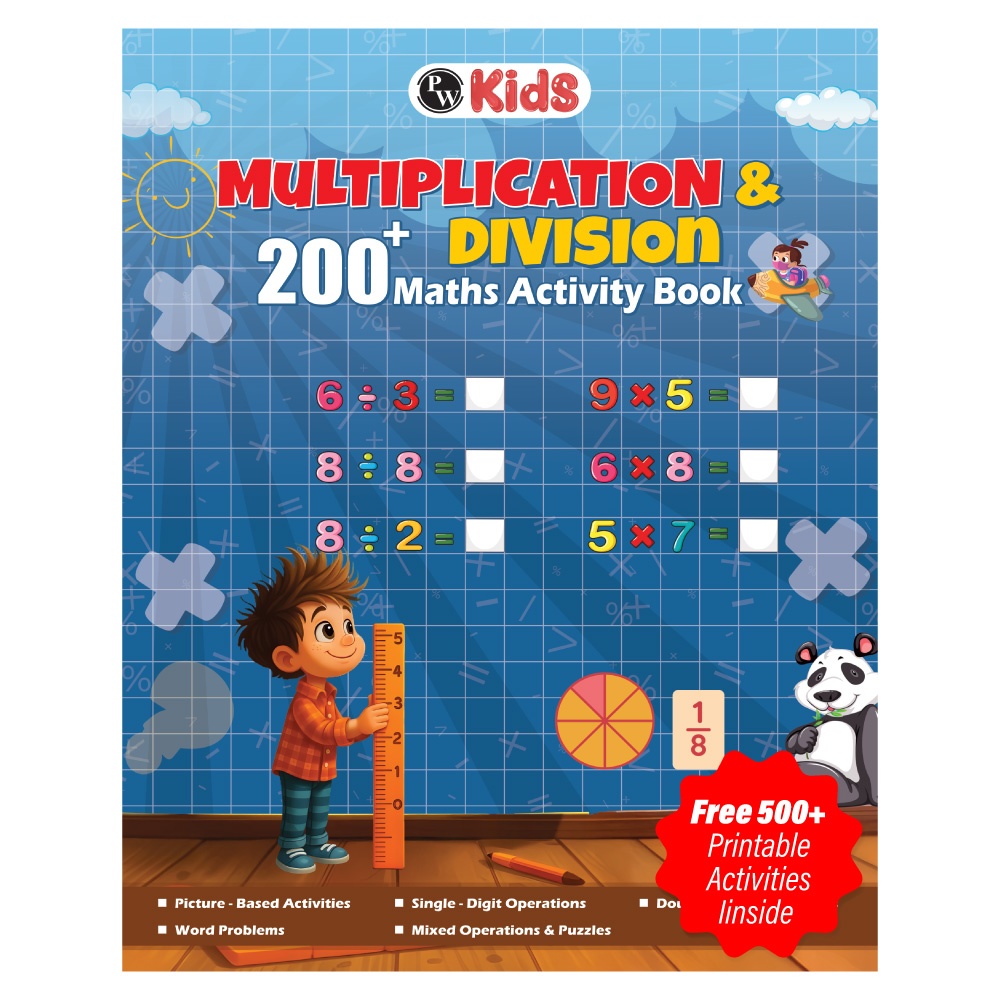
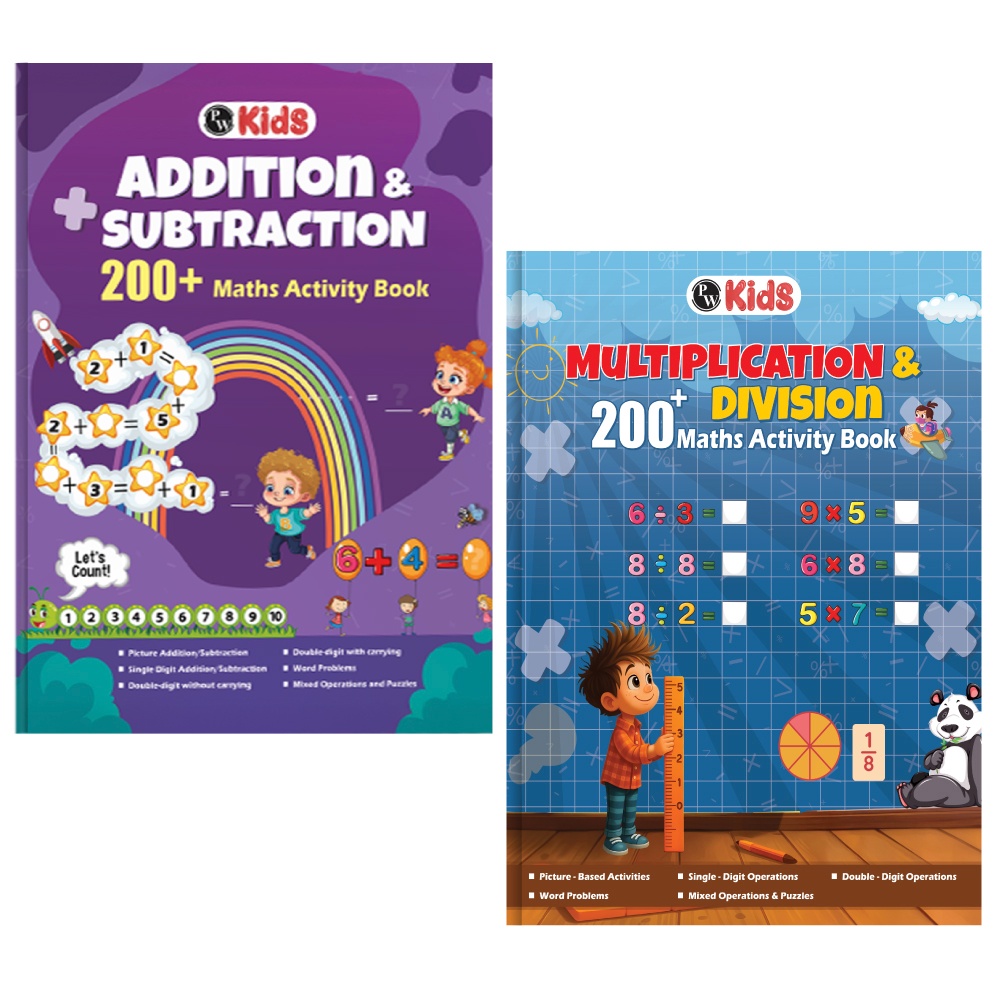
Check Out: PW Kids' Books
Importance of Maths Activity Book
Young minds think in concrete terms, meaning they have to see and touch things to understand them. In traditional schools, equations are introduced too early, creating a gap between counting objects and writing symbols on paper. This sudden shift makes many students lose interest here.
The interactive tools fill this gap beautifully. Numbers become suddenly comprehensible when lessons are spiced with colourful illustrations and tracking exercises. It transforms the daily chores into a fun game that children want to play, instead of a forced chore.
What Children Learn from the Maths Activity Book?
The most effective learning happens when kids do not even realize they are studying. Modern educational tools rely on specific math learning activities for children that turn tricky concepts into playful steps.
Interactive Counting and Grouping
Instead of staring at a naked equation like 5 + 3, a well-designed workbook shows 5 apples and 3 oranges. Count the real stuff. Draw a line to the right number. See how numbers get bigger. This particular technique is great for building spatial awareness.
Pattern Recognition and Coloring
Patterns form the absolute basis of algebraic thinking. Activities that ask children to color every second shape or complete a sequence of blocks teach logic. These puzzles train the brain to look for order and structure, which is crucial for problem-solving.
|
Activity Type |
Focus Area |
Primary Skill Developed |
|
Tracing and Writing |
Number Formation |
Fine Motor Skills |
|
Object Matching |
Counting and Quantities |
Visual Association |
|
Color-by-Number |
Arithmetic Review |
Focus and Precision |
|
Maze Solving |
Number Sequencing |
Logical Planning |
Benefits of a Maths Activity Book
Introducing a structured maths activity book for kids ensures that early education remains both productive and stress-free. These books use targeted layouts to build spatial awareness, pattern recognition, and core arithmetic without overwhelming the student.
-
Visual Representation: Children see objects grouped together, making the concept of addition and subtraction immediate and clear.
-
Motor Skill Development: Tracing lines, writing numbers, and coloring shapes refine hand-eye coordination.
-
Independent Practice: Bite-sized puzzles allow children to complete pages on their own, boosting their sense of achievement.
Regular practice with these books helps children familiarise themselves with standard numerical layouts. Over time, this consistent exposure removes the fear of the subject, preparing them for advanced school topics.
How to Choose the Right Maths Activity Book?
Not all educational materials are created equal. When searching for a maths workbook for beginners, parents should look for options that prioritize a gentle learning curve over complex, advanced testing.
A good beginner book starts with large font sizes and plenty of blank space. Crowded pages confuse young minds and cause mental fatigue. The initial sections must focus purely on number recognition and basic tracing before moving toward any actual calculation.
Gradual progression is the secret to long-term success. The tasks should move slowly from simple counting to single-digit operations, ensuring the child feels supported at every single stage of their journey.
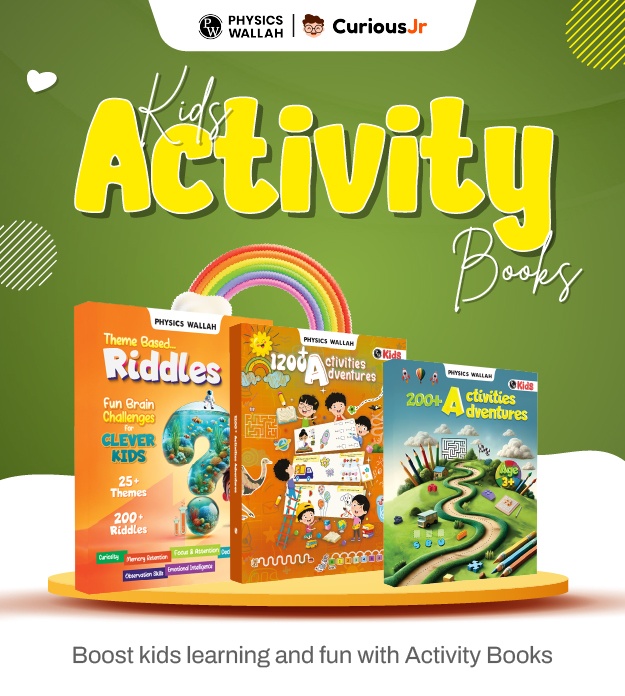
Check Out: Kids Activity Books
How Does the Maths Activity Book Improve Basic Math Skills?
A solid foundation in math goes far beyond clearing school exams. Developing strong basic math skills for children influences how they manage everyday tasks, from telling the time to handling pocket money later in life.
Early mastery of these fundamentals improves cognitive flexibility. When a child understands how to break down a larger number or sort objects by size, they are practicing high-level logical analysis. These cognitive habits assist them across all academic subjects, including science and language arts.
Moreover, feeling capable in math prevents the common phenomenon of math anxiety. Students who use interactive workbooks early on tend to participate more in class and view academic challenges with a positive mindset.
Daily Routine for Maths Activity Book
Consistency beats intensity when it comes to early childhood education. Spending around fifteen to twenty minutes daily with a dedicated kids math practice book is far better than a long, exhausting two-hour session over the weekend.
-
Set a Fixed Time: Pick a quiet hour during the day, preferably after a snack or rest, when energy levels are stable.
-
Keep it Brief: Limit the work to around two or three pages per session to prevent boredom and eye strain.
-
Celebrate the Effort: Focus on how hard the child tried to solve a puzzle rather than just celebrating perfect scores.
Establishing this routine early builds reliable study habits that last throughout school. It positions learning as a natural, everyday habit rather than an unwelcome punishment.
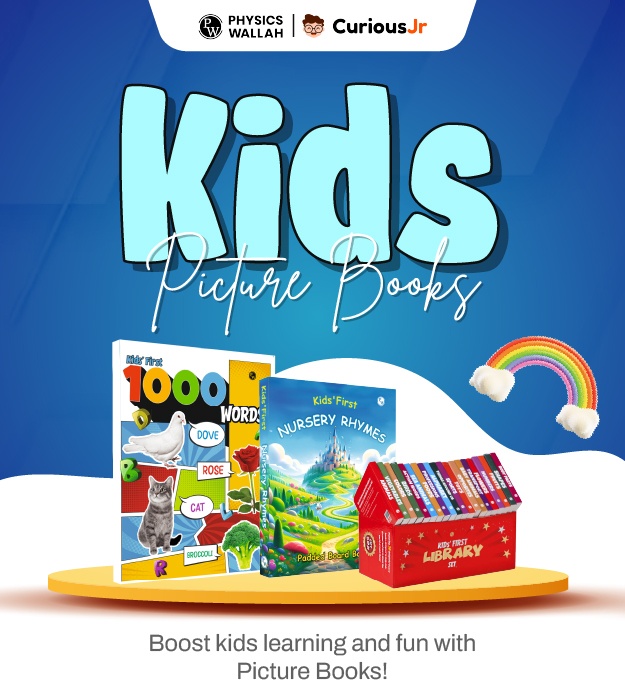
Also Check, Kids Reading Books
Tips for Maths Activity at Home
Learning should never stop when the book closes. Parents can easily mirror the lessons found in workbooks by introducing fun math activities for kids during regular household chores.
-
Kitchen Sorting: Ask your child to count out around four spoons and three forks while setting up the dinner table.
-
Grocery Counting: Let them help you pick out exactly six tomatoes or estimate the weight of a bag of rice at the store.
-
Toy Inventories: Encourage them to group their toy cars by color and calculate which group has the most items.
These real-world examples prove to children that numbers are useful tools rather than abstract rules hidden inside a classroom. It reinforces everything they practice on paper.
Read More: Boost Your Child’s English Skills with 555 Fun Learning Activities
Kids Maths Activity Book
What is the ideal age to introduce a maths activity book?
Children can generally start using a maths activity book around the age of three to four years, beginning with simple tracing and shape recognition before moving to numbers.
How do workbooks prevent children from losing interest in math?
A Quality workbook uses varied puzzles, illustrations, and coloring tasks to keep lessons fresh, ensuring that practicing feels like playtime rather than repetitive schoolwork.
Can a practice book help children who struggle with short attention spans?
Yes, because these books offer short, visually distinct challenges that can be completed in around five minutes, providing immediate satisfaction and keeping young minds engaged.
How many pages should a child complete every day?
Completing around two to three pages daily is usually ideal, as it keeps the routine consistent without causing mental exhaustion or frustration.
Is it necessary to follow the book pages in exact sequential order?
For beginners, following the sequence is highly recommended because the difficulty level increases gradually, building step-by-step on the concepts learned in previous chapters.