Science Experiments for Class 8, 9 & 10 You Can Perform at Home

Students in secondary school often struggle to connect theoretical textbook formulas with real-world physical phenomena. Memorising chemical equations, circuit diagrams, and physical laws without practical exposure leads to weak conceptual clarity and lower test performance. Performing Science Experiments at Home for Class 8 9 10 bridges classroom theories with interactive discovery and practical learning. Hands-on learning transforms abstract topics into clear, memorable observations.
This comprehensive article details over twenty curriculum-mapped practicals across physics, chemistry, electronics, and biology, ensuring students build strong analytical reasoning and critical thinking skills straight from home.
Importance of Science Experiments at Home for Class 8 9 10
Science Experiments at Home for classes 8, 9, and 10 make learning more interesting and practical. Students can understand difficult topics by seeing scientific concepts in action instead of only reading about them in textbooks. Experiments help explain topics such as chemical reactions, electricity, light, pressure, and matter in a simple way.
Practical activities also improve memory because students learn through observation and experience. They encourage students to ask questions, study results, and understand why something happens. This helps develop critical thinking and problem-solving skills. Regular experiments can also support school projects, science exhibitions, practical exams, and better preparation for theory questions.
Why Choose Science Experiments at Home for Class 8 9 10?
Performing practical activities outside the traditional laboratory environment offers immense educational advantages for students aged 10 to 15 years. Experiential learning reinforces classroom teaching, improves retention, and turns passive studying into active discovery.
-
Enhanced Conceptual Understanding: Visualising chemical reactions, current flow, and optical inversion makes abstract textbook theories easy to understand.
-
Development of Critical Thinking: Formulating hypotheses, observing outcomes, and analysing errors cultivate true scientific temperament.
-
Safety and Convenience: Using guided, age-appropriate materials allows students to explore complex phenomena without specialized laboratory hazards.
-
Exhibition Readiness: Hands-on experience prepares students for school exhibitions, STEM competitions, and practical board assessments.
|
Learning Domain |
Skill Developed |
Real-World Application |
|
Chemistry & Reactions |
Analytical observation & redox analysis |
Rust prevention & pH balancing |
|
Physics & Optics |
Spatial reasoning & light path tracking |
Lens design & mirror optics |
|
Electronics & Circuits |
Systematic troubleshooting & wiring |
Household circuitry & device repair |
|
Fluid & Air Science |
Pressure dynamics & fluid mechanics |
Pneumatics & hydraulic systems |
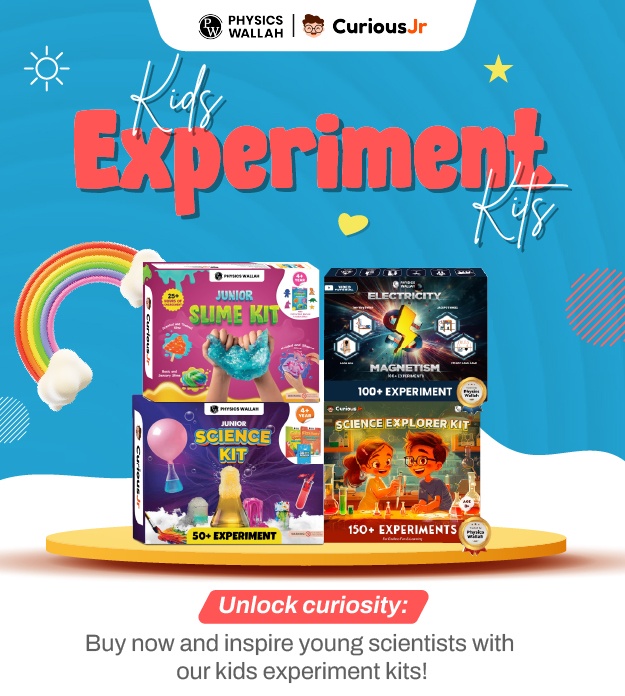
Turn learning into a hands-on experience with PW Kids Experiment Kits, designed to help children explore basic scientific concepts through fun and engaging experiments. These kits encourage curiosity, observation, creativity, and problem-solving while making science learning interactive and enjoyable.
What are the Best Chemistry Science Experiments at Home for Class 8 9 10?
Chemistry comes alive when students witness colour shifts, gas evolution, and rate changes firsthand. These activities cover essential chemical reactions included in middle and high school CBSE and state curricula.
1. Acid-Base Colour Switch Magic and Natural pH Indicators
Understanding acidity and alkalinity is fundamental in secondary chemistry.
-
Core Concept: Neutralisation and indicator colour transitions.
-
What Students Observe: Natural substances like red cabbage or turmeric extract change colours when mixed with acidic or basic household liquids.
-
Curriculum Link: Science experiments for class 8 focusing on acids, bases, and salts.
2. Acid and Metal Reaction with Gas Evolution
Metals react with acids to liberate hydrogen gas, demonstrating chemical reactivity series.
-
Core Concept: Metal-acid displacement and gas testing.
-
What Students Observe: Bubbles forming rapidly as acid acts on active metals, demonstrating energetic chemical changes.
-
Curriculum Link: Science experiments for class 10 covering chemical reactions and equations.
3. Displacement Reaction and Redox Principles
Displacement reactions illustrate how more reactive elements replace less reactive ones in aqueous solutions.
-
Core Concept: Single displacement and reduction-oxidation (redox) processes.
-
What Students Observe: A distinct color change in the solution and metal deposition on the submerged element.
-
Curriculum Link: Core practical modules for Class 9 and 10 chemistry syllabus.
4. Investigating the Rate of Rusting
Iron oxidation occurs naturally, but environmental variables dictate its speed.
-
Core Concept: Factors influencing oxidation and corrosion control.
-
What Students Observe: Varied rates of oxide formation on iron test pieces under dry, moist, and salty atmospheric conditions.
-
Curriculum Link: Corrosion study modules in Class 8 and Class 10 science units.
5. Acid-Base Art Studio
Combining creative art with chemical principles deepens conceptual memory.
-
Core Concept: Targeted pH changes creating visible artistic patterns.
-
What Students Observe: Paper treated with natural indicators changes color upon applying mild acids or bases, illustrating chemical precision.
Make science learning more engaging with the Jr. Electric Science Kit, designed to introduce children to basic electrical concepts through fun, hands-on activities. It encourages curiosity, experimentation, and problem-solving while helping kids learn scientific concepts through practical exploration.
What are the Best Physics and Electricity Science Experiments at Home for Class 8 9 10?
Physics practicals help students understand the forces, energy transformations, and wave phenomena governing the physical world.
1. Ocean Dive: Lateral Inversion and Light Behaviour
Optics requires visual proof to understand how light rays reflect and invert.
-
Core Concept: Plane mirror reflection and lateral image inversion.
-
What Students Observe: Left and right orientation reversal when viewing images or text reflected through optical setups.
-
Curriculum Link: Light and optics units in middle school physics.
2. Observing Diffusion Rate in Liquids
Particle motion in fluids depends directly on temperature and liquid density.
-
Core Concept: Kinetic theory of matter and molecular diffusion.
-
What Students Observe: How rapidly soluble particles spread across liquids of varying temperatures without stirring.
-
Curriculum Link: Science experiments for class 9 explaining matter in our surroundings.
3. Oobleck Exploration (Non-Newtonian Fluid Mechanics)
Non-Newtonian materials defy standard viscosity rules under mechanical stress.
-
Core Concept: Shear-thickening fluids and pressure-dependent viscosity.
-
What Students Observe: A mixture that behaves like a fluid when gently poured, but turns completely solid when struck with force.
4. Electrolysis and Electrochemistry Principles
Passing electric current through solutions breaks down chemical compounds.
-
Core Concept: Ionic movement, anode-cathode reactions, and electrochemistry.
-
What Students Observe: Gas bubbles gathering at submerged electrodes during electrical conduction through ionic liquids.
5. Series Circuits and Parallel Circuits Construction
Building fundamental electrical circuits teaches current distribution and resistance rules.
-
Core Concept: Voltage splits, current flow, and switch control in series versus parallel setups.
-
What Students Observe: How disconnecting one bulb affects others in series compared to parallel wiring configurations powering LEDs, motors, and buzzers.
-
Curriculum Link: Electric current and circuit components in Class 8 and Class 10 physics.
6. Water Conductivity Testing
Not all liquids conduct electricity equally; dissolved ions play the decisive role.
-
Core Concept: Electrical resistance of aqueous solutions and free ion mobility.
-
What Students Observe: Circuit LED brightness varying based on tap water, distilled water, and salt water conductivity.
Check Out: Kids Actvity Kits
What are the Best Air and Water Science Experiments at Home for Class 8 9 10?
Atmospheric pressure, fluid dynamics, and biological gas exchanges control weather, respiration, and engineering systems.
1. Balloon Inflator and Gas Expansion Dynamics
Gas pressure increases with temperature and chemical gas generation.
-
Core Concept: Trapped gas expansion and pressure buildup.
-
What Students Observe: A balloon self-inflating over a flask as chemical reactions generate gas volume.
2. Water Level Rise and Atmospheric Pressure Demonstration
Air exerts massive uniform pressure that can drive liquid displacement.
-
Core Concept: Partial vacuum creation and atmospheric pressure forces.
-
What Students Observe: Liquid rising inside an inverted glass container as oxygen burns inside and air pressure forces liquid upward.
3. Liquid Density Column and Buoyancy
Immiscible liquids stack predictably based on mass per unit volume.
-
Core Concept: Density gradients, Archimedes principle, and liquid stratification.
-
What Students Observe: Distinct, colorful layers formed by liquids of different densities, with small solid objects floating at matching density zones.
4. Suction Glass and Vacuum Forces
Interfacial seal creation allows air pressure differences to lift objects.
-
Core Concept: Differential air pressure and suction forces.
-
What Students Observe: Flat rubber seals lifting substantial weight once air is evacuated from the contact surface.
5. Capillarity and Walking Water Process
Adhesion, cohesion, and surface tension allow liquids to travel upward against gravity.
-
Core Concept: Capillary action through porous media.
-
What Students Observe: Colored water travelling up paper strips and transferring between separate cups over time.
6. CO2 Release and Respiration Exchange
Biological systems release carbon dioxide as a byproduct of metabolism.
-
Core Concept: Cellular respiration and chemical gas detection.
-
What Students Observe: Clear testing solutions turning cloudy when exposed to exhaled air containing carbon dioxide.
7. Volcano Reaction and DIY Fire Extinguisher
Effervescent gas generation demonstrates rapid chemical expansion and flame suppression.
-
Core Concept: Carbon dioxide production and oxygen displacement during combustion control.
-
What Students Observe: Heavy carbon dioxide gas pouring over a flame to extinguish it immediately without direct contact.
Read More: 15 New Science Project Ideas for Class 6 to 10
Science Experiments at Home FAQs
What are the safest science experiments at home for class 8 9 10 students?
Experiments involving natural pH indicators, liquid density columns, series and parallel circuits, and walking water capillary tests are exceptionally safe. They require no open flames or hazardous chemicals, making them ideal for home learning.
How do science experiments for class 8 improve exam performance?
Performing practical activities helps Class 8 students visualize basic concepts like electric circuits, acidity, and air pressure. This visual memory makes answering theory questions, drawing diagrams, and solving analytical exam problems much easier.
Can science experiments for class 9 be used for school science exhibitions?
Yes. Class 9 experiments such as non-Newtonian fluid studies, diffusion rate tests, and liquid density gradients serve as excellent science fair projects. They clearly demonstrate scientific inquiry, variable control, and data presentation.
Are electrical science experiments for class 10 safe to do without adult supervision?
Class 10 electrical activities using low-voltage battery power supplies, LEDs, and small motors are completely safe. However, students should always follow guided instruction manuals and avoid connecting any experiment to main AC power outlets.
Do I need a professional laboratory setup to perform science experiments at home for class 8 9 10?
No professional laboratory is required. Comprehensive kits supply all necessary apparatus, indicators, and electronic modules needed to complete curriculum-aligned experiments safely at home.