CLAT vs AILET Previous Year Papers: What Should You Practise?
Aspirants attempting law entrance exams often struggle to balance their revision between two major national assessments. Moving past basic syllabus coverage, the real test lies in managing passage-heavy legal aptitude, analytical reasoning puzzles, and tight time limits.
Candidates frequently wonder how to allocate their study hours effectively without feeling overwhelmed by conflicting exam formats. Solving previous papers offers a clear path forward by revealing exact testing patterns.
Understanding how to approach CLAT vs AILET previous year papers enables candidates to identify core skill requirements, refine time management, and build confidence through targeted, section-wise practice.
What Are CLAT vs AILET Previous Year Papers
Past examination documents serve as authentic study material, reflecting actual test structures, difficulty levels, and syllabus distributions. When candidates analyze CLAT vs AILET previous year papers, they examine official question sets from past years to understand exam expectations.
These papers offer direct exposure to reading comprehension, logical reasoning, current affairs, and legal aptitude questions as set by examination boards.
Practising past papers helps candidates move beyond theoretical textbook concepts to practical application. These papers showcase exact time constraints and marking schemes, providing a realistic assessment environment.
Working through multi-year solved papers helps law aspirants assess their baseline speed, identify weak subjects, and track performance improvements over time.
CLAT vs AILET Previous Year Papers and Their Main Differences
Both national-level law entrance examinations test critical thinking, reading speed, and analytical ability, but their structural approaches differ significantly. Comparing CLAT vs AILET previous year papers highlights key variations in formatting, section distribution, and problem-solving demands. Using relevant LAW Books can also help aspirants strengthen their concepts and prepare for these differences effectively.
-
Question Structure: Previous papers reveal that one exam relies almost entirely on passage-based questions across all sections. In contrast, the other exam balances brief text passages with direct, independent analytical questions and short reasoning scenarios.
-
Logical Reasoning Focus: Analyzing past papers shows a heavier emphasis on critical reasoning within paragraph context for one test. The other test places greater emphasis on pure analytical reasoning, series completion, arrangements, and syllogisms.
-
Time Allocation per Question: Reviewing past paper formats demonstrates different speed demands. One exam tests long-form reading stamina with multiple questions attached to extensive passages, while the other requires quick switching between short, distinct question types.
-
Syllabus Segregation: Section-wise past paper collections illustrate how subjects like Elementary Mathematics or Quantitative Techniques are weighted differently, requiring distinct practice strategies.
|
Feature / Metric |
Exam Type A Pattern |
Exam Type B Pattern |
|
Primary Paper Format |
Passage-based comprehension across all sections |
Mixed format with passages and standalone questions |
|
Reasoning Emphasis |
Critical reasoning, statement-assumption, argument strength |
Analytical reasoning, puzzle solving, coding-decoding, logic |
|
Reading Volume |
High reading volume requiring sustained speed |
Moderate reading volume requiring agile context switching |
|
Practice Requirement |
Passage analysis, context inference, speed reading |
Rapid puzzle solving, rule application, vocabulary precision |
Which Sections to Practise from CLAT vs AILET Previous Year Papers
Strategic preparation requires knowing which sections from both exam papers offer maximum value. Cross-practicing sections from CLAT vs AILET previous year papers builds well-rounded skills and improves adaptability across different question styles.
-
Legal Reasoning and Aptitude
Solving past papers from both exams builds strong legal reasoning skills. Passage-based legal questions require extracting principles from provided text and applying them strictly to factual scenarios. Standalone or proposition-based legal questions from older paper formats test logical rule application and rapid situational assessment. Practising both types deepens legal comprehension without requiring memorization of complex laws.
-
Logical and Analytical Reasoning
Past paper analysis shows clear differences in reasoning sections. Working through comprehension-focused reasoning papers builds argument mapping, assumption identification, and inference skills. Practising pure analytical reasoning sets improves performance in sequence puzzles, logic games, blood relations, and conditional logic. Candidates benefit from solving both styles to maintain logical speed and flexibility.
-
English Language and Reading Comprehension
English sections across past papers test vocabulary in context, grammar precision, and reading speed. Comprehensive passage questions require tracking subtle author arguments and tone. Short-form vocabulary and grammar questions test precise language rules. Practising both paper types improves reading speed and accuracy under tight time limits.
-
Current Affairs, General Knowledge, and Quantitative Aptitude
Past papers highlight distinct approaches to general awareness and numerical ability. Current affairs sections range from passage-linked analytical questions to direct factual prompts. Practising quantitative sections from past papers helps candidates master data interpretation charts, caselets, and basic arithmetic word problems.
How to Compare Question Patterns Using CLAT vs AILET Previous Year Papers
Evaluating shifts in question trends over time requires a structured approach to past paper analysis. Utilizing organized compilation resources allows candidates to track changing difficulty levels and evolving syllabus priorities.
-
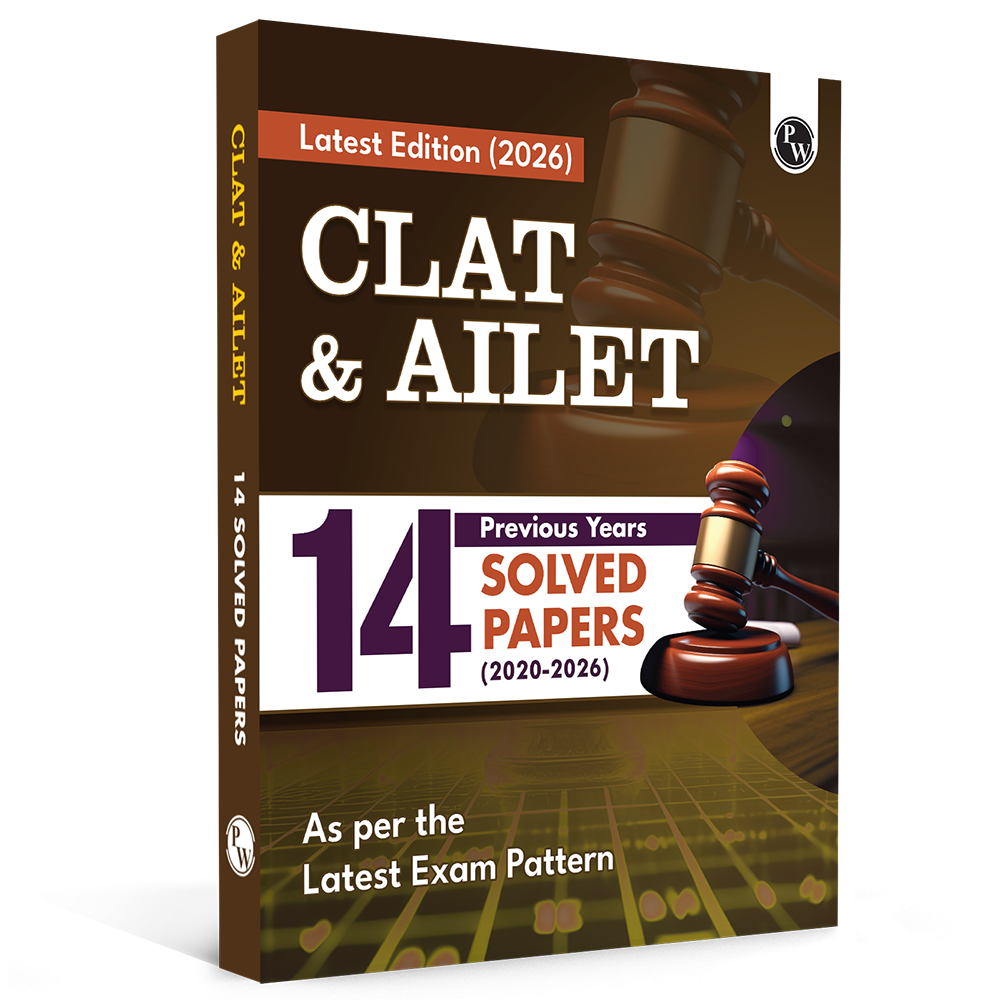
Gather Updated Solved Papers: Collect comprehensive paper collections covering 14 previous years (2020–2026), including the latest December 2026 paper, to align practice with current testing standards.
-
Review Trend Analysis Insights: Examine detailed trend analysis data to identify evolving question structures, high-priority topics, and frequent scoring opportunities across both exams.
-
Evaluate Chapter-Wise Segregation: Work through questions organized by syllabus topics to isolate weak areas, refine concepts, and complete targeted topic revision.
-
Examine Comprehensive Explanations: Review logical, step-by-step solutions for every question to understand key reasoning principles, eliminate incorrect options, and strengthen analytical skills.
Also Check - CLAT Practice Mock Booklet
How to Create a Practice Routine with CLAT vs AILET Previous Year Papers
A structured weekly routine ensures consistent practice across both exam formats without causing study burnout or confusion.
-
Phase 1: Topic-Wise Foundation Building (Days 1–3): Begin by solving chapter-wise segregated questions from past papers. Focus on understanding core concepts in legal principles, critical reasoning, and data interpretation before attempting full-length timed tests.
-
Phase 2: Timed Sectional Drills (Days 4–5): Set strict timer limits while solving specific paper sections. Allocate 25 to 30 minutes per section to build reading speed and fast decision-making skills.
-
Phase 3: Full-Length Paper Simulations (Day 6): Attempt complete past papers from 2020–2026 under strict examination conditions. Simulate actual test environments by taking papers without breaks during official exam hours.
-
Phase 4: Detailed Solution Review (Day 7): Compare marked answers against step-by-step explanations. Document repeating errors, misread premises, or time traps in a dedicated review notebook.
Tips to Use CLAT vs AILET Previous Year Papers for Better Preparation
Using past papers effectively requires clear study strategies rather than casual question solving. Implementing these proven preparation practices helps candidates get the most value out of their study time.
-
Prioritise Year-Wise Progressions: Begin with earlier papers from 2020 to build base skills, then progress systematically to the latest December 2026 paper to adapt to current exam trends.
-
Focus on Explanation Logic: Do not just check answer keys; read complete logical explanations for every correct and incorrect choice to build sound reasoning habits.
-
Track Time per Passage: Monitor the exact minutes spent reading individual passages versus answering questions to identify time-wasting habits early.
-
Use Chapter-Wise Segregation for Targeted Study: Use syllabus-aligned chapter breakdowns to strengthen specific weak areas identified during mock attempts.
-
Analyze Trend Shifts Annually: Study year-to-year question pattern shifts to anticipate changes in topic weighting and passage length.
Mistakes to Avoid While Solving CLAT vs AILET Previous Year Papers
Avoidable study habits can slow preparation progress and reduce the benefits of past paper practice.
-
Ignoring Full Paper Explanations: Skimming answer keys without reading step-by-step solutions prevents candidates from correcting flawed reasoning habits.
-
Practising Without Timers: Solving past papers without strict time limits creates a false sense of security and fails to build real exam endurance.
-
Mixing Question Styles Randomly: Switching between passage-based reading sets and short analytical puzzles without a structured plan causes cognitive fatigue and ruins study focus.
-
Overlooking Deciding Sections: Skipping quantitative techniques or analytical puzzles due to personal preference limits overall score potential in close competition.
-
Neglecting Recent Paper Papers: Relying only on older past papers while ignoring updated sets like the December 2026 paper leaves candidates unprepared for recent exam pattern updates.
Read More: CLAT Syllabus 2027
CLAT vs AILET Previous Year Papers FAQs
1: How do CLAT vs AILET previous year papers differ in format?
Exam papers differ primarily in reading structure and question types. One exam uses passage-based questions across all sections, while the other combines passage sets with short, independent analytical reasoning questions.
2: Where can I find 14 years solved CLAT PYQs and AILET PYQs?
Candidates can access 14 previous years' solved papers (2020–2026) arranged year-wise and section-wise, complete with detailed explanations and trend analysis, in comprehensive compilation books tailored for law aspirants.
3: Should I solve CLAT previous year papers for AILET preparation?
Yes, solving passage-heavy papers builds critical reading speed, vocabulary, and legal reasoning context, which enhances overall performance for all competitive law entrance tests.
4: How often should I practice AILET previous year papers during CLAT AILET preparation?
Candidates should solve section-wise past papers two to three times weekly, escalating to full-length timed paper attempts once a week as exam dates approach.
5: Why is trend analysis important when solving CLAT vs AILET papers?
Trend analysis highlights evolving question patterns, changes in section weighting, and high-priority topics, allowing candidates to focus their study on high-scoring areas.