CAT Quantitative Aptitude Preparation: Important Topics & PYQs

Strong CAT quantitative aptitude preparation requires clear concepts, regular practice, and proper use of previous year questions. The Quantitative Aptitude section can play an important role in improving your overall CAT percentile, but many students find it difficult because of lengthy questions, calculations, and time pressure.
A good preparation plan helps you understand the syllabus, identify important topics, improve calculation speed, and learn how to choose the right method for each question. The best way to start is by building strong basics and then moving towards exam-level questions and PYQs.
Overview of CAT Quantitative Aptitude Preparation
Quantitative Aptitude Preparation focuses on building strong concepts, improving calculation speed, and practising questions regularly. For CAT, students should cover important areas such as Arithmetic, Algebra, Geometry, Number System, and Modern Mathematics. Starting with basic concepts and gradually moving to CAT-level questions can make preparation more effective. Solving PYQs, taking sectional tests, revising formulas, and analysing mistakes can also help improve accuracy, speed, and confidence.
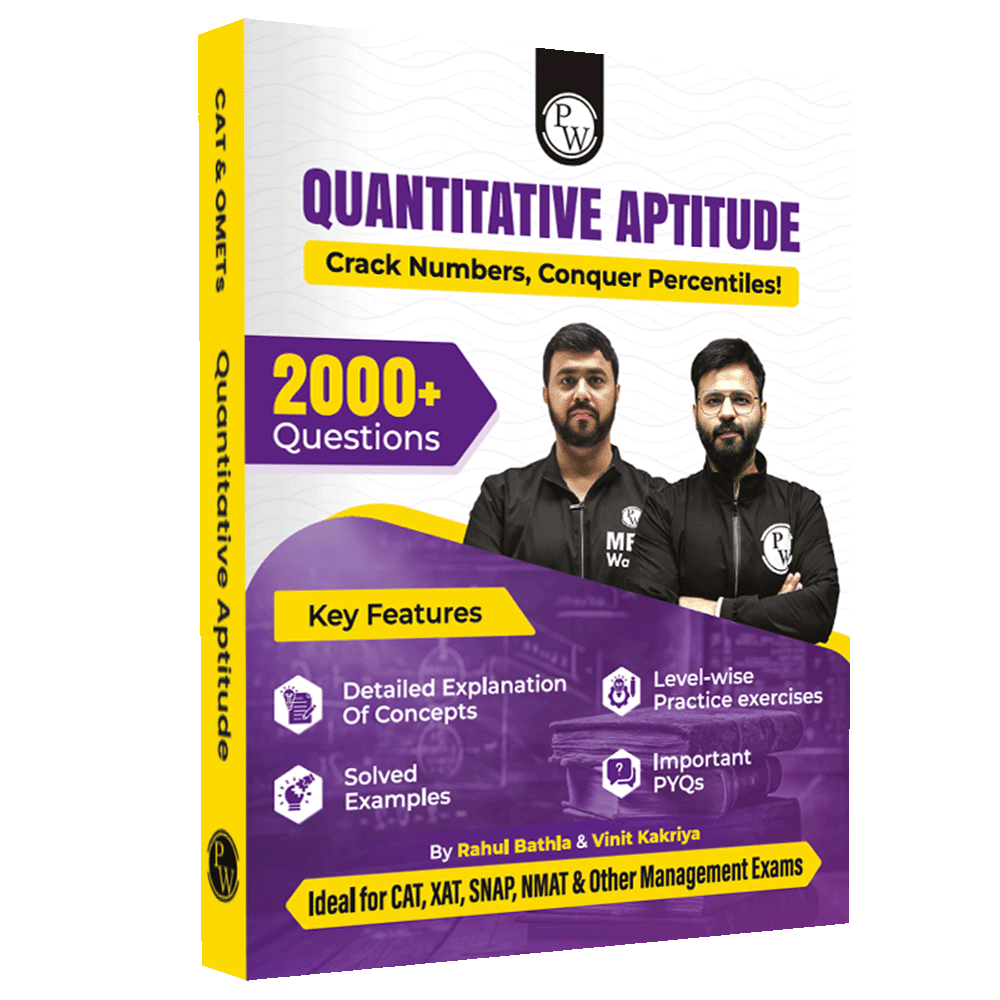
Features of Books for CAT Quantitative Aptitude Preparation
Along with Quantitative Aptitude, Logical Reasoning and Data Interpretation are important areas for management entrance exam preparation. A focused CAT Quantitative Aptitude book can help students practise different question types and improve their solving approach.
Key features include:
-
1200+ Questions for Practice: Practise 1200+ questions to strengthen Logical Reasoning and Data Interpretation skills.
-
Clear Concept Explanations: Understand important concepts through simple explanations.
-
Step-by-Step Solved Examples: Learn how to approach questions through detailed solved examples.
-
Easy to Difficult Practice: Start with basic questions and gradually move towards tougher problems.
-
Important PYQs Included: Practise selected Previous Year Questions to understand actual exam-style questions.
-
Useful for Major Management Exams: Prepare for CAT, XAT, SNAP, NMAT & Other Management Exams with focused LR and DI practice.
What Are the Important Topics for CAT Quantitative Aptitude Preparation?
Understanding the main topics helps students create a better study plan. Some areas appear regularly and should receive more attention during preparation.
-
Arithmetic: Percentages, profit and loss, ratios, averages, mixtures, time and work, and time-speed-distance.
-
Algebra: Linear equations, quadratic equations, inequalities, logarithms, functions, and other basic algebra concepts.
-
Geometry and Mensuration: Triangles, circles, polygons, coordinate geometry, areas, volumes, and 3D figures.
-
Number System: Divisibility, LCM and HCF, remainders, unit digits, factors, and number properties.
-
Modern Mathematics: Permutations and combinations, probability, and set-based questions.
Start with basic questions and slowly move to higher difficulty levels. Regular formula revision can also help you solve questions faster during timed practice.
How to Cover Important Topics in CAT Quantitative Aptitude Preparation?
Students should not try to complete every topic at the same speed. Start with areas where you can build a strong base and then move towards topics that need more practice.
For CAT quant important topics, begin with Arithmetic and Algebra. Once your basics become strong, add Geometry, Number System, and Modern Mathematics.
A weekly plan can include:
-
Concept learning on selected weekdays.
-
Daily question practice.
-
One or two revision sessions.
-
PYQ practice at the end of each topic.
-
Regular sectional tests.
-
Mistake analysis after every test.
This approach helps you measure progress instead of simply counting the number of chapters completed.
How Do Previous Year Questions Help With CAT Quantitative Aptitude Preparation?
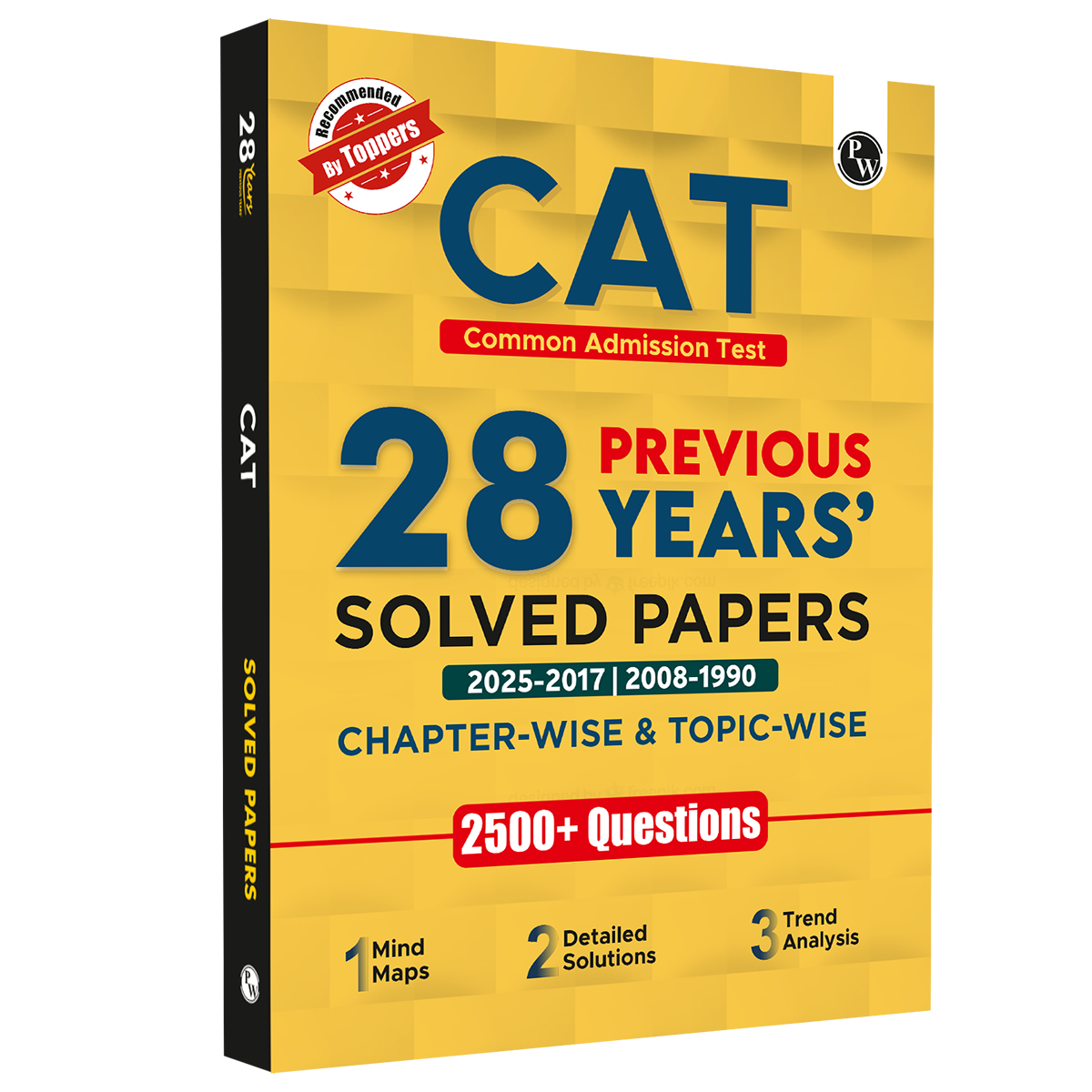
CAT quant previous year questions are useful for understanding the real exam. Instead of only solving questions from practice books, students should also spend time studying questions asked in earlier CAT papers.
PYQs can help you:
-
Understand the level of actual CAT questions.
-
Identify commonly tested concepts.
-
Learn different ways questions can be framed.
-
Improve question selection and time management.
-
Check whether your preparation matches the exam level.
After solving a PYQ, do not only check whether your answer is correct. Study the solution and look for a shorter or easier approach. Keep difficult questions aside and revisit them during revision.
How to Make a CAT Quantitative Aptitude Preparation Strategy?
A good CAT quant preparation strategy should include concept learning, daily practice, revision, and mock-test analysis. Avoid spending too much time only reading theory.
A simple preparation cycle can be:
-
Learn the basic concept.
-
Solve easy questions.
-
Move to moderate-level questions.
-
Practise CAT-level problems.
-
Solve related PYQs.
-
Take a sectional test.
-
Review mistakes and revise.
Maintain a mistake notebook for questions where you make calculation errors, use the wrong formula, misunderstand the question, or take too much time. Revising these mistakes can improve accuracy over time.
Read More - How to Master Quantitative Aptitude Through CAT PYQ?
What Are the Best Resources for CAT Quantitative Aptitude Preparation?
The right study resources can make preparation more organised. Students can combine theory books, practice questions, video explanations, and mock tests according to their learning needs.
Useful resources include:
-
Theory Books: Use chapter-wise material to understand concepts and formulas.
-
Practice Sets: Solve questions at different difficulty levels after completing each topic.
-
Video Solutions: Use detailed explanations when a question or method is difficult to understand.
-
Test Series: Take sectional and full-length tests to improve speed and exam readiness.
-
Previous Year Papers: Use actual questions to check your preparation level.
The aim should not be to use the maximum number of resources. Instead, choose reliable material and complete it properly.
How Can Working Professionals Manage CAT Quantitative Aptitude Preparation?
Working professionals often have limited study time, so they need a more focused approach to CAT quant topics. Instead of trying to study for several hours every day, use shorter weekday sessions and longer weekend sessions.
For example, weekdays can be used for concept learning and short practice sets, while weekends can be used for PYQs, revision, and sectional tests.
Recorded lessons can also help when your work schedule changes. The most important thing is to maintain consistency and avoid leaving large gaps between study sessions.
How to Improve Speed in CAT Quantitative Aptitude Preparation?
Speed is important, but solving questions quickly without accuracy can reduce your score. During quantitative aptitude preparation, first learn the correct method and then work on improving your solving time.
Try to:
-
Improve basic calculations.
-
Learn useful formulas.
-
Avoid unnecessary steps.
-
Practise mental calculations where possible.
-
Identify question types quickly.
-
Skip questions that are taking too much time.
-
Analyse slow questions after every test.
With regular practice, you can become better at deciding which questions to attempt and which ones to leave.
Frequently Asked Questions
What Are the Most Important Areas for CAT Quantitative Aptitude Preparation?
Arithmetic and Algebra are important areas to focus on during quantitative aptitude preparation. Topics such as percentages, ratios, averages, equations, inequalities, and number systems should receive regular practice.
How Do CAT Quant Previous Year Questions Improve Preparation?
CAT quant previous year questions help students understand the actual difficulty, question style, and concepts tested in the exam. They are also useful for improving time management and identifying weak areas.
Which Study Materials Are Useful for CAT Quant Preparation?
Theory books, chapter-wise practice sets, PYQs, video solutions, sectional tests, and full-length mock tests can support CAT preparation. Use a limited number of reliable resources and revise them properly.
How Can Working Professionals Cover CAT Quant Important Topics?
Working professionals can focus first on high-priority CAT quant important topics, use shorter weekday sessions, and keep weekends for longer practice and mock tests. Recorded learning resources can also provide more flexibility.
When Should Students Finish CAT Quant Topics?
Students should try to complete their main concepts well before the exam so that enough time remains for PYQs, mock tests, revision, and mistake analysis. The exact timeline depends on your starting level and the number of hours you can study each week.