How to Master Quantitative Aptitude Through CAT PYQ?
Many MBA aspirants hit a wall when tackling mathematical concepts during test practice. You might understand basic formulas, but applying them under severe time constraints often feels overwhelming. Watching the timer tick down while struggling through complex algebra or arithmetic problems creates unnecessary stress.
This gap between theoretical understanding and exam-day performance can affect your confidence. Turning to authentic CAT PYQ materials gives you direct access to real testing trends, allowing you to bridge this performance gap effectively.
Overview of CAT PYQ
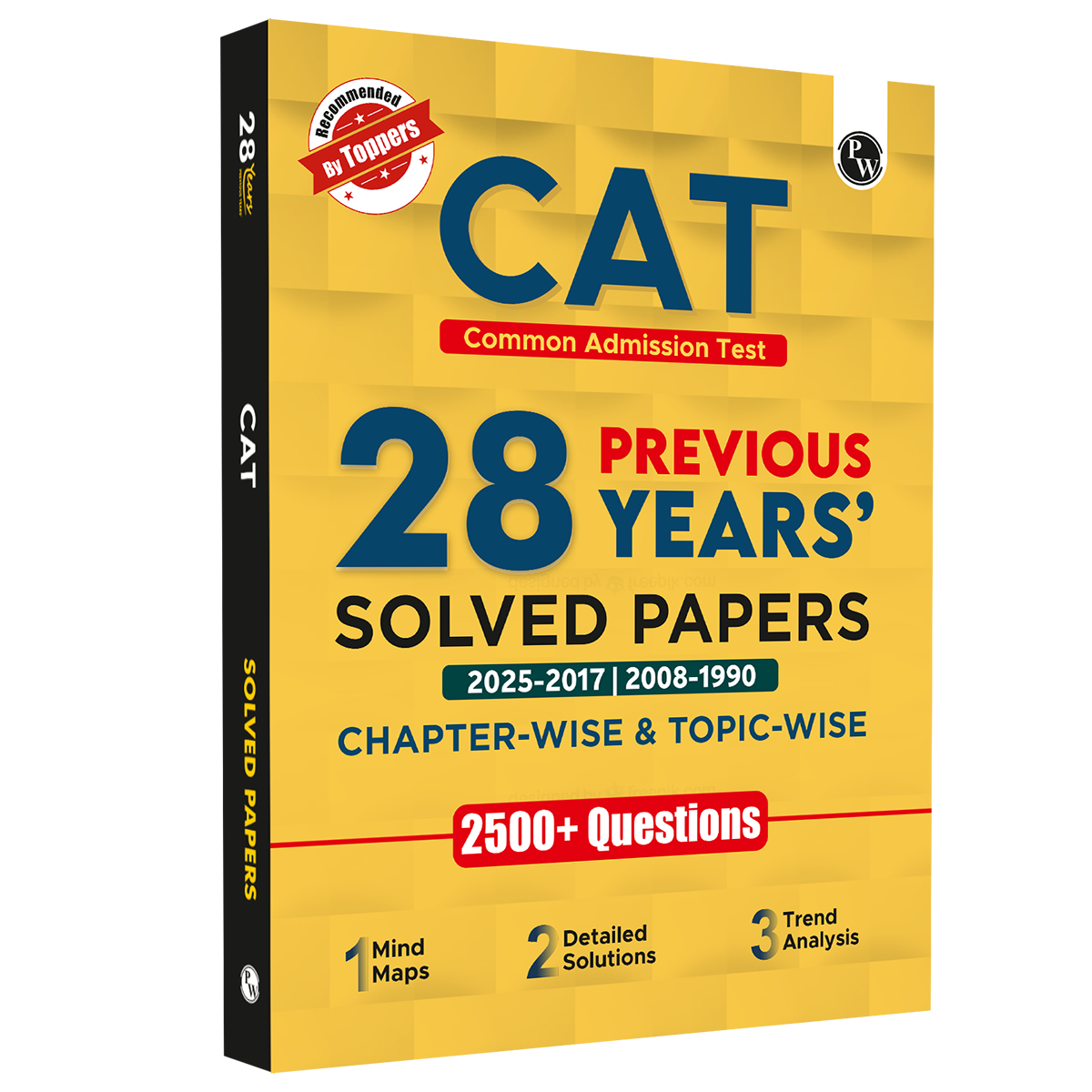
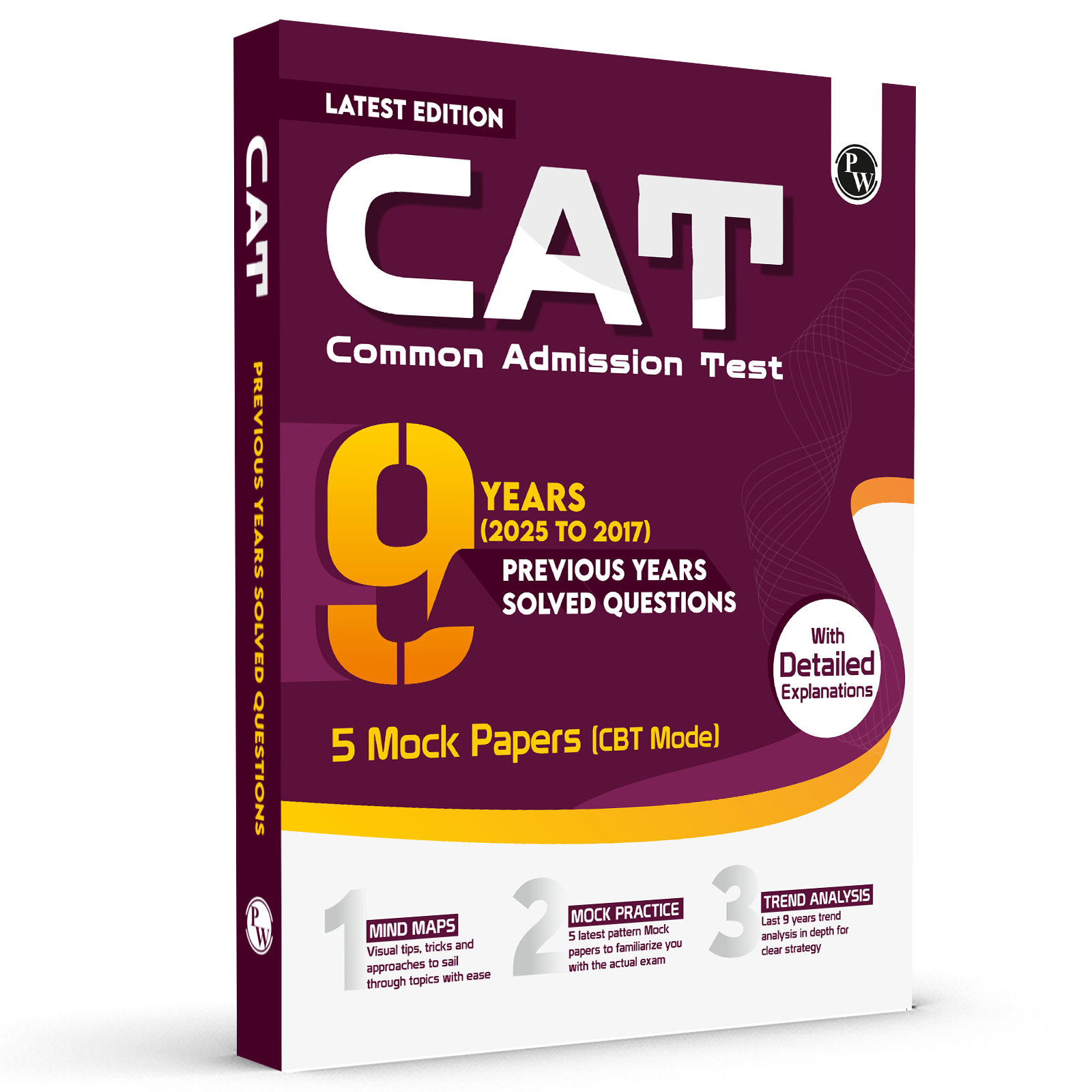
Working through authentic CAT PYQ practice offers aspirants a clear look at how the Common Admission Test evolves over time. A comprehensive collection covering 28 years provides thousands of authentic practice questions.
This vast historical database reflects changing question trends, difficulty shifts, and structural adjustments made by exam authorities up to December 2025.
Using an organized CAT aptitude book helps structure your revision by topic and chapter. Instead of solving random problems, chapterwise segregation lets candidates track performance systematically across various test areas.
|
Key Feature |
Benefit for Aspirants |
|
28 Years Coverage |
Provides a comprehensive quant previous year questions database. |
|
Chapterwise Organization |
Facilitates targeted, topic-by-topic study and revision. |
|
Updated Questions |
Includes papers up to December 2025. |
|
Detailed Trend Analysis |
Highlights high-weightage topics and frequent patterns. |
How CAT PYQ Helps You Prepare for Quantitative Aptitude?
Understanding formulas is only the first step in CAT maths preparation. The real challenge lies in identifying which formula applies to a specific problem setting. Solving historical questions bridges the gap between basic concept learning and practical test performance.
Working with CAT Previous year papers supports your preparation in several practical ways:
-
Develops Analytical Thinking: Actual test questions require multi-step reasoning rather than direct calculation. Regular practice trains your brain to break down complex word problems into clear mathematical steps.
-
Builds Familiarity with Question Styles: Seeing how concepts are tested reduces surprise on exam day. You learn to recognize recurring problem structures quickly.
-
Encourages Multiple Solution Approaches: Solutions often highlight conceptual methods alongside time-saving shortcut techniques and logical reasoning methods.
-
Identifies High-Weightage Topics: Detailed trend analysis points out areas that appear consistently year after year, allowing you to prioritize high-value concepts.
Important Quant Topics Covered in CAT PYQ
The Quantitative Aptitude section tests a broad range of mathematical topics. Analyzing past papers helps break down the syllabus into structured focus areas. Practicing targeted CAT practice questions ensures you do not waste time on fringe concepts that rarely appear.
Major Focus Areas Across Past Papers
-
Arithmetic: Covers ratios, percentages, profit and loss, averages, mixtures, time and work, and speed-distance calculations. These problems form a substantial portion of the exam.
-
Algebra: Includes linear and quadratic equations, functions, logarithms, sequences and series, and inequalities. Algebra questions evaluate abstract reasoning and algebraic manipulation skills.
-
Geometry and Mensuration: Focuses on lines, angles, triangles, circles, polygons, coordinate geometry, and 3D shapes.
-
Modern Math and Number Systems: Includes probability, permutations, combinations, set theory, and fundamental properties of numbers.
A complete analysis of CAT quantitative aptitude trends shows that arithmetic and algebra together account for a major share of the section, making them critical focus areas for every candidate.
How to Improve Speed Using CAT PYQ?
Speed without accuracy leads to negative marking, while accuracy without speed limits your total score. Achieving the right balance requires a systematic approach to practicing past papers.
Here is how you can build solving speed step-by-step:
-
Initial Un-timed Phase: Begin by solving problems without checking the clock. Focus purely on conceptual clarity, logical reasoning, and step-by-step solutions.
-
Learn Alternative Methods: Study detailed explanations to discover shortcut techniques and logical elimination methods that save crucial seconds.
-
Timed Practice Sessions: Group CAT qa PYQs into mini-sets of 10 to 15 questions. Set a timer to simulate test conditions and practice managing time pressure.
-
Option Elimination: Train yourself to evaluate options early. Sometimes working backwards from given options is faster than solving an equation from scratch.
Study Strategy Plan with CAT PYQ
A structured study routine helps keep your preparation on track over months of study. Integrating past papers into your daily schedule ensures continuous revision and self-assessment. Using MBA Books alongside PYQ practice can further strengthen core concepts, provide targeted practice, and improve problem-solving skills across the key sections of management entrance exams.
Phase 1: Concept Building & Topic-wise Practice
-
Read fundamental concepts
-
Solve topic-wise questions from past papers
Phase 2: Mixed Revision & Trend Analysis
-
Analyze paper trends from previous years
-
Practice mixed question sets across chapters
Phase 3: Speed & Strategy Refinement
-
Solve full-length timed question sets
-
Focus on shortcut methods and error reduction
Strategic Action Steps
-
Start Early: Begin incorporating past questions right after finishing each fundamental topic. Do not wait until the entire syllabus is finished.
-
Track Weak Areas: Keep a log of topics where your accuracy drops. Revisit basic concepts for those specific chapters before trying more questions.
-
Conduct Systematic Revision: Use well-structured chapterwise arrangements to conduct quick, periodic revisions of formulas and problem types.
Tips for Using CAT PYQ
To get the good results from past exam papers, adopt a disciplined method rather than passively reading solutions.
-
Attempt Questions First: Always try solving a problem independently for at least two to three minutes before looking at the answer key.
-
Analyze Solutions Thoroughly: Compare your method with the detailed, step-by-step explanations provided in your study material. Note down faster ways to solve the problem.
-
Maintain an Error Log: Document every mistake, whether caused by conceptual gaps, misreading the question, or calculation errors.
-
Focus on Comprehension over Quantity: Solving 20 questions with deep understanding is more valuable than rushing through 50 questions without reviewing errors.
-
Revisit High-Difficulty Questions: Bookmark challenging problems and re-attempt them after a few weeks to test retention.
Common Mistakes to Avoid While Solving CAT PYQ Quant Questions
Even dedicated aspirants make avoidable mistakes when practicing past papers. Being aware of these traps helps you avoid them:
-
Memorizing Steps Instead of Concepts: Memorizing specific steps for a past problem rarely helps because actual exam questions modify parameters and conditions. Focus on understanding the underlying logic.
-
Skipping Detailed Solution Analysis: Looking only at the final numerical answer without studying the step-by-step solution causes you to miss useful shortcut techniques.
-
Ignoring Time Management: Practicing without keeping track of time creates a false sense of security that fails under exam conditions.
-
Overlooking Weak Topics: Avoiding topics you find difficult weakens your overall performance. Use chapterwise sets to target and strengthen weak areas systematically.
-
Relying on Outdated Materials: Ensure your practice material is fully updated through late 2025 to reflect modern exam patterns and current question styles.
Read More: CAT Important Topics for Preparation 2026
CAT PYQ FAQs
Why is practicing past exam papers essential for MBA entrance preparation?
Practicing past papers provides authentic familiarity with actual test standards, question styles, and difficulty levels, making it a critical tool for MBA entrance preparation.
How many years of historical questions should an aspirant cover?
Covering up to 28 years of solved papers gives a comprehensive overview of evolving question trends and high-weightage topics.
Are detailed step-by-step solutions necessary when practicing past papers?
Yes, detailed solutions explain conceptual foundations, logical reasoning approaches, and time-saving shortcuts that help improve both speed and accuracy.
How does chapterwise organization help in study preparation?
Chapterwise segregation allows students to practice systematically by topic, track individual performance, and conduct efficient revision in targeted areas.
When is the best time to start solving previous years' questions?
Aspirants should start solving topic-wise questions as soon as they complete basic concepts for a given chapter to reinforce learning right away.