How to Analyse Wrong Answers in NDA Verbal Ability With PYQ Book
NDA test is not just solving practice sets in preparation. Most applicants practice hundreds of NDA English questions without analyzing their blunders. This results in frequent mistakes in the main paper. Analysis of bad choices indicates underlying deficiencies, slow response, and insufficient vocabulary abilities. With a dedicated NDA verbal ability PYQ book, the candidates can find the patterns of mistakes, rectify the basic rules and improve the results in the final examination.
Importance of Error Analysis for an NDA Verbal Ability PYQ Book
Attempting previous year questions helps candidates understand the exam environment, but analyzing wrong options transforms average preparation into top performance. Without systemic error analysis, solving an NDA English practice book yields limited benefits.
-
Common Grammar Gaps: Detects Errors in detecting errors are mainly due to misplaced modifiers, subject-verb agreement problems, or faults with prepositions.
-
UPSC Reveals Trap Options: Tests Subtle Differences In Words Review of wrong answers reveals misleading distractors used to mislead candidates.
-
Prevents Marks Loss: Negative marking is provided for incorrect answers in the NDA General Ability Test (GAT). The lower the wrong guesses, the higher the cut-off points.
-
Optimizes Revision Time: Candidates can concentrate on their personal weak areas instead of re-reading and understanding subjects repeatedly.
How to Categorise Mistakes With an NDA Verbal Ability PYQ Book
Each wrong answer is the result of a specific difficulty. Systematizing the classification of errors helps your revision organized and effective.
1. Conceptual Knowledge Gaps
These mistakes happen when fundamental rules are unclear. For instance, selecting the wrong option in direct-indirect speech or active-passive voice reflects a weak base in grammar conventions.
2. Vocabulary and Contextual Deficits
Encountering unknown terms in antonyms, synonyms, or idioms often leads to blind guesses. An NDA PYQ book with chapter-wise solved papers helps build vocabulary through actual exam context.
3. Reading Comprehension Misinterpretations
Misunderstanding main arguments in reading passages usually results from rushed reading or jumping to conclusions.
4. Attention and Marking Slip-ups
For example, if you need an antonym but you choose a synonym, that’s an avoidable slip-up. These blunders are logged to eliminate thoughtless errors in the long run.
How to Analyse Wrong Answers With an NDA Verbal Ability PYQ Book
To convert your mistakes into learning points, follow a step-by-step review process using your PYQ book.
|
Review Stage |
Action Required |
Expected Outcome |
|
Stage 1: Error Identification |
Highlight every incorrect attempt after completing a test session. |
Prevents skipping hidden mistakes during self-assessment. |
|
Stage 2: Category Tagging |
Mark the mistake type (Conceptual, Vocab, Reading, Careless) beside the question. |
Creates a clear performance map for topic weakness. |
|
Stage 3: Solution Cross-Checking |
Read the detailed answer in your NDA English question bank. |
Clarifies the underlying logic behind the right choice. |
|
Stage 4: Rule Logging |
Write new grammar guidelines or vocabulary items in an error notebook. |
Provides tailored revision material before exam day. |
|
Stage 5: Re-testing |
Re-attempt tagged questions after a 7-day gap. |
Ensures complete mastery over previous mistakes. |
What to Look for in an NDA Verbal Ability PYQ Book
Not all preparation guides offer the same level of utility. quality resources include specific features designed to streamline self-evaluation and targeted revision.
Chapter-Wise Theory and Explanations
Clear theoretical explanations allow you to check relevant rules immediately after identifying an error, making conceptual recovery fast and efficient.
Past 5 Years Weightage Analysis
Knowing which topics carry maximum marks helps prioritize revision efforts effectively.
NDA English Weightage Map (Typical Distribution)
├── Spotting Errors / Grammar (~20-30%)
├── Vocabulary: Synonyms & Antonyms (~30-40%)
├── Idioms & Phrases (~10-15%)
└── Ordering of Words / Passages (~15-20%)
Handpicked Previous Year Questions with Solutions
Selected NDA English previous year questions combined with comprehensive step-by-step explanations allow you to understand why correct options fit and why wrong choices fall short.
How to Track Progress Using an NDA Verbal Ability PYQ Book
Regular error analysis becomes more useful when you track whether the same mistakes are reducing over time. After completing each practice set from your NDA books, record your total attempts, correct answers, incorrect answers, and the type of mistakes you made.
Create a simple progress tracker with categories such as grammar, vocabulary, comprehension, and careless errors. Compare your results every week to identify areas where accuracy is improving and topics that still require additional practice.
-
Record Accuracy: Track your correct and incorrect answers after every practice session.
-
Compare Error Types: Check whether grammar, vocabulary, or comprehension errors occur most frequently.
-
Monitor Solving Time: Note how long you take to complete each section and work towards faster responses.
-
Review Repeated Mistakes: Reattempt questions that you have answered incorrectly more than once.
-
Set Weekly Targets: Aim to reduce a specific type of error during each revision cycle.
This approach turns your previous year's questions practice into a measurable study routine. Instead of simply completing more questions, you can focus on improving the areas that have the greatest impact on your accuracy.
Common Mistakes to Avoid With an NDA Verbal Ability PYQ Book
Many candidates waste time by making simple errors during their paper analysis routine.
-
Ignoring Minor Doubts: Skipping an unattempted or guessed question because the final score looks acceptable leads to repeated mistakes in later papers.
-
Memorising Without Logic: Learning correct options by heart instead of understanding underlying grammar principles fails when UPSC modifies question formats.
-
Delaying Analysis: Postponing error analysis until days after solving a paper reduces your ability to recall your original thought process.
-
Failing to Track Weak Areas: Working through a PYQ set without recording recurring mistakes prevents targeted score improvement.
How to Revise Weak Topics With an NDA Verbal Ability PYQ Book
Identifying a mistake is only the first step. After analysing your performance, use your PYQ book to revisit the topic and solve similar questions. This helps you determine whether you have actually understood the rule or simply remembered the answer to one question.
For example, if you repeatedly make errors in subject-verb agreement, revise the relevant grammar rules before attempting another set. If vocabulary is your weak area, create a list of unfamiliar words from previous papers and revise their meanings, synonyms, antonyms, and usage.
A simple revision cycle can include:
-
Identify the Weak Topic: Find the chapter responsible for repeated errors.
-
Revise the Rule: Review the relevant explanation before solving more questions.
-
Practise Similar Questions: Attempt 10 to 15 questions based on the same concept.
-
Check Your Accuracy: Compare your new performance with the earlier attempt.
-
Revisit After a Week: Solve another short set to check long-term retention.
Following this cycle ensures that your NDA previous year papers is used not only to identify mistakes but also to correct them. Over time, repeated error patterns should become less frequent, while your speed and confidence improve.
How to Choose an NDA Verbal Ability PYQ Book for Practice
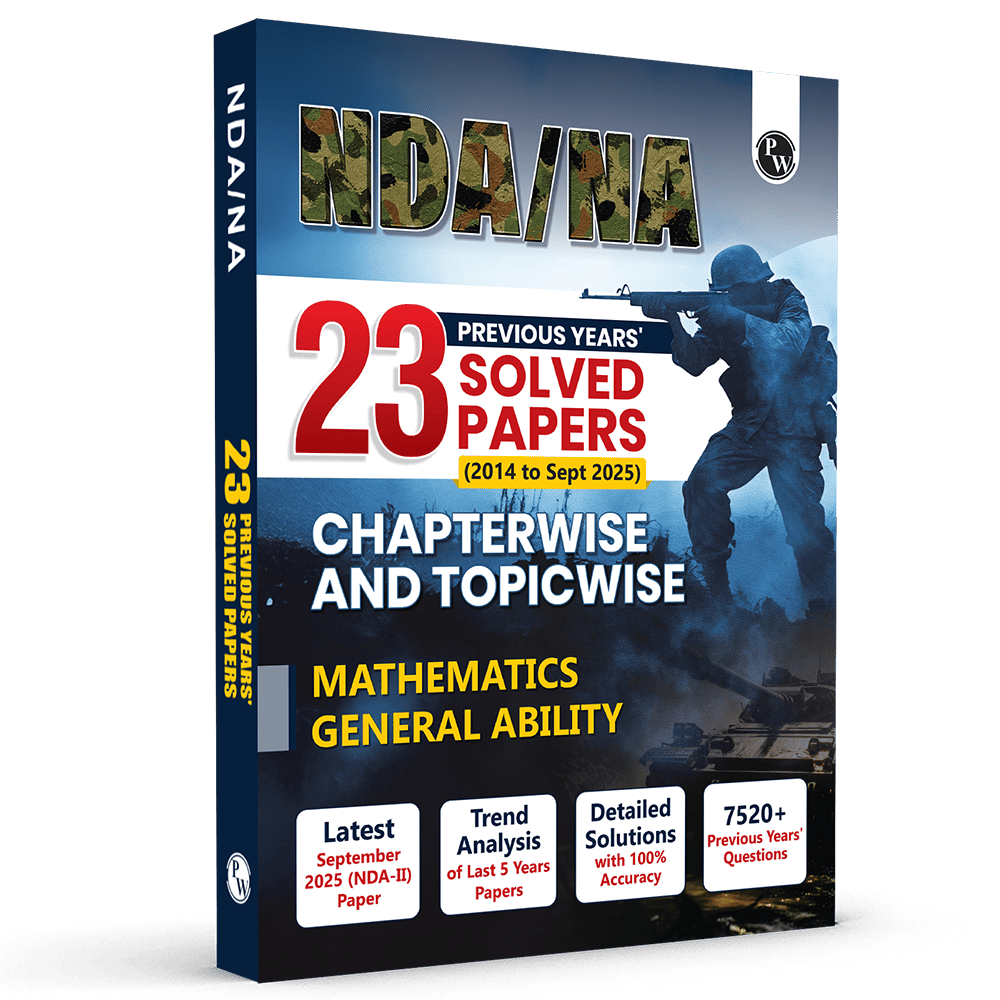
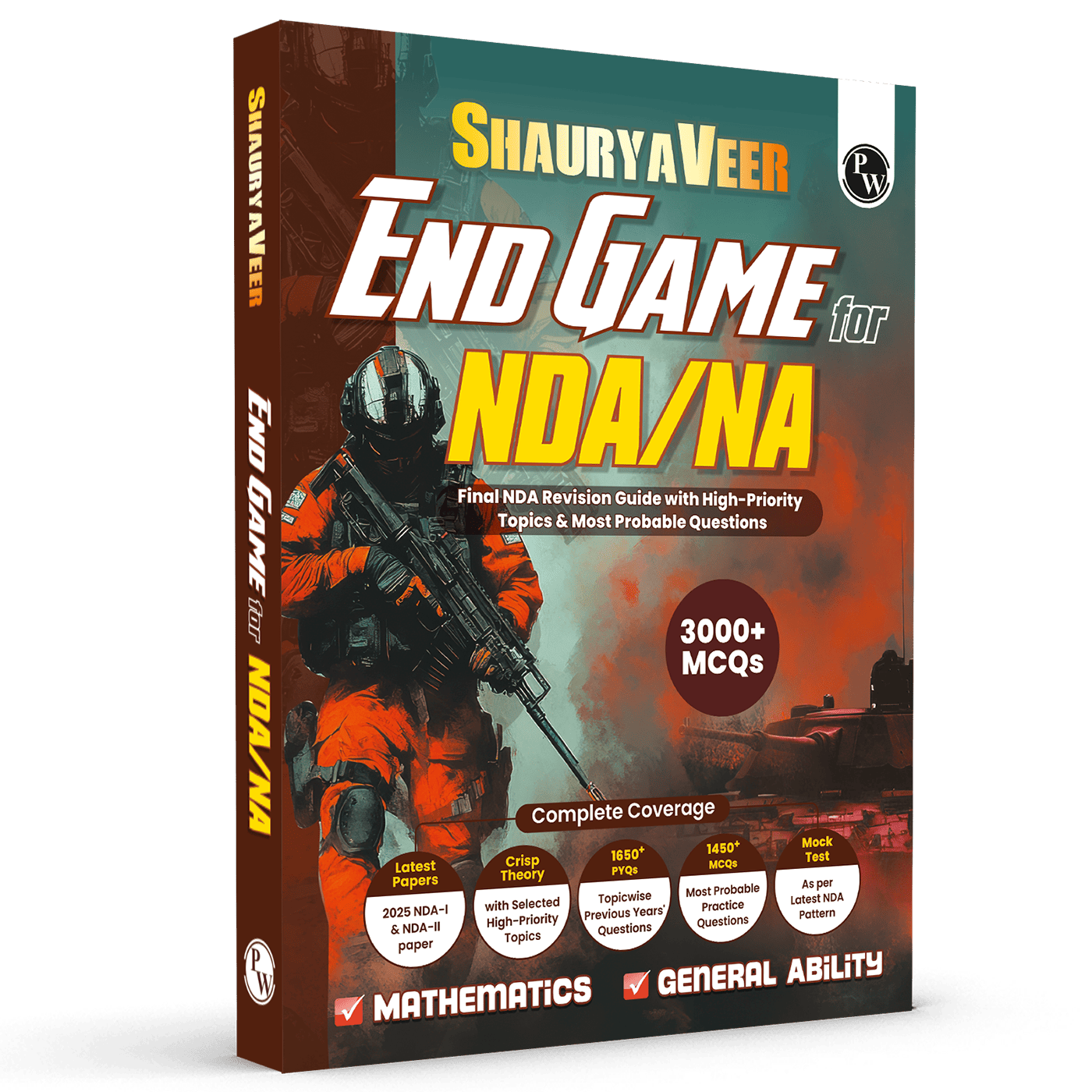
Using a structured reference guide simplifies self-evaluation. The NDA/NA General Ability English Book provides tailored tools for systematic preparation:
-
Precise Chapter-Wise Theory: Explains fundamentals clearly to help build grammar and comprehension skills.
-
Solved Examples: Shows correct approaches and problem-solving techniques for NDA verbal ability questions.
-
Practice Exercises with Detailed Solutions: Enables thorough self-practice while clarifying doubts and improving accuracy.
-
Handpicked PYQs till Date: Provides reliable insights into real exam patterns and question formats.
-
Chapter-Wise Weightage Analysis: Maps past 5-year paper trends so you can focus on high-scoring areas strategically.
Read More: Features of Shaurya NDA English Book for 2026 Exam
NDA Verbal Ability PYQ Book FAQs
1. How often should I analyze wrong answers in an NDA PYQ book?
Analyze your errors immediately after completing each practice set or mock test while your thought process is fresh.
2. Can analyzing NDA English previous year questions improve my vocabulary score?
Yes, studying past questions helps identify frequently asked root words, synonyms, and antonyms, building high-yield exam vocabulary.
3. What should I do if I keep getting spotting errors questions wrong?
Note down every failed grammar rule in a dedicated error journal, review the foundational rules, and solve chapter-specific exercises to fix the gap.
4. How does an NDA English pyq book help reduce negative marking?
It clarifies common distractor patterns and trap options used by UPSC, helping you avoid unreliable guessing on test day.
5. Are step-by-step solutions necessary in an NDA English practice book?
Yes, step-by-step solutions explain why wrong options are incorrect, helping build deep conceptual clarity rather than simple answer verification.