3 Months NEET 2027 Study Plan with PYQ Book

Standing in front of a massive medical syllabus as deadlines close in creates immense pressure for students. Reading textbook chapters repeatedly without testing your application skills often leads to confusion and poor time management on exam day.
You need a targeted path that turns theoretical concepts into sharp exam results. Using a structured NEET PYQ book helps you analyze real paper patterns, target high-yield topics, and build confidence rapidly. This article outlines a complete 3-month strategy to maximize your practice using authentic past years' questions.
What is a NEET PYQ Book
A specialized NEET PYQ book is a comprehensive practice collection designed to streamline exam preparation through authentic past questions. Instead of overwhelming learners with unverified questions, it compiles real exam papers from previous years into structured formats.
-
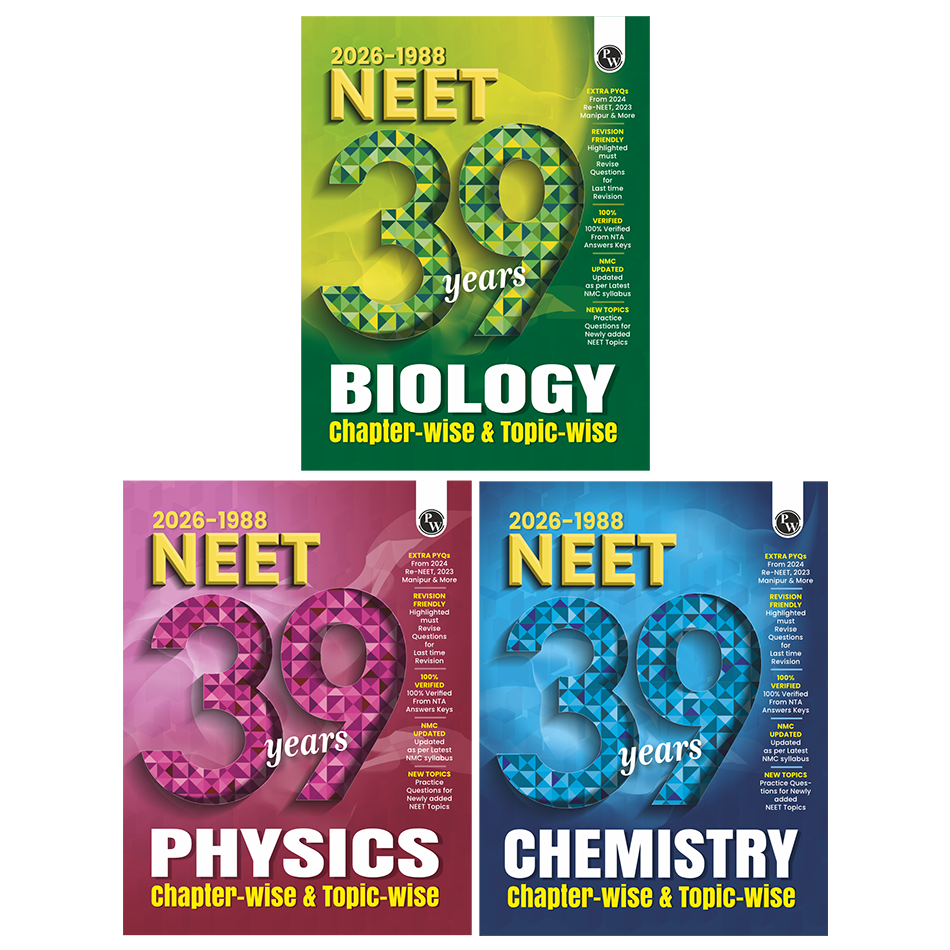
Massive Question Archive: Features authentic solved questions spanning up to 39 years (1988–2026) across Physics, Chemistry, and Biology.
-
Chapterwise and Topicwise Layout: Arranges questions by specific chapters and topics to make daily tracking simple.
-
NTA-Verified Solutions: Delivers 100% verified answers cross-checked directly with official NTA answer keys.
-
Trend Detection Features: Includes tools like PYQs Deja Vu to help you identify repeated concepts instantly.
-
Special Exam Coverage: Integrates additional papers such as 2024 Re-NEET and 2023 Manipur papers for extra practice.
-
Syllabus Alignment: Fully updated to match the latest NTA syllabus guidelines while preserving relevant historical questions.
Explore NEET books for 2027 preparation. Find subject-wise books, NCERT-based study material, PYQs, question banks, and revision resources.
What Should You Cover with a NEET PYQ Book in 3 Months
Succeeding in a limited timeframe during your NEET 3-month preparation means choosing what to study wisely. You cannot afford to solve random questions without checking their relevance.
Physics Focus Areas
-
Mechanics and Motion: Solve questions on Laws of Motion, Work Energy Power, and System of Particles.
-
Electrodynamics: Practice numericals on Current Electricity, Moving Charges, and Electrostatics.
-
Modern Physics: Master high-scoring chapters like Atoms, Nuclei, and Dual Nature of Matter.
-
Optics: Solve past problems covering both Ray Optics and Wave Optics.
Chemistry Focus Areas
-
Physical Chemistry: Focus heavily on Chemical Kinetics, Electrochemistry, Equilibrium, and Solutions.
-
Organic Chemistry: Solve reaction mechanisms, name reactions, and Hydrocarbons questions.
-
Inorganic Chemistry: Master Coordination Compounds, Chemical Bonding, and periodic trends.
Biology Focus Areas
-
Human Physiology: Solve chapterwise questions on Digestion, Circulation, Excretion, and Neural Control.
-
Genetics and Evolution: Target Principles of Inheritance and Molecular Basis of Inheritance.
-
Ecology and Environment: Cover Ecosystem, Biodiversity, and Organisms and Populations.
-
Plant Physiology: Solve past paper items on Photosynthesis, Respiration, and Plant Growth.
NEET PYQ help you practise previous-year questions with detailed solutions, strengthen concepts, identify exam patterns, and improve your preparation for NEET.
How to Use a NEET PYQ Book in a 3-Month Study Plan
Using a NEET PYQ book effectively requires a structured system rather than random question solving. Following a phased approach guarantees complete coverage across all subjects.
Phase 1: Topicwise Practice (Month 1)
Begin by aligning your daily reading with immediate question solving. As soon as you finish reading a topic in NCERT, open your NEET PYQ book and solve the corresponding topicwise questions. This solidifies concept clarity and highlights gaps in your basic understanding immediately.
Phase 2: Trend Analysis and Speed (Month 2)
Shift your attention toward speed and recurring themes. Use features like PYQs Deja Vu to identify concepts that NTA tests year after year. Timed solving sessions during this phase boost your speed while maintaining high accuracy.
Phase 3: Revision and Weak Spot Elimination (Month 3)
Dedicate the final phase of your NEET 2027 study plan to rapid revision. Work through highlighted Must Revise Questions to review complex topics without starting from scratch. Re-solve every problem you marked incorrect during previous attempts.
|
Month |
Primary Objective |
Weekly Targets |
Expected Outcome |
|
Month 1 |
Foundation & Topicwise Practice |
Complete 15 chapters per subject; solve 50 PYQs daily. |
Clear basic concepts and identify core weak areas. |
|
Month 2 |
Speed Building & Trend Recognition |
Cover remaining syllabus; analyze PYQs Deja Vu trends. |
Improved question-solving speed and pattern recognition. |
|
Month 3 |
Full Sprints & Final Revision |
Solve full papers; review Must Revise Questions. |
Complete exam readiness and minimized silly errors. |
NEET Question Bank for focused practice with exam-relevant questions, detailed solutions, and comprehensive coverage to strengthen concepts and boost NEET 2027 preparation.
When to Solve Questions from an NEET PYQ Book
Timing your practice sessions determines how much information you retain. Solving questions at the wrong stage can lead to frustration or false confidence.
-
Immediately After Theory: Solve subtopic questions right after reading textbook notes to anchor facts firmly.
-
During Weekend Review: Reserve Saturdays to test whole chapters covered during the week using past papers.
-
In the Final Sprint: Use dedicated morning slots during your NEET prelims preparation to solve full length 3-hour tests.
-
After Identifying Weakness: Re-visit topic questions right after making mistakes in mock exams to fix conceptual errors.
Study Strategy Plan with an NEET PYQ Book for NEET 2027
A structured strategy ensures you remain consistent throughout your preparation journey. Here is a month-by-month framework designed to maximize results.
Month 1 Strategy: High-Weightage Mastery
Focus on establishing momentum by tackling high-weightage topics first.
-
Physics: Complete Mechanics and Thermal Physics units while solving chapterwise past paper items.
-
Chemistry: Master Chemical Bonding, General Organic Chemistry, and Mole Concept.
-
Biology: Finish Human Physiology and Genetics chapters thoroughly.
-
Daily Goal: Dedicate 2 hours per subject to solving authentic questions from your NEET PYQ book.
Month 2 Strategy: Full Syllabus Coverage
Expand your study hours to cover remaining chapters and secondary topics.
-
Physics: Cover Electrodynamics, Optics, and Modern Physics.
-
Chemistry: Complete Physical Chemistry numerical units and Inorganic chapters.
-
Biology: Finish Reproduction, Biotechnology, Plant Physiology, and Ecology.
-
Daily Goal: Solve 100 to 120 NEET 2027 pyqs daily across all three subjects.
Month 3 Strategy: Mock Tests and Sharp Revision
The final 30 days must replicate real examination conditions closely.
-
Simulated Exams: Attempt full-length past papers within the official time limit.
-
Error Log Review: Study your incorrect options carefully using verified step-by-step solutions.
-
Focused Re-solving: Re-visit highlighted revision questions to keep formulas fresh in your memory.
Common Mistakes to Avoid While Using an NEET PYQ Book
Let’s understand what common points you need to avoid while using this book:
-
Rote Memorization: Avoid memorizing answer options without understanding the underlying concepts.
-
Ignoring Explanations: Do not check only the final key option; always review the detailed solution explanations.
-
Skipping Old Questions: Do not ignore older questions from previous decades; they often form the conceptual base for new questions.
-
Inconsistent Practice: Avoid solving hundreds of questions on one day and skipping practice for the next three days.
-
Neglecting Timer Controls: Solving questions without tracking time gives a false sense of security regarding your exam speed.
NEET Revision Books for quick and effective revision with concise concepts, important topics, practice questions, and exam-focused content to strengthen NEET 2027 preparation.
Practice Sheet for a NEET PYQ Book During Final Preparation
Use this simple target template to structure your final revision week effectively:
-
Day 1: Solve 40 Physics questions (Mechanics) and 50 Biology questions (Genetics).
-
Day 2: Solve 40 Chemistry questions (Physical) and 50 Biology questions (Human Physiology).
-
Day 3: Solve 40 Physics questions (Electrodynamics) and 40 Chemistry questions (Organic).
-
Day 4: Review all marked error questions from Days 1 to 3 using verified solutions.
-
Day 5: Solve 50 questions from Re-NEET and special state paper collections.
-
Day 6: Attempt one full 3-hour past exam paper under timed conditions.
-
Day 7: Analyze the test results thoroughly, verifying missed questions against official answer keys.
Frequently Asked Questions
Why is a NEET PYQ book essential for preparation?
A NEET PYQ book exposes you to authentic exam questions, reveals recurring topic trends, and helps you evaluate your actual readiness accurately.
How many years of questions should I solve for NEET 2027?
Solving up to 39 years of past questions gives complete coverage of every possible question variation and syllabus change over time.
Can I complete my revision using a PYQ book in 3 months?
Yes, following a structured 3-month strategy with chapterwise practice makes covering the entire syllabus manageable.
How do highlighted questions save time during revision?
Highlighted Must Revise Questions focus on complex, multi-concept problems, allowing you to review entire chapters quickly.