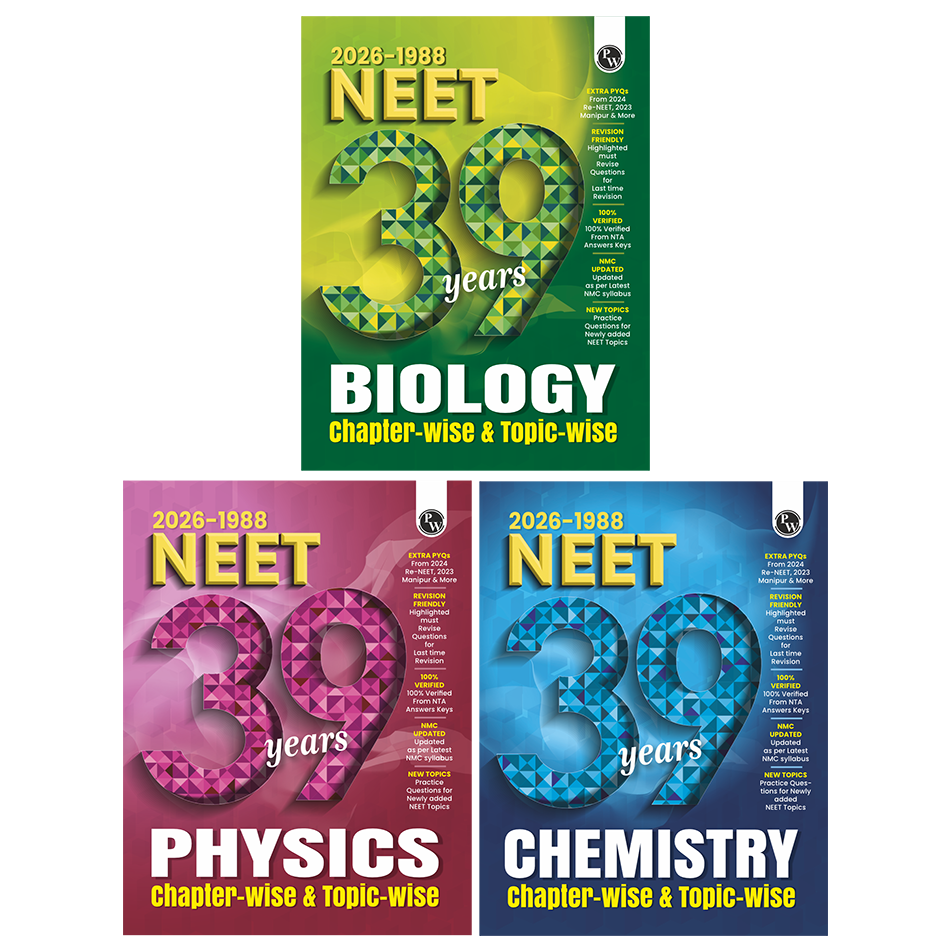
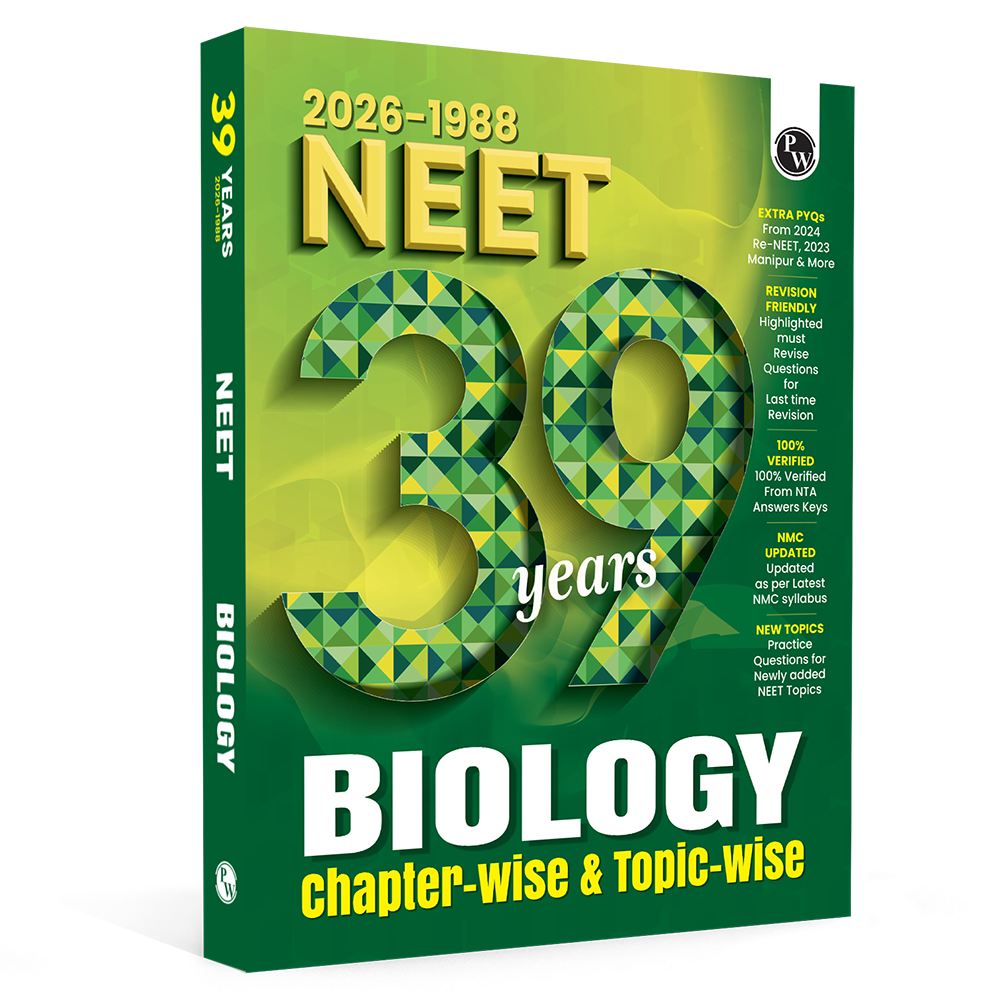
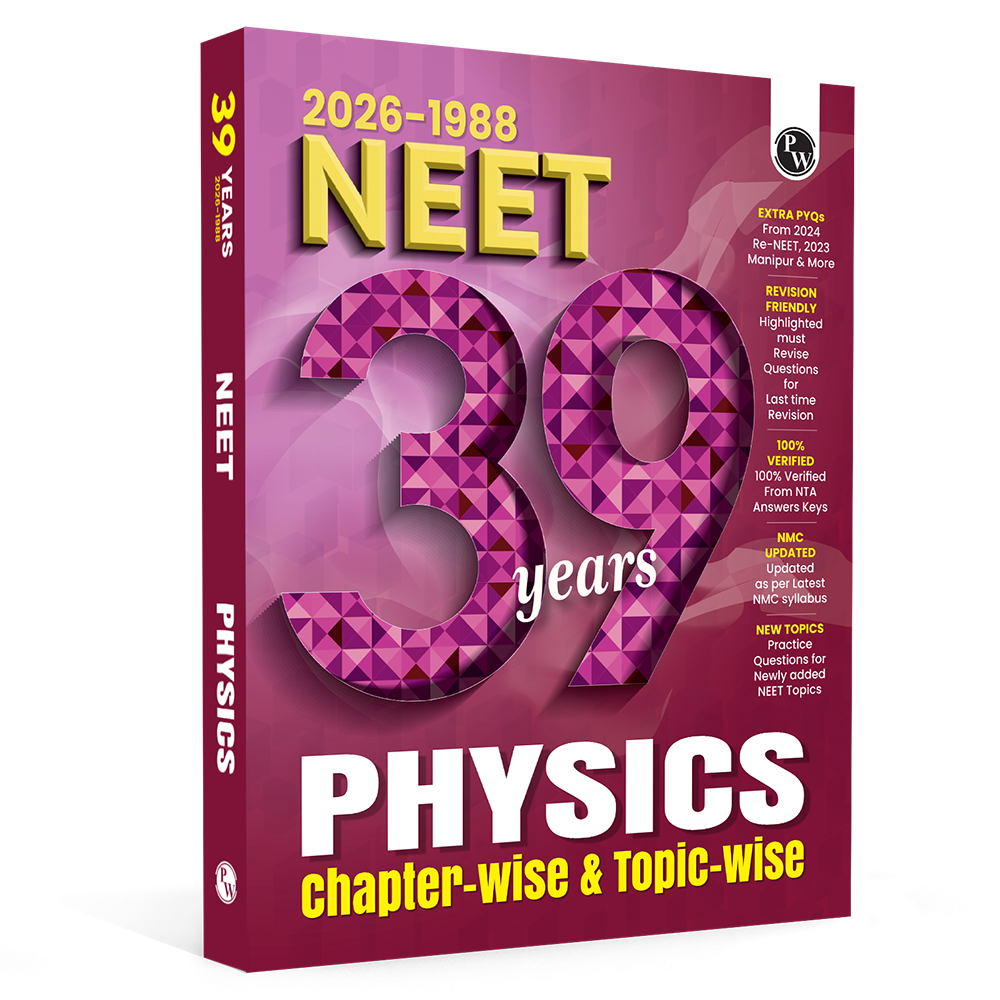
Is 39 Years NEET PYQ Book Enough for Complete NEET Preparation?

Every aspirant wants an efficient strategy that maximizes score potential without wasting precious hours on redundant resources. Finding the balance between practicing past papers and mastering fundamental theories is the key to building confidence.
A reliable NEET PYQ book acts as an essential tool in this journey, helping you analyze question formats and test your understanding.
This article evaluates whether past paper compilations alone can carry you through the entire syllabus or if a broader approach is necessary for total readiness.
Importance of NEET PYQ Book
Using a dedicated NEET PYQ book forms a fundamental part of any effective medical entrance exam preparation routine. Relying solely on passive textbook reading often creates a false sense of security, whereas solving past questions forces active concept application.
-
Understanding Exam Patterns and Trends: Analyzing historical papers helps you discover real exam patterns, question structures, and recurring trends across subjects.
-
Boosting Accuracy and Speed: Solving fully solved, reliable answers builds precision and reduces simple calculation mistakes.
-
Saving Preparation Time: A structured compilation allows focused practice, preventing hours wasted on irrelevant topics outside the core syllabus.
-
Improving Revision Efficiency: Utilizing books with highlighted questions makes it easy to review high-yield concepts right before exam day.
-
Tracking Syllabus Changes: Quality resources cover both historical trends and recent syllabus modifications, ensuring your practice stays fully aligned.
-
Strengthening Conceptual Clarity: Repeated NEET previous year questions practice reinforces core theories in Physics, Chemistry, and Biology, turning weak chapters into reliable strengths.
Is NEET PYQ Book Enough for Complete NEET Preparation?
Relying exclusively on a NEET PYQ book is rarely sufficient to guarantee a top score, even though it remains an indispensable preparation tool. Entrance exams test your ability to solve brand-new question variations alongside traditional question types.
While 39 years NEET PYQ sets give you a massive practice base spanning decades, you must combine them with other key resources for full coverage.
|
Resource Type |
Core Objective |
Can It Stand Alone? |
|
NCERT Textbooks |
Builds foundational concept clarity, definitions, and core theoretical knowledge. |
No, because it lacks sufficient practice with complex numerical problems. |
|
NEET PYQ Book |
Delivers targeted practice of authentic questions and highlights recurring trends. |
No, as it cannot prepare you for completely new question formats. |
|
Mock Tests |
Simulates real exam stress, time constraints, and multi-concept challenges. |
No, because mock tests must be grounded in actual past paper trends. |
What Topics Does NEET PYQ Book Cover?
A comprehensive past paper book strictly follows the latest official NTA syllabus guidelines, providing complete topic coverage across all three core subjects. It organizes questions logically so students can systematically work through both Class 11 and Class 12 curricula.
Physics Syllabus Coverage
-
Class 11 Topics: Units and Measurements, Kinematics, Laws of Motion, Work, Energy and Power, System of Particles, Gravitation, Mechanical Properties of Solids and Fluids, Thermal Properties, Thermodynamics, and Oscillations.
-
Class 12 Topics: Electrostatics, Current Electricity, Magnetic Effects of Current, Electromagnetic Induction, Alternating Current, Ray and Wave Optics, Dual Nature of Radiation, Atoms, Nuclei, and Semiconductor Devices.
Chemistry Syllabus Coverage
-
Physical Chemistry: Atomic Structure, Chemical Bonding, Thermodynamics, Solutions, Electrochemistry, and Chemical Kinetics.
-
Inorganic Chemistry: Periodic Classification, p-Block, d- and f-Block Elements, and Coordination Compounds.
-
Organic Chemistry: Basic Principles and Techniques, Hydrocarbons, Haloalkanes, Alcohols, Phenols, Aldehydes, Ketones, Organic Compounds Containing Nitrogen, and Biomolecules.
Biology Syllabus Coverage
-
Botany: Diversity in the Living World, Cell Structure and Functions, Plant Physiology, Genetics, and Ecology.
-
Zoology: Structural Organisation in Animals, Human Physiology, Reproduction, Evolution, and Human Health and Disease.
When Should You Use NEET PYQ Book During Preparation?
Timing your practice properly ensures maximum retention and performance. Integrating a NEET PYQ book into different phases of your study schedule brings unique advantages.
-
Immediate Post-Chapter Learning: Solve relevant chapter-wise NEET PYQs as soon as you finish reading a topic in NCERT to cement the concepts immediately.
-
Weekly Revision Routines: Use past paper collections during weekly study blocks to test your long-term memory of older chapters.
-
Pre-Exam Months: Focus heavily on authentic sets like 39 years NEET PYQ books during the final three months to build exam stamina and speed.
How to Use NEET PYQ Book with NCERT and Mock Tests?
Achieving top marks requires a well-structured ecosystem that connects your primary reading materials, question practice, and full-length exam simulations.
-
Step 1: Read the Core Theory Thoroughly: Begin by studying NCERT chapters line by line, focusing on definitions, diagrams, and sample problems.
-
Step 2: Solve PYQs Without Assistance: Open your NEET PYQ book and attempt the questions without checking the answer keys beforehand.
-
Step 3: Analyze Solutions for Concept Gaps: Compare your approaches against fully solved, verified answers to spot calculation shortcuts and logical flaws.
-
Step 4: Take Timed Mock Tests: Combine your practice with NEET preparation books and full-length mock exams to adapt to actual test-day pressure.
-
Step 5: Revisit Weak Areas in NCERT: Go back to your textbook to re-read any specific topics where you made mistakes during your past paper session.
Study Strategy Plan for Using NEET PYQ Book
Maximising the utility of your study materials requires a structured, phase-by-phase strategic plan tailored to your preparation timeline. Using NEET Books alongside regular revision and practice helps strengthen concepts, organise topic-wise preparation, and improve overall exam readiness.
Phase 1: Foundational Practice (Months 1–6)
-
Read a chapter thoroughly from NCERT and your lecture notes.
-
Solve 30–50 relevant questions from your past paper book immediately.
-
Highlight any question that requires more than two minutes to solve.
Phase 2: Consolidated Unit Practice (Months 7–9)
-
Combine multiple chapters into unit blocks (e.g., Mechanics or Organic Chemistry).
-
Practice past questions across the entire unit without breaking for answers.
-
Check your accuracy percentage and identify recurring weak spots.
Phase 3: Final Exam Simulation (Months 10–12)
-
Attempt full-length 3-hour past papers using OMR sheets to mimic actual conditions.
-
Review step-by-step explanations for every wrong answer.
-
Use highlighted, high-yield questions for rapid daily revision.
Dropper students aiming for score improvement and Class 11 or 12 aspirants can all benefit immensely from this systematic smart preparation approach.
Common Mistakes to Avoid While Using NEET PYQ Book
Avoid these frequent pitfalls to get the best return on your study time:
-
Memorizing Answers Instead of Concepts: Memorizing option letters (A, B, C, D) is counterproductive because numerical values and phrasing change in new exams.
-
Checking Solutions Too Early: Looking at the answer key immediately after reading a question prevents you from developing genuine problem-solving skills.
-
Ignoring Explanation Details: Skipping detailed, verified solutions means missing out on faster calculation tricks and alternate problem-solving paths.
-
Practicing Outdated Syllabus Topics: Wasting time on deleted topics reduces your efficiency; always use resources that clearly mark recent syllabus updates.
-
Leaving PYQ Practice for the Last Month: Postponing past paper practice creates an unmanageable backlog, depriving you of valuable trend insights early on.
Read More: NEET Syllabus 2026 with Exam Pattern
NEET PYQ FAQs
Is a NEET PYQ book sufficient on its own to score high marks?
A past paper collection is essential for understanding trends and gaining targeted practice, but it works best when combined with NCERT textbook study and full-length mock tests.
Who can benefit the most from practicing 39 years NEET PYQ collections?
Droppers aiming for score improvement, Class 11 and 12 students, and any aspirant focusing on smart, trend-based preparation benefit greatly.
How do chapter-wise NEET PYQs improve overall preparation efficiency?
Organizing questions by chapter allows you to test specific concepts right after learning them, saving time and instantly highlighting personal knowledge gaps.
Does past paper practice help with syllabus changes and updates?
Yes, quality compilations clearly distinguish between legacy trends and modified syllabus guidelines, keeping your practice fully relevant.
How often should I revisit NEET previous year questions during revision?
Revisit difficult or highlighted past questions every few weeks during regular study reviews, and perform a comprehensive review in the final month before the exam.