How NEET PYQ and Test Series Help to Score Good Marks

Using a well-organised simulated schedule and a plan that focuses on PYQs is the best method to get ready for the NEET. The key challenge isn't just learning the principles; it's using them in a short length of time, like 200 minutes. Using a NEET PYQ book together with a test series is the only way to fill this gap. These products help you put what you know about theory into skills you can apply on the test, so you won't be surprised on the big day.
Check Out: PW NEET Books
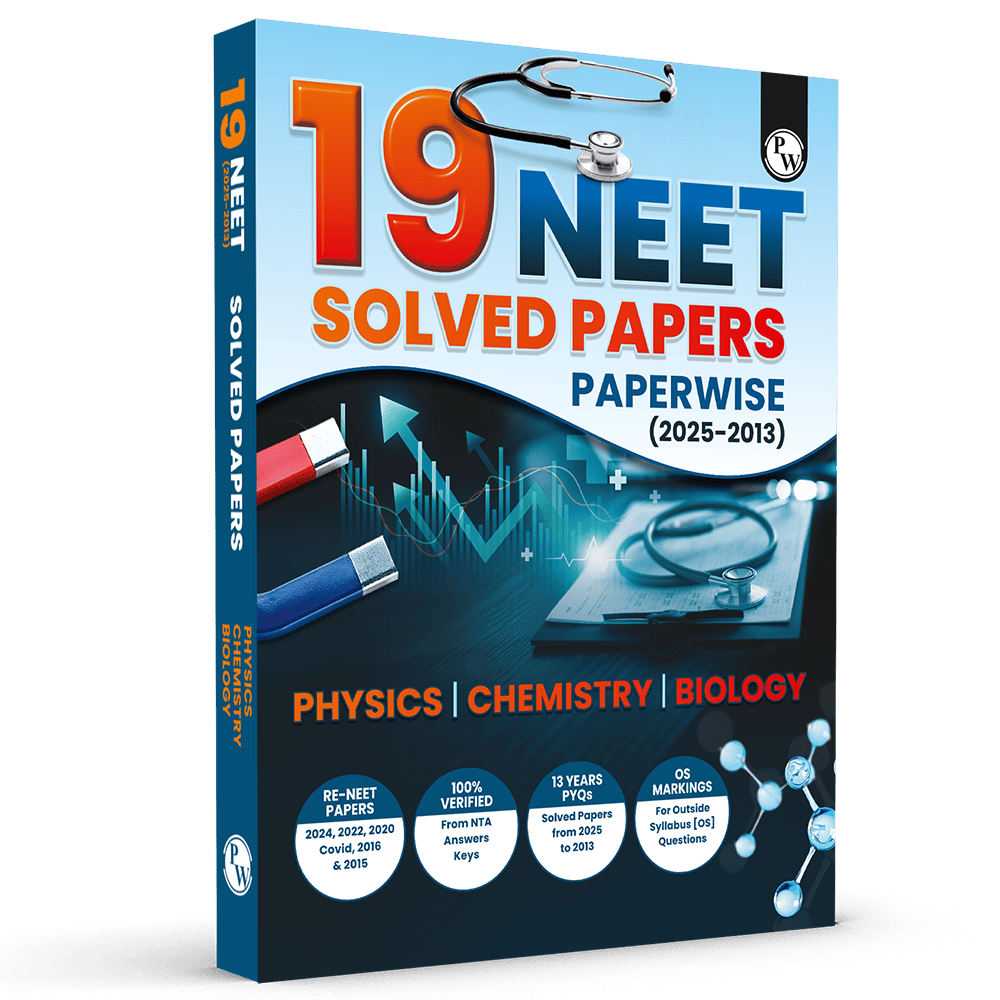
Importance of NEET PYQ
It is more than just a list of old questions; it is a blueprint of the examiner’s mindset. By analysing a NEET previous year paper, you can see exactly which chapters the National Testing Agency (NTA) prioritises. For instance, in biology, chapters like Genetics and Human Physiology often carry more weight, while in physics, Mechanics and Electrodynamics are recurring favourites. Accessing a high-quality PDF allows you to practise on the go, ensuring that you are always in touch with the core requirements of the exam.
How Can NEET Test Series Help?
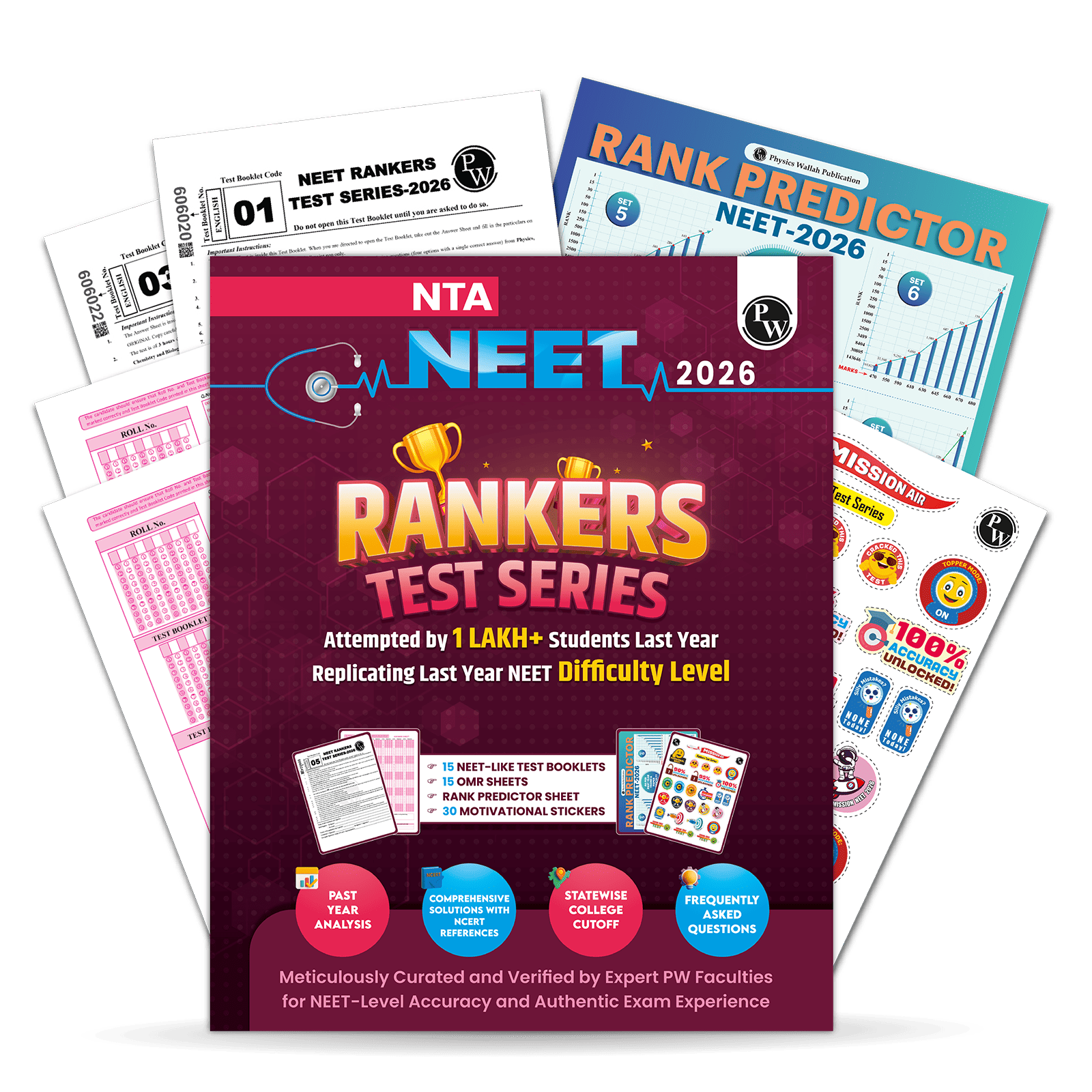
While PYQs help students understand the past exam pattern, a NEET test series prepares them for the pressure of the actual exam. NEET is not only about knowing the answer. It is also about reading quickly, choosing the right questions, avoiding silly mistakes, and completing the paper on time.
A good NEET test series 2026 includes chapter-wise tests, full-length mock tests, questions based on the latest syllabus, and different difficulty levels. This helps students practise Physics, Chemistry, and Biology in a planned way. Regular tests also make it easier to find weak topics before the final exam.
The PW NEET test series is designed to give students exam-like practice with carefully selected questions, detailed solutions, NCERT references, and mock test formats that support both revision and performance tracking.
NEET Exam Pattern and Marking Scheme
Before you start working on a PYQ, it's important to know how the test is set up:
-
There are 200 questions in total, but you only need to answer 180 of them.
-
The total number of marks is 720.
-
Physics, Chemistry, and Biology are the subjects.
-
How to grade:
-
+4 for every right answer -1 for every wrong answer
-
Format by section:
-
Part A (required questions)
-
Part B (choices within the company)
Over the years, the difficulty level has fluctuated between moderate and challenging.
-
Some years emphasize conceptual Physics, making the paper tougher
-
Biology often remains NCERT-based but detailed.
-
Increasing competition (15–20 lakh+ aspirants) raises cut-offs
Practicing with a previous year's NEET paper helps you adapt to these variations and prepares you for unpredictable difficulty levels in NEET 2026. A test series adds another layer to this preparation because it exposes students to new question types, mixed difficulty levels, and full-paper pressure before the final exam.
NEET PYQ and Test Series Features
Good resources don't only supply the answer; they also explain why it is the answer. A strong preparation plan should include both NEET previous year question paper practice and mock test practice.
Key features include:
-
Trend Analysis: PYQs show which issues have come up the most often in the last 10 to 36 years.
-
Chapter-wise practice: A NEET previous year question paper pdf can help students revise one chapter at a time.
-
Verified solutions keep you from getting confused by unverified online sources.
-
Exam-like mock tests: Test series help students practise under time pressure.
-
Updated syllabus coverage: A good test series should follow the latest NEET syllabus and exam pattern.
-
Mixed difficulty levels: Easy, moderate, and challenging questions prepare students for different types of papers.
-
Detailed solutions: Step-by-step answers help students understand mistakes instead of just checking marks.
-
Performance analysis: Mock tests help track accuracy, time taken, strong topics, and weak areas.
-
NCERT focus: Since NEET is largely based on NCERT concepts, both PYQs and test series should help students revise core NCERT-based topics.
Check Out: NEET Question Banks
NEET PYQ vs Test Series
A NEET previous year paper tells students what has already been asked in the exam. A NEET test series helps them prepare for what can come next. Both are important, but they serve different purposes.
PYQs are useful for understanding the real exam pattern, repeated concepts, and topic weightage. Test series are useful for building exam stamina, improving speed, reducing anxiety, and checking preparation level through regular practice.
To score well, students should not depend only on one method. They should solve a NEET previous year question paper after completing chapters and attempt mock tests regularly as the exam gets closer.
You need a mix of both to get a score above 650. Here is how they differ in their utility:
|
Feature |
NEET Previous Year Paper |
NEET Test Series 2026 |
|
Primary Goal |
Understand exam DNA and weightage. |
Build stamina and exam-day strategy. |
|
Question Source |
Authentic, NTA-conducted exams. |
Expert-curated based on current trends. |
|
Best Time to Use |
While finishing a chapter (Topic-wise). |
After completing a portion or full syllabus. |
|
Difficulty Level |
Realistic and standard. |
Varies from easy to challenging. |
|
Repetition |
High chance of concept repetition. |
Focuses on new types of possible questions. |
NEET PYQ Benefits
Using NEET PYQ book in isolation might give you confidence, but adding a test series ensures you stay sharp under pressure. Here is how this combination benefits your preparation:
1. Understanding Time Management
The NEET exam is a race against time. A test series teaches you when to skip a difficult question to save time for easier ones. This is especially important where accuracy at speed is the ultimate differentiator.
2. Identifying High-Yield Chapters
Instead of studying everything with equal intensity, practising with a NEET past year paper helps you focus on sections that actually fetch marks. You will notice that certain concepts in organic chemistry or molecular biology appear almost every year in a PYQ.
3. Reducing Exam Anxiety
Familiarity breeds confidence. When you have solved every previous year paper from the last decade, the actual exam feels like just another practice session. Using a PYQ pdf to solve mocks in a timed environment desensitises you to exam-day stress.
Benefits of NEET Test Series 2026
Adding a NEET test series 2026 to daily preparation can make practice more focused and exam-ready. It helps students move beyond learning chapters and start testing how well they can apply concepts under pressure.
Main benefits include:
-
Real exam practice: Mock tests create a paper-like environment with fixed time and mixed questions.
-
Better time management: Students learn how much time to spend on Physics, Chemistry, and Biology.
-
Improved accuracy: Regular practice helps reduce guessing and careless mistakes.
-
Weak topic identification: Test analysis shows which chapters need more revision.
-
Confidence building: The more students practise full-length tests, the less unfamiliar the final exam feels.
-
Revision support: Every test works like a quick revision of multiple topics.
-
Performance tracking: Students can compare scores over time and understand whether their preparation is improving.
-
Exam-day discipline: OMR-based and timed practice helps students build the habit of sitting through the paper with focus.
Improve Time Management with NEET PYQ and Test Series
A NEET previous year paper helps students understand the time needed for actual NEET-level questions. A NEET test series helps them practise finishing the paper within the exam limit. Together, they make students more comfortable with timed solving.
Students can improve time management by:
-
Solving chapter-wise PYQs after completing each topic.
-
Attempting full-length mock tests once a week.
-
Using OMR-style practice to build exam habits.
-
Checking which subject takes the most time.
-
Leaving very difficult questions for the second round.
-
Reviewing wrong and skipped questions after every test.
-
Keeping an error log for repeated mistakes.
This method helps students avoid panic and make better decisions during the final exam.
How to Use NEET PYQ and Test Series?
To get the most out of your PYQ practice, follow this structured approach:
-
Start Early
Begin solving PYQs alongside your NCERT preparation. -
Practice Chapter-wise First
After completing each chapter, solve related NEET previous year questions. -
Shift to Full-Length Papers
Once the syllabus is done, attempt to complete the previous year's NEET papers in timed conditions. -
Analyse Mistakes Deeply
Maintain an error log for both PYQs and mock tests. -
Track Progress Weekly
Monitor your accuracy, speed, and weak areas.
This method turns PYQs into a powerful preparation system rather than just a practice tool.
Read More: NEET Handwritten Revision Notes PDF with Solutions
NEET PYQ and Test Series FAQs
How many years of PYQ should I solve?
It is ideal to solve at least the last 15 to 20 years. However, focus more on the NEET previous year's paper versions from 2019 onwards, as the pattern shifted after the NTA began conducting the exam.
Is a test series for NEET enough to clear the exam?
A test series is a tool for practice. You must first clear your concepts using NCERT, then use the PW NEET test series to refine your speed and accuracy.
Where can I find a reliable NEET previous year question paper PDF?
Reliable PDFs are available on educational apps. For a better experience, there are many books that categorise each previous year question paper by subject and chapter for easier navigation.
Will solving the NEET previous year paper help with the new syllabus?
Yes. While some topics are removed, 90% of the core remains the same. A PYQ helps you master high-yield topics that are still part of the NEET 2026 curriculum.
When should I start joining a test series?
The best time to join the test series is right at the start or after covering 50% of the syllabus. Starting early with a test series helps you stay disciplined and prevents a backlog of revision.