How to Practise Different MCQ Formats With NEET NCERT Objective Punch
Preparing for NEET demands targeted question practice beyond simple direct MCQs. To clear the cut-off and achieve a top rank, candidates must master diverse question patterns, including assertion-reason, match-the-column, numerical profiles, and statement-based questions. The NEET NCERT objective punch book set provides structured, line-by-line NCERT practice designed specifically to solve this challenge and help aspirants build speed and accuracy across every exam-oriented format.
Importance of NEET NCERT Objective Punch
The objective punch is useful for students who want to strengthen their NCERT-based preparation through regular question practice. It helps students move beyond simple reading by testing concepts in different MCQ formats. With chapter-wise questions, NEET PYQs, statement-based questions, numerical questions, and other practice formats, it supports better understanding, speed, and accuracy
Features of NEET NCERT Objective Punch
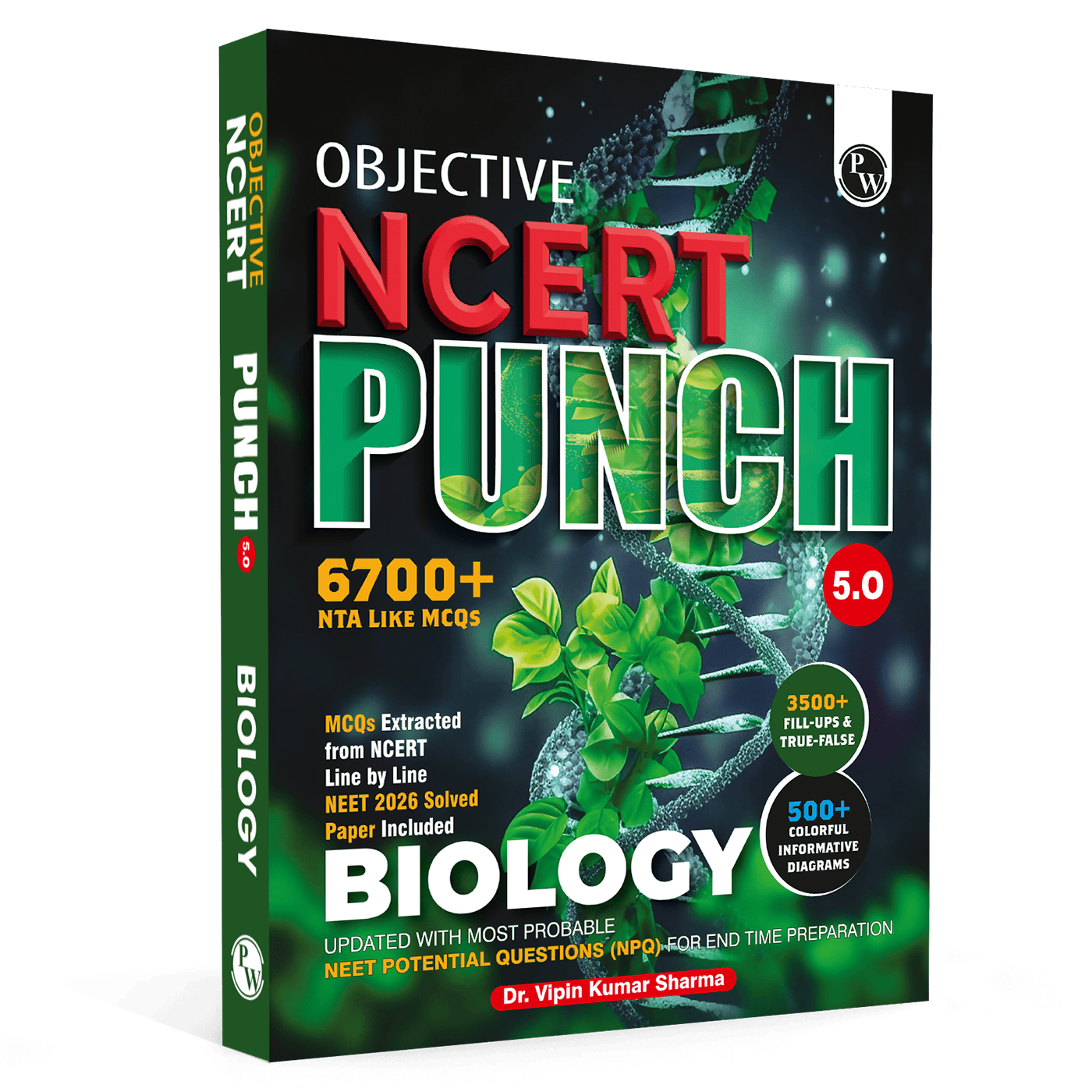
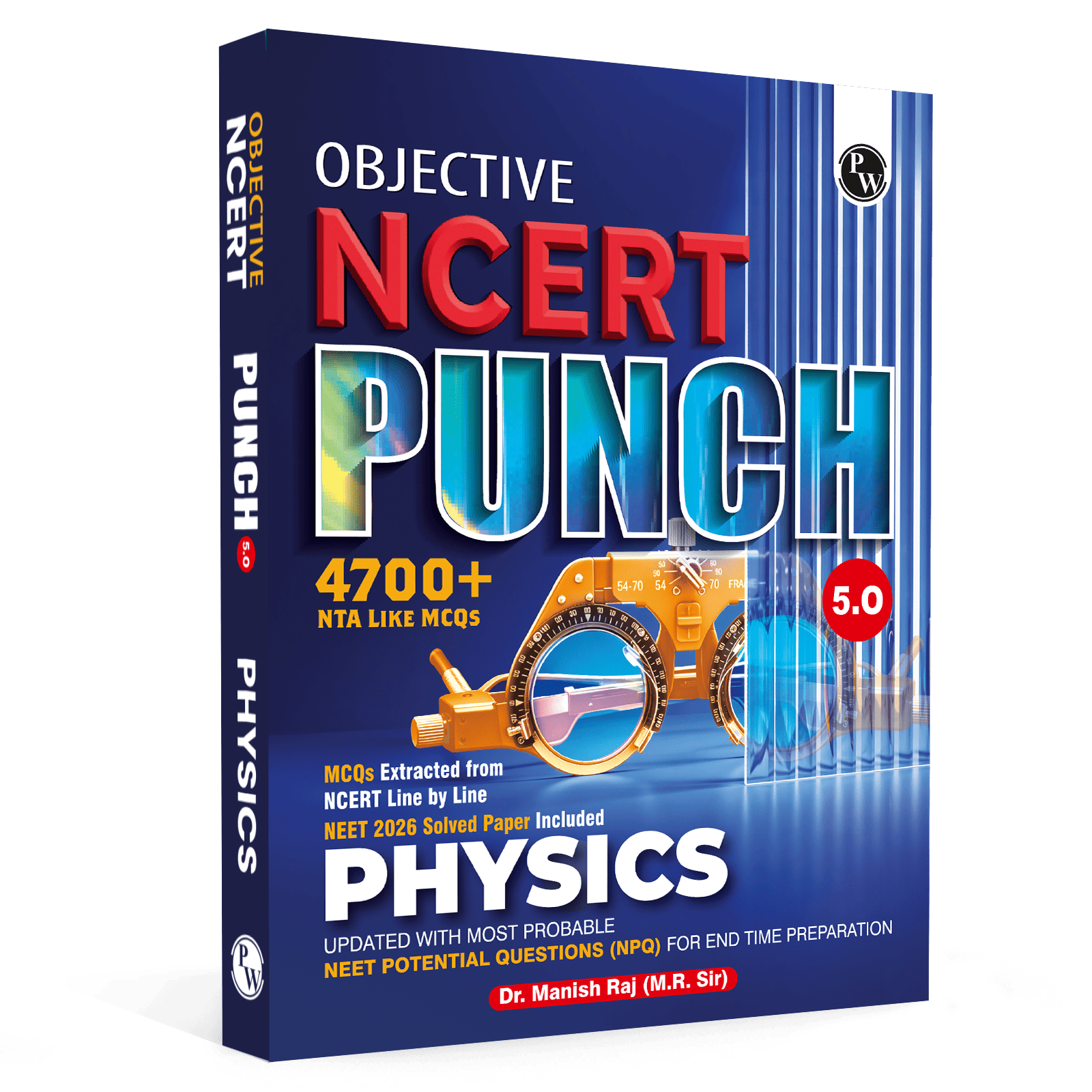
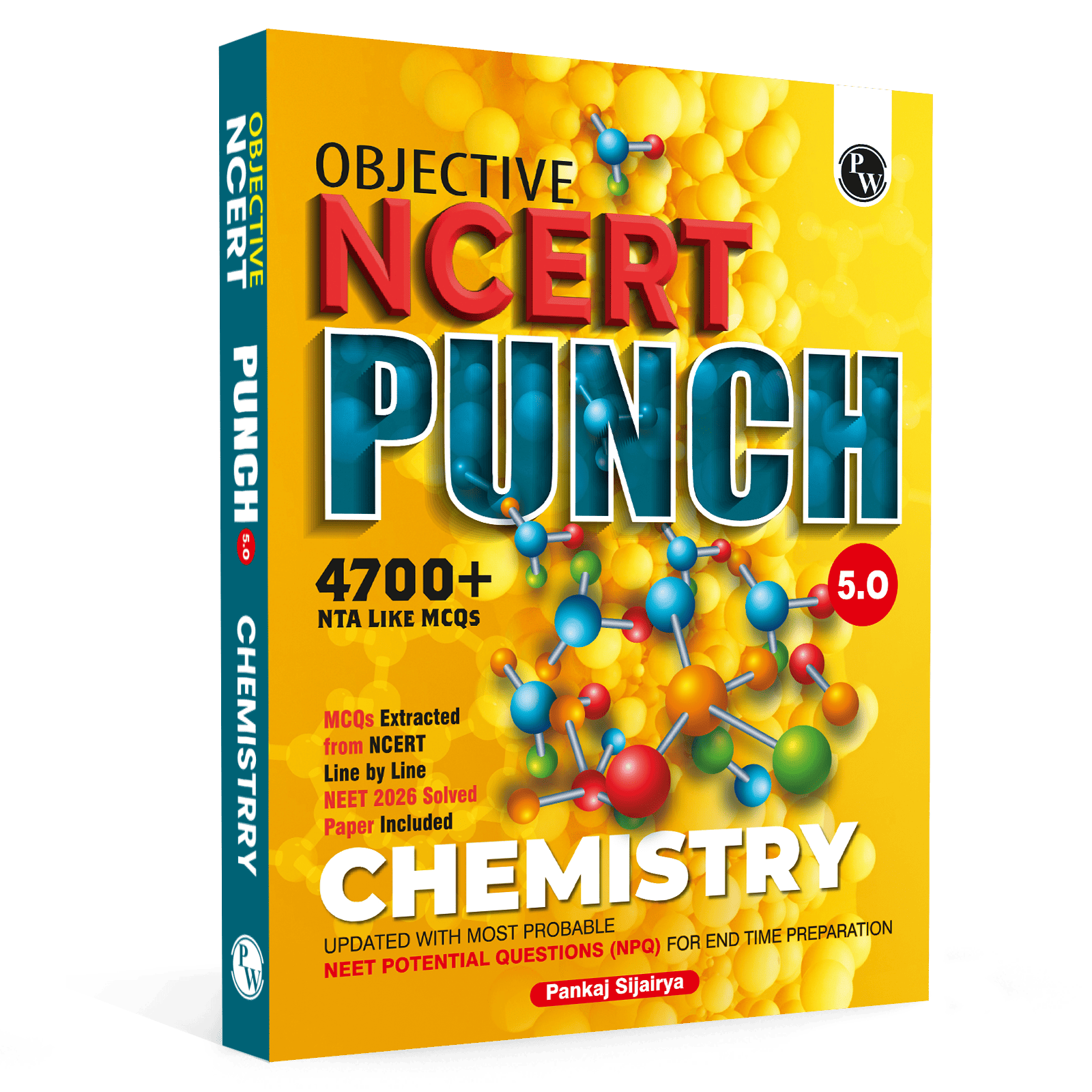
Prepare for NEET with a large collection of NCERT-based questions, revision notes, diagrams, and PYQs. NEET NCERT Objective Punch helps students strengthen concepts, practise different question types, and improve speed and accuracy for the exam.
• 11,400+ NTA-Level MCQs: Get extensive practice with more than 11,400 NTA-level MCQs covering important NEET concepts. Regular practice helps improve question-solving ability, speed, and accuracy.
• 500+ Colourful Diagrams with Short Notes: Make revision simple with chapter-wise short notes and 500+ colourful diagrams. These resources help you quickly recall important facts, processes, and concepts from NCERT.
• 3,500+ Fill-in-the-Blanks & True-False Questions: Test your knowledge with 3,500+ Fill-in-the-Blanks and True-False questions. This practice helps you identify knowledge gaps and strengthen your understanding of key concepts.
• NEET Previous Year Questions (PYQs): Solve NEET Previous Year Questions (PYQs), including the latest 2026 paper, to understand the real exam pattern and get familiar with the types of questions asked in NEET.
• 240+ Match the Column Questions: Practise more than 240 Match the Column questions to improve your ability to connect facts, terms, concepts, and related information quickly.
• 4,200+ Multi Correct MCQs: Attempt 4,200+ Multi Correct MCQs to practise questions with multiple possible correct options. This helps develop careful reading and better option-selection skills.
• 4,800+ Numerical Profile Questions: Build stronger numerical problem-solving skills with 4,800+ Numerical Profile Questions. These questions provide extra practice for applying formulas and concepts correctly.
• Assertion-Reason & Statement-Based Practice: Improve your conceptual clarity with Assertion-Reason and statement-based questions. This format helps you learn how to analyse each statement before selecting the correct answer.
• Most Probable NEET Questions (NPQs): Use Most Probable NEET Questions (NPQs) for targeted revision before the exam. These questions help you focus on important concepts and revise key areas in less time.
• High-Order Thinking Questions: Practise challenging and time-consuming MCQs that test your deeper understanding of concepts. This helps improve your confidence when facing difficult questions in the actual NEET exam.
• Complete NCERT-Based Coverage: Study through topic-wise and unit-wise questions based on NCERT. This organised approach helps you cover important concepts systematically and identify topics that need more revision.
• Multiple Question Formats: Practise different question styles in one place, including MCQs, numerical questions, Match the Column, Assertion-Reason, True-False, and statement-based questions for more complete exam preparation.
Why Practise Different MCQ Formats With NEET NCERT Objective Punch?
NEET preparation requires mastering multiple problem styles because the NTA exam paper tests conceptual depth, critical analytical skills, and speed simultaneously. Solving only standard multiple-choice items leaves gaps in preparation when candidates face complex format shifts on exam day.
-
Broadens Conceptual Clarity: Different question formats test whether you truly understand a concept or have merely memorised textbook lines.
-
Reduces Exam-Day Anxiety: Familiarity with complex formats prevents shock and panic during the actual test.
-
Improves Time Management: Statement-based questions and numerical profile problems require distinct solving speeds and time allocation strategies.
-
Minimises Negative Marking: Practising tricky match-the-column and assertion-reason problems prevents careless elimination mistakes.
Using a comprehensive NEET book ensures that you do not just learn facts, but learn how NTA transforms those facts into varied objective test formats.
How to Solve Single-Correct MCQs With NEET NCERT Objective Punch?
Single-correct multiple-choice questions form the backbone of the NEET examination. Practising these questions helps build core speed, basic recall, and quick elimination techniques.
Strategies for Single-Correct MCQs
-
Direct Fact Recall: Read the stem carefully and identify the exact NCERT concept being queried before looking at the options.
-
Elimination Technique: Immediately cross out options that violate fundamental physical laws, chemical properties, or biological definitions.
-
Spotting Distractors: Watch out for negative keywords such as "not", "incorrect", "except", and "false" hidden within the question stem.
How to Solve Match-the-Column and Statement-Based Questions With NEET NCERT Objective Punch?
Match-the-column and statement-based questions require high analytical precision. They test a student's ability to cross-link multiple concepts across a single chapter or unit.
[ Read Statement / Column Entry ]
│
▼
[ Cross-check NCERT Fact Validity ]
│
▼
[ Apply Option Elimination Strategy ]
│
▼
[ Final Selection with Speed & Accuracy ]
Steps for Solving Match-the-Column Questions
-
Find the Most Certain Pair: Start with the column entry you are 100% sure about.
-
Scan Option Choices: Eliminate all option combinations that do not match your confirmed pair.
-
Confirm with a Second Pair: Verify your choice using a secondary known combination to seal the correct answer without reading every item.
Steps for Solving Statement-Based Questions
-
Evaluate Statements Independently: Read Statement I and Statement II separately to judge whether each is individually true or false.
-
Check Interdependence: Determine if Statement II provides the correct reason or logical follow-up for Statement I.
-
Leverage Structured Sets: The NEET objective punch contains over 240 Match the Column questions alongside dedicated statement-based exercises to build this exact analytical habit.
Practise NCERT-based MCQs, strengthen concepts, improve accuracy, and prepare effectively for NEET with chapter-wise NEET questions and detailed practice.
How to Practise Assertion-Reason and Multi-Correct Questions With NEET NCERT Objective Punch?
Assertion-Reason (A-R) problems are widely regarded as some of the most challenging NCERT-based MCQs because both statements may be individually correct, yet the reason might fail to explain the assertion.
|
Format Type |
Core Testing Objective |
Best Solving Strategy |
|
Assertion-Reason |
Tests logical cause-and-effect reasoning |
Insert the word "BECAUSE" between Assertion and Reason to test logical validity |
|
Multi-Correct MCQs |
Tests complete chapter depth and thoroughness |
Treat each option choice as an individual True/False statement |
|
Fill-in-the-Blanks / True-False |
Tests precise memory of NCERT line details |
Focus on precise definitions and exact terminology |
Effective Steps for Assertion-Reason Solving
-
Read the Assertion statement and determine if it is True or False.
-
Read the Reason statement independently and determine if it is True or False.
-
If both are True, link them by reading Assertion + "BECAUSE" + Reason. If the full sentence forms a logically sound statement, Option A is your answer.
By practicing with more than 4,200 multi-correct MCQs and dedicated A-R sections in the NEET objective punch, aspirants develop a sharp eye for subtle conceptual traps.
How to Practise Numerical Questions With NEET NCERT Objective Punch?
Numerical problems in Physics and Physical Chemistry require a structured step-by-step approach to avoid calculation errors and formula confusion under time pressure.
[ Extract Given Data & Target Quantity ]
│
▼
[ Select Relevant NCERT Formula ]
│
▼
[ Check Units & Perform Calculation ]
│
▼
[ Match Result against Option Profile ]
Tips for Numerical Accuracy
-
List Knowns and Unknowns: Write down given variables and required outputs immediately upon reading the prompt.
-
Standardize Units: Convert all quantities into SI units before applying formulas to avoid magnitude errors.
-
Estimate Calculations: Round off complex intermediate decimal numbers slightly when options are widely spaced out.
The NCERT objective punch combo features 4,800+ numerical profile questions specifically aligned with NTA pattern difficulty, training you to execute numerical steps seamlessly.
How to Use NEET NCERT Objective Punch for Daily MCQ Practice?
Consistent practice using a structured schedule ensures complete coverage of all question formats before exam day.
-
Phase 1: Topic-Wise Foundation (Daily Practice)
-
Read the specific NCERT chapter carefully.
-
Revise chapter-wise short notes and key diagrams.
-
Solve foundational NEET MCQ practice sets and fill-in-the-blanks.
-
Phase 2: Advanced Format Drilling (Weekly Practice)
-
Practice dedicated batches of Assertion-Reason and Match-the-Column items.
-
Complete multi-correct and numerical profile question sets under timed conditions.
-
Phase 3: High-Yield Revision (Final Stage)
-
Solve Most Probable NEET Potential Questions (NPQs) provided in the book set.
-
Practice Previous Year Questions (PYQs) to calibrate speed against real exam papers.
Integrating the NCERT objective punch into your daily schedule provides structured access to over 11,400 NTA-level questions, transforming standard preparation into a targeted, high-scoring routine.
FAQs
How does the NEET NCERT objective punch help with different MCQ formats?
The NCERT objective punch offers dedicated question sets for single-correct MCQs, Assertion-Reason, Match-the-Column, statement-based items, multi-correct questions, and numerical profile problems. This comprehensive structure ensures aspirants practice every format encountered in the actual NEET exam.
Are all questions in the NEET NCERT objective punch strictly based on NCERT?
Yes, the NEET objective punch features 100% NCERT-based content. Every single-correct, fill-in-the-blank, and objective format is extracted directly from the Class 11 and Class 12 Physics, Chemistry, and Biology NCERT textbooks.
How many questions are included for NEET MCQ practice in this book set?
The book set includes over 11,400 NTA-level MCQs, 3,500+ fill-in-the-blanks and true-false questions, 240+ Match-the-Column problems, 4,200+ multi-correct MCQs, and 4,800+ numerical profile questions for complete NEET MCQ practice.
Is the NEET NCERT objective punch suitable for numerical practice in Physics and Chemistry?
Yes, it contains over 4,800 numerical profile questions tailored specifically to test formula application, unit conversions, and step-by-step problem-solving in Physics and Physical Chemistry as per the latest NTA exam trends.
Does the NEET NCERT objective punch include previous year NEET questions?
Yes, the NEET practice book incorporates NEET Previous Year Questions (PYQs) along with Most Probable NEET Potential Questions (NPQs) designed for end-time exam revision and self-assessment.