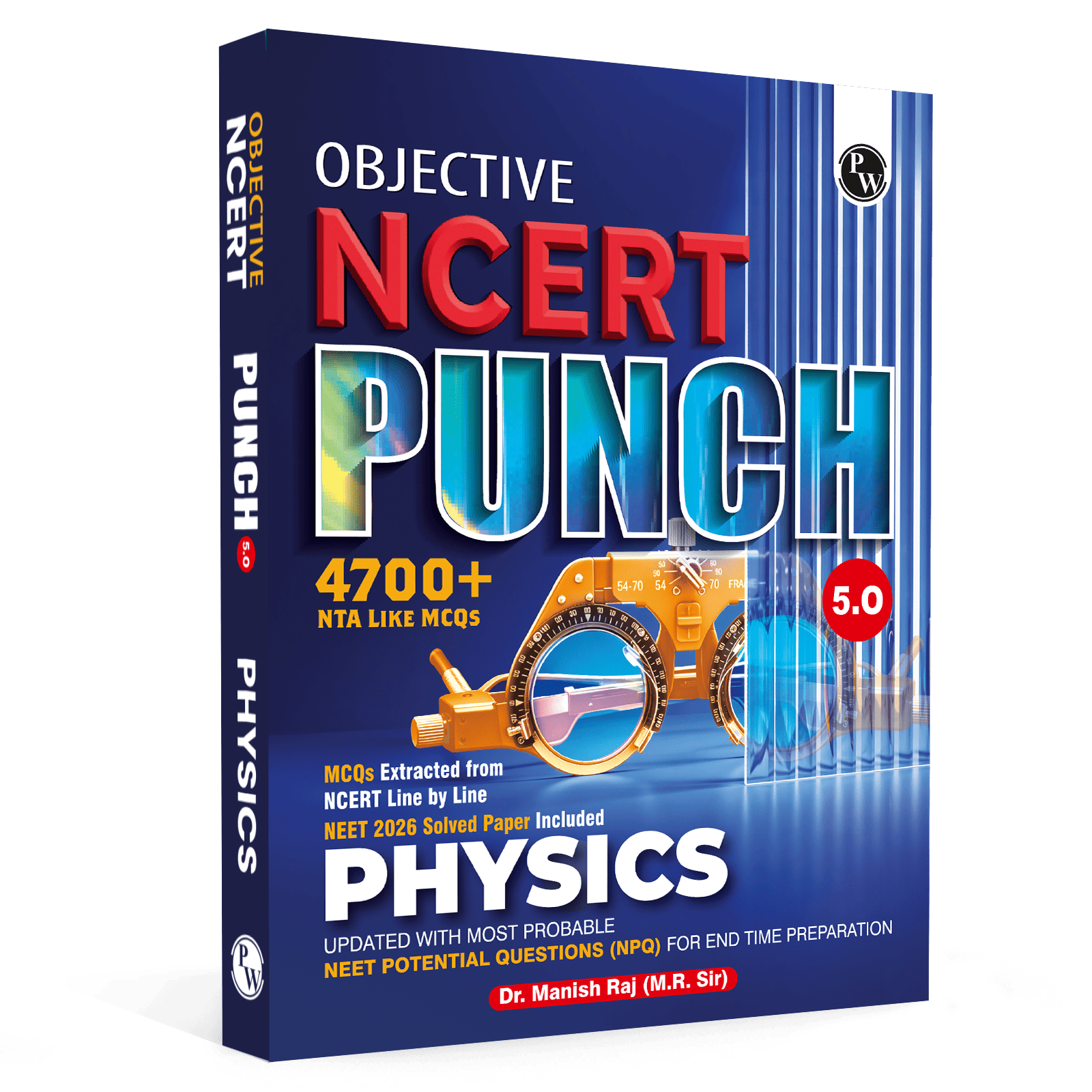
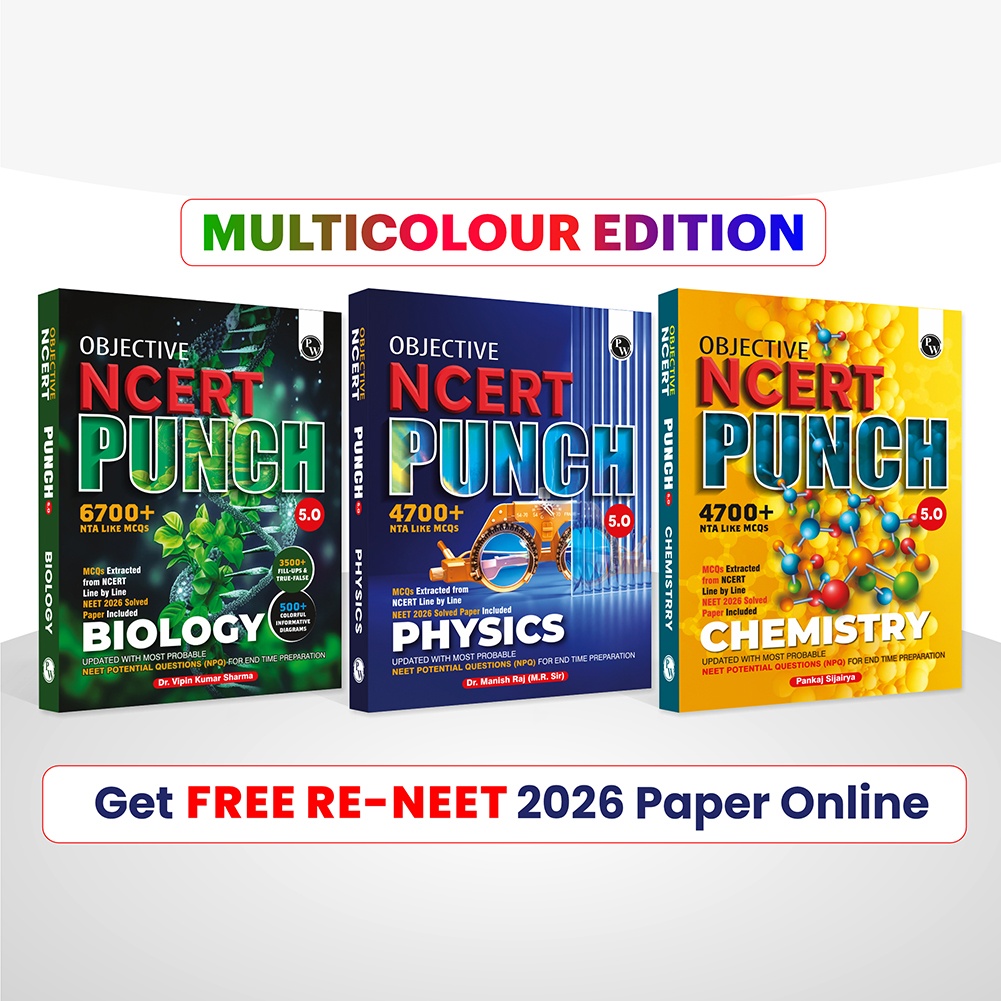
How NCERT Objective Punch Physics Book Strengns Concept-Based MCQs
Cracking medical entrance tests requires more than just memorising definitions or skimming through textbook paragraphs. Many students find themselves stuck when standard conceptual ideas turn into complex, application-based questions during the actual exam.
If you struggle to apply theoretical formulas to tricky problems, you need a dedicated framework that bridges the gap between basic reading and advanced problem-solving.
This is where a NEET NCERT Punch Physics becomes essential. By working systematically through a structured question bank, you can master the exact paper patterns and build the confidence needed to solve challenging numerical tasks under strict time limits.
What Is NEET NCERT Punch Physics?
The NEET NCERT punch physics framework serves as a comprehensive, curriculum-aligned study companion built specifically for medical aspirants. It provides a complete practice routine that mirrors the official testing syllabus, spanning both Class 11 and Class 12 topics.
The main goal is to shift your focus from passive reading to active practice, ensuring every paragraph of your core textbook is thoroughly evaluated through diverse question formats.
Rather than offering generic problem sets, this resource provides highly targeted, objective punch physics materials that isolate specific subtopics. It ensures that students do not just memorise formulas but actually understand the underlying mechanics of every physical law.
Breaking the vast syllabus down into clear, manageable segments helps you track your progress objectively and eliminate weak areas early in your study schedule.
Features of the NEET NCERT Punch Physics for NEET
Medical entrance exams heavily penalise superficial learning. Choosing the right NEET books determines how effectively you turn theoretical knowledge into a highly competitive score. The NEET NCERT punch physics guide offers distinct advantages that traditional reference books often miss:
-
Complete Curriculum Alignment: Every practice problem directly reflects the official Class 11 and Class 12 testing outlines, keeping your revision highly focused.
-
Diverse Question Variances: Aspirants gain exposure to multiple question formats, including assertion-reasoning, statement-based queries, and intensive multiple-choice options.
-
Structured Progress Tracking: Topic-wise and unit-wise segregation allows you to monitor exactly where your conceptual understanding stands.
-
Exam-Oriented Layout: The material focuses closely on recent exam trends and patterns, ensuring your practice hours align with actual test-day expectations.
Topics Covered in NEET NCERT Punch Physics
A balanced approach across both years of your higher secondary curriculum is vital for a top rank. The workbook organises its question banks to ensure that foundational concepts receive just as much attention as advanced, high-weightage chapters.
-
Class 11 Foundational Chapters
The early sections focus on establishing a strong grasp of physical mechanics, dimensions, and thermodynamic principles. These topics build the logical framework necessary for tackling more abstract theories later on. Students face structured problems in Mechanics, Kinematics, Laws of Motion, Work, Energy, Power, Gravitation, and Bulk Matter Properties.
-
Class 12 Advanced Modules
The later sections transition into highly abstract and analytical domains that carry massive weight in the competitive exam. These modules require strong visualization and precise mathematical application. Key areas include Electrostatics, Magnetism, Current Electricity, Electromagnetic Induction, Optics, Wave Mechanics, and Modern Physics.
How to Use NEET NCERT Punch Physics for Concept-Based MCQs?
True proficiency comes from knowing how to dissect a problem systematically. Working through concept-based MCQs requires a deliberate, multi-step strategy rather than rushing to check the answer key.
|
Step Number |
Action Plan |
Strategic Objective |
|
Step 1 |
Read the core textbook chapter carefully |
Establish fundamental theoretical clarity before attempting problems. |
|
Step 2 |
Attempt the short answer and fill-in-the-blanks sections |
Reinforce specific definitions, exact unit definitions, and key formulas. |
|
Step 3 |
Tackle the single-option objective questions |
Build basic application speed and eliminate obvious distractors. |
|
Step 4 |
Solve assertion-reason and statement-based problems |
Deepen analytical logic and verify structural understanding. |
|
Step 5 |
Analyze incorrect answers and document mistakes |
Pinpoint logic gaps and prevent repeating errors during the actual exam. |
First, always ensure you have read the core theoretical text before opening the NEET question bank. When you begin a question set, highlight the key variables and keywords within the problem statement itself.
Avoid guessing; if you find yourself torn between two options, write down the specific law or formula you are relying on. This disciplined habit forces you to think structurally and stops you from picking choices based on pure intuition.
Second, dedicate separate study blocks to modern question formats. Assertion-reason items demand that you verify not just the truth of two statements independently, but also the exact causal link between them. By regularly practicing these formats, you develop the mental flexibility needed to handle unexpected, high-pressure exam scenarios smoothly.
When Should You Use NEET NCERT Punch Physics?
Timing your study resources correctly can completely change your retention rate. Using the NEET NCERT punch physics series at the right stages of your preparation ensures you build both long-term memory and sharp exam-day speed.
-
During Active Classroom Learning: Use the topic-wise sub-sections immediately after a lecture to lock down the concepts you just learned.
-
Mid-Term Evaluation Phases: Revisit completed units every four to six weeks to make sure your formula application stays fresh.
-
Intensive NCERT Physics Revision Periods: Utilize the condensed summary notes and structured diagrams for rapid, high-yield overviews before major mock exams.
-
Final Countdown Months: Pivot completely to solving previous years' questions and high-order, time-bound problem profiles to peak your exam temperament.
Study Plan for Using the NEET NCERT Punch Physics
To get the absolute most out of your study volume, you need a clear, structured schedule. Randomly jumping between chapters often leads to uneven preparation and lingering weak spots.
Phase 1: Topic Isolation and Baseline Practice
Focus heavily on building a clean execution routine. For every chapter you finish, resolve to complete at least fifty topical questions without looking at the solutions. Use the fill-in-the-blanks and true-false segments to verify that you know your basic formulas inside out. Do not worry too much about a timer during this initial phase; focus entirely on accuracy and understanding the logic behind each step.
Phase 2: Mixed Formats and Speed Building
Once your baseline accuracy is solid, start introducing strict time constraints. Combine different subtopics and practice handling diverse formats like matching columns and multiple-choice items back-to-back. This approach trains your brain to switch between different physical laws quickly, preparing you for the fast pace of the actual exam hall.
Practice Sheet for NEET NCERT Punch Physics
Regular diagnostic self-testing is the best way to ensure you can apply your knowledge under pressure. Use this sample challenge sheet to evaluate your current problem-solving approach and see how well you handle high-yield question formats.
Section A: Foundational Knowledge Check
-
Item 1: Describe how changing a medium's permittivity alters the electrostatic force between two stationary point charges, and state the governing law.
-
Item 2: Explain the mechanical difference between a conservative and a non-conservative force field, providing two distinct physical examples for each.
-
Item 3: Define the exact relationship between the angular momentum of a rigid rotating body and its moment of inertia when external torque is zero.
Section B: Advanced Application Challenges
-
Item 4: A circuit contains an ideal inductor and a capacitor connected in series. If the supply frequency matches the natural resonant frequency, derive the total impedance.
-
Item 5: Analyze why the stopping potential in a photoelectric setup changes linearly with the frequency of incident radiation, and name the constant represented by the line's slope.
Read More: Concept-Based Questions on Physics for NEET 2027 Exam
NEET NCERT Punch Physics FAQs
How does the NEET NCERT punch physics book assist with numerical problem-solving?
The workbook features thousands of numerical profile questions broken down by topic. This allows students to practice specific mathematical steps repeatedly until they can solve complex equations quickly and accurately.
Can I rely on this guide for intensive NCERT physics revision close to the exam?
Yes, the book includes chapter-wise short notes and over 500 detailed diagrams. These resources make it an ideal tool for rapid visual review and quick formula checks right before test day.
What makes the NEET physics questions in this bank different from generic materials?
Every question is designed around real exam trends and NTA testing levels. The bank includes unique formats like statement-based questions and assertion-reason problems that match the actual test difficulty.
How many physics objective practice problems should I solve daily to build speed?
Aiming for 30 to 40 focused problems daily helps build strong muscle memory. Consistently working through structured question sets naturally sharpens both your speed and your overall accuracy.
Does the workbook explain the core physics concepts deeply enough for beginners?
The book focuses primarily on structured practice, but it supports learning with clear summaries and concept-building exercises. This makes it an excellent tool for turning theoretical knowledge into practical problem-solving skills.