When to Start Solving NEET Chemistry PYQs — A Phase-by-Phase Guide
Starting your preparation early gives you an edge, but many students find it difficult to know the exact time to solve past papers. There is so much theory and so much question practice, and it can be quite hard to juggle 3 huge subjects. A systematic approach is needed, and not random guesses, to ace your NEET PYQ chemistry strategy.
In this article, we tell you when and how you can incorporate past papers into your study routine to improve your score.
Check Out: NEET Books
Importance of NEET PYQ Chemistry for Exam Preparation
NEET PYQ Chemistry helps students understand the exam pattern, frequently asked concepts, and the types of questions that have recurred over the years. Practicing previous-year questions improves accuracy, speed, and confidence while highlighting important topics in Physical, Organic, and Inorganic Chemistry.
The content includes chapter-wise questions, detailed solutions, concept explanations, and analysis of important reactions, formulas, and trends. Regular practice with NEET PYQs helps aspirants identify weak areas and build a focused preparation strategy for better exam performance.
Features of NEET PYQ Chemistry
Your choice of practice material directly influences your final efficiency. Using poorly organized resources leads to confusion, incorrect answer keys, and wasted study hours.
-
Error-free solutions: Clear explanations help you understand the steps behind complex reactions.
-
Year-wise distribution: Tracking how question patterns changed over the last decade provides great insight.
-
Clear print quality: Well-aligned structures and readable chemical equations prevent misinterpretation.
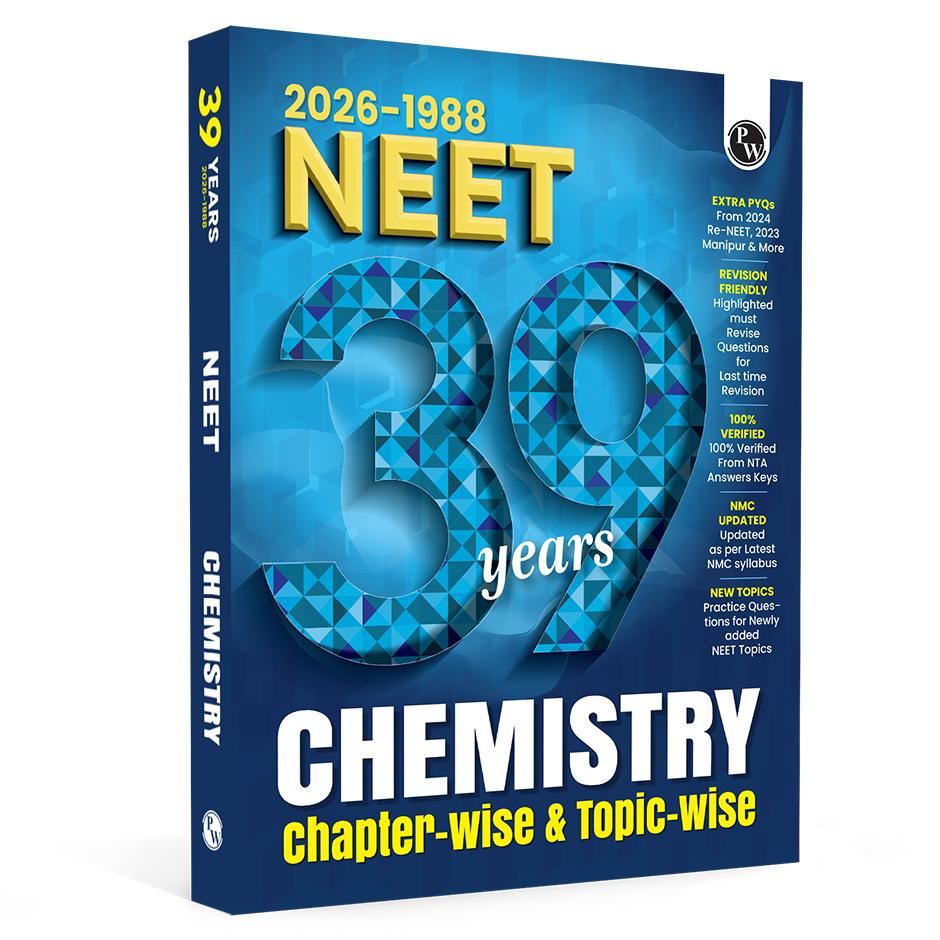
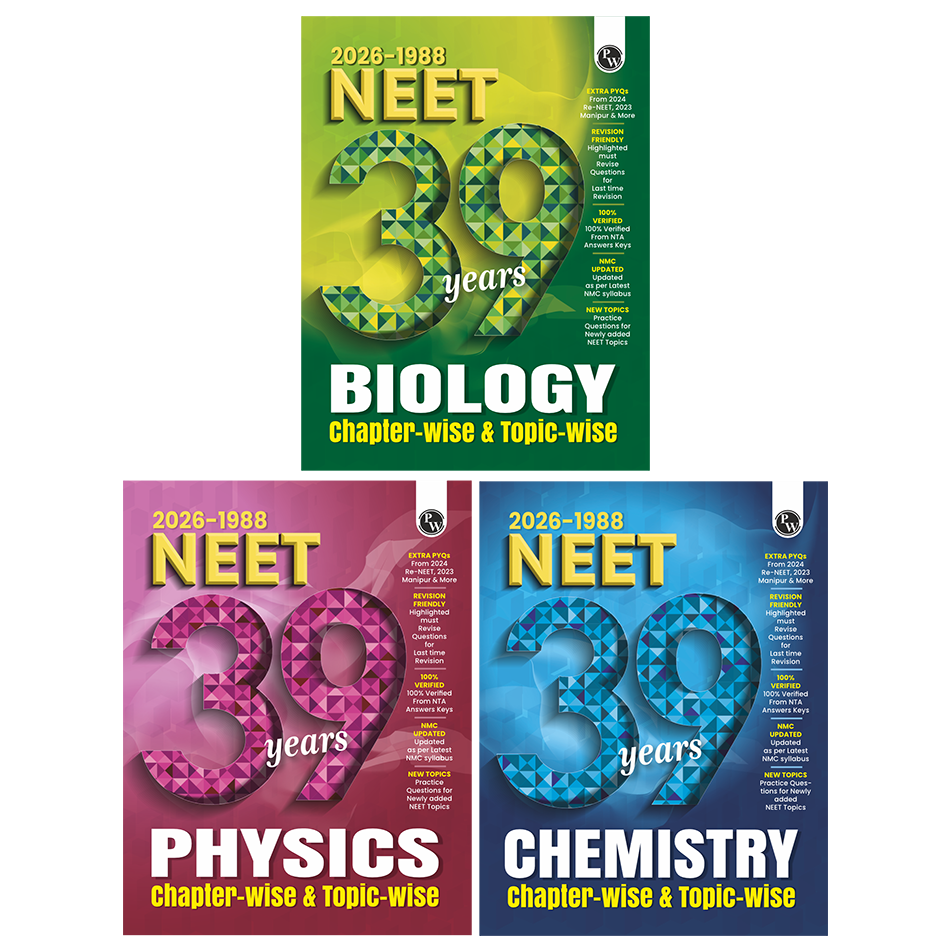
To make preparation more effective, students can also practise with NEET Chemistry PYQ, which helps identify recurring concepts, strengthen problem-solving skills, and improve familiarity with actual exam questions.
Why Timing is Important in NEET PYQ Chemistry?
Diving into past papers too early can damage your confidence if you have not covered the core theory. Conversely, leaving them until the final month creates unnecessary panic and leaves zero room for error correction.
Under a structured timeline, you will comprehend the underlying concepts prior to testing your knowledge under exam conditions. It helps you to identify the chapters that have high weight, repetitive patterns of questions, and the areas where you tend to make silly mistakes.
Phase 1: Initial NEET PYQ Chemistry Learning
This phase occurs when you learn a chapter for the very first time in class or through self-study. Your primary focus must remain on understanding definitions, mechanisms, and core formulas.
-
Concept validation: Solve topic-specific questions immediately after finishing a lecture to cement what you just learned.
-
Formula application: Use physical chemistry formulas in basic problems before jumping straight into complex, multi-concept papers.
-
NCERT alignment: Ensure you read the textbook thoroughly alongside your initial practice.
How to use past questions?
Do not try to solve a full three-hour paper right now. Instead, use a reliable NEET chemistry PYQ resource to isolate questions belonging only to the specific topic you completed. This practice confirms whether your initial understanding aligns with actual exam standards.
Phase 2: NEET PYQ Chemistry Chapter Completion
Once your teacher finishes an entire chapter, or you complete it during self-study, your preparation moves to the next level. This stage usually happens a few days or a week after your initial learning phase.
-
Organic mechanisms: Review all named reactions and conversions across the whole chapter.
-
Inorganic trends: Revisit exceptional periodic trends and chemical bonding behaviors.
-
Physical calculations: Work through varied numerical problems that combine different formulas from the same chapter.
Targeted question practice
At this point, look for a dedicated chemistry PYQ NEET book that categorizes questions by chapter. Attempting twenty to thirty past questions from that specific chapter will highlight your weak spots. If you struggle with a particular trend or calculation, return to your notes immediately.
Phase 3: NEET PYQ Chemistry Revison
Around halfway through your syllabus, individual chapters begin to blur together. This phase is critical because the actual exam combines multiple concepts into a single question.
-
Interlinked topics: Practice organic chemistry by linking chapters like Alcohols and Aldehydes together.
-
Trend analysis: Compare d-block and f-block elements with p-block trends simultaneously.
-
Formula sheets: Build a comprehensive formula log to glance through before starting your practice sessions.
Setting up mixed review sessions
Open your NEET previous year question paper chemistry files and pick out sections covering completed chapters. Try solving these questions without looking at your reference notes to test your long-term memory and retention capacity.
Phase 4: NEET PYQ Chemistry Before Exams
With around two to three months left for the examination, your theory preparation should be largely complete. Your daily routine must transition from reading notes to intensive testing and analysis.
-
Strict timing: Set a timer for around forty-five to fifty minutes for the chemistry section.
-
OMR filling: Practice shading response sheets to estimate your actual exam speed accurately.
-
No external help: Avoid checking solution keys until you finish the entire mock set.
Full-length paper practice
This is the period to solve complete question sets rather than isolated segments. Utilizing a quality NEET PYQ book chemistry helps you experience the exact layout, difficulty level, and distribution of the actual exam, making you comfortable with the final paper format.
What are the NEET PYQ Chemistry High-Weightage Topics?
To maximize the efficiency of your preparation timeline, you must know which specific areas deserve the most attention during your practice cycles. Not all chapters carry the same weight, and focusing your energy on high-yield zones ensures a much better return on your study hours.
The table below breaks down the core chemistry segments, their approximate weightage based on past paper trends, and the ideal phase to begin intensive question practice.
|
Chemistry Segment |
Key High-Yield Chapters |
Approximate Weightage |
Recommended Practice Phase |
|
Physical Chemistry |
Chemical Thermodynamics, Equilibrium, Electrochemistry, Solutions |
Around 30% to 35% |
Phase 1 & Phase 2: Requires early formula application and deep calculation practice per chapter. |
|
Organic Chemistry |
Hydrocarbons, Aldehydes, Ketones & Carboxylic Acids, General Organic Chemistry |
Around 30% to 35% |
Phase 2 & Phase 3: Best tackled when you can interlink different reaction mechanisms across multiple chapters. |
|
Inorganic Chemistry |
Chemical Bonding, Coordination Compounds, p-Block Elements, d & f-Block Elements |
Around 30% to 33% |
Phase 3 & Phase 4: Ideal for mid-term review and final months to lock periodic trends into your active memory. |
When moving through these phases, physical chemistry requires you to maintain a dedicated formula logbook from day one. For organic chemistry, your main priority should be writing out full reaction mechanisms rather than just memorising the final products. Inorganic chemistry benefits heavily from consistent, spaced repetition closer to the actual test date, as this keeps complex, exceptional trends fresh in your mind.
Using a structured NEET PYQ book chemistry lets you see exactly how these three distinct segments are distributed in the actual test paper, helping you manage your time effectively during the exam.
Mistakes to Avoid While Using NEET PYQ Chemistry
Many aspirants solve thousands of questions but fail to see an increase in their mock scores because of faulty practice methods.
Passive reading of solutions
Glancing at an answer and assuming you understand it is a major trap. Always write down the chemical equation or numerical calculation yourself before checking the solution key.
Ignoring the analysis part
Spending two hours solving questions requires at least thirty minutes of deep analysis. Maintain an error logbook to document every single mistake, whether it was a conceptual error or a simple calculation slip.
Postponing inorganic chemistry
Students often delay inorganic sections, thinking they require pure memorization. However, solving past questions early reveals that questions follow highly logical, repetitive trends based on core principles.
Read More: NEET Chemistry Chapter Wise Weightage 2026
NEET PYQ Chemistry FAQs
When should I start using a NEET PYQ chemistry resource?
You should start using a past question resource as soon as you complete your first chapter. Begin with topic-wise questions during your initial learning phase, and gradually move towards full-length papers as the main exam approaches.
Is reading NCERT enough before solving chemistry PYQ NEET sets?
NCERT forms the absolute core foundation for the exam. However, directly applying that theory to trick questions requires regular practice with past papers to understand how concepts turn into multiple-choice options.
How many past years should my NEET PYQ book cover in chemistry?
Your practice book should ideally cover around thirty to thirty-five years of past papers. This extensive range helps you identify long-term question trends, high-yield topics, and repeating reaction mechanisms.