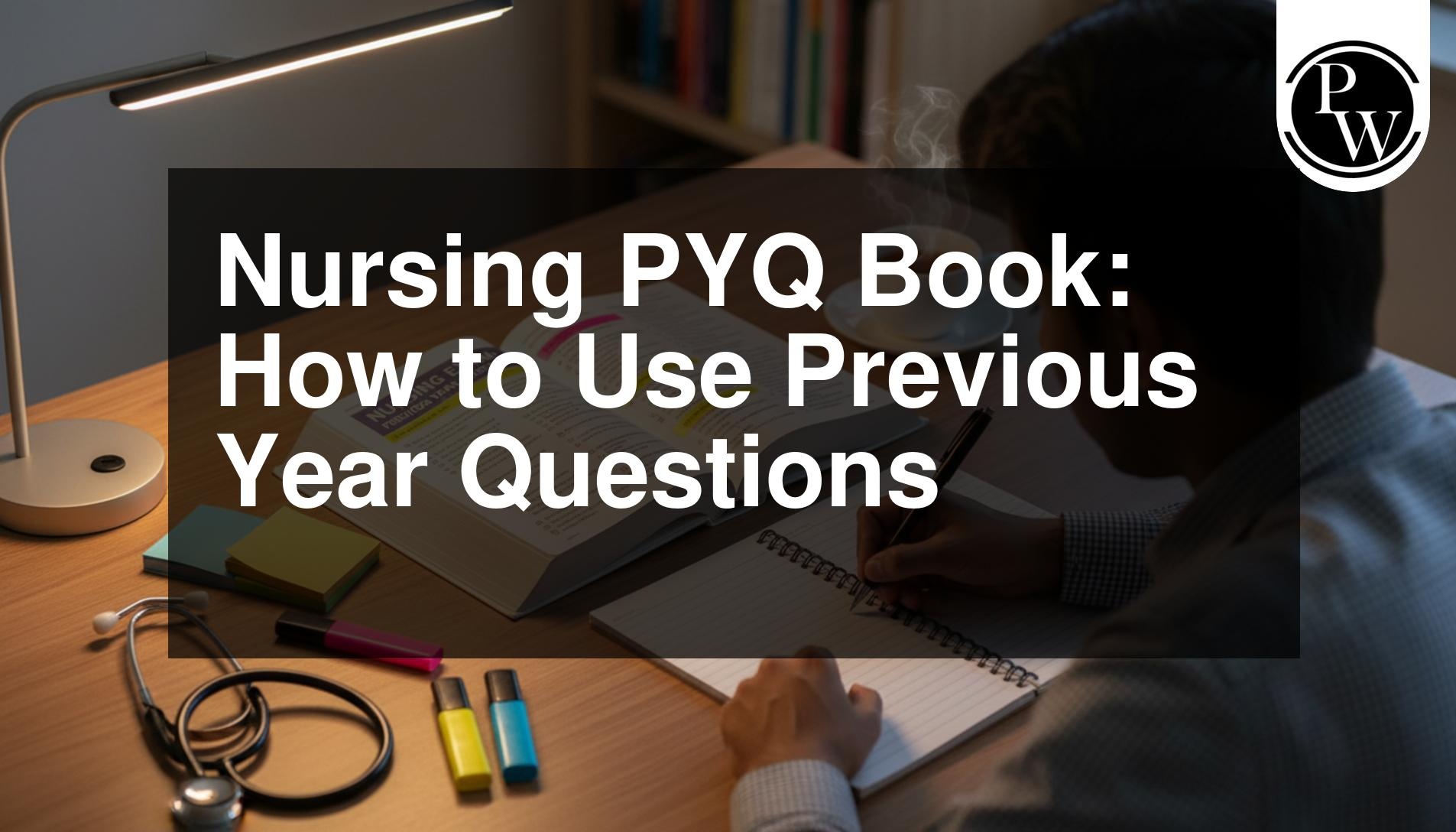
Nursing PYQ Book: How to Use Previous Year Questions
Syllabus coverage feels overwhelming when exam patterns shift unexpectedly halfway through the academic session. Finding reliable study resources completely changes this dynamic, helping learners transition from passive reading to active, goal-oriented problem-solving.
By integrating nursing PYQ book and past papers into daily routines, candidates successfully bridge knowledge gaps, build steady confidence, and track progress accurately right through their mid-term session.
What Is a Nursing PYQ Book
A nursing PYQ book serves as a critical compilation of historical examination questions designed specifically for medical and nursing recruitment or entrance tests. These volumes organise previous years papers systematically, allowing students to inspect question weightage and recurring medical concepts.
Rather than guessing which units matter most, candidates review authentic questions issued in past tests. These resources turn theoretical notes into practical problem-solving modules, ensuring alignment with modern testing formats.
Explore Nursing books with PYQs, practice questions, detailed solutions, and exam-focused concepts. Find the right study material for nursing entrance and competitive exams, practice effectively, revise key topics, and prepare confidently.
Structural Layout of Historical Volumes
-
Questions inside these study guides are arranged by subject, year, or chapter for easy navigation.
-
This structured layout allows learners to focus on single physiological systems or medical domains without distraction.
-
Indexing systems help track specific clinical topics across multiple examination years efficiently.
-
Chapter-wise segregation guarantees that students can align past questions directly with ongoing college lectures or coaching modules.
Authentic Exam Replication
-
Every question reflects the standard difficulty level and linguistic phrasing encountered in official examinations.
-
Working through these authentic sets removes the element of surprise on exam day.
-
Exam replicas expose students to the exact distractor options commonly deployed by recruitment boards.
-
Familiarity with official testing formats reduces anxiety and builds composure during actual evaluations.
What You Can Learn from a Nursing PYQ Book
Exam blueprints become transparent when candidates examine past sets carefully. Learners discover high-yield medical topics, recurring clinical scenarios, and standard question phrasing used by examining bodies.
Analysing these sets reveals the depth of knowledge required for complex clinical subjects, moving beyond surface-level memorisation. Aspirants also gauge how time must be allocated across sections, identifying which physiological systems or nursing procedures attract the most questions year after year.
Identifying High-Yield Topics
-
Certain medical conditions and nursing interventions appear with predictable frequency across recruitment tests.
-
Recognising these patterns ensures that revision time goes toward high-scoring areas.
-
Frequency charts help students separate low-yield trivia from essential clinical competencies.
-
Prioritising high-yield chapters maximises score potential within limited preparation windows.
Understanding Question Complexity
-
Examining past questions exposes the shift from straightforward factual recall to complex clinical decision-making.
-
Students learn how single symptoms map to multi-system disorders under examination conditions.
-
Multi-statement queries test the depth of conceptual understanding rather than rote learning.
-
Analysing complex structures prepares candidates for advanced problem sets encountered in national-level tests.
PW Nursing Books Vision High Combo Set of 3 Books with 5000+ Questions, PYQs & Detailed Explanations for NORCET, RRB, NHM CHO, DSSSB, AIIMS CRE, ESIC & JIPMER Exams.
How to Use a Nursing PYQ Book After Completing Each Topic
Immediate application solidifies fresh classroom learning. Once a medical chapter is finalised, turning directly to corresponding questions in a nursing PYQ book tests actual retention. This active recall technique highlights weak conceptual spots before they turn into permanent knowledge gaps. Solving topic-wise segments right after studying helps lock medical facts into long-term memory, preparing students to tackle mixed-topic evaluations later in their mid-term session.
Immediate Reinforcement Loops
-
Closing a textbook and immediately solving related past questions creates a powerful cognitive loop.
-
This practice transforms short-term study efforts into permanent retention.
-
Immediate testing catches subtle misunderstandings before they compound into major knowledge deficits.
-
Active engagement breaks the monotony of passive textbook reading during long study hours.
Validating Theoretical Understanding
-
Reading about a nursing procedure is very different from identifying a clinical error in a multiple-choice question.
-
Topic-wise practice proves whether the underlying concept has truly been grasped.
-
Practical application forces the brain to translate abstract medical theories into actionable clinical judgments.
-
Success in topic-wise drills builds psychological readiness for comprehensive mock evaluations.
Which Questions to Practise First from a Nursing PYQ Book
Starting with foundational units builds essential momentum during mid-term preparation. Candidates should tackle fundamental direct questions and basic anatomical queries before advancing to complex clinical case studies or multi-statement clinical scenarios.
This gradual progression prevents early burnout and builds steady problem-solving confidence. Working through easier past queries first establishes a solid footing, making subsequent advanced problem sets much more manageable during daily study hours.
Building Early Momentum
-
Beginning with straightforward definitional questions encourages consistency and prevents early discouragement.
-
Tackling basic queries first builds the mental stamina required for multi-statement problems.
-
Early wins create positive psychological reinforcement during stressful academic periods.
-
Foundational practice clears basic doubts before transitioning to advanced medical problem sets.
Graduating to Clinical Scenarios
-
Once foundational confidence is established, learners can safely transition to multi-layered patient care scenarios.
-
Advanced practice prepares students for pharmacology calculations and complex care planning.
-
Scenario-based training sharpens critical thinking abilities required in emergency nursing environments.
-
Graduating to difficult sets ensures comprehensive preparation across all potential exam weightage brackets.
Read More - Nursing Syllabus: How to Cover All Subjects With PW Books?
How to Analyse Your Mistakes with a Nursing PYQ Book
Reviewing incorrect responses is just as important as solving fresh problem sets. When an answer goes wrong during practice, tracking down the root cause prevents repeating the exact same error in actual tests.
Students should note whether a mistake stems from conceptual misunderstanding, misreading the question stem, or simple calculation slips. Maintaining a dedicated error log helps candidates revisit flawed concepts regularly, transforming past mistakes into reliable scoring opportunities during exam evaluation.
Categorising Error Types
-
Not all mistakes carry the same weight during medical practice evaluations.
-
Separating careless reading errors from absolute knowledge gaps directs remediation efforts where they are needed most.
-
Identifying calculation errors in drug dosage problems prevents critical mistakes in clinical practice.
-
Categorising errors transforms random failures into structured targets for future revision.
Maintaining an Error Log
-
Recording missed questions in a separate notebook creates a personalised revision manual.
-
Regular review of logged errors ensures identical mistakes are never repeated during actual testing.
-
An error log tracks recurring weak spots across different physiological systems.
-
Final-week preparation becomes highly efficient when limited exclusively to reviewing logged mistakes.
Study Strategy for Using a Nursing PYQ Book Regularly
Consistency dictates ultimate success in professional entrance examinations. Allocating fixed daily or weekly slots exclusively for historical question practice keeps preparation sharp and steady.
Pairing these sessions with targeted bsc nursing PYQs ensures that syllabus revision stays balanced alongside regular textbook reading. Structuring weekly targets around specific exam papers prevents last-minute cramming and fosters a calm, methodical approach to the entire syllabus.
Time Blocking Your Practice
-
Setting aside dedicated micro-slots each day for past paper questions prevents study fatigue.
-
Consistent daily engagement builds steady discipline across demanding academic schedules.
-
Time blocking ensures that practical testing is never skipped due to heavy lecture loads.
-
Short, focused practice blocks maintain high cognitive retention throughout the week.
Balancing Theory and Practice
-
A successful weekly routine divides hours between core textbook reading and active question execution.
-
Combining traditional reading with active testing reinforces medical facts effectively.
-
Theory chapters provide the framework, while past questions test practical implementation.
-
Balanced study schedules prevent the exhaustion associated with single-method preparation.
Tips to Improve Accuracy with a Nursing PYQ Book
Precision separates successful candidates from the rest of the applicant pool. Practising under timed conditions trains the mind to process medical scenarios quickly without panicking. Students should eliminate wild guessing, learning instead to narrow down options using logical clinical deduction. Regular timed drills using nursing preparation books combined with past paper practice elevate overall problem-solving speed and minimise avoidable examination errors.
Implementing Timed Drills
-
Simulating exam pressure during daily practice conditions the nervous system to remain calm.
-
Timed sessions train candidates to manage sections efficiently under tight examination clocks.
-
Speed drills expose time-wasting habits during complex case-study evaluations.
-
Regular clock-based practice builds the pacing instincts required on exam day.
Practising Elimination Tactics
-
When faced with ambiguous clinical choices, systematic elimination increases correct selection probability.
-
Logical deduction helps rule out incorrect nursing interventions quickly.
-
Elimination tactics prevent negative marking in exams with penalty structures.
-
Systematic option filtering streamlines decision-making under high-pressure conditions.
Common Mistakes to Avoid While Solving a Nursing PYQ Book
Treating past volumes like casual reading material diminishes their actual value. Skipping detailed answer explanations prevents students from understanding the underlying clinical rationale behind correct choices.
Rushing through sets without timing the process creates a false sense of security regarding exam day readiness. Avoiding these common traps ensures that every hour spent reviewing past examinations translates into genuine improvement and higher confidence.
Relying Solely on Answer Keys
-
Looking up the answer without reading the accompanying rationale defeats analytical problem solving.
-
Understanding the clinical explanation is vital for handling similar future questions.
-
Memorising option letters without clinical context fails when question phrasing changes.
-
Detailed rationale reading uncovers underlying physiological principles missed during initial attempts.
Ignoring Timed Constraints
-
Practising without a clock leads to poor time management during the actual examination.
-
Failing to track speed leaves difficult nursing scenarios unanswered at the final bell.
-
Untimed practice creates unrealistic expectations of personal exam readiness.
-
Pacing discipline must be cultivated daily alongside conceptual mastery.
Frequently Asked Questions
1. Which exams can I prepare for using a nursing PYQ book?
These comprehensive resources support preparation for major national and regional nursing entrance examinations, recruitment tests, and institutional selections.
2. Are these volumes aligned with the latest syllabus?
Yes, quality volumes are structured strictly according to the updated syllabus and current exam patterns of major nursing examinations.
3. Do these books include detailed explanatory solutions?
Yes, they feature comprehensive solutions alongside bsc nursing PYQs to help students understand underlying clinical concepts and exam structures.
4. Can beginners use these practice compilations effectively?
Yes, structured explanations and graded questions make these resources suitable for both beginners and advanced learners during their mid-term session.