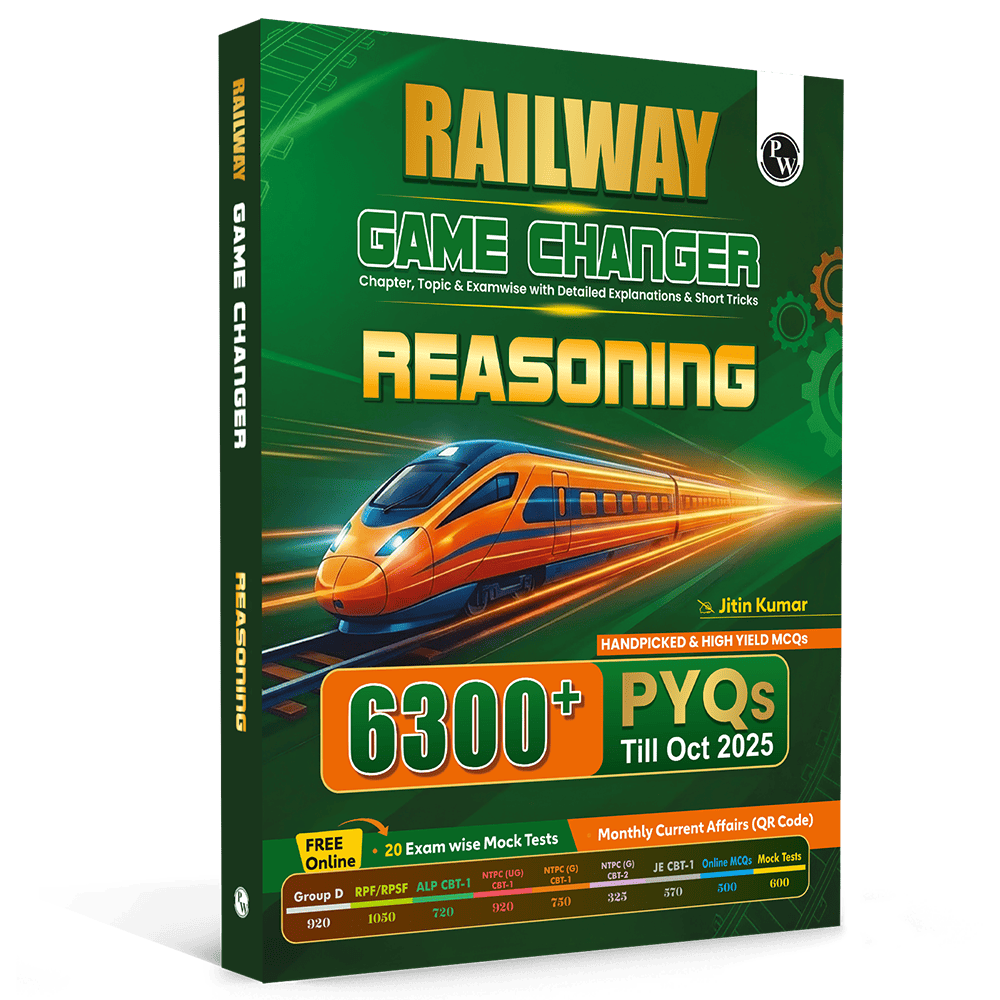
How to Use Railway Reasoning PYQ Book for Pattern Recognition
Railway recruitment examinations test your mental agility, quickness and analytical skill through a wide array of logical portions. Preparation for these tests is not a matter of randomly tackling problems but having a definite plan. An organized RRB reasoning PYQ book is your key instrument to decode repeating trends of questions, develop speed and learn exact test mechanics. Thus, you can learn the art of analyzing historical trends and take your preparation beyond just practicing to being a pattern identification machine.
Why Use a Railway Reasoning PYQ Book for Exam Preparation
Working through selected old papers is helpful to candidates so that they can match their study regimen to what they might expect in the actual examination. The typical practice sets are typically missing the exact question composition, difficulty levels, and logical patterns used by actual testing authorities.
Understanding Real Exam Trends
Official test papers reveal exact recurring themes across exam cycles. A comprehensive railway reasoning question bank allows candidates to observe how core concepts evolve across different shifts and tiers.
-
Focuses effort on high-weightage topics rather than irrelevant chapters.
-
Highlights recurring tricky variations in standard seating arrangements and puzzles.
-
Prevents surprise scenarios by exposing you to historical variations of non-verbal items.
Building Speed and Accuracy
Solving real railway exam reasoning questions adds to mechanical speed and mental clarity. If you practice in timed situations, you will soon find out your own weak points.
-
Reduces the read and ponder time for multi-statement syllogisms.
-
Increases visual perception of mirror images, paper folding, embedded figures.
-
Reduces errors in calculation in math operations and number series.
How to Find Patterns in a Railway Reasoning PYQ Book
It is not enough to understand pattern recognition by simply solving questions page by page. You need a methodical approach to dissecting each subject, grouping similar concepts, and identifying recurring logical structures. Using RRB Books alongside PYQ practice can help strengthen concepts, improve pattern recognition, and develop a more systematic approach to solving exam questions.
|
Step |
Focus Area |
Goal |
|
Phase 1 |
Topic Sorting |
Group questions by logical category |
|
Phase 2 |
Logic Mapping |
Identify core formulas and rules |
|
Phase 3 |
Distractor Analysis |
Recognize common trap options |
Grouping Questions by Logical Categories
Start by categorizing the questions depending on the concepts they're built on, instead of solving them in a sequential order, as you open your railway reasoning practice book.
-
Analogy and Classification: Group items into letter-based, number-based, and word-based categories to spot standard relation types.
-
Series Completion: Separate arithmetic progression series, geometric patterns, and alternating sequence types.
-
Analytical Logic: Cluster statement-assumption and statement-conclusion problems to observe standard acceptable premises.
Identifying Recurring Numerical and Alphabetical Codes
The alphabetical and numerical sequences are based on certain mathematical rules which are often found in the test papers. Basic positional values are best memorized for quickness of recognition.
-
Learn reverse alphabetical pairs (such as A-Z, B-Y, C-X) to solve coding problems visually.
-
Memorize square and cube values up to 30 to spot non-linear number series quickly.
-
Track positional shifts in coding-decoding to spot pattern variations instantly.
How to Track Patterns Using a Railway Reasoning PYQ Book
If you have patterns of questions that keep coming up, then a RRB PYQ book is even more valuable than just keeping a log of wrong answers. Create a simple pattern tracker with columns for topic, question type, repetitive logic, complexity, solving time and common traps. Change it after every exercise.
This tracker helps you see what kind of questions tend to be more common, and what patterns tend to take you longer over time. Use these tips to prioritize revision, practice similar PYQs and enhance question choices for timed assessments.
How to Practise With a Railway Reasoning PYQ Book
Adopting a clear step-by-step workflow ensures every practice session directly improves your test-day performance.
1.Categorize the Chapter Topic:Prerequisite step before solving.
Open your chosen section in the railway reasoning practice book and review the solved examples first to note core rules.
2.Attempt Unsolved Railway Reasoning PYQs:Timed practice.
Solve a set of 20 to 25 PYQs without checking answer keys to simulate real test pressure.
3.Analyze Errors and Trap Options:Review process.
Review incorrect attempts to determine if the error came from misreading the question, calculation mistakes, or missing a hidden rule.
4.Document Recurring Logic Types:Retention phase.
Maintain a dedicated notebook to record unique series rules, complex blood relation structures, or difficult arrangement setups.
Analyzing Syllogism and Venn Diagram Patterns
Syllogism questions demand strict adherence to formal logic. Studying authentic railway reasoning previous year questions helps you learn Venn diagram representations and avoid standard logical fallacies.
-
Definite Conclusions: Draw basic Venn diagrams to verify statements that hold true in all possible conditions.
-
Possibility Cases: Use overlapping diagrams to check potential relationships without violating primary statements.
-
Either-Or Cases: Look out for complementary pairs containing identical elements with one positive and one negative premise.
Solving Direction Sense and Distance Problems
Direction tests depend on clear spatial mapping. Drawing structured diagrams prevents directional confusion during complex multi-turn scenarios.
-
Draw a standard cardinal direction reference cross (North, South, East, West) on scratch paper immediately.
-
Use the Pythagorean theorem for shortest distance calculations involving right-angled paths.
-
Pay attention to final orientation prompts, distinguishing between starting point perspective and current facing direction.
Railway Reasoning PYQ Book for Mock Test Practice
Transitioning from topical practice to full-length timed tests tests your stamina and adaptability under real exam constraints.
Benchmarking Topic-Wise Weightage
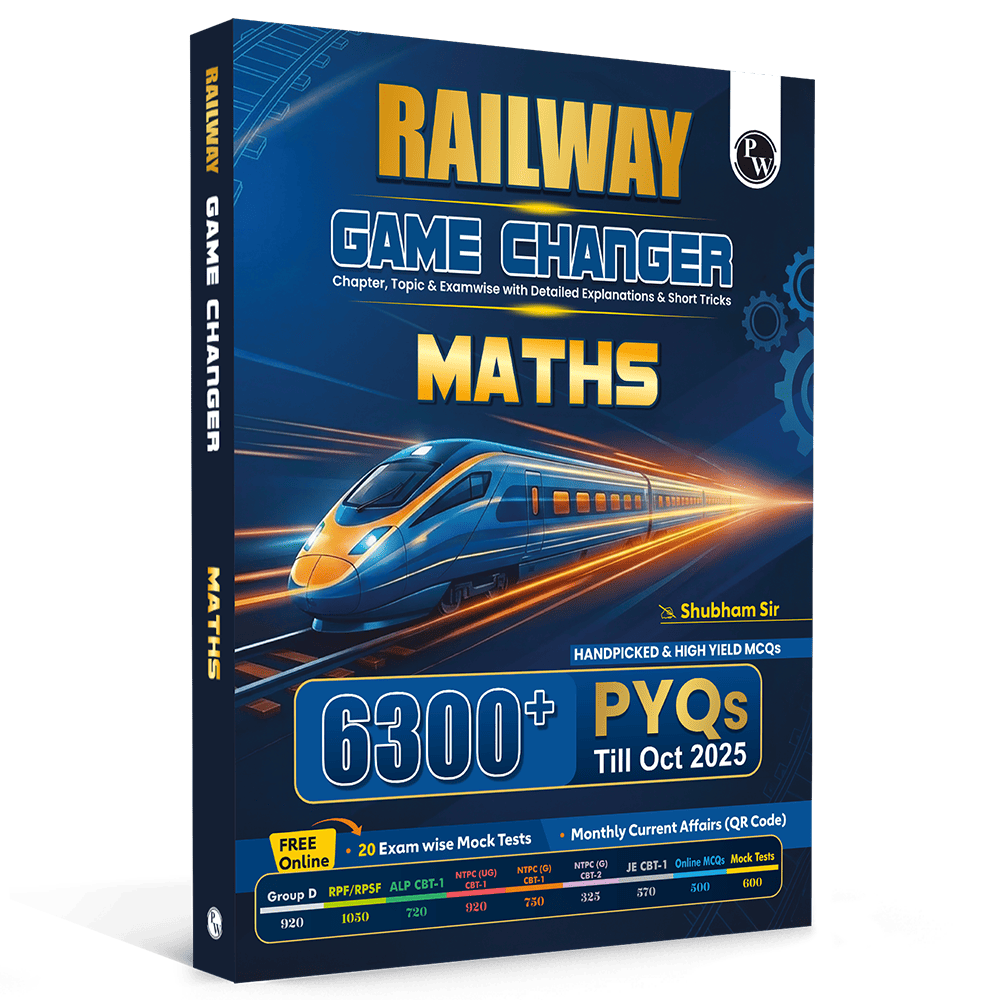
Analyzing comprehensive practice resources like the RRB Game Changer Combo Set 3 books helps candidates allocate preparation time based on actual section weightage.
-
High-Weightage Chapters: Focus maximum practice on Coding-Decoding, Syllogisms, Series, and Analogy.
-
Moderate-Weightage Chapters: Maintain steady practice for Blood Relations, Direction Sense, and Seating Arrangements.
-
Low-Weightage Chapters: Review basics for Data Sufficiency and Complex Puzzle Matrices.
Track Your Progress Across Test Cycles
Tracking your time per question helps ensure steady improvements in speed without sacrificing accuracy.
Mistakes to Avoid With a Railway Reasoning PYQ Book
Avoid common preparation pitfalls to get the best return on your practice investment:
-
Relying on Answer Keys Too Early: Attempting questions for at least two minutes before checking solution sets builds independent analytical ability.
-
Ignoring Non-Verbal Questions: Skipping figure series, counting of figures, or paper folding leads to unnecessary mark loss on easy sections.
-
Neglecting Timer Controls: Solving past papers without tracking time creates a false sense of security that fails under exam conditions.
-
Over-looking Misleading Statement Premises: Taking real-world assumptions into logical statement problems leads to incorrect option selection.
Read More: How to Prepare Reasoning for RRB Exam 2026
Railway Reasoning PYQ Book FAQs
How does a railway reasoning pyq book help in pattern recognition?
A separate collection of prior year papers separates past exam items by topic, helping the candidates to detect repeating mathematical rules, code forms and logics utilized by test makers.
Are railway reasoning previous year questions sufficient to score well?
Yes, rehearsing old paper problems allows you to cover all core logical categories, test difficulties and repeating question forms needed for top grades.
How many railway reasoning PYQs should I practice daily?
Solving 40-50 questions everyday and doing proper error analysis, you are bound to see gradual increases in speed, clarity of logic and overall accuracy.
What is the best method to solve complex railway reasoning questions?
Use visual input mapping to deconstruct complex queries , cut out implausible possibilities early , and use step-by-step logic rules instead of guesswork .
Should I practice past papers using a physical railway reasoning question bank or online tests?
Both media are working well. Physical books allow for elaborate margin notes and topical grouping, while online exercise increases genuine screen-reading speed and time management abilities.