CBSE Class 10 Maths Sample Papers: How to Find Your Most Difficult Questions?
You might spend hours solving textbook problems, only to feel stuck when faced with unseen, higher-order questions during classroom tests. The challenge lies in identifying exactly which mathematical concepts trigger panic under timed conditions.
Solving CBSE class 10 maths sample papers provides a practical diagnostic environment to reveal those specific weaknesses. Instead of guessing where your preparation falls short, structured practice exposes complex questions, allows targeted revision, and builds the problem-solving confidence needed to excel in your upcoming examinations.
Overview of CBSE Class 10 Maths Sample Papers
Solving structured sample question papers is a cornerstone of effective CBSE maths exam preparation. These practice sets replicate the true board examination format, giving you early exposure to different question types, weightage patterns, and time limits.
Using practice papers during the first term session helps you transition from basic formula memorization to real-world application.
-
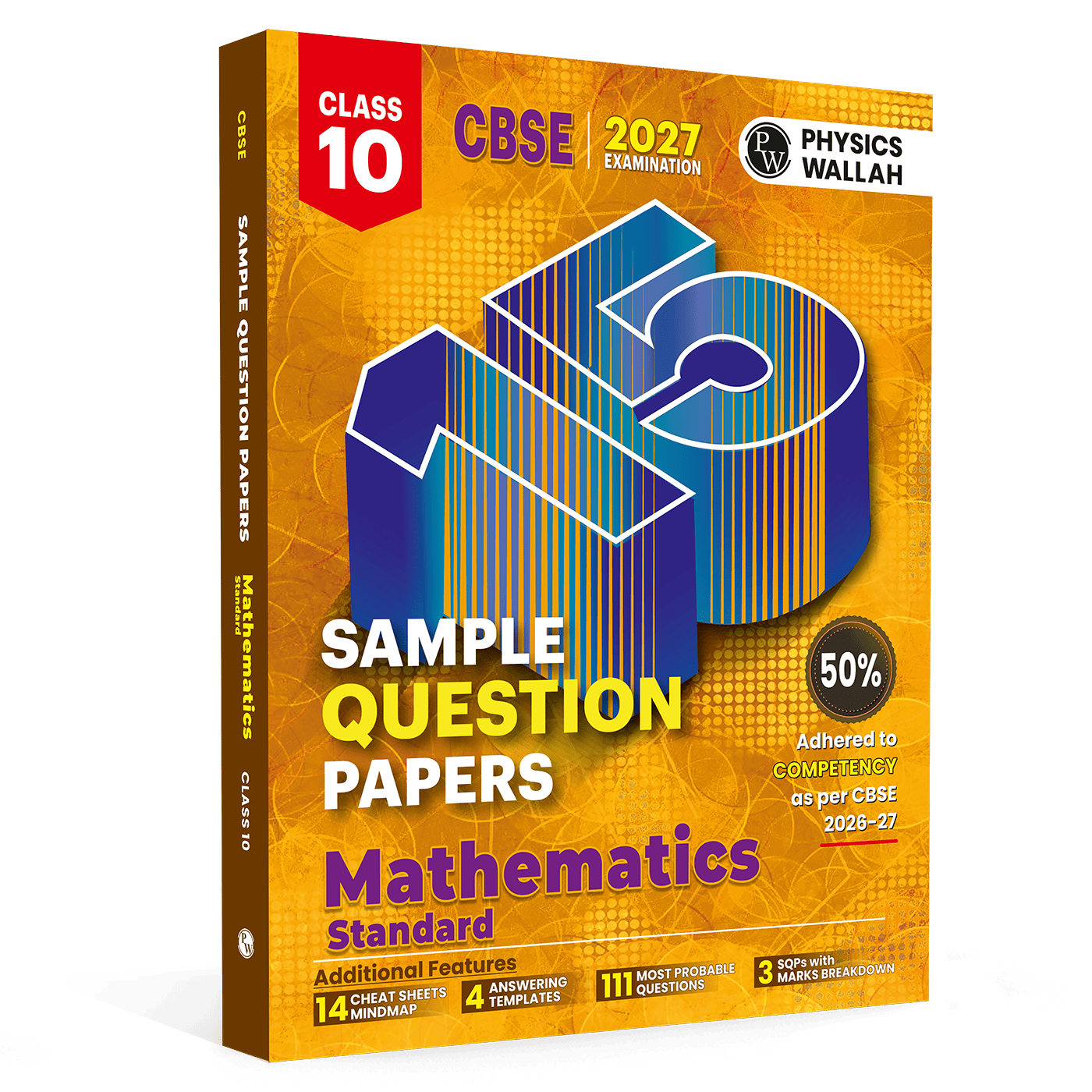
15 Board-Style Practice Papers: Solving 15 complete sample papers provides comprehensive coverage across basic, intermediate, and advanced difficulty levels.
-
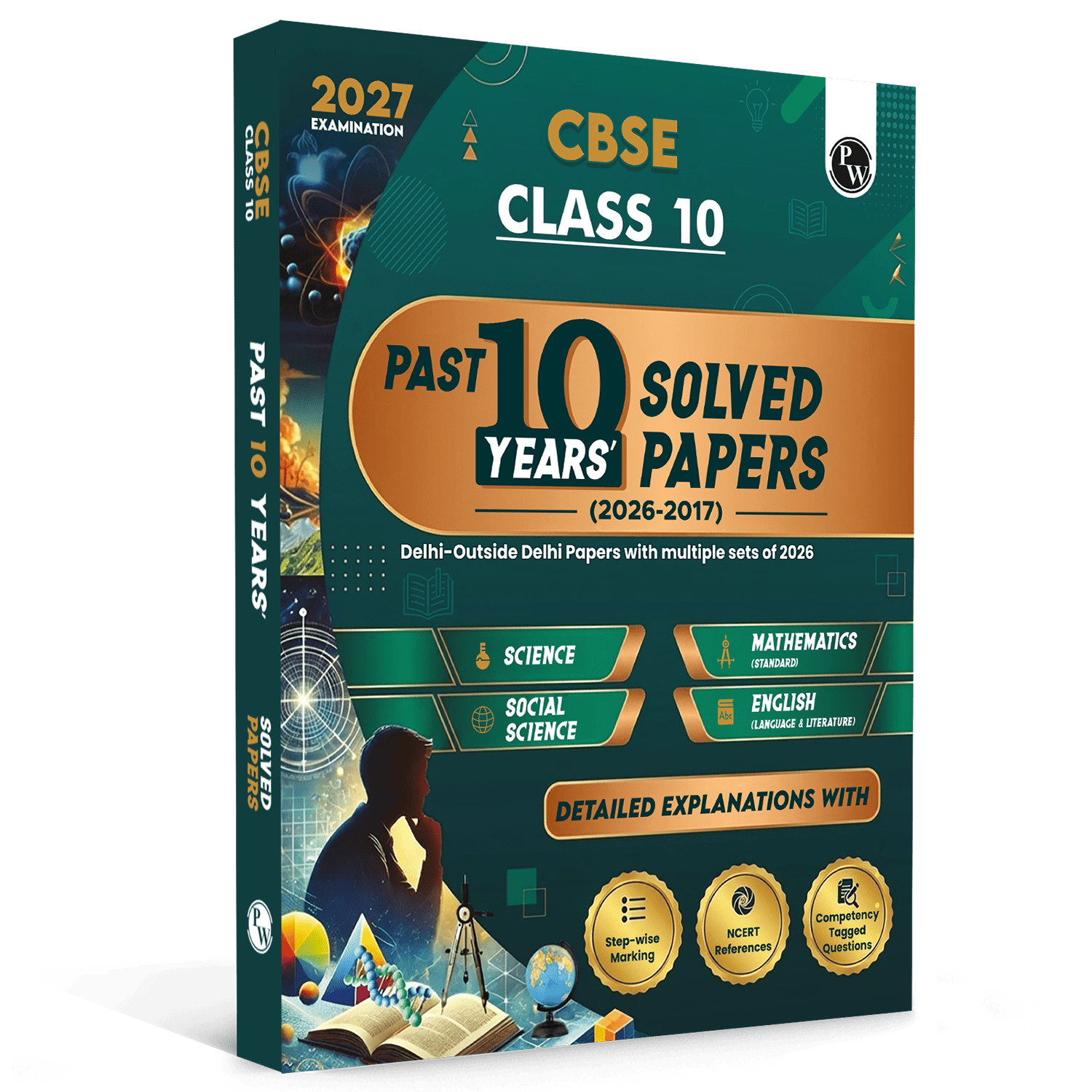
5-Year Trend Analysis: Reviewing past trends from 2024 and 2025 solved papers helps you understand how questions are framed and which topics carry higher weightage.
-
14 Cheat Sheets & 111 Most Probable Questions: Quick revision guides allow you to recap crucial formulas, core theorems, and high-priority questions right before test days.
-
CBSE Marking Scheme & Step-Wise Solutions: Detailed answer keys show exactly how marks are awarded for individual steps, helping you structure high-scoring solutions.
-
Level-Wise Difficulty & Answering Templates: Practicing across varied difficulty levels with dedicated answering booklets conditions you to handle simple MCQs and complex word problems with equal ease.
How Can CBSE Class 10 Maths Sample Papers Help You Find Difficult Questions
Self-assessment during the first term is most effective when you test yourself under realistic conditions. Solving CBSE class 10 sample papers helps you discover blind spots that standard textbook exercises often miss.
-
Exposure to Unseen Question Formats: Textbook exercises follow repetitive patterns, whereas sample papers combine multiple concepts into single, complex questions that test deep comprehension.
-
Real-Time Speed and Accuracy Tracking: Timed mock tests reveal which specific questions cause time delays, helping you identify areas where problem-solving speed drops.
-
Clear Highlighting of Weak Concepts: When you repeatedly hesitate or make calculation errors on specific question types, sample papers instantly flag those topics for revision.
-
Understanding Mark Allocation: Step-wise marking solutions reveal where you lose partial marks, helping you distinguish between minor sign errors and fundamental conceptual gaps.
How to Find Your Most Difficult Questions in CBSE Class 10 Maths Sample Papers
Finding your hardest questions requires a structured approach rather than random practice. Follow this step-by-step strategy to pinpoint problem areas during your first term study sessions:
-
Simulate Real Exam Conditions: Set a timer for 3 hours, eliminate all distractions, and solve a complete paper without checking formulas or textbook solutions.
-
Apply Self-Assessment Marking Stickers: Use dedicated marking stickers while reviewing your attempt to tag questions as Easy, Moderate, or Difficult based on your confidence level during the test.
-
Analyze the Marking Scheme: Compare your solutions with step-wise answer guides to see if your approach aligns with standard marking criteria.
-
Categorize Your Mistakes: Group incorrect answers into distinct buckets—conceptual errors, step-omission errors, or simple calculation slips.
-
Log Tricky Questions in an Error Notebook: Maintain a dedicated record of every question you failed to solve or took over 10 minutes to finish.
Which Questions Should You Mark as Difficult in CBSE Class 10 Maths Sample Papers
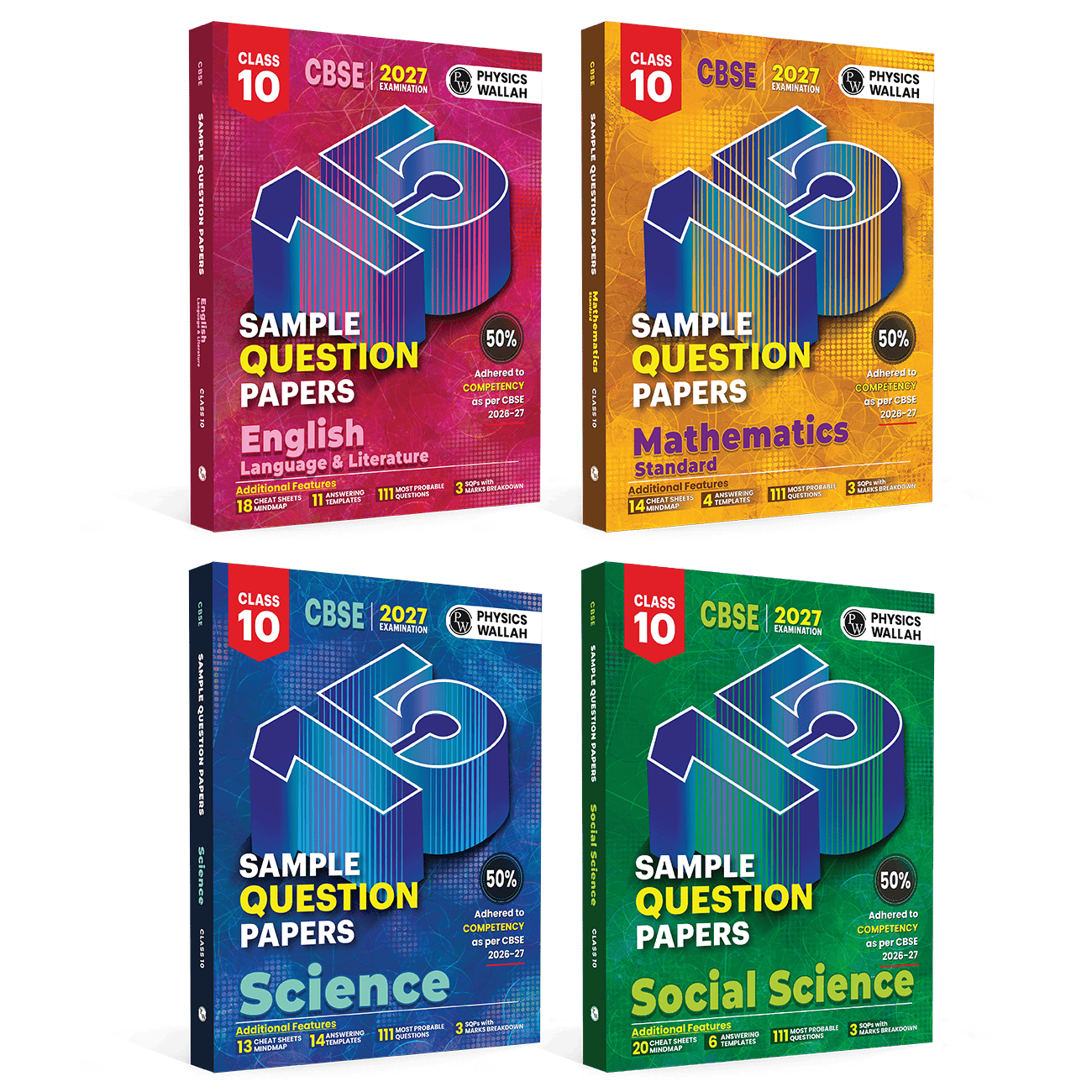
Not every question you get wrong is genuinely difficult. To target your revision effectively during the first term session, learn to distinguish between different types of challenging problems in class 10 maths sample papers. The CBSE Class 10 Sample Papers Combo of 4 Books 2027 can provide additional practice to help identify and work on different question types.
|
Question Type |
Identifying Characteristics |
Action Required |
|
Multi-Concept Word Problems |
Combines two or more chapters (e.g., Quadratic Equations mixed with Surface Areas). |
Break down the statement into smaller logical steps before setting up equations. |
|
Abstract Geometric Proofs |
Requires non-obvious constructions or precise logical deductions without direct numerical values. |
Memorize base theorems and practice step-by-step logical statements. |
|
Trigonometric Identities |
Involves complex algebraic transformations where the starting step is not immediately clear. |
Work backward from the Right-Hand Side (RHS) to find the link to the Left-Hand Side (LHS). |
|
Real-Life Case-Based Questions |
Features long contextual paragraphs that require extracting mathematical data. |
Read the final sub-question first to identify required variables quickly. |
|
High-Calculation Problems |
Involves multi-digit decimal calculations or complex square roots where error probability is high. |
Double-check intermediate step values using rough work margins. |
Study Strategy Plan with CBSE Class 10 Maths Sample Papers for Difficult Questions
Once you identify your tricky questions, follow this practical weekly study plan to resolve them during your first term preparation.
-
Phase 1: Diagnostic Attempt (Day 1)
Solve one complete paper from your class 10 maths practice papers under strict timing. Use self-assessment stickers to mark questions that caused hesitation or took too long. -
Phase 2: Error Analysis & Categorization (Day 2)
Cross-check your answers with step-wise solutions. Identify whether errors resulted from formula gaps, wrong steps, or bad time management. -
Phase 3: Targeted Concept Revision (Days 3–4)
Revisit core textbook concepts and study relevant cheat sheets for chapters where you dropped marks. Solve 10–15 targeted practice problems specifically on those weak topics. -
Phase 4: Retesting Most Probable Questions (Day 5)
Attempt high-priority problems from the 111 most probable questions set to test if your conceptual understanding has improved. -
Phase 5: Speed and Answer-Writing Refinement (Day 6)
Practice writing answers in dedicated answer booklets. Focus on neat presentation, clear step progression, and proper highlight of final units.
Tips to Handle Difficult Questions in CBSE Class 10 Maths Sample Papers
Facing a complex problem during a practice test can break your momentum. Using CBSE Class 10 Books alongside regular practice can help strengthen concepts and improve problem-solving skills. Use these field-tested tactics when tackling hard questions in a CBSE maths sample paper:
-
Use the Two-Pass Method: Solve all easy and direct questions first to secure quick marks, leaving challenging multi-step problems for the second pass.
-
Break Down Word Problems: Translate wordy problems line by line into algebraic expressions instead of attempting to solve everything at once.
-
Write Down Given Information: Even if you do not know the complete solution, writing down the given data, formulas, and rough diagrams can secure partial marking points.
-
Leverage Eliminating Options in MCQs: For difficult multiple-choice questions, substitute options back into the problem or eliminate logical impossibilities to narrow down the answer.
-
Control Your Time Allocation: Limit time to 1.5 minutes per mark. If a 4-mark question takes longer than 6 to 8 minutes, tag it as difficult, move on, and return to it later.
Common Mistakes to Avoid in CBSE Class 10 Maths Sample Papers
Avoiding frequent exam pitfalls is just as important as learning formulas. Many students lose easy marks due to poor practice habits during the first term session.
-
Ignoring Mistake 101 Insights: Neglecting common error analysis guides often leads to repeating standard calculation mistakes in successive tests.
-
Skipping Step-Wise Presentation: Writing down final answers without clear intermediate steps leads to loss of partial marks under official marking schemes.
-
Over-Relying on Formula Sheets During Mocks: Looking up formulas while attempting sample papers creates a false sense of preparation that fails during timed tests.
-
Neglecting Time Management: Spending 15–20 minutes stuck on a single difficult question leaves insufficient time for high-scoring, simple problems.
-
Failing to Review Solved Mock Papers: Simply checking final marks without reviewing step-wise solution guides prevents you from learning better, faster methods.
Read More: CBSE Class 10 Sample Papers 2026-27: Subject-Wise PDF & Solutions
CBSE Class 10 Maths Sample Papers FAQs
1. How many sample papers should I solve in the first term?
Solving 8 to 10 sample papers during the first term session builds a strong diagnostic foundation for identifying weak topics early.
2. What should I do when I cannot solve a question in a practice paper?
Mark the question as difficult, skip it temporarily, finish the rest of the paper, and then analyze the step-wise solution to understand the missed concept.
3. How do sample papers help with step-wise marking?
Official-style sample papers provide step-by-step marking schemes, showing exactly how marks are split across formulas, intermediate calculations, and final statements.
4. Are high-priority probable questions enough for difficult topics?
Probable questions offer concentrated practice on high-frequency board patterns, but combining them with full-length sample papers ensures complete exam readiness.