Class 10 Social Science Question Bank vs Notes: Which Helps More?

History dates blur together, Civics articles get mixed up, and Geography maps start looking like a complete maze. Time is short, and the syllabus feels massive at this point in the academic year.
Most students find themselves trapped in a common dilemma: should you keep reading through pages of handwritten notes, or shift your focus directly to solving practice questions? Choosing the right study tool can make all the difference to your final score.
Using a dedicated Class 10 social science question bank helps bridge the gap between simple reading and active exam execution.
Overview of the Class 10 Social Science Question Bank
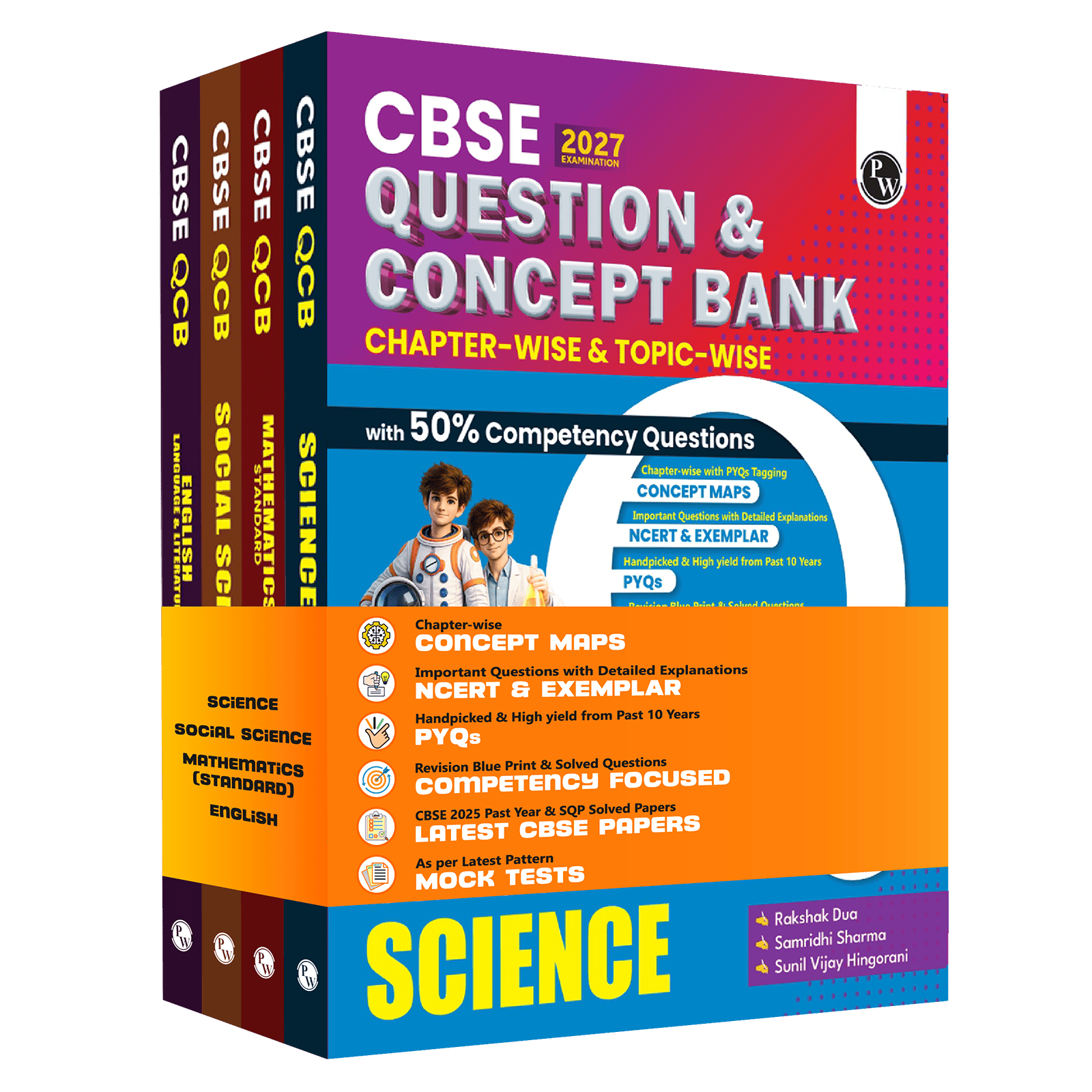
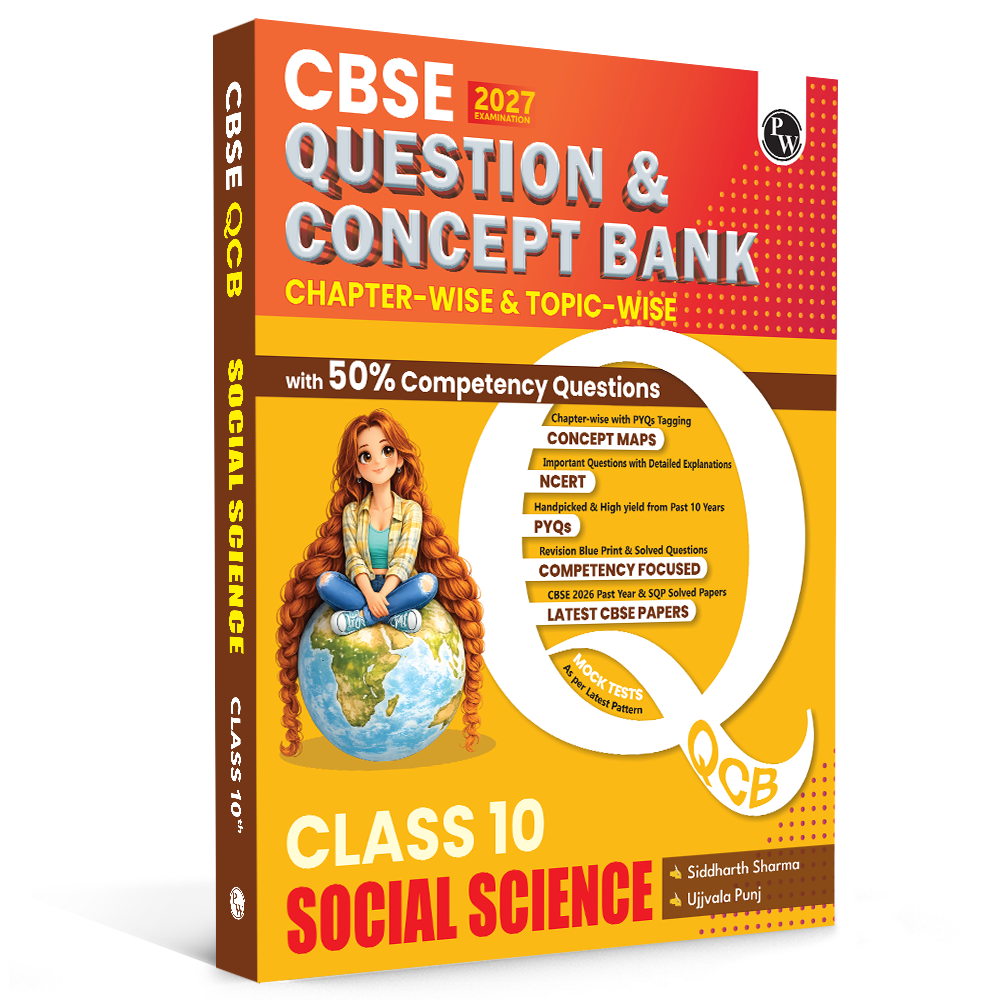
A class 10 social science question bank is a targeted practice tool designed around the latest board exam patterns and syllabus requirements. Unlike regular textbooks that explain concepts from scratch, this resource focuses entirely on how those concepts are tested in actual assessments.
Here is what you typically find inside a dedicated class 10 SST question bank:
-
CBSE Solved Papers: Fully solved sample papers and past year questions to understand marking schemes and trends.
-
Chapter-wise Concept Maps: Visual tools designed to enable quick, structured revision for better memory retention.
-
NCERT Intext and Important Questions: A balanced mix of core questions and previous years' board prompts.
-
High-Yield Questions: Handpicked, frequently asked questions from the last 10 years focusing on key exam areas.
-
Competency-Focused Blueprints: Structured blueprints and solved questions for case-study solving ability.
-
Mock Tests: Full-length tests based on the latest pattern to improve accuracy and time management.
What is the Difference Between Class 10 Social Science Question Bank and Notes?
Notes and question banks serve completely different purposes during your academic preparation. Notes help you build understanding during initial lectures, while a social science practice CBSE Class 10 book trains you to retrieve that information under exam conditions.
The key differences between these two resources are summarized below:
|
Feature |
Handwritten Class Notes |
Class 10 Social Science Question Bank |
|
Primary Focus |
Concept explanation and quick reading |
Exam preparation and targeted question practice |
|
Structure |
Paragraphs, key terms, and summaries |
Questions, concept maps, and detailed solutions |
|
Application |
High for initial learning phase |
High for mid-term testing and active revision |
|
Pattern Alignment |
General summary of textbook content |
Matches exact board exam trends and blueprints |
|
Self-Assessment |
Hard to measure exact exam readiness |
Easy to track accuracy, speed, and confidence |
Why Does a Class 10 Social Science Question Bank Give Better Exam Practice?
Reading through notes gives you a sense of familiarity, but it does not simulate the pressure of an actual test. A Class 10 social science question bank forces your brain to recall information actively, which strengthens memory retention much better than passive reading.
When you practice actual questions, you train yourself to handle different formats. Knowing the facts of the French Revolution is quite different from writing a structured 5-mark response on its global impact.
Using dedicated practice sets brings clear advantages:
-
Exposes Knowledge Gaps: You instantly realize which topics you know well and which ones need another review session.
-
Builds Exam Stamina: Solving mock tests and past year papers prevents fatigue during actual exam hours.
-
Improves Speed: Regular practice helps you gauge how much time to allocate to 1-mark versus 5-mark questions.
-
Familiarises with Marking Schemes: You learn to write exact key points that evaluators look for when scoring papers.
Can Notes Replace the Class 10 Social Science Question Bank?
Notes are brilliant for building foundational clarity, but relying on them alone during mid-term preparation has clear limitations. Notes tell you what the topic is, but they rarely show you how that topic will appear on your question paper.
Without solving dedicated sets, you might face unexpected question formats during exams. Your notes might cover the concept of Federalism clearly, but they won't teach you how to decode a complex source-based case study on power-sharing.
Here is why notes alone fall short near exam time:
-
They encourage passive reading rather than active recall under pressure.
-
They lack structured model answers mapped to official marking guidelines.
-
They do not provide systematic map-work practice or picture-based evaluation.
-
They cannot replicate the variety of competency-based questions tested in modern papers.
What is the Right Way to Combine Class 10 Social Science Question Bank with Notes?
You do not have to choose one over the other. The most effective strategy involves using both resources in a balanced routine.
Use your notes to refresh concepts quickly, and then immediately switch to practice sets to test what you just read. This dual approach ensures both strong understanding and sharp exam execution.
Follow this step-by-step approach to integrate both tools:
-
Quick Topic Review: Spend 15 minutes skimming your notes or visual concept maps for a single chapter to refresh key dates, definitions, and terms.
-
Immediate Question Solving: Open your class 10 social science question bank and attempt 10 to 15 questions from that exact chapter without looking at the solutions.
-
Check and Compare: Match your written answers with the detailed solutions provided in the book.
-
Update Notes: If you miss a crucial point or keyword, add it directly to your margin notes for quick review later.
-
Timed Practice: Dedicate weekends to solving full mock tests under strict time limits to build accuracy and confidence.
How Class 10 Social Science Question Bank Improves Answer Writing?
In Social Science, knowing the answer is only half the battle; presenting it clearly determines your final score. Many students lose marks simply because their answers are too long, poorly structured, or missing essential keywords.
Using a CBSE class 10 question bank trains you to write answers that align directly with evaluator expectations.
Key answer-writing habits developed through regular practice include:
-
Structuring Content: Learning when to use bullet points instead of long, messy paragraphs.
-
Keyword Placement: Highlighting essential historical terms, economic concepts, and constitutional articles naturally.
-
Sub-headings Usage: Breaking complex 5-mark answers into neat, readable sub-sections.
-
Direct Responses: Answering the exact core demand of the prompt without adding unnecessary filler text.
How to Do Revision Using Class 10 Social Science Question Bank?
As mid-term exams approach, sitting down to read entire chapters word-for-word is inefficient. A targeted SST revision class 10 strategy relies on solving varied question sets to cover the maximum syllabus in minimum time.
Instead of reading through text, reverse-engineer your revision process: start with questions and refer back to notes only when you get an answer wrong.
Here is an effective mid-term revision routine:
-
Day 1 - History & Civics: Solve 20 short-answer questions and 5 long-answer prompts using high-yield sets.
-
Day 2 - Geography & Economics: Focus on map-based questions, data interpretation, and case-study blueprints.
-
Day 3 - Weak Area Focus: Re-attempt all NCERT in-text and past board questions you marked incorrect during your first try.
-
Day 4 - Full Paper Attempt: Sit for a full-length mock paper using a timed environment for CBSE SST preparation.
Also Check - PW CBSE Class 10 Social Science PYQ
Mistakes to Avoid While Using Class 10 Social Science Question Bank
Having a quality question bank is helpful, but using it incorrectly can waste valuable preparation time. Avoid these common errors during your mid-term studies:
-
Reading Answers Passively: Simply reading the answers in the book without writing them down yourself reduces retention.
-
Ignoring Marking Schemes: Skipping the detailed solution analysis means you miss out on understanding how points are calculated.
-
Overlooking Competency Questions: Focusing only on simple theory questions while ignoring analytical case-based sets.
-
Delaying Practice Until the End: Waiting to finish the entire syllabus before opening your practice sets leads to last-minute panic.
-
Not Timing Yourself: Solving questions casually without keeping track of time creates speed issues during actual exams.
Read More: CBSE Class 10 Study Timetable
Class 10 Social Science Question Bank FAQs
1. Is a class 10 social science question bank enough for mid-term exam prep?
Yes, pairing a quality question bank with basic chapter reading covers all major exam patterns, sample questions, and marking schemes needed for strong scores.
2. Should I make notes if I already have a question bank?
Short notes or visual concept maps are useful for quick warm-ups, but the question bank should be your main tool for active testing.
3. How many questions should I solve daily for class 10 SST questions practice?
Solving around 15 to 20 varied class 10 SST questions daily across different formats ensures consistent practice without causing burnout.
4. How does a practice book help with long answers in a social science board exam?
It provides structured solutions that show you how to break complex concepts into clear points, proper introductions, and logical conclusions for the social science board exam.