Class 12 Physics, Chemistry & Biology Revision Strategy with PYQ
Preparing for the board exams becomes much easier when you follow a proper study plan. A good PCB revision strategy should include both theory and regular practice. One of the best ways to prepare is by solving CBSE Class 12 PCB PYQ (Previous Year Questions). These questions help you understand the real exam pattern, marking scheme, and the types of questions that are asked again and again. By practicing Class 12 PYQs, you can improve your preparation and score better marks in the board exams.
Importance of CBSE Class 12 PCB PYQ
A well-planned revision strategy is important because Physics, Chemistry, and Biology are different subjects that need different ways of studying. Biology mainly tests your understanding of concepts, diagrams, and scientific terms. Physics focuses on formulas, calculations, and problem-solving, while Chemistry requires both theory and numerical practice.
Balancing Different Study Styles
Using the same study method for all three subjects is not effective. A smart revision strategy gives enough time to each subject based on its requirements. You should set separate study sessions for Physics derivations, Chemistry reactions and formulas, and Biology diagrams and important terms. This balanced approach helps you cover the syllabus without feeling tired or stressed.
Time Management under Pressure
The CBSE board exam gives you only three hours to complete the paper. Managing your time is just as important as knowing the answers. Regular board-exam revision with Class 12 PYQs helps you learn how much time to spend on multiple-choice questions, short answers, and long-answer questions. With enough practice, you can complete the paper on time and still have a few minutes left for revision.
Identifying Learning Gaps
One of the biggest benefits of solving PCB PYQ is that it shows you your weak areas. Many students think they understand a topic until they try solving board questions. Previous year papers help you find the chapters that need more practice, giving you enough time to improve before the actual exam.
How to Revise with CBSE Class 12 PCB PYQ
Good physics, chemistry, and biology revision means giving equal attention to all three subjects. Instead of trying to study everything again at the last minute, use PCB PYQ to revise important concepts and strengthen your understanding. This method helps you remember topics better and prepares you for the real board exam.
Physics
Physics is often considered the most difficult subject because it includes many derivations and numerical problems. During your physics, chemistry, and biology revision, divide your daily practice into two parts.
Spend around 30 minutes writing important derivations like Gauss's Law, Lens Maker's Formula, and other commonly asked derivations. Then spend about one hour solving numerical questions related to these topics.
While solving questions, always write every calculation step clearly. Pay attention to units, formulas, vector signs, and proper presentation because CBSE gives step-wise marks for correct methods, even if the final answer is wrong.
Practicing PYQs regularly also helps you understand which numerical questions are repeated in different forms.
Chemistry
Chemistry becomes easier when you divide it into three parts.
For Organic Chemistry, keep a separate notebook for named reactions, reaction mechanisms, and important conversions. Write each reaction several times until you remember it without looking at your notes.
For Physical Chemistry, learn all important formulas and solve numerical questions every day. Topics like Electrochemistry and Chemical Kinetics usually include calculation-based questions, so regular practice is necessary.
For Inorganic Chemistry, focus on NCERT explanations and reasoning-based questions. Chapters like d-block and f-block elements often contain direct theory questions in the board exams. Solving CBSE Class 12 PYQ helps you understand the question pattern and identify important topics.
Biology
Biology is one of the highest-scoring subjects for PCB students. However, scoring well requires correct scientific terms and neat presentation.
During your Physics Chemistry Biology revision, practice drawing and labeling diagrams every day. Important topics like DNA replication, the human reproductive system, plant anatomy, and biotechnology diagrams are asked regularly in board exams.
When writing answers, use the exact scientific words given in the NCERT textbook instead of writing long explanations in your own language. CBSE examiners look for correct keywords, accurate diagrams, and proper labeling.
Regular practice with PYQs also helps you understand which diagrams and theory questions appear most often. This makes your board-exam revision more focused and improves your chances of scoring above 95%.
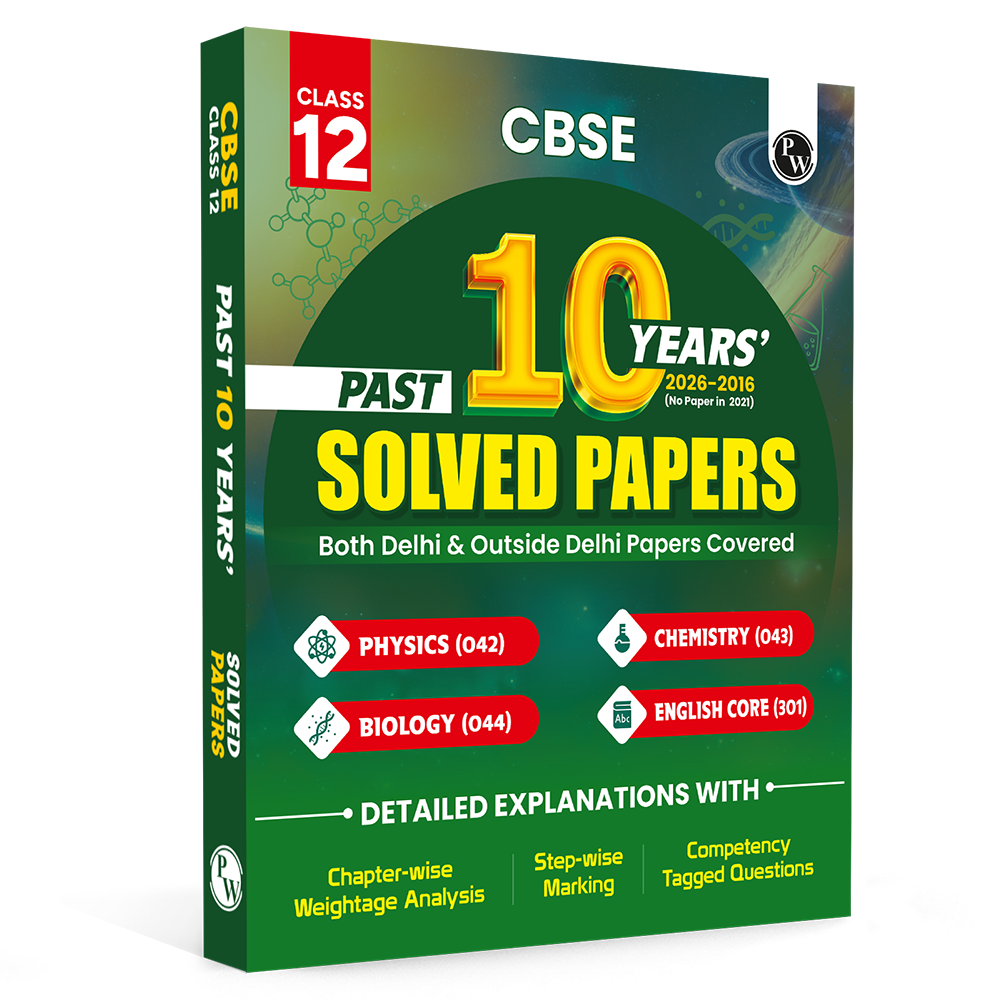
Features of CBSE Class 12 PCB PYQ
The PCB PYQ book includes several useful features that make your board-exam revision more effective and well-planned.
-
Exam Trend & Pattern Insights: Prepare smarter with chapter-wise weightage, question types, and exam trends based on the last 5 years of CBSE Class 12 board papers.
-
Authentic CBSE Papers Coverage: Practice with 20 original Delhi and 20 Outside Delhi CBSE papers for Physics, Chemistry, Biology, and English.
-
Term-wise Paper Inclusion: Strengthen your preparation with both Term-I and Term-II papers for complete subject-wise practice.
-
Step-wise Solutions with Marking Scheme: Understand answer writing with detailed step-by-step solutions prepared according to the latest CBSE marking scheme.
-
Updated Syllabus Guidance: Focus on the right topics with rationalised content clearly marked as Out of the Syllabus (OS) as per the latest CBSE guidelines.
-
Competency-based Question Analysis: Build confidence with a 10-year analysis of competency-based questions, including case-based, assertion-reason, and application-based questions.
Benefits of CBSE Class 12 PCB PYQ
Adding PCB PYQ to your daily study plan makes your preparation much more effective. Reading the textbook alone may make you feel prepared, but solving previous year questions shows how much you really know. It also helps you understand the real exam pattern and improves your confidence before the board exam.
Regular board-exam revision with PYQs helps you become familiar with the types of questions asked by CBSE. You learn which chapters are important, how questions are framed, and how to write answers according to the marking scheme. This focused chapterwise practice saves time and helps you prepare more efficiently.
|
Feature |
Benefits of Solving PYQs |
Impact on Board Exam Score |
|
Trend Analysis |
Helps you find topics that are asked again and again in the board exam. |
Lets you focus more on high-weightage chapters and avoid spending too much time on less important topics. |
|
Marking Scheme Familiarity |
Shows how marks are divided for each answer. |
Helps you write clear and complete answers that score more marks. |
|
Speed Optimization |
Gives you practice under real exam time limits. |
Helps you finish the paper early and leaves enough time for revision. |
How to Use CBSE Class 12 PCB PYQ
Many students start solving full-length sample papers before completing the syllabus. This often lowers their confidence because they cannot answer many questions. A better method is to follow practice, where you complete one chapter at a time before moving to the next.
Step 1: Complete a Chapter Theory
Begin by studying one chapter carefully from your NCERT textbook, class notes, or reference books. Make sure you understand all important concepts, formulas, diagrams, and definitions before solving questions.
Strong theory makes board-exam revision much easier later.
Step 2: Filter Relevant Past Questions
After finishing the chapter, collect all PCB PYQ questions from that chapter.
Practicing chapter-wise questions helps you understand:
-
Frequently asked questions
-
Important concepts
-
Repeated question patterns
-
High-scoring topics
This type of practice helps you revise only what matters most.
Step 3: Solve Under a Timer
Once you have collected the questions, solve them without looking at the answers.
Set a timer based on the marks.
For example:
-
2-mark question – about 2 minutes
-
3-mark question – about 5 minutes
-
5-mark question – about 8–10 minutes
Practicing under time limits improves your writing speed and prepares you for the actual board exam.
Step 4: Cross-Check with Official Marking Schemes
After completing each question, compare your answer with the official CBSE marking scheme or a trusted solution book.
Check whether you:
-
Used the correct keywords.
-
Wrote all important steps.
-
Drew proper diagrams where needed.
-
Followed the correct answer format.
This process helps you improve your answer-writing skills and avoid repeating the same mistakes.
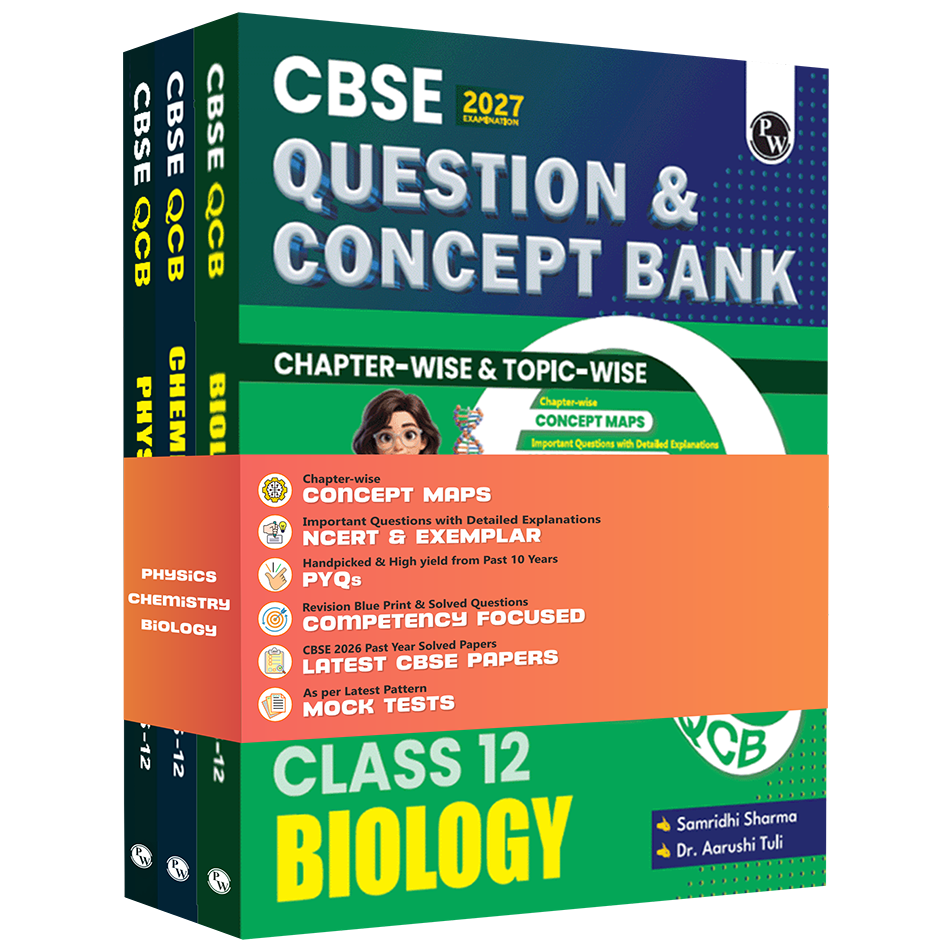
Check out: Class 12th Question Banks
Mistakes to Avoid with CBSE Class 12 PCB PYQ
Many students study hard but still miss high scores because of small mistakes during their board exam revision. Avoiding these common errors can improve your performance in Physics, Chemistry, and Biology and help you score more marks in the final exam.
Reading Solutions Instead of Writing Them
One of the biggest mistakes students make is reading the answer and thinking they have understood it. This may work for theory, but it does not help during the actual exam.
When solving CBSE PCB PYQ, always write the complete answer yourself. In Physics, solve every numerical step by step instead of only reading the solution. In Chemistry, write every reaction and calculation clearly. In Biology, practice writing complete answers along with diagrams.
Writing answers regularly improves your speed, accuracy, and confidence.
Ignoring the Weightage Distribution
Many students spend too much time studying small topics that carry very few marks while ignoring chapters with higher weightage.
Before starting your revision, check the chapter-wise weightage and focus first on topics that are asked more often in the board exam.
Neglecting the Language and Presentation
Good presentation is just as important as knowing the correct answer.
Many students lose marks because they:
-
Skip important calculation steps.
-
Draw incomplete diagrams.
-
Forget proper labels.
-
Use unclear handwriting.
-
Miss important keywords.
CBSE examiners follow the marking scheme carefully. Clean diagrams, proper headings, correct scientific terms, and step-by-step answers make it easier to score full marks.
Read More: CBSE Class 12 Question Bank PDF Download
CBSE Class 12 PCB PYQ FAQs
How many past years should I cover for the PCB PYQ revision?
For the best revision, you should practice at least the last 7 to 10 years of CBSE Class 12 PCB PYQ papers. This helps you understand repeated questions, important topics, changes in the exam pattern, and the latest CBSE question style across Physics, Chemistry, and Biology.
Can I pass the exam just by doing chapterwise practice of past papers?
It is one of the best ways to prepare, but it should not replace theory. First, study the concepts from NCERT and your class notes. Then use PYQs to test your understanding. Combining theory with previous year questions helps you answer both direct and application-based questions confidently.
How does the PCB PYQ help in Physics numericals?
Many Physics numerical questions follow similar formulas and methods every year. Solving CBSE Class 12 PCB PYQ teaches you which formulas to use, how to solve problems quickly, and how to write each step clearly. This helps you earn valuable step-wise marks even if the final answer is not completely correct.
Should I practice diagrams while solving the PCB PYQ for Biology?
Yes. Diagram practice is an important part of Physics Chemistry Biology revision. Every time you solve a Biology question that needs a diagram, draw and label it neatly. Regular practice improves your speed and helps you remember important parts during the board exam.
Where can I find authentic solved papers for the PCB PYQ?
You can find authentic CBSE Class 12 PCB PYQ books and solved papers from trusted educational publishers and official learning platforms. Choose study material that follows the latest CBSE syllabus, includes detailed step-by-step solutions, and matches the newest marking scheme. This ensures your board exam revision stays accurate and up to date.