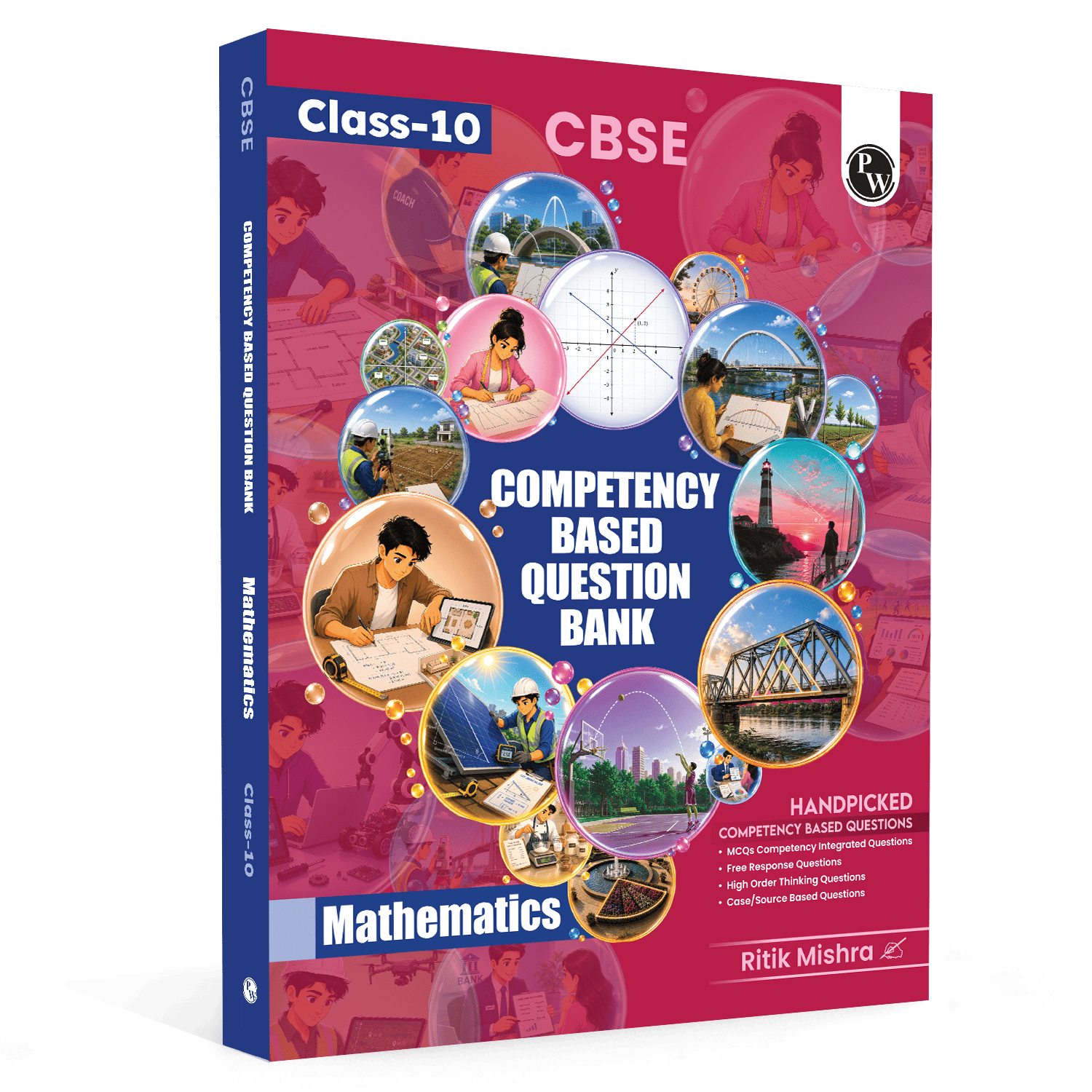
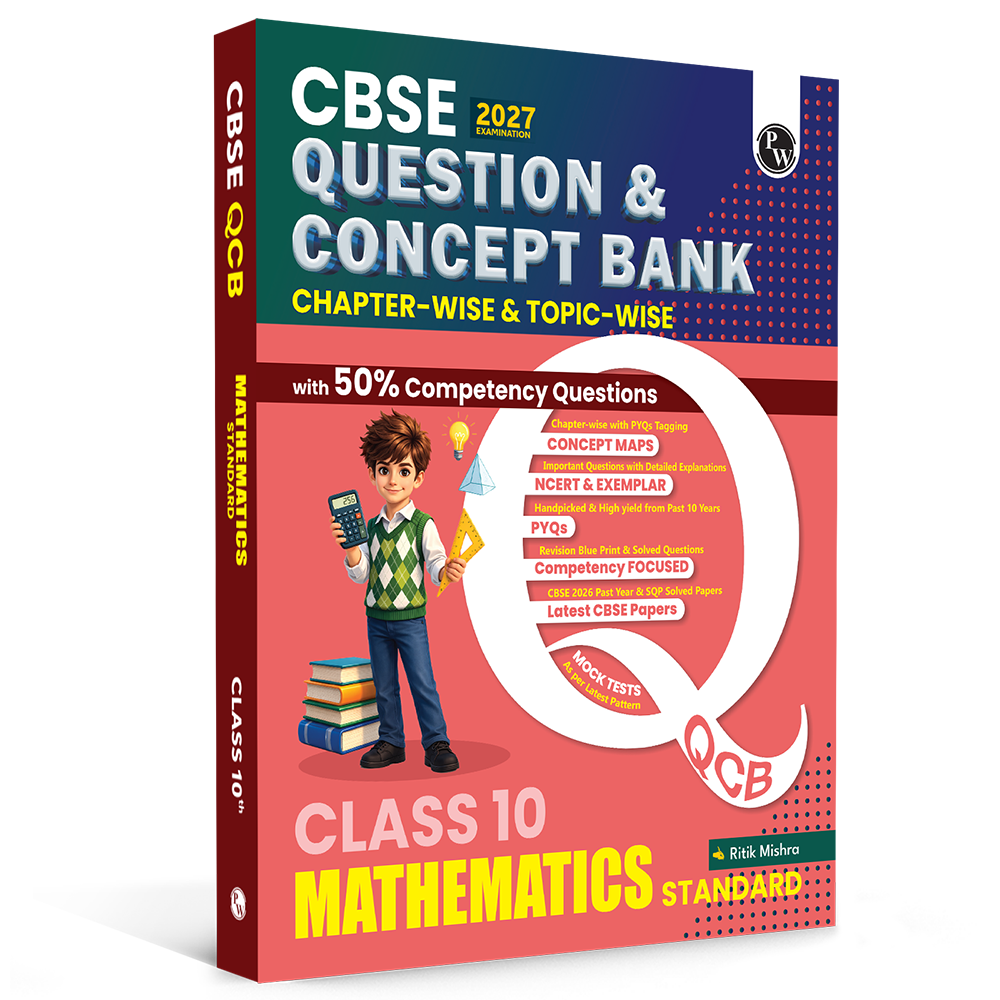
Features of PW Class 10 Maths Competency Based Question Bank
Students preparing for board exams frequently struggle to move beyond basic memorisation when encountering complex application problems on test papers. Traditional practice methods often fail to prepare learners for real-world contextual questions, leading to unnecessary stress and lost marks during examinations.
Mastering Class 10 maths competency questions requires a structured approach that bridges the gap between theoretical knowledge and practical analytical thinking.
What Is a Class 10 Maths Competency Questions Book?
The modern CBSE examination pattern places a strong emphasis on evaluating a student's ability to apply mathematical principles to practical situations. A dedicated Class 10 maths book designed around competency-based learning moves away from conventional rote learning. Instead, it focuses on testing actual comprehension, logical reasoning, and analytical skill.
This specialized practice resource aligns completely with the latest National Education Policy (NEP) 2020 guidelines. It transforms abstract mathematical concepts into relatable scenarios, ensuring students understand the practical relevance of every formula. Incorporating this structured approach into regular CBSE maths practice enables learners to handle unfamiliar, higher-order thinking problems with clarity and speed.
Features of Class 10 Maths Competency Questions Book
Selecting the right study material is critical for efficient preparation. The PW Class 10 Maths question bank incorporates several key structural features designed to elevate student performance and streamline revision:
-
Aligned with NEP 2020 Guidelines: Every question reflects the updated curriculum framework, focusing on practical application rather than basic memory retention.
-
400+ Competency-Based Questions: Offers an extensive repository of high-yield practice items tailored for board-focused preparation.
-
Step-Wise Marking Scheme: Outlines exact mark allocations for intermediate steps, helping students refine answer presentation to maximize marks.
-
Detailed Solutions: Provides step-by-step explanations for every problem to support clear self-study and error analysis.
-
Real-Life Application-Based Questions: Features contextual situations that develop analytical thinking beyond standard textbook drills.
-
Curriculum-Aligned Revision: Facilitates systematic topic-by-topic review for effective maths board preparation.
-
NCERT Exemplar Support: Integrates exemplar-level problem structures to complement core Classroom learning.
Types of Questions in Class 10 Maths Competency Questions
To achieve complete exam readiness, students must become familiar with the diverse problem formats introduced in recent board papers. The question bank categorises practice items into four distinct formats, each targeting a specific analytical skill:
-
Multiple Choice Questions (MCQs)
Multiple Choice Questions test fundamental accuracy under time constraints. These items require students to spot subtle conceptual variations rapidly without writing out extensive manual calculations.
-
Assertion & Reason
Assertion and Reason problems require a deeper level of logical evaluation. Students must determine whether two given statements are mathematically correct and judge if the provided reason directly justifies the assertion.
-
Case-Based Questions
Case-based scenarios form the core of modern competency evaluations. These questions present real-life situations, charts, or practical contexts. Students extract the relevant numerical values and apply appropriate formulas to solve sub-questions.
-
Subjective Questions
Subjective problems assess a student's capability to deliver clear, structured solutions. Practicing subjective formats builds precision in writing logical mathematical proofs and applying formulaic steps correctly.
How Class 10 Maths Competency Questions Help Build Concepts?
Relying solely on formula memorisation leaves students vulnerable when board exams introduce unfamiliar problem structures. Practicing Class 10 maths competency questions fundamentally changes how learners process mathematical information.
By working through scenario-driven items, students learn to strip away contextual text and extract core mathematical equations quickly.
Using quality PW Class 10 books encourages analytical thinking by requiring students to justify each calculation step.
Over time, this practice trains the brain to recognize underlying patterns across different chapters, such as applying trigonometry to real-world heights or using statistics for data interpretation. As a result, students develop lasting conceptual clarity that extends well beyond standard exam requirements.
Practice Plan with Class 10 Maths Competency Questions
Achieving top results requires a deliberate, step-by-step strategy. Below is a structured implementation model designed to maximize your revision efforts:
-
Phase 1: Conceptual Foundation
-
Review core definitions and standard formulas from your primary textbook.
-
Solve introductory practice problems to ensure basic calculation accuracy.
-
Phase 2: Targeted Competency Drills
-
Transition to solving Class 10 maths competency questions topic by topic.
-
Focus heavily on MCQs and Assertion & Reason problems to test conceptual precision.
-
Phase 3: Real-World Application Practice
-
Work through case-based scenarios under timed conditions.
-
Practice extracting numerical data from complex contextual word problems.
-
Phase 4: Evaluation and Presentation Refinement
-
Cross-check all written answers against the provided step-wise marking scheme.
-
Maintain an error log to record missteps and review them weekly.
How to Use Class 10 Maths Competency Questions for Board Preparation?
To gain maximum value from your CBSE Class 10 Question Bank, adopt an active problem-solving routine rather than reading through worked solutions passively:
-
Attempt Problems Independently: Always work through questions fully on paper before referring to the answer section.
-
Analyze the Step-Wise Marking Scheme: Study where marks are awarded for intermediate steps, formula statements, and final units.
-
Integrate NCERT Exemplar Problems: Use exemplar support features to tackle high-difficulty questions systematically.
-
Simulate Test Conditions: Set a timer when completing case-based sets to build real exam speed and stamina.
-
Review Solutions Thoroughly: Compare your method with detailed solutions to discover shorter, more effective calculation paths.
Tips to Score Better with Class 10 Maths Competency Questions
Executing an effective exam strategy is just as crucial as mastering the underlying mathematics. Implement these practical exam techniques to boost your performance:
-
Read the Scenario Thoroughly: Spend adequate time understanding the context in case-based questions before attempting calculations.
-
Explicitly State Formulas: Write down general algebraic or geometric formulas clearly before substituting numerical values.
-
Maintain Clean Step Formatting: Lay out each step of your calculation logically so examiners can easily follow your methodology.
-
Verify Units and Final Values: Double-check that final numerical answers include appropriate measurement units like square centimeters, meters, or ratios.
-
Manage Exam Time Wisely: Allocate specific time slots for MCQs, case-based scenarios, and long-form subjective questions to avoid rushing near the end.
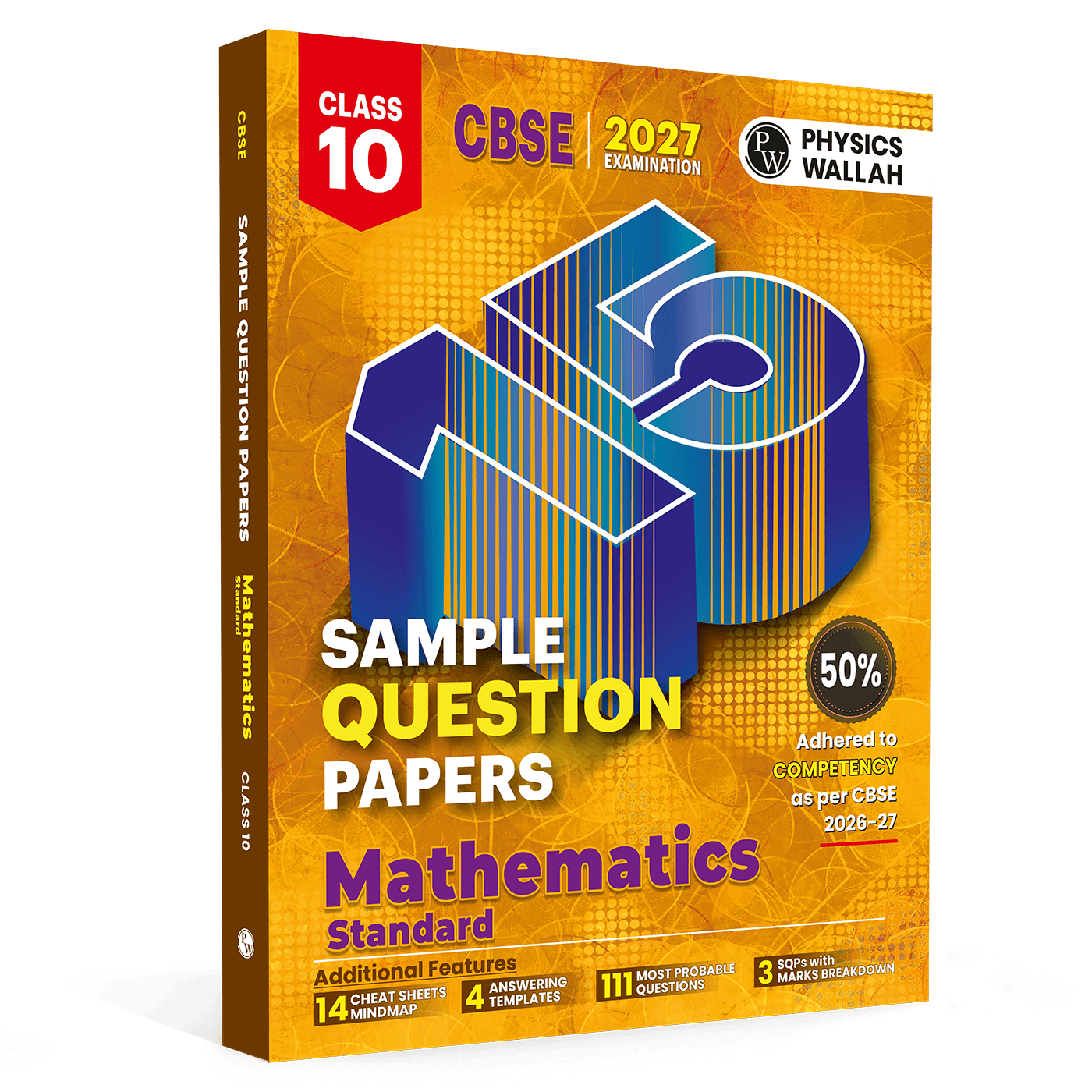
Also Check - CBSE Class 10th Sample Papers
Common Mistakes to Avoid While Solving Class 10 Maths Competency Questions
Avoiding common preparation errors can significantly improve your overall score. Keep these common missteps in mind during your practice sessions:
-
Skipping the Contextual Text: Rushing through scenario descriptions often leads to missing essential numerical constraints hidden within the text.
-
Neglecting Intermediate Steps: Omitting formula statements or intermediate calculations costs valuable marks under a step-wise marking scheme.
-
Memorising Solutions: Attempting to memorise problem steps instead of understanding core principles leads to confusion when numbers or contexts change.
-
Misinterpreting Assertion & Reason Items: Selecting options without carefully verifying if the reason directly explains the assertion results in avoidable errors.
-
Poor Time Allocation: Spending an excessive amount of time on tricky initial MCQs leaves insufficient time for lengthy case-based sections.
Read More: Important Questions for CBSE Class 10 Maths
Class 10 Maths Competency Questions FAQs
What are Class 10 maths competency questions?
They are application-focused practice problems designed to evaluate a student's analytical skills, real-world data extraction capabilities, and conceptual understanding rather than simple formula memory.
How many questions are included in the competency question bank?
The resource contains over 400 practice questions spanning MCQs, Assertion & Reason, Case-Based, and Subjective formats.
Does this practice book follow the latest CBSE exam pattern?
Yes, all questions and solutions align fully with NEP 2020 guidelines and current CBSE board exam specifications.
How do detailed solutions help in board preparation?
Detailed solutions offer step-wise marking guidance, allowing students to check their answer presentation, spot calculation errors, and learn correct step structures.
Can competency questions assist with NCERT exemplar practice?
Yes, the material incorporates NCERT Exemplar support, helping students connect fundamental textbook theory with advanced analytical problems.