How 10-Year SST PYQ Book Reveals Repeated Board Exam Patterns
Facing the Social Science board examination often feels like an uphill struggle because of the vast volume of historical timelines, geographical data, and political concepts. When revision time approaches, the sheer density of the syllabus can cause serious panic, leaving you unsure of where to direct your focus.
To break this stressful cycle, you need a highly strategic study companion. Integrating a trusted CBSE class 10 SST PYQ book into your routine changes your entire approach, allowing you to easily identify exactly which questions the board repeats year after year.
What is CBSE Class 10 SST PYQ?
The term CBSE class 10 SST PYQ represents the structured compilation of previous year questions from past Central Board of Secondary Education examinations. This particular collection spans a complete ten-year period from 2016 to 2026, offering an authentic look at what external examiners actually value.
A standard school textbook provides you with raw information, but a dedicated SST PYQ book presents that same information through the eyes of an examiner. It systematically translates massive theory chapters into clear, answerable problems, demonstrating the precise depth of conceptual understanding you need to display on exam day.
Features of CBSE Class 10 SST PYQ
A modern CBSE Class 10 previous year paper book is not just a simple bundle of old question papers. It is an expertly engineered learning tool designed according to the latest CBSE syllabus, exam pattern, and official marking schemes. The following specific elements make it an essential asset for your Class 10 SST preparation journey:
1. Chapter-Wise and Topic-Wise Segregation
Instead of forcing you to solve a full three-hour paper before you have even finished your school syllabus, questions are broken down by chapter and individual topics. This means after finishing a single topic in class, you can immediately open your book and solve every question asked on that exact area over the last ten years.
2. Smart Exam Analysis and Trends
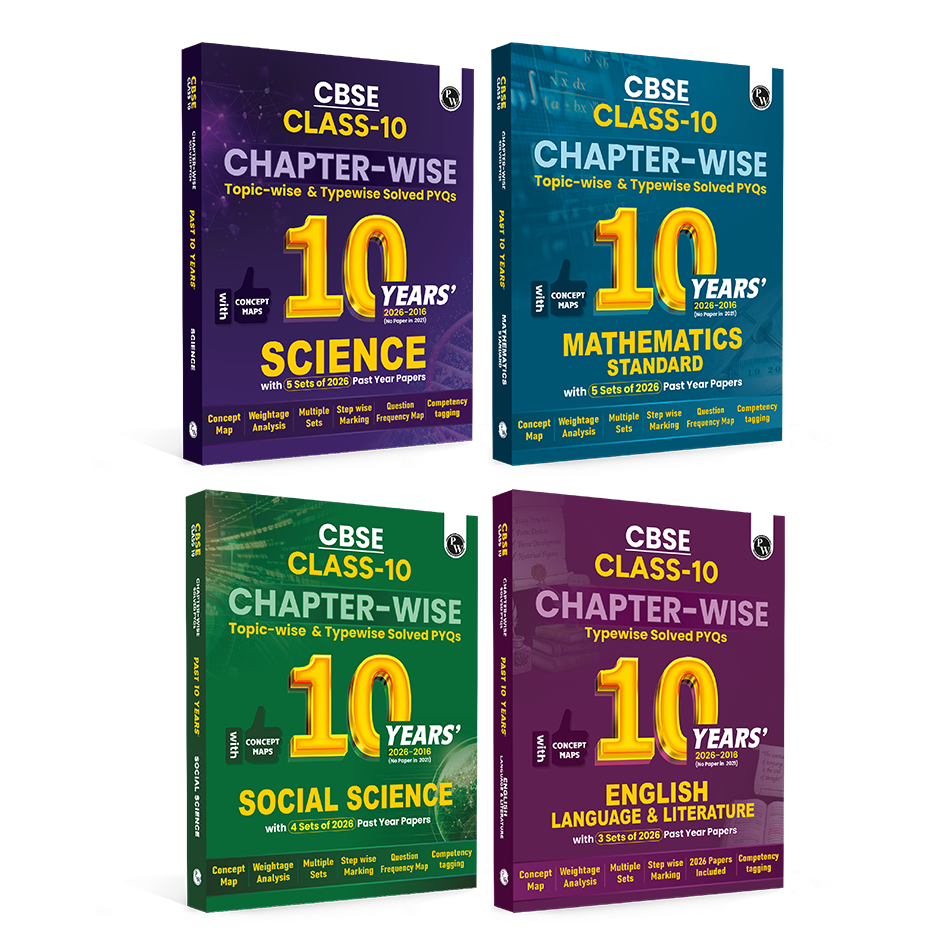
The book includes a complete exam-oriented trend analysis that tracks how question typologies change over time. Refer to the internal documentation in see how this resource features a smart exam analysis, question frequency maps, and chapter-wise weightage charts to guide your daily focus.
3. Visual Concept Maps
Before diving into the questions, the resource provides visual concept maps for lightning-fast revision. These maps allow you to revise an entire chapter’s definitions, timelines, and flowcharts in just a couple of minutes, keeping the core concepts fresh in your mind.
4. Bloom's Taxonomy Classification
To prepare you for modern evaluation methods, questions are categorized across six cognitive learning levels according to Bloom's Taxonomy Classification. This specific setup helps strengthen your analytical thinking and conceptual clarity.
5. Detailed Solutions with NCERT References
Every question comes with step-by-step solutions that are directly linked back to NCERT concepts. This incorporates step-wise marking explanations, showing you the exact phrases and keywords required to gain maximum marks from board checkers.
Why is CBSE Class 10 SST PYQ the Best Resource for Board Preparation?
When tackling a highly theoretical subject like Social Science, passive reading is rarely enough to secure top marks. Utilizing social science previous year papers is widely considered the ultimate strategy for students who want to clear their exams with genuine distinction.
-
Reveals the Real Blueprint: Textbooks do not highlight which paragraphs are critical, but past papers show you exactly where the board focuses its attention.
-
Improves Answer Structures: Seeing real exam questions helps you practice dividing your thoughts into clean, point-wise answers that match official checking standards.
-
Eliminates Exam Fear: Solving authentic board questions removes the mystery of the assessment, making the final paper look entirely familiar rather than intimidating.
-
Builds Time Management: Practising with past papers teaches you how much time to allocate to a short objective question versus a long descriptive essay.
Which Topics Appear Most Frequently in CBSE Class 10 SST PYQ?
A close look at the CBSE Class 10 SST PYQ trends proves that the board relies heavily on specific core topics. While the exact wording of a question might change slightly, the central historical events or economic principles remain identical across the years.
1. History Constants
In History, the 'Nationalism in India' chapter is a massive goldmine for marks. Questions regarding the Non-Cooperation Movement, the Civil Disobedience Movement, and the features of Satyagraha appear in almost every single set of board papers.
2. Geography Essentials
Geography papers rely heavily on resource identification and map-pointing work. Topics covering agricultural seasons, water scarcity, and the distribution of minerals are consistently tested using direct descriptive questions or identification keys.
3. Political Science Focus
Power-sharing mechanisms and the structural differences between federal and unitary systems are highly cyclical. The board regularly uses case studies or direct five-mark questions to test these specific themes.
4. Economics Priorities
The sectors of the Indian economy and the differences between formal and informal sources of credit dominate the Economics section. Examiners consistently ask students to compare data sets or explain why formal credit needs to expand in rural areas.
|
Social Science Subject |
High-Frequency Repeated Themes |
Typology of Questions |
|
History |
Nationalism in India, Unification of Italy/Germany |
Long descriptive, map location |
|
Geography |
Agriculture, Water Resources, Minerals |
Map pointing, data identification |
|
Political Science |
Power Sharing, Federalism, Outcomes of Democracy |
Case-based, analytical situations |
|
Economics |
Sectors of Economy, Money and Credit, Development |
Distinctions, statement analysis |
How to Identify Question Trends Using CBSE Class 10 SST PYQ?
Spotting board exam trends does not require complex statistics; it just requires a structured observation process while using CBSE Class 10 books.
-
Look for Language Shifts: Notice how a direct question changes over the years into a statement-based question that requires critical analysis.
-
Track the Three-Year Pattern: Concepts that appeared three or four years ago often find their way back into the current sets with small updates to their case details.
-
Isolate Competency-Based Prompts: Pay attention to how the board introduces assertion-reasoning and image-based evaluation questions for high-weightage chapters.
-
Consolidate Map Work: Keep a separate list of every map question asked from 2016 to 2026. You will notice that the locations chosen for ports, dams, and nationalist movements are nearly identical every single year.
When to Start Solving CBSE Class 10 SST PYQ?
A common error is saving past papers for the final month before the main exams. The ideal time to begin using your CBSE class 10 SST PYQ book is during your mid-term studies.
Integrating past questions into your weekly schedule allows you to learn a topic and instantly test your knowledge against actual board standards. This gradual method builds long-term confidence and prevents the chaotic, stressful cramming sessions that happen right before the board exams begin.
Study Strategy Plan Using CBSE Class 10 SST PYQ
To make the most of your ten-year solved collection, you need a disciplined operational plan rather than randomly browsing through pages.
-
Study the NCERT Chapter: Start by reading your base textbook to understand the general story, key terms, and data points.
-
Review the Visual Concept Maps: Use the quick concept maps in your past year book to lock down the core hierarchy of the chapter.
-
Analyze Question Frequency: Look at the frequency trackers shown in to see which parts of the chapter are tested most heavily.
-
Practice Active Writing: Select a three-mark or five-mark question from the book and write out your full answer by hand without looking at the solution.
-
Evaluate Against the Marking Scheme: Open the step-by-step detailed solutions to see if you included the essential NCERT keywords and correct headers. Adjust your answers based on what you find missing.
Common Mistake to Avoid While Using CBSE Class 10 SST PYQ
Even with the best tools, incorrect preparation habits can stop you from achieving a perfect score. Keep these common traps in mind during your study journey:
-
Treating Solutions Like Reading Material: Passively reading through solved answers will give you a false sense of security. You must write out answers to train your brain to retrieve keywords under real exam pressure.
-
Ignoring the Latest Typology Changes: Relying on old, unsegregated question papers can leave you unprepared for modern competency-based formats. Make sure you use a modern resource that includes type-wise segregation
-
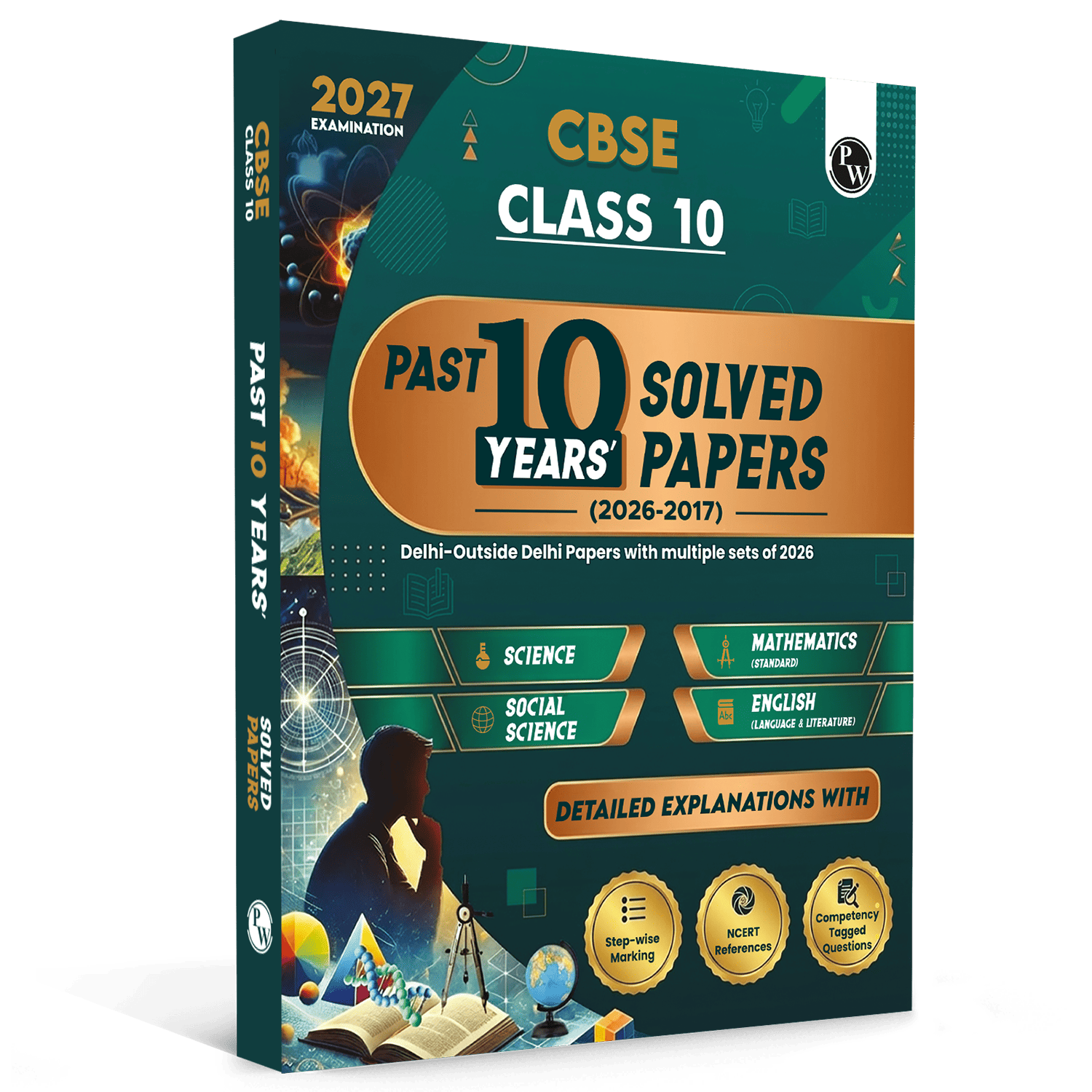
Skipping Official Sample Question Papers: Past papers tell you what happened in previous years, but the official sample papers show you exactly what the board expects this year. Ensure you practice the official sample papers included in the book combo to fine-tune your overall exam speed.
Read More: CBSE Class 10 Social Science Notes PDF Free Download, Benefits, Importance
CBSE Class 10 SST PYQ book FAQs
Q1: How can a CBSE Class 10 SST PYQ book help me spot repeated questions?
A1: The book groups past exam papers into specific chapters and topics, making it easy to see when identical concepts or themes show up year after year.
Q2: When should I start using social science previous year papers in my schedule?
A2: It is best to start using them during your mid-term studies alongside your regular lessons so you can master each chapter step-by-step.
Q3: Why are the detailed solutions in a structured book better than standard notes?
A3: The solutions are written to match the official board marking schemes and are mapped directly back to NCERT concepts, showing you the exact words needed to score full marks.