How to Revise Calculus Using a Class 12 Maths Question Bank?
Calculus is very important for board exams and needs consistent practice and systematic revision. Learn step-by-step solutions and enhance problem solving speed to obtain maximum marks with the help of a specific Class 12 Maths question bank to solve weak concepts.
How Class 12 Question Bank Makes Calculus Revision Easier
Calculus is the backbone of senior secondary mathematics. It is a substantial part of the syllabus of the board examination. Many students do not fail because they lack theoretical understanding, but because they are unable to apply the concepts efficiently under the examination settings. For topics such as Continuity, Differentiability, Applications of Derivatives, Integrals, and Differential Equations, you will need different techniques and conceptual clarity. Students who do not have systematic practice tend to spend more time on fundamental issues and miss high weightage questions.
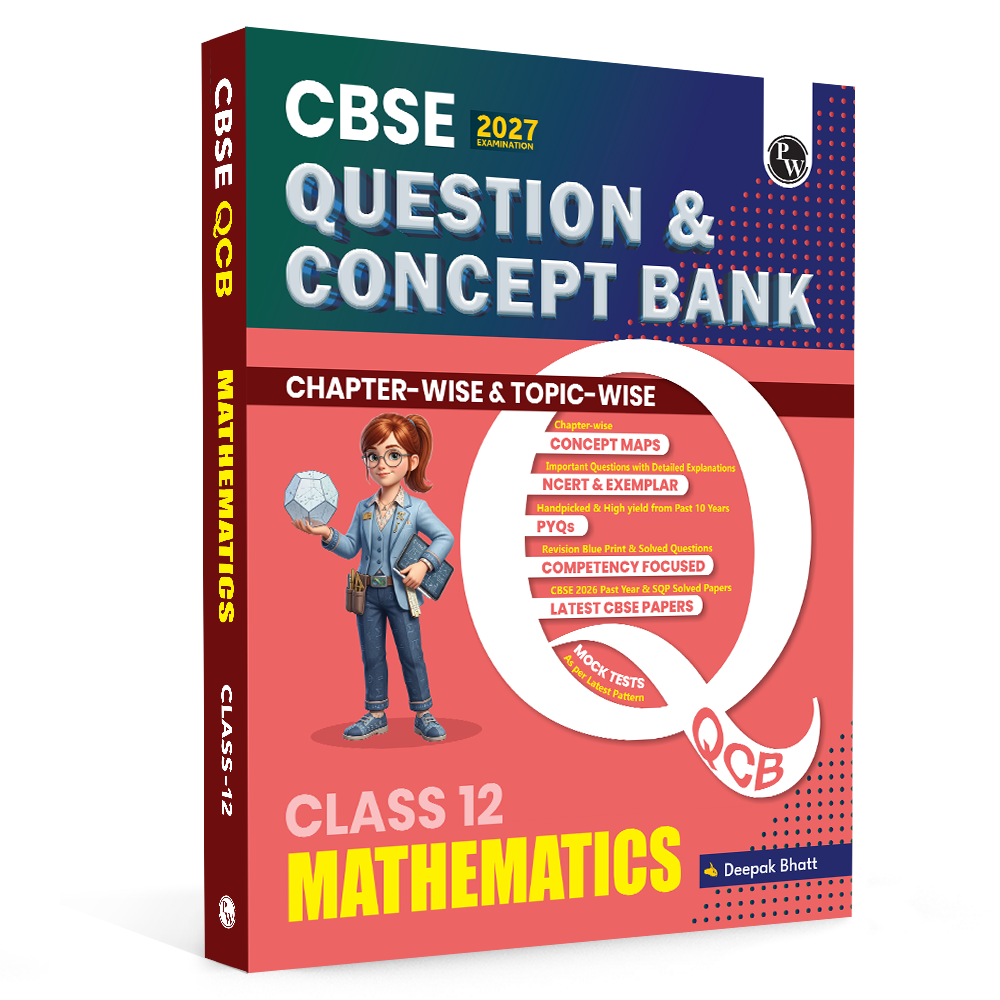
A good Class 12 Maths question bank fixes this problem with structured targeted practice. It bridges the gap between reading textbook theory and tackling difficult problems at the board level. With structured practice materials, students learn how formulas are converted into a step-wise mark distribution, which makes them more accurate during the final tests.
Why Use Class 12 Maths Question Bank for Calculus Practice?
Preparing for board exams requires more than just re-reading class notes. A well-designed class 12 question bank gives students a realistic view of the exam environment and question patterns.
Structured Coverage of High-Weightage Chapters
Calculus is not a single topic; it is a interconnected chain of sub-disciplines. A dedicated Maths practice book breaks down these topics logically:
-
Continuity and Differentiability: Focuses on foundational limits, continuous functions, and basic derivative rules.
-
Applications of Derivatives (AOD): Targets rate of change, increasing/decreasing functions, tangents, normals, and maxima/minima problems.
-
Integrals (Indefinite and Definite): Covers substitution methods, integration by parts, partial fractions, and properties of definite integrals.
-
Applications of Integrals: Concentrates on finding areas bounded by curves, lines, and standard shapes.
-
Differential Equations: Examines order, degree, variable separable methods, homogeneous equations, and linear differential equations.
Using chapter-wise Maths questions ensures that students do not leave gaps in their syllabus coverage.
Exposure to Diverse Question Patterns
Board papers test students across various difficulty levels and formats. A quality question set includes:
-
Multiple Choice Questions (MCQs): Test rapid recall and quick application of formulas.
-
Assertion-Reasoning Questions: Evaluate deep conceptual understanding and logical connections.
-
Short Answer Questions (2 & 3 Marks): Require clear, concise step-by-step derivations.
-
Long Answer Questions (5 Marks): Demand complete, methodical problem-solving with proper mathematical notation.
-
Case-Based Questions: Measure real-world applications of calculus concepts.
How Class 12 Maths Question Bank Covers Every Calculus Chapter
To maximise the benefits of your revision, follow a structured framework rather than solving questions randomly. Along with the question bank, use CBSE Class 12 Books to strengthen concepts, revise important formulas, and understand each chapter in greater depth.
Combining CBSE Class 12 Books with regular question-bank practice helps you build conceptual clarity, identify weak areas, and improve your confidence across the Calculus chapters.
|
Revision Phase |
Primary Objective |
Recommended Action |
Time Allocation |
|
Phase 1: Concept Audit |
Identify formula and rule gaps |
Review core definitions, standard derivatives, and integration formulas |
15% of revision time |
|
Phase 2: Guided Practice |
Master basic to intermediate problems |
Work through solved examples in the question collection |
35% of revision time |
|
Phase 3: Timed Testing |
Build speed and accuracy |
Solve long-answer questions without external assistance |
30% of revision time |
|
Phase 4: Error Analysis |
Eliminate repeat mistakes |
Maintain an error notebook to review incorrect steps |
20% of revision time |
Phase 1: Reviewing Core Formulas and Definitions
Before jumping into complex integration or application problems, spend time refreshing essential formulas. Create a summary sheet containing:
-
Standard derivatives and standard integrals
-
Product rule, quotient rule, and chain rule formulas
-
Trigonometric identities frequently used in integration
-
Properties of definite integrals
-
Standard differential equation formats
Having these formulas at your fingertips prevents silly errors and saves precious time during timed tests.
Phase 2: Solving Chapter-Wise Questions Methodically
When tackling calculus practice, start with fundamental problems before moving to complex, multi-step questions.
-
Start with Solved Examples: Study the marking scheme and step distribution provided in your reference material. Pay attention to how final statements are formatted.
-
Move to Unsolved Problems: Solve questions independently without looking at solution keys immediately.
-
Verify Each Step: Check not just the final numerical answer, but every intermediate algebraic step.
-
Highlight Key Concepts: Mark questions that use unique tricks or non-standard substitutions for quick re-examination later.
Right Revision Tips with Class 12 Question Bank
Good grades in Calculus come from smart study practices. Simply going through pages of equations is rarely enough. To make revision more effective, use a structured approach that combines concept review, regular question practice, and self-assessment.
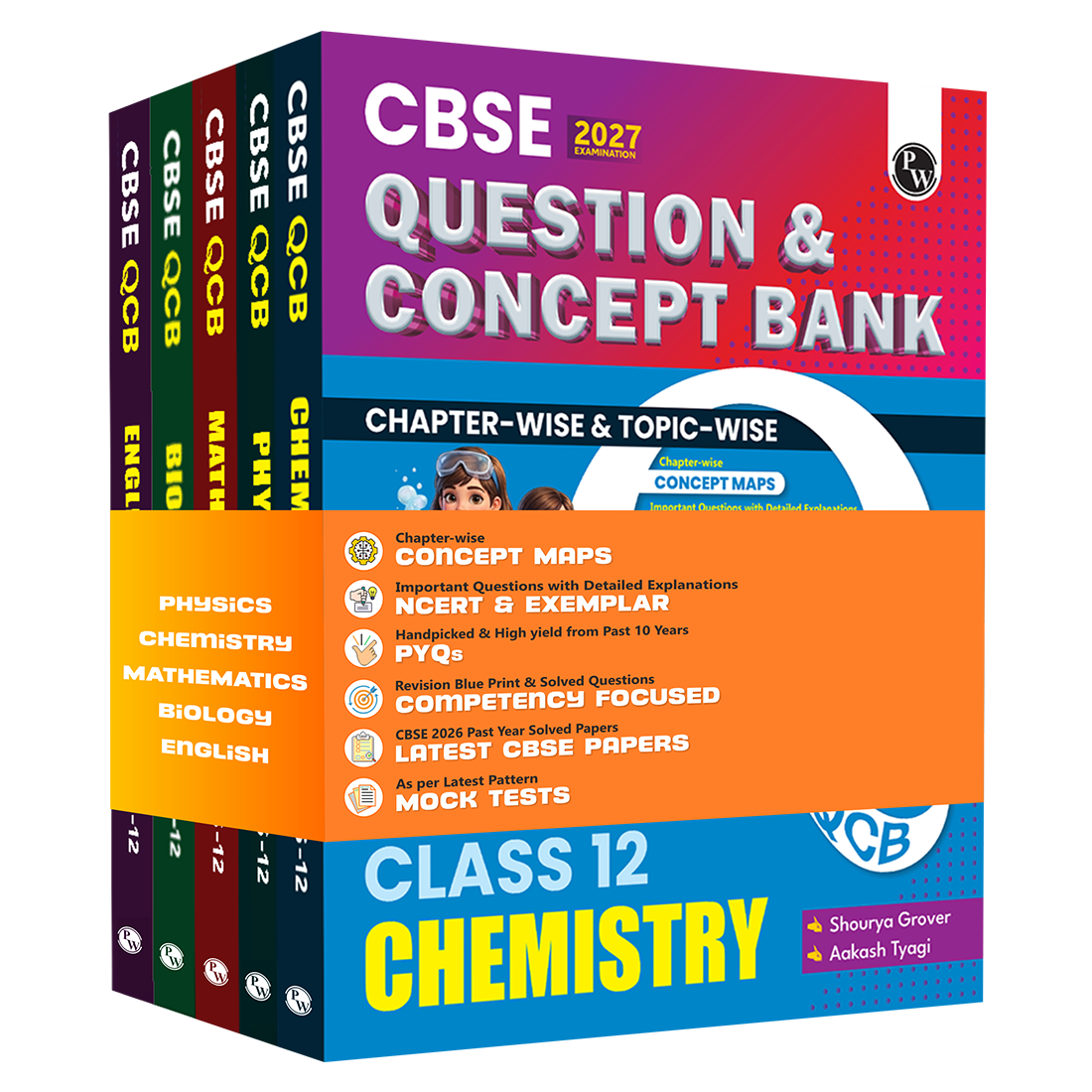
The CBSE Class 12 Question Bank Set of 5 can support this process by providing chapter-wise questions and practice material. Use it alongside your textbook to revise concepts, practise different question types, identify weak areas, and improve your preparation for the CBSE Class 12 examinations.
Focus on High-Yield Topics First
Certain sections of calculus consistently carry higher weightage or predictable question styles in board examinations:
-
Maxima and Minima Word Problems: These 5-mark questions require setting up a single-variable function, taking derivatives, finding critical points, and verifying second derivatives.
-
Definite Integral Properties: Questions leveraging symmetry and standard properties frequently appear in short and long-answer sections.
-
Area Bounded by Curves: Sketching accurate rough diagrams is critical to obtaining full marks in these questions.
-
Linear Differential Equations: Identifying integrating factors correctly guarantees easy marks.
Build an Error Log for Technical Mistakes
Keep a dedicated notebook to record every error made during revision. Categorize your mistakes into three main buckets:
-
Conceptual Errors: Misunderstanding a rule or applying an invalid property (e.g., distributing integrals across multiplication).
-
Calculation Errors: Making basic arithmetic or sign errors during long algebraic manipulations.
-
Omission Errors: Forgetting to add the constant of integration (C), not checking domain limitations or not sketching rough designs.
By looking at this mistake log weekly, you will not be making the same mistakes while preparing for the final board.
How to Practice Mock Tests with Class 12 Maths Question Bank
Speed and precision are equally important in board exams. Many capable students fail to finish their papers because they spend excessive time on long-answer calculus questions.
Simulating Exam Conditions
To build stamina and improve time management:
-
Set a Timer: Allocate approximately 1.5 to 2 minutes per mark (e.g., 10 minutes for a 5-mark long question).
-
Work Without Notes: Keep formula sheets away during mock tests to simulate real exam pressure.
-
Neat presentation: Draw clear diagrams, indicate the assumed variables, and mention the formulas used in each step unambiguously.
-
Strictly Evaluate: Grade your paper using the official marking schemes, deducting marks for missing intermediate phases.
Utilizing Previous Years' Questions (PYQs)
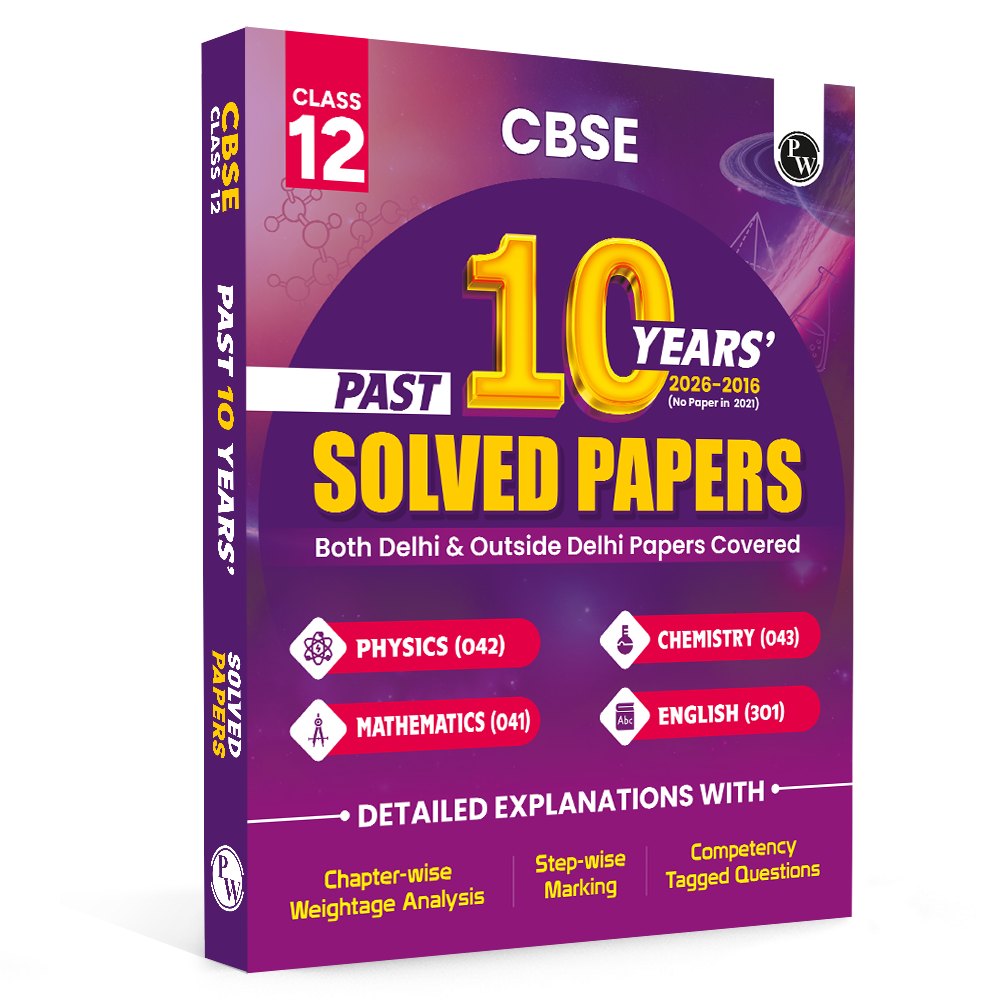
CBSE class 12 previous year questions reveal reoccurring themes and examiner preferences. The chapters in the extensive question bank contain the questions from the original past years’ question papers. Answering these questions increases familiarity with the precise wording of the questions and the criteria for evaluation.
Read More: CBSE Class 12 Maths Question Bank - Downloaded PDF
Class 12 Maths Question Bank FAQs
How does a class 12 maths question bank help in calculus revision?
A systematic chapter-wise practice question bank for class 12 math is available, categorized by difficulty and format. It helps students in mastering step-wise problem solving, marking schemes and targeting weak areas during revision.
What is the best way to start practice for board exams?
Begin by revising fundamental formulas, derivatives, and integration rules. Then, work through chapter-wise Maths questions, starting with solved examples to learn correct step presentation before tackling unsolved problems under timed conditions.
How much time should be dedicated daily to Maths board preparation?
Students should spend 1.5 to 2 hours daily on Maths board preparation. Dedicating focused time to solving varied calculus problems ensures consistent progress and prevents last-minute cramming before exams.
Are past years' questions included in a standard math practice book?
Yes, a quality Maths practice book incorporates authentic past board questions alongside fresh practice sets, case studies, and sample papers to give students complete coverage of the exam syllabus.
Why is step-by-step solving important in Class 12 calculus?
In board exams, answers are evaluated by step marking schemes. If you do not illustrate intermediate stages or indicate the use of formula you may lose marks even if your final answer to the numerical part is correct .